

Hot Keyword:
Author:YISEN Pouch Packing Machine Manufacturer TIME:2024-11-09
Powder flying during the fill is limited by slowing and containing the product-air movement: keep the discharge close to or inside the bag, control the dose profile, provide enough headspace, vent displaced air through a managed route, contain the opening, and apply extraction only where it captures dust without pulling product away. Stable hopper feed and clean, well-timed cutoff are equally important.
The visible cloud at a pouch mouth is produced by a chain of events. Powder may arrive aerated from upstream conveying, accelerate through the metering tube, entrain more air during its fall, strike the bag bottom, and force air back through a narrow opening. Static, fine particles, low humidity, overfilled bags, and a sudden auger stop can worsen the release. Instead of treating every plume with more suction, observe the fill in phases and identify whether material escapes at the start, during the main dose, at cutoff, or while the bag moves away. Record hopper level, refill state, powder lot, quantity, tube position, machine rate, and package dimensions. The following controls focus on the filling event itself; room exposure, combustible dust, and occupational requirements still need competent site-specific assessment. High-speed video or slow-motion review can be useful for locating a short release that operators cannot easily see at full rate, provided recording is permitted and safely arranged. Pair visual evidence with pack measurements because a smaller cloud may simply mean more powder is being extracted. Also review the discharge after sealing: deposits that appear near conveyors may come from damaged bags rather than the filling station. Separate these sources so corrective action addresses the correct part of the process. Every test should leave the machine in a known safe configuration and preserve the reason for the selected values.
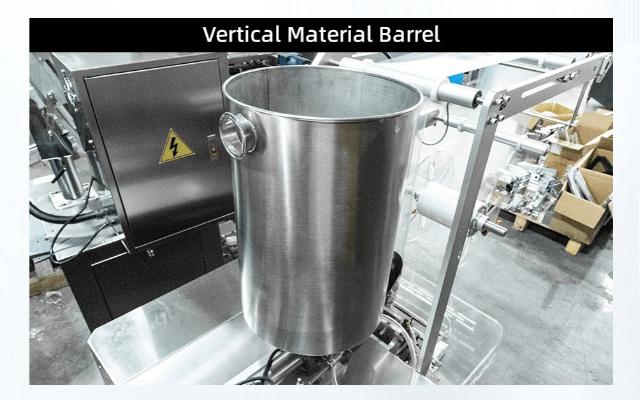
A powder that floods or alternately bridges cannot produce a calm discharge. Hopper geometry, controlled agitation, product level, refill rate, and upstream conveying affect density and aeration. Run the machine before, during, and after refill to see whether a fresh charge creates a stronger plume or changes the dose. Excessive stirring may generate fines, separate a blend, or compact cohesive material. Adjust only enough to maintain predictable feed. If pneumatic transfer is used, consider how conveying air leaves the receiving hopper and whether powder has time to settle before metering. The filling device should receive consistent material so its speed profile and cutoff remain meaningful. A stable source often reduces flying without changing the pouch station.
Position the filling outlet near the package opening and, where the design and product allow, let a tube enter the pouch before discharge. A shorter, enclosed fall gives powder less opportunity to entrain room air and drift sideways. The tube must not strike the bag, trap product, or restrict large agglomerates. Its outside surface should stay clear of powder that could be carried into the seal. Telescoping or lifting motion may support larger fills, but timing and cleanability need review. Curtains, shrouds, or a contained filling enclosure can intercept material that escapes the opening. Ensure guards remain safe and accessible while avoiding horizontal ledges that collect deposits. Test the smallest pouch mouth because it is usually least forgiving.
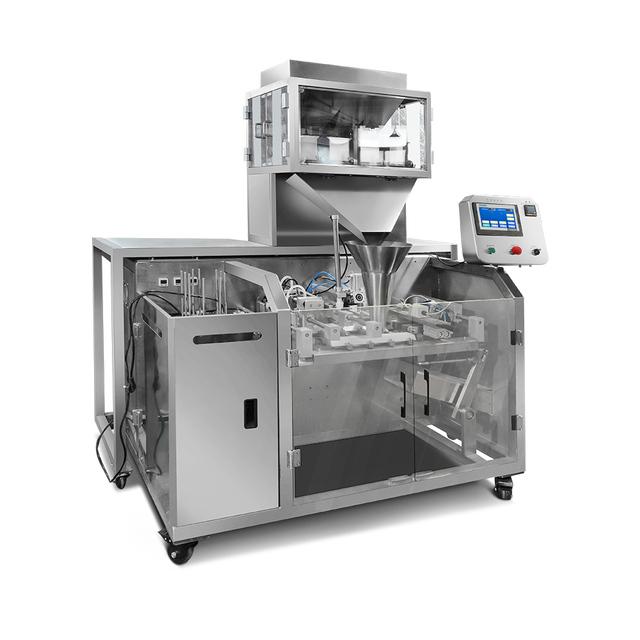
The fastest possible auger or gate movement may launch powder into the bag faster than displaced air can leave. A staged profile can use a controlled main fill followed by a slower finishing portion, subject to the metering technology and accuracy needs. Screw acceleration, rotation speed, cutoff, dribble, and bag dwell should be tuned with consecutive quantity checks. The ideal profile keeps output acceptable while reducing rebound and airborne loss. Very fine material may need settling time before the pouch indexes; bulky aerated product may need a different bag volume rather than more compaction. Compare plume, dose variation, and seal contamination together. Slowing the final fraction is useful only if it does not create unstable residual flow or excessive cycle variation.
The incoming dose replaces air inside the bag. That air needs an escape route with low enough velocity that it does not carry many particles upward. Options may include space around a deep filling tube, a vented or concentric tube, porous product-specific features, or controlled aspiration near an enclosure. Geometry must fit the powder and package. Strong suction at the outlet can preferentially capture fines, alter composition, reduce net quantity, and load filters quickly. Inspect captured material and pack results during adjustment. Extraction should be connected to a properly engineered facility system with known pressure and alarms. If airflow is essential, define machine response to loss of extraction. A simple duct connection does not demonstrate safe or effective capture.
A bag filled close to its mouth leaves little volume for the powder to settle and little clean laminate for sealing. Confirm product bulk density under realistic conditions and size the pouch for the largest expected occupied volume, not only the nominal mass. Gussets, zipper profiles, and narrow stick packs change available cross-section. Bag clamps or supports can hold the opening stable and prevent the pouch collapsing around the stream. After the dose, allow enough time for dust to fall below the closure before spreading or moving the top. Overfilling should be treated as a package or process mismatch, not solved by brushing powder from the seal on every cycle. Inspect the most aerated product lot and lowest permitted headspace during trials.
Static can attract fine particles to film, tubes, guards, and sensors, especially under dry conditions or with certain materials. The appropriate response depends on the powder hazard, film, machine construction, humidity, and site electrical requirements. Bonding, grounding, ionization, material choice, or environmental control may be considered by qualified personnel, but none should be applied generically to an unknown dust. Keep the filling zone smooth and accessible so settled product can be removed through the approved method. Track where deposits reappear after cleaning. Powder on one side of the tube may indicate airflow or alignment; buildup at the tip may indicate cutoff; film attraction can follow static or surface contamination. The pattern is diagnostic information.
Use the same product lot and pouch while changing one controlled variable at a time. Record quantity, visible release, captured product where measurable, deposits, seal contamination, machine rate, and interventions. The matrix below helps isolate common sources.
| Observation | Likely area to inspect | Useful trial change |
|---|---|---|
| Cloud begins at dose start | Aerated feed, rapid acceleration, long free fall | Stabilize supply and compare a gentler initial profile |
| Dust rises throughout filling | Air escape, bag opening, outlet position | Test deeper discharge and managed vent geometry |
| Puff appears at cutoff | Residual flow, abrupt stop, bag movement | Review finishing speed, cutoff, and settling dwell |
| Fine powder collects in extraction | Excessive or poorly located airflow | Balance capture against product loss and dose result |
| Powder reaches top seal | Headspace, rebound, static, insufficient settling | Challenge bag volume and top-conditioning sequence |
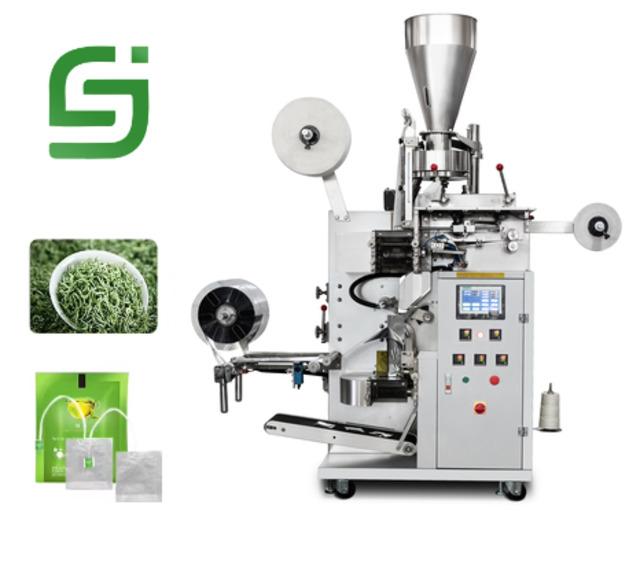
Once a stable combination is found, document hopper parts, refill logic, auger or filler setup, tube position, bag support, dose profile, settling time, extraction condition, film, and inspection frequency. The powder packaging machine range provides equipment context, but release should reference the exact demonstrated arrangement. Train operators to recognize increased plume, deposit pattern, extraction alarm, changing quantity, and seal contamination. Inspect sleeves, clamps, tube wear, hopper venting, filters, sensors, and enclosure integrity. After maintenance or product change, verify first-off packs and observe the fill event before returning to full operation. Reassess the setup when powder supplier, conveying, bag size, room condition, or production rate changes.
Why does powder fly when it hits the pouch bottom? The impact displaces air and can rebound fine particles through the opening. Shorter drop, controlled fill rate, stable support, adequate headspace, and managed venting can help.
Should extraction be set to maximum airflow? No. Excess airflow may remove product, bias the dose, disturb the stream, and overload filters. Capture must be engineered and balanced with product retention.
Can a longer settling delay eliminate dust? It can help particles fall before sealing, but it does not correct aerated feed, excessive drop, poor venting, static, or an overfilled pouch.
Why is dust worse immediately after refill? Incoming powder can be more aerated, disturb material already in the hopper, or overload venting. Compare density, feed, and fill behavior around the refill event.
What settings should be preserved after a successful test? Record physical parts and positions as well as software values, product and film lots, room or extraction conditions, quantity results, and inspection findings.
Avoiding powder flight requires control of the material before, during, and immediately after the dose. Stable hopper feed, a short protected fall, a shaped fill profile, adequate headspace, gentle air release, and correctly balanced extraction work together. Observing when the plume begins is more useful than applying one universal accessory. Once trials produce clean seals and stable quantities, the complete physical and control setup should be locked and maintained.

YISEN MACHINERY - The ONE-STOP VFFS PACKING MACHINE SOLUTION SUPPLIER
 Tel: +8617350750975
 Email: info@vffspackingmachinery.com
 MP/WhatsApp: +8617350750975
 Manufacturer Address:Meixi Road, Tongan District, Xiamen,Fujian,China