

Hot Keyword:
Author:YISEN Pouch Packing Machine Manufacturer TIME:2026-10-04
Place metal inspection where the proposed equipment can assess the actual tea and package, and where rejected material can be separated reliably. For a tea pouch packing machine line, compare inspection before filling, after inner-bag closure, and after outer wrapping. Approve a location only after the inspection supplier evaluates the production laminate, pack presentation, challenge samples, and the operations that follow that point.
Begin with a sketch of what travels through the line: loose tea, a filled filter bag, an attached string or label where required, and the finished outer envelope. Mark the operations between these states and the point at which each item can be diverted. An inspection proposal becomes much easier to assess when everyone agrees which physical object is being examined.
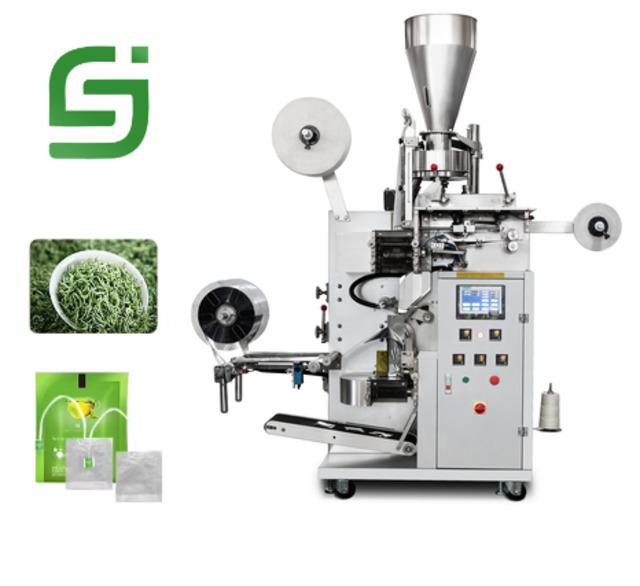
The YS-169 product record describes an inner bag enclosed in an outer envelope. Use that description to ask whether the quoted configuration exposes an accessible transfer between the two. It does not establish that an inspection device is installed there, that enough space exists, or that an independent reject can operate at that transfer.
For each candidate position, request a drawing that identifies the incoming material, the inspection zone, the diversion point, and the next processing operation. Include the line supplier and inspection specialist in this discussion. A location labelled simply "after packing" leaves too much ambiguity when a line makes both an inner bag and an outer package.
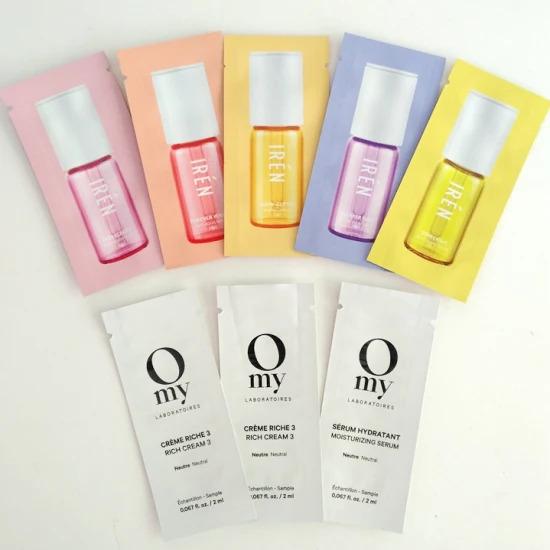
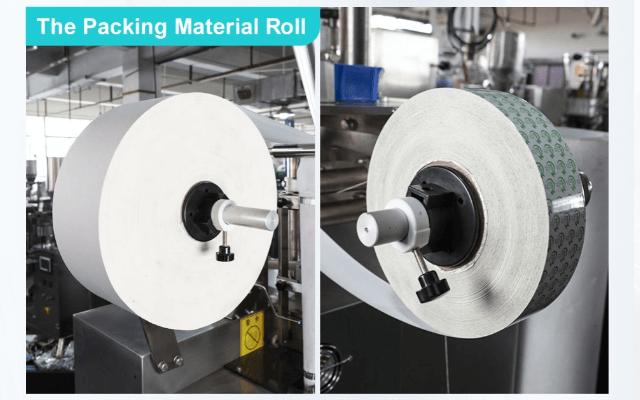
Do not reduce the outer package to a description such as shiny film, paper sachet, or foil pouch. Request the material supplier's construction sheet and identify the actual layers, coatings, printing, and commercial pack dimensions. Send both unused material and representative completed envelopes so the inspection specialist can assess the proposed application.
The stored YS-169 listing names several envelope material families, including aluminium-containing constructions. That list prompts a question: which exact construction will be used for this order, and what inspection proposal has been evaluated with it? It provides no basis for claiming that one detector can inspect every listed laminate or reach a particular sensitivity.
Keep packaging procurement involved when sample material is supplied. An early trial using a clear development film cannot settle the inspection purchase for a later metallic retail envelope. Ask the specialist to identify which changes in laminate, pack size, decoration, or product presentation would require another application review, and include those triggers in the purchasing record.
The location comparison should state what is inside the inspection boundary and what remains downstream. Request a separate proposal for each feasible position. If a supplier proposes a different technology, including X-ray inspection, require its own application assessment; the name of the technology is not proof that it suits the tea, envelope, or available transfer.
| Proposed position | Object presented | Purchase question | Unexamined later operations |
|---|---|---|---|
| Before tea filling | The agreed bulk-tea stream | How are suspect portions separated from accepted tea? | Dosing, bag formation, attachments, and wrapping |
| Between inner bag and envelope | The completed inner bag and any attachments | Can the transfer present and divert individual bags? | Envelope feeding, sealing, cutting, and discharge |
| After outer wrapping | The retail pack with its production laminate | Has this exact pack been assessed by the inspection specialist? | Any subsequent handling or secondary packing |
Use the final column to discuss remaining exposure with the buyer's quality team. An upstream proposal may be commercially attractive, but it does not examine work performed after that station. Conversely, a downstream location needs a demonstrated package and transfer combination. The decision should record both the examined object and the accepted limitation.
Ask the inspection supplier to propose an application trial using the buyer's actual tea and production pack. The trial brief should identify the contaminant categories under review, the specialist's controlled challenge samples, the presentation conditions, and the form of the results. The buyer's quality personnel should approve the acceptance criteria before a performance promise enters the order.
Do not copy a sensitivity figure from an unrelated product demonstration. Request results tied to the proposed equipment, inspected opening or transfer geometry, sample identity, and package configuration. Where the specialist varies sample position or presentation, retain those conditions with the result rather than reporting only the easiest successful demonstration.
Include product-free packs and normal filled packs in the application discussion so the specialist can explain how it distinguishes package-related behaviour from a challenge result. Keep all challenge work within a controlled supplier or site procedure, with responsibility for sample recovery and product disposition. Product-release limits and inspection operating procedures remain with the responsible quality and inspection specialists.
A signal alone does not describe where suspect tea or a suspect pack goes. Require the quotation to distinguish the inspection instrument, transfer equipment, rejection mechanism, collection area, confirmation functions, and any control interface with the packing machine. Identify who supplies each item and who demonstrates the combined arrangement.
For bulk tea, ask how the proposed system defines the portion diverted and prevents it from returning to the accepted stream. For discrete packs, ask how the supplier relates the inspection event to the correct physical item. Pack spacing, orientation, transfer changes, and accumulated product should appear in the supplier's demonstration plan.
Agree what the system is expected to do when the collection area is unavailable, confirmation is missing, or the adjoining machine stops. These are requirements to review with the vendors, not features established by the tea machine page. Record who owns the disposition decision for affected output so an unresolved event cannot disappear into a general production count.
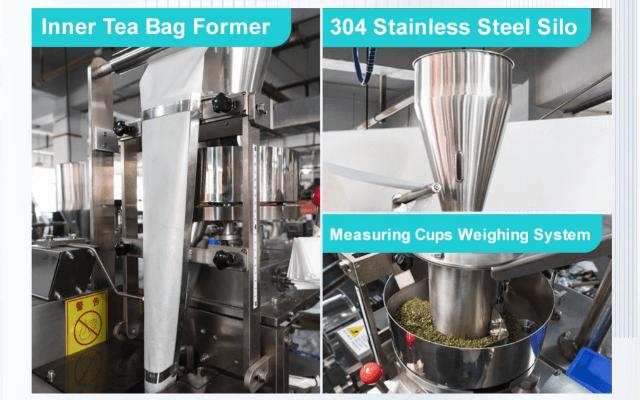
If the selected inspection point is ahead of bag formation or envelope cutting, list those later operations explicitly in the location approval. This does not mean they necessarily introduce contamination. It means that an earlier inspection result cannot describe a package that did not yet exist when the tea passed that station.
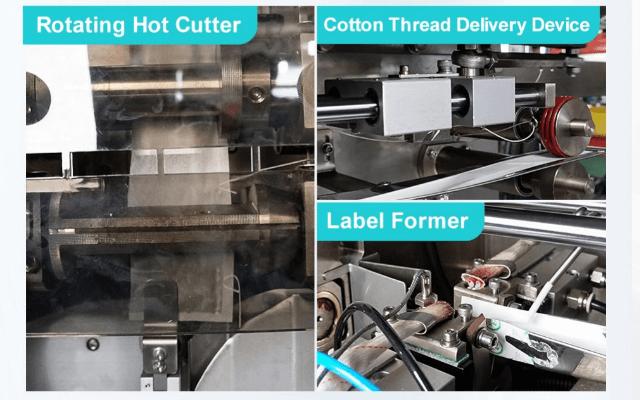
The YS-169 source includes images of cutting and thread-and-label components. Use them to ask which assemblies follow the proposed inspection point on the quoted machine. Do not treat a component photograph as proof of an inspection function or as a diagnosis of a contamination source.
Have the quality team review the proposed position against its own process assessment. If it requests another inspection position or an additional control, obtain a revised layout and scope. Purchasing should retain the reason for choosing the location, including any downstream operations outside it, rather than substituting a broad statement that the complete line is metal inspected.
A bench application result and an integrated line trial answer different purchasing questions. The first addresses the submitted tea and package under the specialist's conditions. The second should show that the proposed transfer presents that object consistently and moves the intended rejected object to the agreed destination.
Ask the vendors to include normal pauses, restart, changes in spacing, and the actual discharge arrangement in their demonstration proposal. Identify who records the relationship between each inspection event and the resulting diversion. Require observations of packs that overlap, turn, or accumulate where those conditions are plausible for the proposed layout.
Keep the agreed production configuration visible in the record: package drawing, laminate revision, attachments, conveyor arrangement, and inspection equipment identity. If a temporary demonstration conveyor differs from the ordered transfer, record the remaining integration work. A successful application sample should not silently become acceptance of a different complete line.
Prepare a short brief with four attachments: the process route, the material specification, the specialist's application proposal, and the equipment responsibility drawing. Together they should make it possible to identify exactly what is being bought and which approval remains conditional.
Use the tea bag packaging machine range to identify the packaging configuration for discussion, then obtain a separate written inspection scope. The public product record does not confirm an installed metal detector, X-ray unit, detection sensitivity, or inspection certification. Any such claim needs evidence for the offered equipment and application.
Keep alternatives priced separately when trials are incomplete. State who funds another trial after a material change, who resolves a transfer mismatch, and whether shipment depends on closing the application review. This gives purchasing a usable boundary without turning an undecided inspection arrangement into a promised machine capability.
Does an aluminium-containing envelope decide the technology automatically? No. Submit the complete laminate construction and filled pack to the inspection specialist. Ask it to compare suitable proposals and document application limits. Appearance or a short material name cannot settle the equipment choice.
Can inspecting loose tea replace checking the finished outer pack? Those positions examine different objects at different stages. Ask the buyer's quality team to assess the later operations and approve the intended boundary. An upstream result does not cover operations that occur after inspection.
Is an alarm enough to accept the inspection purchase? The order should define the required response and how affected material is controlled. Where rejection is required, the vendor must explain diversion, confirmation, collection, and recovery. Do not infer these functions from an alarm display.
What should happen when the envelope supplier changes? Send the revised construction and production samples for review against the approved application. Let the inspection specialist and buyer's quality personnel determine the required reassessment before the changed package is treated as covered.
Does the illustrated tea machine include a detector? The source evidence used here does not establish one. The photographs show packaging components only. Request an itemised equipment list and an application-specific inspection proposal from the vendors responsible for the quotation.
The inspection purchase should end with an agreed object, location, and rejection path. Put the actual outer laminate and the operations after each candidate position at the centre of the comparison. Close the application assessment with the inspection specialist and obtain the buyer's quality approval before accepting a performance statement. A clear material-and-location brief makes exclusions visible and allows the selected packaging and inspection suppliers to quote the same defined arrangement.

YISEN MACHINERY - The ONE-STOP VFFS PACKING MACHINE SOLUTION SUPPLIER
 Tel: +8617350750975
 Email: info@vffspackingmachinery.com
 MP/WhatsApp: +8617350750975
 Manufacturer Address:Meixi Road, Tongan District, Xiamen,Fujian,China