

Hot Keyword:
Author:YISEN Pouch Packing Machine Manufacturer TIME:2026-11-06
No. Rated power alone does not predict electricity per accepted pack from a Honey Packing Machine. The comparison needs electrical energy measured over a defined interval and the acceptable finished packs produced within that interval. Power, elapsed time, rejected output and campaign size affect that relationship. A smaller catalogue power entry is therefore insufficient evidence that one offer will consume less electricity for the buyer's packing task.
A supplier's electrical rating belongs to an identified equipment configuration. Establish whether the quoted entry describes the complete packer, one assembly or another stated scope. Do not silently reinterpret a loosely labelled catalogue number as actual operating demand, and do not assume every rating has the same definition.
Even an unambiguous rating does not describe the electrical energy used during a honey campaign. It contains no account of how operating draw changes, how long the equipment remains in each state, or how many finished packs pass inspection. Those missing quantities prevent a direct purchasing conclusion about electricity per pack.
Supply approval remains a separate question. A production-energy comparison does not establish that the receiving factory can connect or operate the proposed electrical configuration. Conversely, approval of its supply requirements does not establish its production consumption. The buyer needs to keep these decisions distinct rather than letting one power entry answer both.

The U.S. Energy Information Administration distinguishes electrical power, expressed in watts or kilowatts, from electricity used over time, expressed in watthours or kilowatthours. The distinction matters when reading a machine offer: kW and kWh cannot be substituted for each other merely because the letters look similar.
Let E represent measured energy in kWh, t the matching duration in hours, and P_avg the actual average power over that duration. Their relationship is:
E = P_avg × t
This uses an average describing the whole interval. A momentary display reading may describe a particular operating state without representing the average across filling, pauses and other included events. A catalogue rating is not a substitute for that observed average either.
Multiplying a stated power by an assumed duration produces an estimate under those assumptions. It does not turn the stated power into a measurement of the campaign. Keep that estimate separate from an accumulated energy result, even when both are expressed in kWh. No consumption value for the pictured equipment follows from this relationship alone.
The Department of Energy describes energy intensity in terms of energy used per unit of output or activity. For this purchasing question, the proposed output unit is an accepted finished honey pack. That choice connects electricity to usable production instead of commanded machine motion.
With N_accepted denoting accepted packs from the same measured interval, the calculation becomes:
e = E / N_accepted
If r_accepted = N_accepted / t is the observed accepted rate in packs per hour, the equivalent relationship is e = P_avg / r_accepted. Power alone cannot settle this ratio. A greater average draw could accompany a proportionally greater accepted rate, or a lower draw could accompany more waiting and fewer acceptable packs. These are mathematical possibilities, not findings about any supplier.
Use released output under the agreed inspection criteria. Cycles, discharged sticks and accepted sticks describe different populations when defects occur. Energy associated with rejected output does not disappear because those packs are removed from the denominator. Changing the denominator midway through a comparison changes the meaning of the result.
A result must identify the equipment whose electricity it includes. A base packer measured alone and a setup that also includes separately supplied equipment describe different production scopes. Adding an assumed allowance does not make an unmeasured attachment part of the original observation.
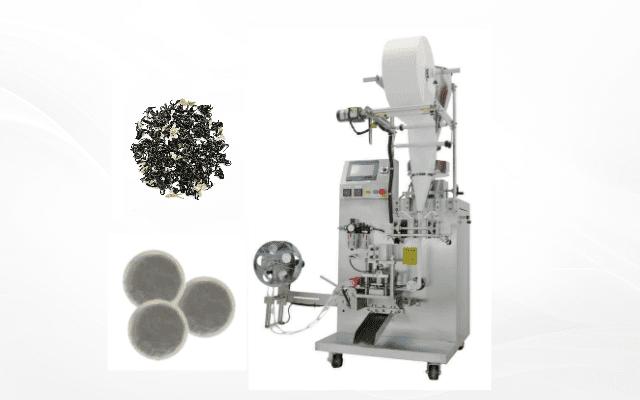
The current YS-65J honey-stick product description discusses the feed vessel, metering path, cutoff, film section and accepted output. It asks buyers to confirm the supplied temperature-related arrangement. It provides relevant process context, but no measured electricity-per-pack result. The photographs likewise establish no operating draw or included electrical load.
The honey-compatible sauce packing range is a starting point for identifying the offered configuration. Confirm its actual functions before comparing consumption. The product-page images show equipment views; they should not be assembled into an assumed tested build or treated as proof that heating, agitation or coding is included.
Electricity supplied elsewhere also needs a clear boundary. For example, a packer-only electrical result cannot silently represent the energy of a separately supplied utility system. Keep excluded services visible without converting their consumption into electricity through an unsupported assumption.

A running-only result answers a narrower question than a campaign result. Identify the start and end of each before interpreting either. Where preparation or waiting energy has been measured, decide explicitly whether those intervals belong to the campaign comparison. Do not presume that a stopped packer consumes either nothing or a fixed amount.
For compatible, non-overlapping intervals within the same equipment boundary, a campaign can be represented as:
E_campaign = E_preparation + E_running + E_waiting
The labels describe measured portions of the chosen interval, not a claim that every machine has the same operating sequence. If a period was not observed separately, retain that limitation rather than manufacturing a breakdown that looks more complete.
An interval with no accepted packs has no finite electricity-per-accepted-pack result. Preserve its energy and duration instead of assigning a fictional pack count. If that interval belongs within the campaign, its measured energy can contribute to the campaign numerator while the denominator remains the accepted campaign output. This avoids making waiting disappear through an undefined ratio.
Consider the contribution of preparation energy when it has actually been measured. Allocating the same preparation amount across fewer accepted packs gives a larger contribution per pack. Allocating it across more accepted packs gives a smaller contribution. This arithmetic does not establish that preparation energy stays constant between real campaigns; that condition must be demonstrated before using it.
The campaign relationship is e_campaign = E_campaign / N_campaign. It can differ from a stable-running ratio even when both calculations are correct. One includes the agreed surrounding activity; the other describes a selected production state. Neither should be relabelled as the other to improve a quotation's appearance.
Frequent short orders and long uninterrupted campaigns therefore raise different comparison questions. Use the buyer's intended campaign pattern to choose which observed result is relevant, while keeping untested schedules as assumptions. A demonstration from a long run does not establish the ratio for repeated short orders.
Do not extrapolate a favourable interval into annual electricity, monetary savings or payback. The article's calculation interprets the stated measured task. A longer-term forecast would introduce operating patterns and other information that the simple ratio does not provide.
A per-pack unit does not make unlike products equivalent. A different honey quantity, stick format, material or inspection rule changes the output being delivered. Compare the defined commercial pack before ranking its electricity intensity. Otherwise a smaller or less demanding pack may appear preferable simply because the task changed.
Product condition also belongs in that definition. Use the producer's approved honey condition and identify the configuration actually observed. Do not make one offer look better by assuming an easier product condition, excluding a supplied function, or accepting defects that the competing result counts as rejects.
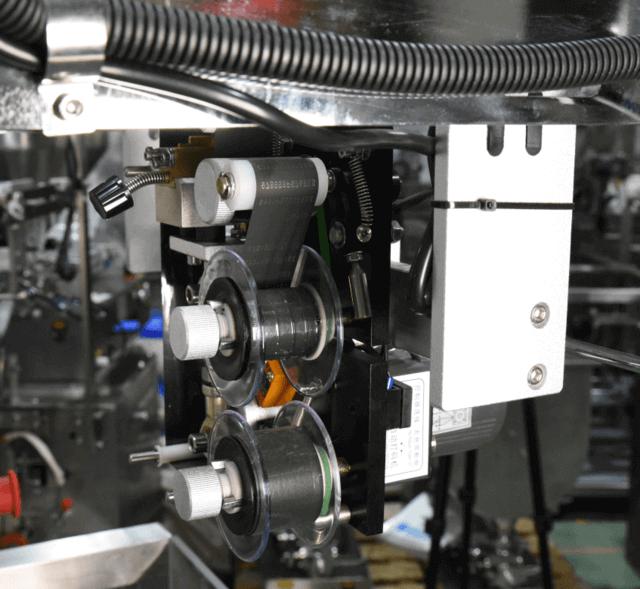
The same principle applies to coding. If coding is part of the required finished pack, define whether the compared equipment scopes include that function. The photographed coding assembly illustrates the question; it does not show its energy use, prove its inclusion in the offer or establish how it is supplied.
A ratio can identify a difference between matched observed tasks. It cannot, by itself, explain the physical cause or prove that a machine is universally more efficient. Keep the conclusion as specific as the comparison that produced it.
Purchasing should distinguish a missing quantity from an unfavourable result. A power rating without measured energy is incomplete evidence for this question, rather than a demonstrated high or low electricity intensity. The table separates common submissions by the conclusion they can support.
| Available comparison | What it establishes | Buyer conclusion |
|---|---|---|
| Rated kW for each offer | A stated rating within each supplier's defined scope | No energy-per-accepted-pack ranking follows |
| Accumulated kWh without a matching accepted count | Energy over the identified interval | The production-intensity denominator remains missing |
| Matched stable-running energy and accepted output | Intensity for the observed running condition | Compare that condition without calling it a campaign result |
| Matched campaign energy and accepted output | Intensity for the declared campaign and equipment boundary | Use it for that task while keeping untested duties open |
Any actual electrical measurement belongs with appropriately qualified personnel and suitable arrangements. This comparison explains the quantities to interpret; it provides no connection, instrument-installation or operating procedure. A supplier's lower rated power remains useful specification information, but it earns no automatic preference for electricity per pack.
Does a lower rated kW guarantee lower electricity per accepted pack? No. The result also needs actual energy over time and matching accepted output. Without those quantities, the rating cannot establish the production ratio or its relationship to a competing offer.
Can one live power reading replace accumulated kWh? A momentary reading describes its observation point. It does not automatically represent average power throughout a campaign. Interpreting energy requires the corresponding duration and operating history, rather than an assumed constant draw.
Should measured preparation and waiting be included? Include them when they fall inside the declared campaign basis. A running-only figure may remain useful, but label it separately. Never infer an idle-consumption value from the fact that bag motion has stopped.
What if energy is recorded but no packs are accepted? Retain the energy, duration and observed circumstance. There is no finite per-accepted-pack ratio for that interval. Its energy may belong in a larger defined campaign calculation with actual accepted output.
Can this comparison establish an electricity bill or savings guarantee? No. It describes a specific production-energy relationship. It does not provide a tariff, a future operating schedule, a full site-energy allocation or evidence of guaranteed consumption for a purchased machine.
Electricity per accepted honey pack is an energy-to-output ratio, not another name for rated power. Preserve the distinction between a stated rating, power observed during operation and energy accumulated over time. Then connect that energy to accepted output from the same task and interval. A buyer comparing short campaigns should see the relevant campaign result; a steady-running result answers its own narrower question. Select between offers only when those quantities describe comparable production, and leave the machine's actual consumption unclaimed until it has been established.

YISEN MACHINERY - The ONE-STOP VFFS PACKING MACHINE SOLUTION SUPPLIER
 Tel: +8617350750975
 Email: info@vffspackingmachinery.com
 MP/WhatsApp: +8617350750975
 Manufacturer Address:Meixi Road, Tongan District, Xiamen,Fujian,China