

Hot Keyword:
Author:YISEN Pouch Packing Machine Manufacturer TIME:2026-11-10
Ultrasonic frequency describes how often vibration repeats; amplitude describes the extent of that vibration at an identified point. Neither number, by itself, tells a buyer how a pyramid tea bag packaging machine will close the intended filter material. Read the generator, converter, booster and welding tool as a connected system, then establish what the controller starts, controls and ends during a weld.
Ultrasonic joining involves more than an electrical cabinet and a closing face. The generator supplies a high-frequency electrical signal. A converter changes that electrical excitation into mechanical vibration. The booster changes the vibration amplitude, and the sonotrode, also called a welding horn, brings the motion to the work. These functions explain why a single cabinet rating cannot describe the complete closing system.
Herrmann's technical introduction describes the converter through the inverse piezoelectric effect: its ceramic elements respond to the applied electrical field with mechanical movement. The booster and sonotrode then form part of the mechanical route. This is a general explanation of ultrasonic equipment, not identification of the components installed in the tea machine offered to a particular buyer.
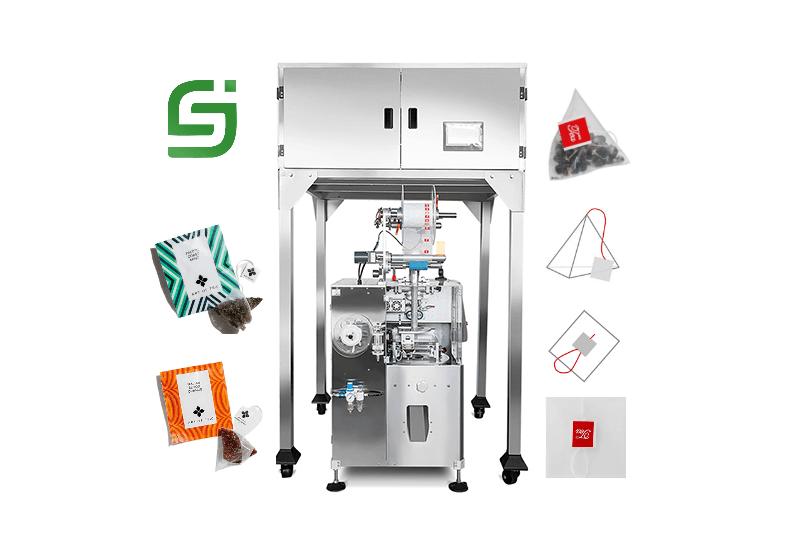
The YS-ZF90 product reference provides the tea application context and identifies ultrasonic sealing. Its overview helps locate the machine arrangement under discussion. The separate pack illustrations around the machine are presentation examples, not evidence that those specimens came from the pictured build or that additional envelope equipment is included.
Frequency counts repetitions over time. In an ultrasonic description, it concerns the repeating vibration, conventionally identified in hertz or kilohertz. A bag-production rate counts completed packaging cycles. The two quantities describe different events; a frequency entry cannot be read as the number of tea bags produced in a minute.
The electrical supply frequency is another distinct reference. The generator's purpose includes producing the high-frequency excitation needed by the ultrasonic system from its electrical supply. A supply-frequency field in a machine specification therefore does not identify the frequency of mechanical vibration at the welding tool.
Keep the question physical: which vibration and which component does the frequency entry describe? A higher listed frequency does not, without application evidence, establish a stronger joint, faster packaging or a better machine. This explanation offers no preferred frequency for tea filters and no value for the fitted YS-ZF90 generator.
Amplitude concerns the extent of oscillating movement rather than how often that movement repeats. The reference matters because the converter, booster and sonotrode perform different jobs. Herrmann's component explanation states that the booster can increase or reduce amplitude and that the sonotrode can also change it. A value attributed to one location is consequently incomplete as a statement about another.
For a useful explanation, name the component, the point being described and the convention used to express displacement. A supplier might discuss a controller command, a component's nominal characteristic or an actual measurement. Those descriptions should remain distinguishable even when their labels all contain the word amplitude. The buyer should not have to infer a physical displacement from an unexplained setting.
The working face adds a spatial question. Herrmann's sonotrode documentation describes measuring amplitude distribution at a vibrating tool with laser technology. That establishes why tool-level distribution can be a separate subject from the generator display. It does not show a measured distribution on this tea machine, or make a particular measuring instrument an automatic purchasing requirement.
Use the distinction to understand the offered system, without calculating an unverified tool displacement from a catalog entry. Where the reference is missing, the defensible conclusion is that the amplitude statement needs explanation.
A percentage needs a defined reference. For an amplitude command, the supplier should explain what its controller means by the displayed percentage and which component arrangement that explanation assumes. The percentage alone does not state a displacement at a named point on a welding tool.
This is especially relevant when a machine description mentions a booster or another horn. Because these components participate in changing amplitude, retaining a familiar screen percentage does not by itself identify unchanged tool movement. That is an inference from the mechanical chain, not a claim that a specific tea-machine change has occurred.
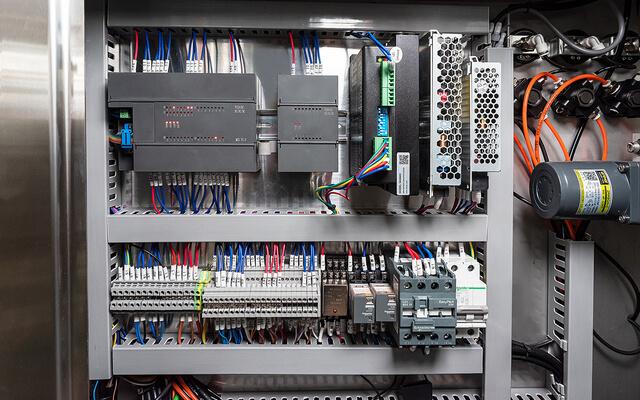
The electrical-cabinet photograph provides equipment context. Its visible control modules and wiring do not identify a generator's amplitude convention or establish the authenticity and configuration of every component. Ask for the meaning of the offered controller's own terminology rather than treating a cabinet photograph as a measurement.
The mechanical chain must bring vibration to the intended joining area. Ultrasonic packaging explanations describe sonotrode or anvil geometry concentrating energy where local heating is needed. Tool contour is therefore part of the physical explanation, alongside material and the controlled welding process.
A bare amplitude statement leaves that interaction undescribed. It does not identify the contact geometry, the location at which vibration acts or the response of the selected filter material. Equal-looking settings are insufficient to establish equal joining conditions when the physical references differ. The responsible supplier needs to explain its proposed combination.
Ultrasonic closing also should not be interpreted as an absence of heat in the joint. The technical explanation involves locally generated heat, even though the process does not depend on an externally heated sealing tool in the same way as conventional heat sealing. This distinction gives no product-temperature result, material-compatibility guarantee or permission to disregard contamination.
Keep this discussion about how motion reaches a joint. Selecting mesh grades and developing their operating windows require their own application evidence; repeating a general material trial checklist would not resolve an undefined amplitude reference.
A control mode describes how the system governs a stage of the process. In its ULTRAPACK technical table, Herrmann lists different combinations of time, energy and power modes for named generator variants. The table is a concrete example of why a generic statement that a controller is digital does not identify its available modes.
For the offered controller, establish what the selected mode controls and what criterion ends the active weld. A recorded duration might be an outcome of that mode, whereas a time setting might define the endpoint in another implementation. The presence of a number on a report does not settle its role. Use the supplier's description of that implementation.
Power and energy need only a short distinction here. Power describes an energy rate; energy describes an accumulated quantity. A whole-machine electrical rating, a generator capacity and a recorded welding quantity have different references. None supplies an amplitude at the tool without further information.
The Herrmann example does not establish that YISEN fits that brand, any named mode or a recording package. It helps a buyer recognize the question that remains unanswered when an offer lists ultrasonic sealing without explaining the fitted control behavior.
Start and finish are not interchangeable labels. In Herrmann's general description, a trigger condition identifies the start of ultrasonic activity, welding continues until its switch-off criterion is reached, and a subsequent holding phase allows the joint to firm under pressure. These stages help explain why active weld duration is not necessarily the entire joining sequence.
A buyer should use this phase distinction to read a technical description, not impose a press-style sequence on an unverified packaging mechanism. The proposed tea system may require its own explanation of motion and control. No trigger force, contact arrangement, timing or holding value is prescribed here.
When duration is discussed, identify its beginning and end. Does it cover ultrasonic activity, a controlled contact stage or a larger machine sequence? This semantic difference can exist even when two reports use the same time unit. It cannot be resolved by assuming that both suppliers started their clocks at the same event.
The practical result is an understandable sequence: when the selected control takes effect, what ends it and what happens next. It remains separate from the rate at which completed bags leave the machine.
A setpoint tells the system what has been selected. A measured value reports an observed quantity at a defined reference. A saved record preserves whatever information its recording system actually captures. Moving a number between these categories changes its meaning.
| Information presented | What it can describe | What still needs identification |
|---|---|---|
| A frequency entry | The repetition of a named electrical or mechanical signal | The component and the signal being described |
| An amplitude percentage | A command under the controller's defined convention | The reference behind it and its relationship to tool displacement |
| A weld duration | Time between specified process events | Whether it is a selected endpoint or a measured outcome |
| A stored process graph | The variables and interval actually recorded | Their definitions and connection to the identified welding arrangement |
The console photograph identifies visible controls on the product reference. Its printed labels and displayed numerals do not establish operating units, a configured control mode or a witnessed weld result.
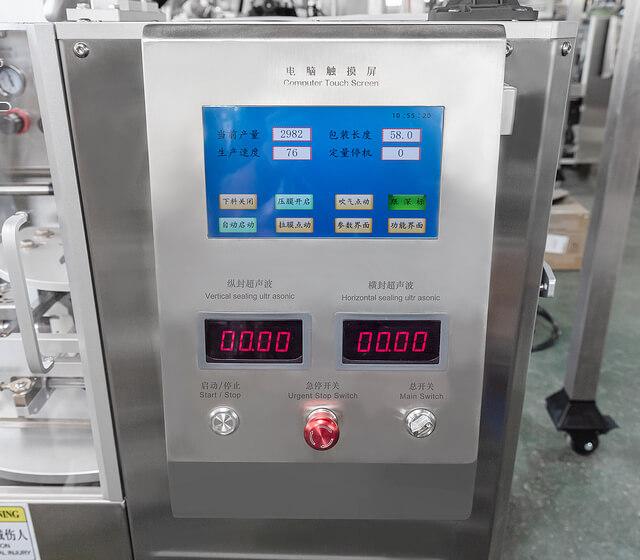
When reviewing a pyramid tea bag packaging machine, connect each ultrasonic term to the proposed mechanical chain and controller. The YS-ZF90 reference supplies an application to discuss; external component literature supplies concepts. Neither substitutes for identifying the actual offered arrangement.
The clearest explanation lets the buyer follow the electrical excitation to mechanical movement, locate the amplitude reference and distinguish the controlled stage from the surrounding cycle. If one of those relationships remains unknown, leave that specific description unresolved. A collection of precise-looking numbers cannot supply the missing physical reference.
Is a higher ultrasonic frequency a higher bagging speed? No. Vibration frequency counts a different event from completed packaging cycles. It does not establish accepted output, joint quality or a preferred frequency for the buyer's filter material.
What does an amplitude percentage leave unanswered? It leaves the reference behind that percentage and its relationship to movement at a specified tool location unexplained. The fitted converter, booster, horn and controller convention matter to that interpretation.
Can a booster change what a familiar setting means? The booster participates in changing mechanical amplitude. An unchanged percentage therefore does not, on its own, establish unchanged displacement at the working tool. Have the responsible supplier explain the defined arrangement.
Why ask which events define weld time? A reported interval might concern ultrasonic activity or a wider process stage. Its start, endpoint and role in the selected mode make it interpretable. The time unit alone cannot identify those boundaries.
Does the illustrated console confirm a particular generator? It provides visual context for the YS-ZF90 reference. The picture does not establish a fitted external brand, control algorithm, recording software or actual measured tool amplitude.
Read ultrasonic specifications along the physical chain. Frequency identifies repetition; amplitude needs a location and convention; the booster and horn help determine the movement delivered to the joint. Then read the controller through its start condition, active-weld endpoint and following phase. Understanding those relationships makes the proposed tea-machine description usable without inventing settings, assigning unverified components or treating a screen as a measurement.

YISEN MACHINERY - The ONE-STOP VFFS PACKING MACHINE SOLUTION SUPPLIER
 Tel: +8617350750975
 Email: info@vffspackingmachinery.com
 MP/WhatsApp: +8617350750975
 Manufacturer Address:Meixi Road, Tongan District, Xiamen,Fujian,China