

Hot Keyword:
Author:YISEN Pouch Packing Machine Manufacturer TIME:2026-11-20
A servo-driven powder packing machine does not necessarily control each lane's dose independently. The servo might move film or sealing parts rather than an auger. Independent dosing requires an identifiable metering axis and a control arrangement that can address the relevant outlet separately. Establish those functions before comparing a common command, individual dose adjustment, missing-package inhibition or automatic weight correction.
Servo describes a motion-control arrangement, not the material-handling job assigned to it. In a packaging machine, controlled motion can pull the web, position a sealing assembly or rotate a dosing screw. Finding a servo in the component list therefore leaves the central purchasing question open: which movement does that drive govern?
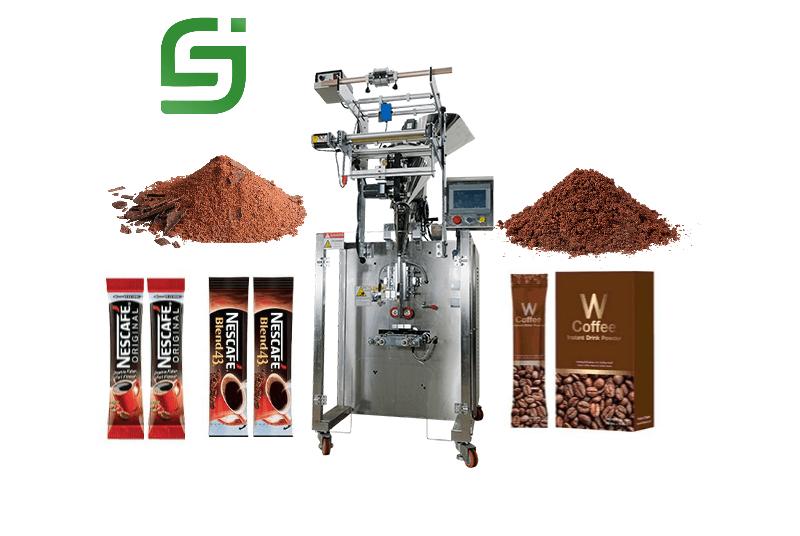
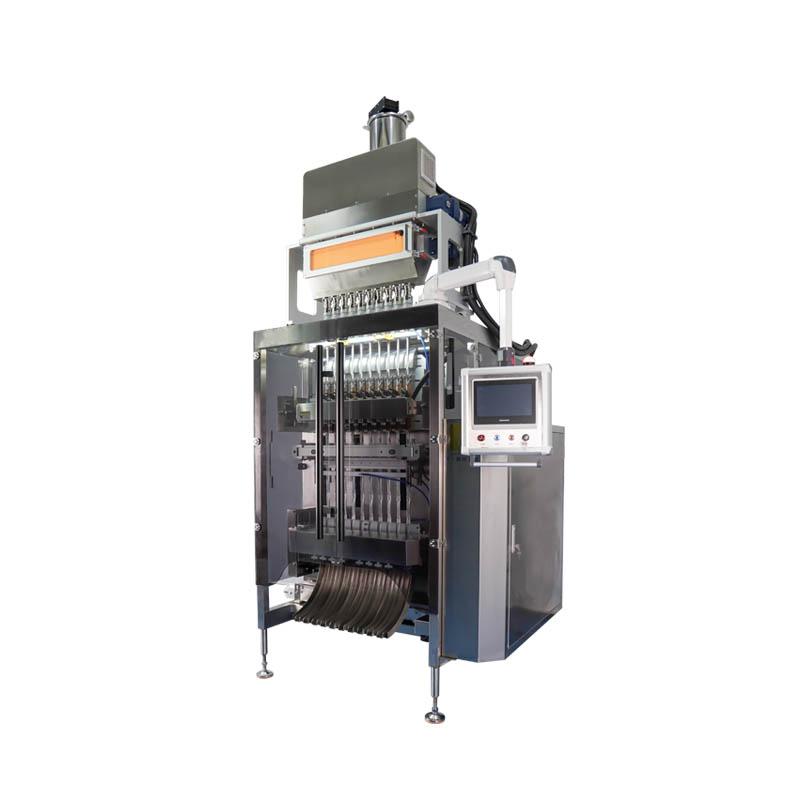
A saved 2026-08-20 archived form for the site's multi-lane powder product named servo film pulling. That dated wording identifies a web-handling function; it does not establish that each powder outlet has its own servo-driven auger, even when several parallel forming tubes appear in a photograph. The pictured configurations provide application context without revealing a complete drive diagram.
Begin with the function attached to each drive entry. A statement about accurate film advance cannot be used to explain separate powder corrections. Likewise, an independently driven agitator does not necessarily provide an individually adjustable dose. Keep the material meter, the device supplying it and the package motion distinct. Otherwise, two quotations can appear equivalent because both use the same attractive component word while offering different adjustment capabilities.
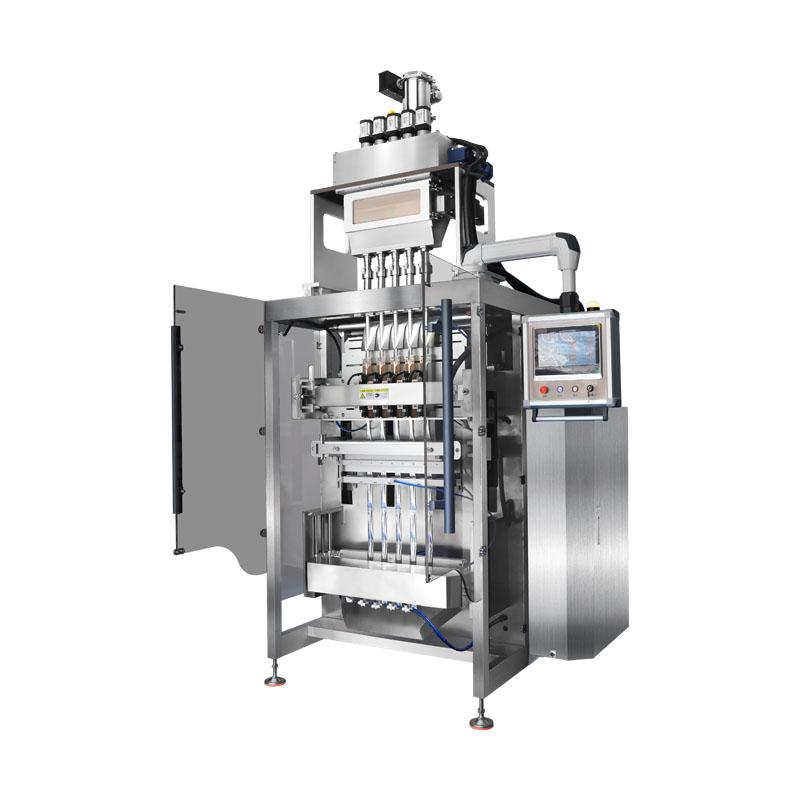
A common hopper and independent metering axes are compatible concepts. Spee-Dee's multi-axis filler description gives a concrete example: material reaches the auger tooling from a common hopper, while each axis has a separate servo motor for its setup and adjustment. This describes that manufacturer's arrangement, not a confirmed configuration of the site's powder machine.
Follow the material from storage to each outlet. Identify whether a package lane receives one metered discharge, several combined discharges or a shared stream divided after metering. These routes create different meanings for the word independent. Separate forming tubes establish separate package paths; they do not, by themselves, identify where the quantity assigned to each path is determined.
Keep the physical allocation readable when lanes are numbered. An auger number, an outlet position and the lane label used at discharge might not be identical references. The useful map connects them. This avoids purchasing a feature whose adjustment exists somewhere in the machine but cannot be reliably associated with the particular sachet that production wants to change.
Mechanical independence concerns which parts can move separately. Control independence concerns which movements the installed program can command separately. Operator authority is another layer: a machine might contain separately driven axes while the supplied interface exposes only a shared recipe value. A motor count cannot resolve all three questions.
For example, changing one outlet's commanded rotation while preserving the others is different from changing a global factor that affects the entire group. Both adjustments might be available through one touchscreen. Conversely, several displayed fields do not prove several independently controlled physical meters if the underlying mechanism or program links their movement.
The distinction matters when the production requirement calls for separate trimming. The offered controls should explain which parameter belongs to which metering action and whether a change is local or shared. This is not a recommendation to alter protected settings or redesign a drive. It is a way to identify the adjustment freedom being purchased. A coupled arrangement can be acceptable for a suitable duty; an independent arrangement still needs appropriate mechanics and an understandable operating boundary.
Consider a line where one channel repeatedly differs while neighboring channels remain consistent. A common dose command may change every channel together. That changes the group but does not necessarily remove the difference between its members. An available local adjustment offers another degree of freedom, provided the affected outlet is correctly identified.
The observation does not prove that the motor caused the deviation. Uneven powder presentation, different installed tooling, a restricted outlet or material retained after dosing could produce a local result. Correcting the command without understanding the route might conceal a mechanical condition rather than resolve it. Independent control is a capability, not a diagnosis.
Compare what happens to the unaffected lanes when a permitted correction is made. The important question is whether the proposed architecture can respond selectively when selectivity is useful. Keep this comparison within the same lane layout and powder duty. Choosing more lanes, proving a statistical tolerance and locating the cause of every weight variation are separate decisions; none is settled simply by adding independently driven screws.
Also distinguish a local quantity change from a local timing change. A command that changes how much an auger turns need not provide an independently selectable discharge window. Conversely, adjusting when an outlet starts does not necessarily change its metered quantity. The offered controller should explain these relationships in its own terms. This prevents one available adjustment from being credited with a different control function.

Separate auger commands do not create separate powder environments when the augers draw from one hopper. Replenishment, level and the way material distributes across that vessel can influence several meters. The architecture therefore has both shared conditions and local actions. Treating either as the complete explanation leaves part of the system unexamined.
Spee-Dee identifies compensation for head-pressure variation as a purpose of individual axis adjustment. That supplies a reason for the function without guaranteeing a result for another machine or powder. Its description does not mean that an independent motor can correct any bridge, obstruction, unsuitable screw or uncontrolled change in the supplied material.
A useful purchase comparison asks which disturbances are expected to affect the group and which require an outlet-specific response. If every channel changes after the same supply event, a collection of local trims may obscure a common issue. If only one route differs, changing the common hopper arrangement may be equally misplaced. Preserve the difference between maintaining the shared material condition and using the adjustment freedom of the individual meters.
Spee-Dee also describes individually inhibiting an axis when a package is missing. That is a specific action associated with a particular filling opportunity. It should not be expanded into an assumption that any multi-lane machine can run a long campaign with one lane disabled while every other function continues normally.
An ongoing reduced-lane mode raises questions beyond the dosing motor. Film may continue through the inactive position, seals and cuts may still occur, and the discharge system may expect a complete group. Counting or downstream collection can interpret an empty position differently from the filler. The supplier must define the complete supported mode.
Separate the requested behaviors: omit a dose for an absent container, stop after an unconfirmed dose, or deliberately operate an approved subset of lanes. They have different consequences for material, packages and line coordination. No bypass or operating procedure follows from this comparison. A photograph of multiple motors cannot establish any of these behaviors, and a no-container/no-fill statement should retain the scope assigned to it by the equipment manufacturer.
Inspection and actuation remain different systems even when they communicate. Syntegon's descriptions of multi-lane stick and sachet systems identify weighing by lane and individual package. This is an example of inspection identity; it is not evidence that every inspected result automatically produces an adjustment or that the site's equipment includes that inspection arrangement.
For feedback to address a particular auger, the result must retain a reliable connection to the responsible discharge. Mixing packages on a common conveyor can make that association harder unless the line has a defined tracking method. A correct weight measurement with the wrong lane assignment could direct a correction to an unaffected meter.
Ask what the offered connection actually does: display results, raise an alarm, classify a package or change a permitted parameter. Those functions should not be combined under an unexplained automatic-control label. The user also needs to understand when a result is too old, ambiguous or unavailable to support correction. Lane-specific adjustment is useful only when the information directing it refers to the intended metering action.
A separately controlled axis adds an identifiable drive, motor, mechanical connection and associated control information. During a service discussion, establish which of these belongs to an individual position and which is shared. A spare that fits physically is not automatically a complete replacement for the commissioned function.
The equipment supplier should identify the restored axis within its own supported service process. Relevant records may connect the position, metering tooling and authorized motion configuration. This is different from assuming that copying a whole-machine recipe establishes correct movement after a component change. The required checks depend on the particular design and manufacturer guidance.
Consider access and identification when comparing alternatives with the same lane count. Several drives may be straightforward to distinguish, or their physical layout may make position mistakes difficult to notice. The procurement value lies in a maintainable, reproducible allocation, not in the largest component total. Do not treat extra axes as a promise of uninterrupted production: shared controls, material supply or package handling can still constrain the complete machine.
Compare the functions explicitly instead of ranking machines by a servo badge. A proposal can include one of the capabilities below without including the others. The distinction helps purchasing describe the required behavior while allowing the manufacturer to explain the corresponding construction.
| Quoted function | Meaning to establish | Separate question |
|---|---|---|
| Servo film pulling | Controlled movement of the packaging web | What meters powder at each outlet? |
| Individual auger adjustment | A local metering command can change separately | Which tooling and lane does it address? |
| Selective dose inhibition | A named axis omits a defined filling action | Is sustained reduced-lane running supported? |
| Lane-specific feedback | An identified result can direct an authorized correction | How is result identity preserved? |
The powder packing machine category provides a starting application reference. The purchase should identify which functions the actual build includes. Neither an overview image nor another manufacturer's independent-axis example supplies that answer for the offered machine.
Does servo film pulling prove servo auger dosing? No. Moving film and metering powder are different jobs. The description must assign the drive to its actual function.
Can independently driven augers share one hopper? Yes, the Spee-Dee example describes that arrangement. Shared material supply does not prevent separate metering commands, although it can create common disturbances.
Does a separate motor guarantee an operator can trim that lane? The interface and permitted control behavior must support the adjustment. Hardware separation alone does not identify the available operating authority.
Is missing-package inhibition a reduced-lane production mode? Not necessarily. Sustained operation also involves film, cutting, counting and discharge behavior that the manufacturer must define.
Does individual weighing automatically mean automatic correction? No. Weighing supplies information. The offered system must separately describe any connection that uses it to change a metering command.
Buy an understandable allocation of motion and control. Identify the material route, the meter serving each lane and the commands that can change independently. Then distinguish shared supply conditions, selective inhibition and inspection feedback. This gives the servo claim a specific meaning while leaving unverified functions outside the proposed machine's capability.

YISEN MACHINERY - The ONE-STOP VFFS PACKING MACHINE SOLUTION SUPPLIER
 Tel: +8617350750975
 Email: info@vffspackingmachinery.com
 MP/WhatsApp: +8617350750975
 Manufacturer Address:Meixi Road, Tongan District, Xiamen,Fujian,China