


 Price:

Describe viscosity at the temperature used for filling
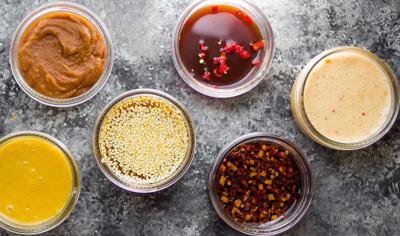
Ketchup, smooth chili sauce and a sauce with seeds may all fit the product name while behaving very differently. Record the temperature, particle size, tendency to separate and time-dependent thickening of the production recipe. A warm sauce may flow easily at startup and slow after standing; another can thin under stirring. Send enough material for steady running, a stop and a restart rather than one small laboratory container.
The stored page lists a horizontal constant-temperature barrel and stirring as relevant features. These devices should be configured around the product, not switched on by habit. Excessive heat can change colour or flavour, while unnecessary stirring can introduce air. The trial record should state the actual product temperature and stirring condition used for every accepted sample.
| Sauce property | Machine consequence | Acceptance evidence |
|---|---|---|
| Smooth, pourable sauce | Cutoff may be clean but dripping can continue after the dose. | Nozzle video and seal-face inspection |
| Thick ketchup | Feed pressure and temperature can change portion repeatability. | Individual volume or mass results after a stop |
| Chili seeds or particulates | Pieces can obstruct a narrow outlet or reach the seal. | Largest-particle review and rejected-sachet samples |
| Separating recipe | The first and last sachets may not have the same composition. | Ingredient distribution check across the run |
Barrel orientation and agitation should follow the recipe
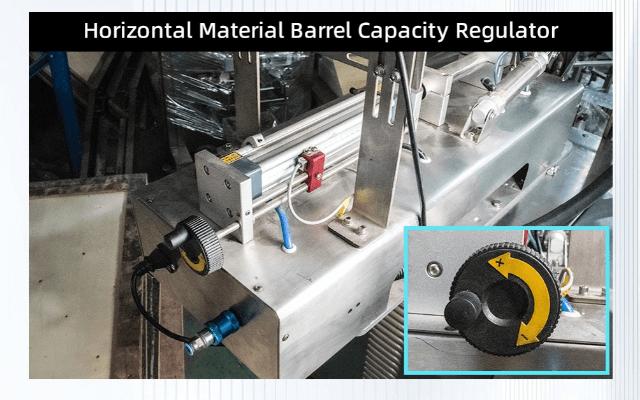
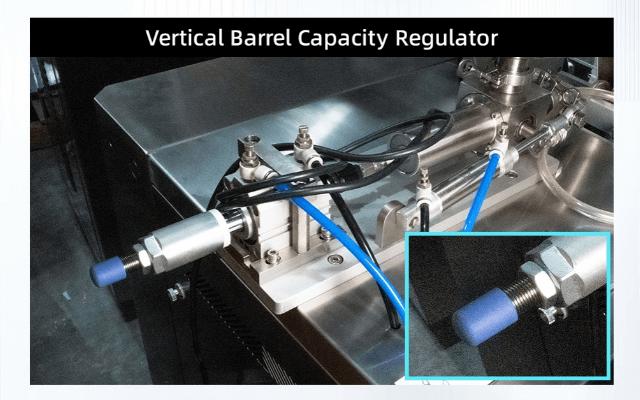
The legacy body distinguishes a horizontal barrel with stirring for thicker sauces from a vertical barrel for products that flow readily. Treat that as a configuration choice requiring confirmation. Review dead zones, outlet height, drainability and access before selecting the vessel. If temperature control is required, identify the medium, set point, alarm response and safe cleaning condition on the final equipment list.
Nozzle cutoff determines whether the seal stays clean
The generic function notes mention volumetric or piston filling, but the stored product fields do not prove which mechanism belongs to the exact delivered unit. Ask the supplier to identify the fitted feed and cutoff system. During testing, watch the end of each dose: a string of ketchup or a delayed drop can land on the film as the transverse seal closes. Evaluate the nozzle at normal speed, after a short pause and after the barrel level changes.
Separate portion error from product loss. A sachet can meet net content while leaving sauce on the nozzle, former or jaw. Record drips, wipe frequency and the number of seals rejected for contamination. If the sauce contains particles, inspect whether the cutoff damages them or traps them at the outlet.
Isolate it and compare both quantity and product stringing with stable production.
Check whether feed behavior shifts between a full vessel and the normal refill point.
Open and inspect samples after sustained production when residue has had time to accumulate.
Use the largest normal inclusion and record blockage, damage or late release.
Film and seal settings must tolerate a wet product path
The stored page records back, three-side and four-side seal choices and a bag window of 30-170 mm long by 30-130 mm wide. Select one construction from the commercial sachet drawing, then provide the intended laminate. Test tracking, heat and pressure with sauce in the machine. A dry empty-bag seal is only a setup check; it does not represent the contaminated condition that drives leakage.
Build the fill study around startup, pause and refill
The summary gives a 3-100 ml customizable range, while the specification line combines 1-100 g and 3-100 ml. Do not treat mass and volume as interchangeable without the sauce density. Define the commercial declaration first, then choose the measurement method. Collect individual sachets after startup, during stable operation, after a pause and around a refill. Report the mean, spread and any rejected dose rather than one favourable sample.
| Stored planning field | Recorded value | How to use it |
|---|---|---|
| Nominal speed | 30-60 bags/min | Confirm accepted filled sachets at the required viscosity |
| Bag dimensions | 30-170 mm long; 30-130 mm wide | Tie each SKU to former, film width and seal layout |
| Machine envelope | 900 x 1100 x 1900 mm; about 300 kg | Add vessel loading, cleaning and service clearance |
| Power and gas entries | Legacy values use questionable magnitude or units | Hold them out of the utility schedule until verified |
Cleaning validation starts where sauce can remain hidden
Inspect joints, valves, the barrel outlet, transfer path, nozzle and splash areas. Ask the operator to empty the machine, remove approved contact parts and show how each hidden surface is reached. Record the cleaning method, inspection points, reassembly check and first released sachet. A clean exterior does not prove that a valve cavity or nozzle seat is free of old sauce.
For a recipe change, include colour, flavour and allergen considerations in the release rule. If a clean-in-place function is proposed, confirm that it belongs to the delivered configuration and covers the complete product path; the generic legacy notes are not enough to establish that feature.
Buyer checks for ketchup and chili sauce sachets
Can water be used for the factory acceptance test?
It can support a leak or control check, but it cannot replace the production sauce for dosing, stringing, particles and cleaning.
Should the barrel always be heated?
No. Temperature and agitation should follow the sauce behavior and product-quality limits recorded for the trial.
Is the fill range a mass range or a volume range?
The stored fields mix grams and millilitres. Define the commercial declaration and sauce density before acceptance.
What causes sauce in the end seal?
Late nozzle cutoff, stringing, splash, an overfilled sachet or insufficient product-fall time can contaminate the seal path.
How is cleaning time compared fairly?
Use the same recipe, residue condition, disassembly scope, inspection points and release rule for each configuration.
Conclusion
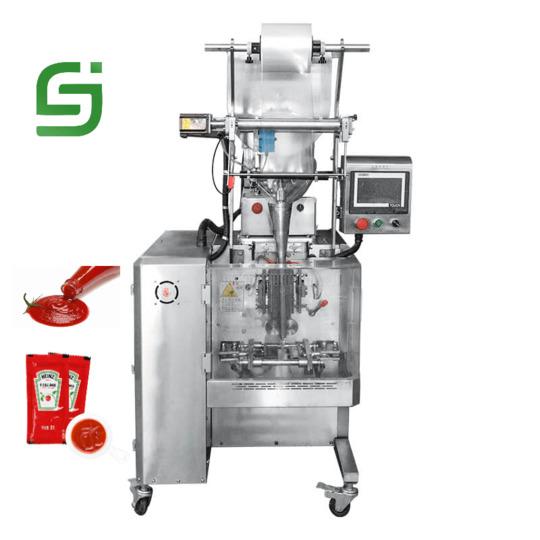
The YS-61J decision should close on a named sauce, processing temperature, feed and cutoff arrangement, sachet drawing, laminate and cleaning release. Review the sauce packaging machine range, then make retained filled samples and product-contact inspection part of the final acceptance record.



 Tel: +8617350750975
 Email: info@vffspackingmachinery.com
 MP/WhatsApp: +8617350750975
 Manufacturer Address:Meixi Road, Tongan District, Xiamen,Fujian,China



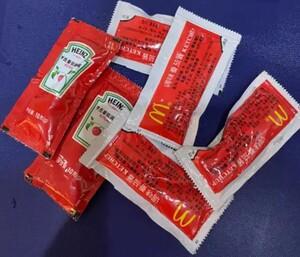
The ketchup packaging is not bad2024-08-09

Trustworthy Performance Dependable operation day in and day out, enhancing our production reliability.2024-08-15
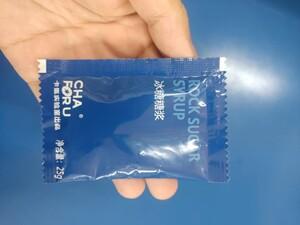
Prompt Customer Support "Their customer service team is responsive and knowledgeable. They helped us set up and troubleshoot efficiently.2024-08-09
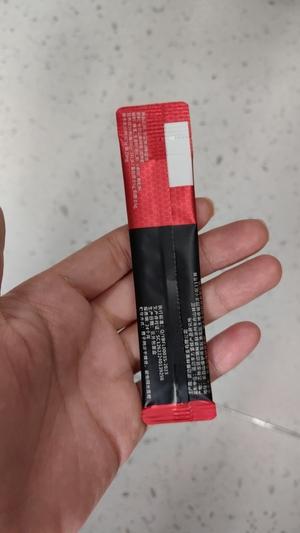
Reliable Durability "Built to last! We've been using it daily for months without any issues. Its robust build gives us peace of mind.2024-08-09