



 Price:

Sugar and salt need separate dosing baselines
| Comparison point | Sugar stick | Salt stick |
|---|---|---|
| Bulk behavior | Crystal grade and humidity can change flow or compaction. | Crystal shape and anti-caking treatment can change apparent density. |
| Residue | Fine dust can collect at the gate, former and ledges. | Residue can attract moisture and increase corrosion risk. |
| Portion study | Test the exact foodservice serving and crystal grade. | Test the declared serving with the production salt lot. |
| Changeover release | Check sweet residue and optional flavour carryover. | Check retained salt at joints and exposed metal surfaces. |
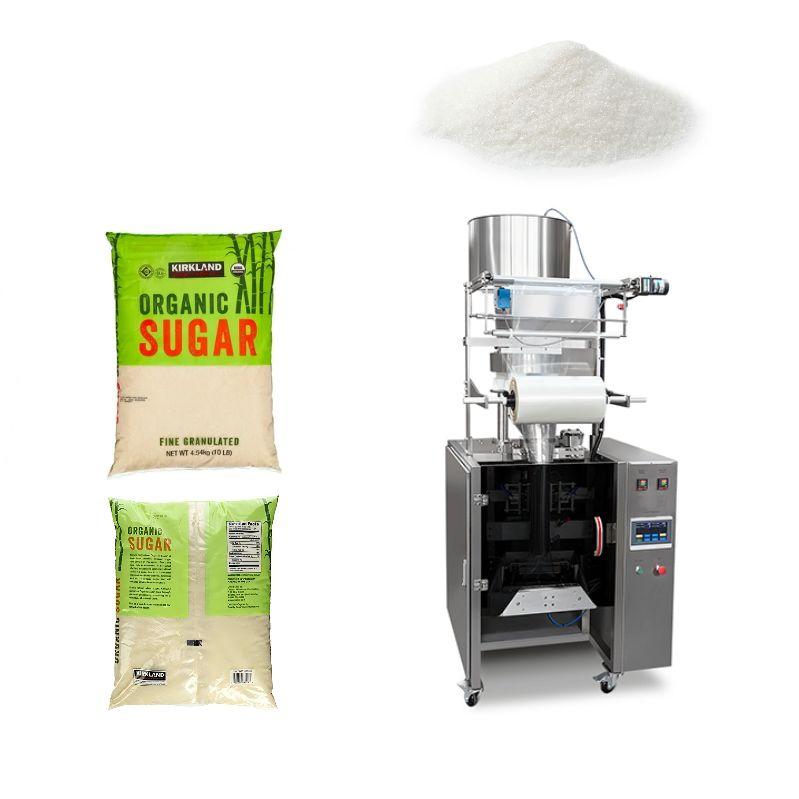
A measuring cup repeats volume rather than mass. The saved features mention cups and multi-head weighers as possible choices, but the stored specification does not prove that both belong to one delivered machine. Identify the fitted dosing system in the quotation. If a cup is used, build one calibration for sugar and another for salt; do not transfer a setting between products because their bulk densities differ.
Use individual weights to expose small-serving variation
The form records 1-100 g while the specification table records 3-100 g. That discrepancy matters most at the lower end, where a small carryover represents a large percentage of the serving. Collect individual packs after startup, during stable production, around a hopper refill, at low level and after a normal stop. Keep phases separate and retain out-of-limit samples with the settings that produced them.
Humidity changes flow before the machine looks abnormal
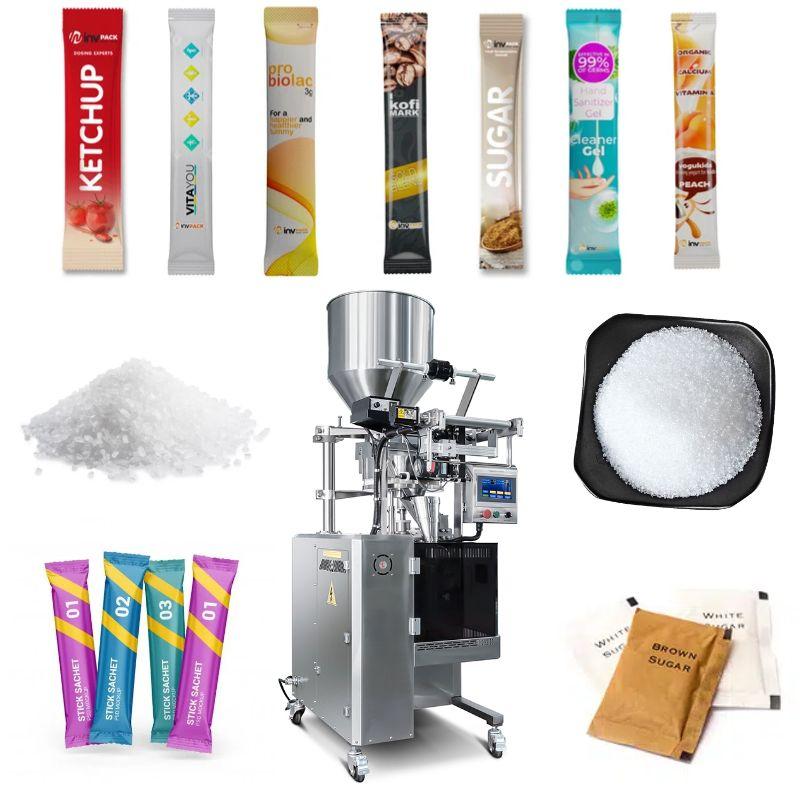
Run the trial with product conditioned to the factory environment, not only a freshly opened dry sample. Fine sugar can compact; salt can absorb moisture and form harder lumps. Watch for bridging, delayed release and residue that falls after the dosing gate closes. Define the hopper cover, refill practice and maximum open exposure time used during the accepted run.
Narrow artwork must match the former and film roll
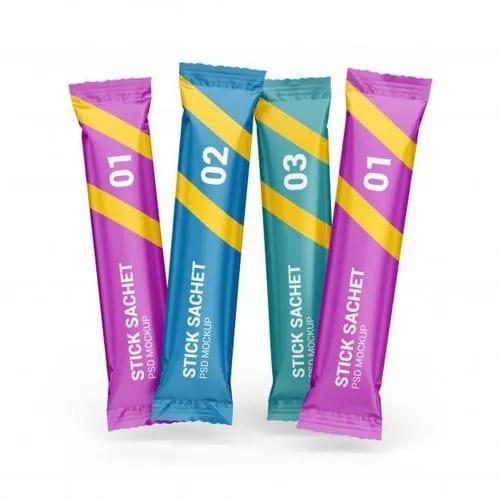
The stored bag window is 30-170 mm long by 30-130 mm wide. Length may be adjusted through the machine setting, while a width change generally requires the correct former and film width. Provide final artwork with eye-mark position, seal allowance, roll direction, tear feature and coding zone. Confirm each commercial width as a separate setup instead of calling the full stored range one instant adjustment.
Count output only after weight and seals pass together
The saved speed field is 30-60 packs per minute. Report the set cycle rate and the accepted discharge count separately. Reject reasons should include weight, trapped crystals, poor registration, weak seals, bad cuts and unreadable codes. Repeat the count after switching from sugar to salt because residue, cup setting and film tension may change during the conversion.
Record crystal grade, supplier lot, condition and target serving for each run.
Retain consecutive individual weights from all transition phases.
Inspect seals, cuts, tear behavior and print registration with production film.
Record emptying, cleaning, new settings and first released packs for the second product.
Salt service requires a corrosion and cleaning plan
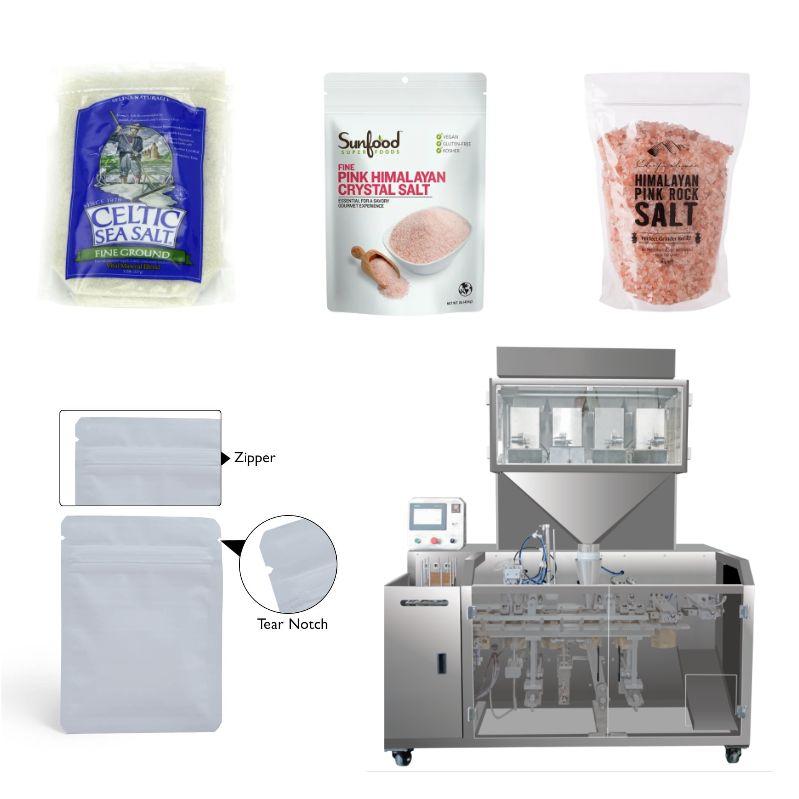
Identify surfaces exposed to salt dust, joints where crystals can remain and the cleaning chemicals allowed on the delivered materials. Cleaning should remove residue without leaving moisture trapped around fasteners or electrical enclosures. Keep a post-clean inspection route and maintenance baseline so early staining or pitting is found before it affects hygiene or film tracking.
The handover file should keep separate recipe sheets for sugar and salt, the corresponding former and roll width, dosing settings, acceptable weight data and labelled finished sticks. Add the permitted cleaning tools and inspection photographs after the first product switch. Record hopper level and room humidity with each retained sample. A later operator can then restore the verified state without guessing which settings belonged to which crystal grade.

Buyer questions for a dual-product stick line
Can one cup setting be used for sugar and salt?
No assumption is safe; calibrate each product because equal volume does not guarantee equal mass.
Which lower fill limit should appear in the order?
Hold the limit until the conflicting 1 g and 3 g records are reconciled by approved evidence.
Does the speed field mean 60 accepted packs per minute?
Not automatically. The accepted count excludes weight, seal, registration, cut and code rejects.
What should change with a new stick width?
Confirm the former, web width, artwork, seal allowance and setup time for each finished drawing.
Why document sugar-to-salt changeover?
The record proves that residue was removed and that the second product returned to its approved dosing and sealing state.
Conclusion
Release the YS-61K only with separate sugar and salt product records, dosing studies, artwork sets and changeover rules. Use the sugar and salt packaging machine category to compare the platform, but keep the disputed lower fill boundary outside the guarantee until one source of truth is approved.

 Tel: +8617350750975
 Email: info@vffspackingmachinery.com
 MP/WhatsApp: +8617350750975
 Manufacturer Address:Meixi Road, Tongan District, Xiamen,Fujian,China