


 Price:

Choose the frame from lane count and sachet width
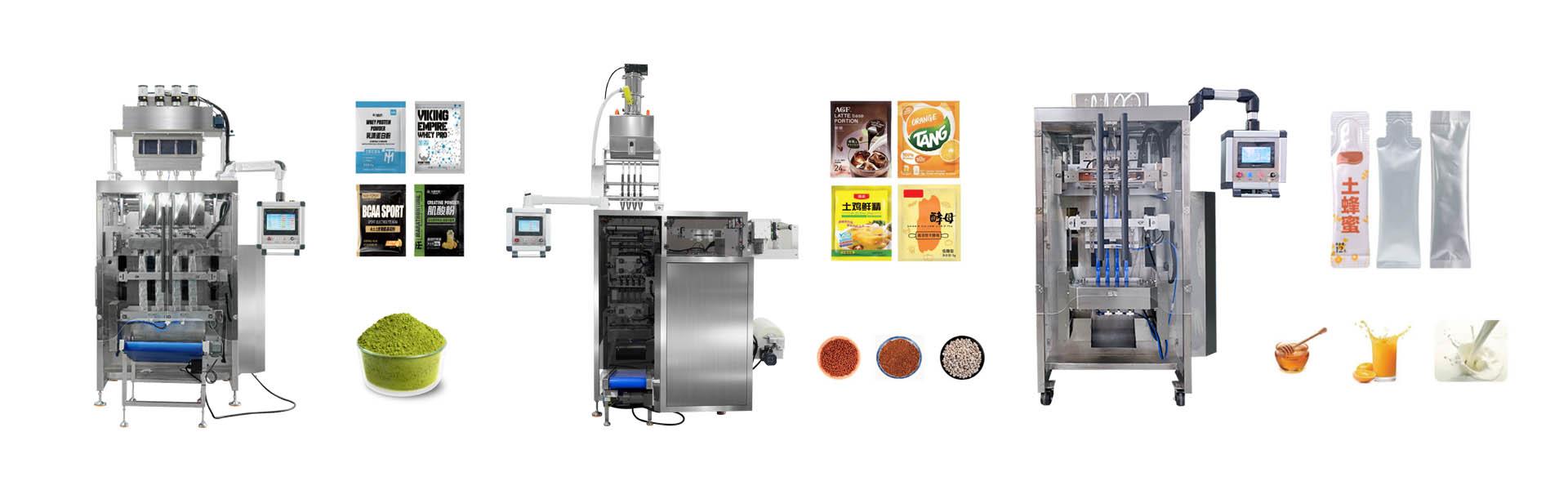
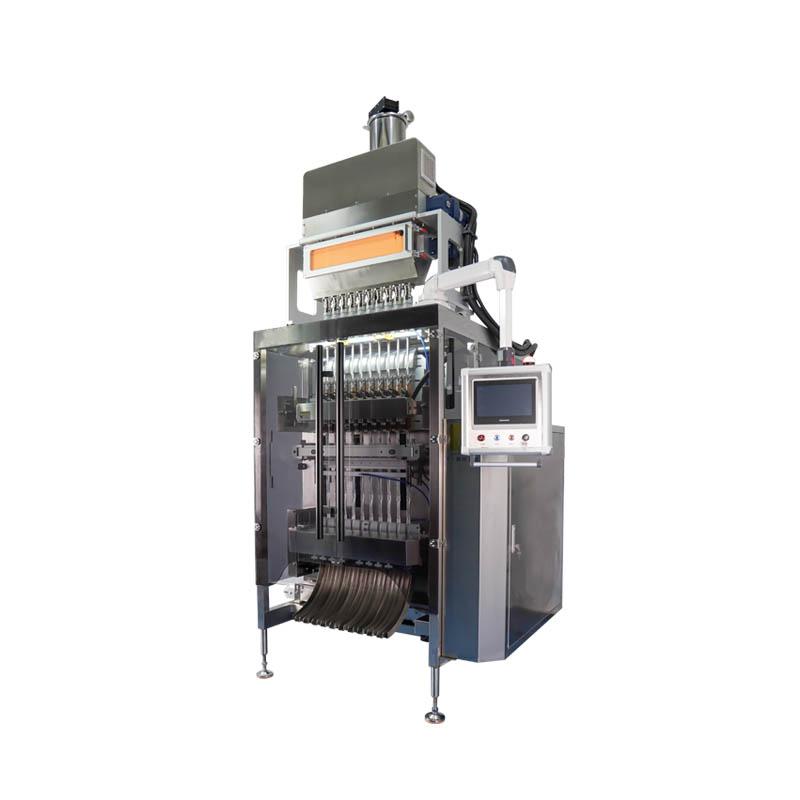
The saved table describes three machine widths covering 2-4, 3-10 and 4-16 lanes, with maximum film widths of 300, 600 and 900 mm. Model strings differ between the summary and table, so this article does not assign a model label to any configuration. Start with the finished sachet width, edge trim, lane spacing and registration marks, then select the frame that can carry the complete web layout.
| Stored configuration | Lane and web evidence | Buyer confirmation |
|---|---|---|
| Narrow frame | 2-4 lanes; film up to 300 mm; bag width 20-70 mm | Final lane pitch and edge trim |
| Medium frame | 3-10 lanes; film up to 600 mm; bag width 20-95 mm | Printed repeat and register-mark strategy |
| Wide frame | 4-16 lanes; film up to 900 mm; bag width 20-105 mm | Web handling, access and floor layout |
| All stored variants | 50-180 mm bag length; back seal | Finished drawing and cut style |
The screw arrangement follows powder behavior
The saved specification lists long screw, short screw and short screw with cup as measuring options. Match the arrangement to bulk density, flow, aeration, dusting and target dose. A free-flowing seasoning and an aerated milk powder should not inherit one screw speed or cutoff. Record the production powder condition and collect individual results by lane rather than pooling all sachets.
Lane balance must be visible in the data
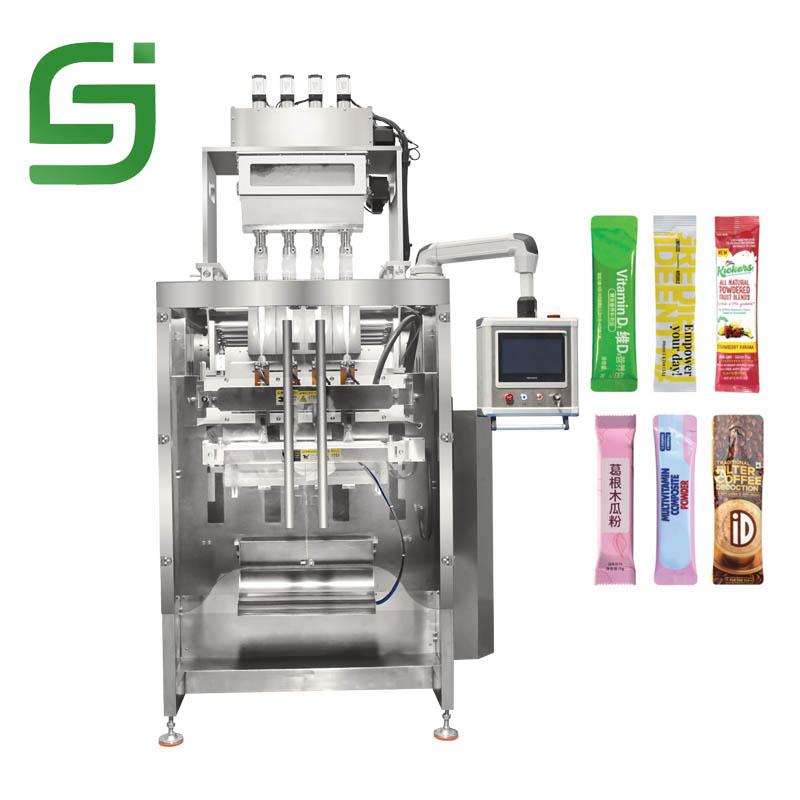
Label every lane and collect consecutive sachets in sequence. Report mean, spread and rejects per lane at startup, stable operation, refill, low hopper and restart. A combined average can hide one underfilling lane and another giving away product. Define who may adjust a single lane and how the machine is requalified after that change.
Keep samples in discharge order with lane number and run phase.
Calculate each lane separately before reviewing the combined total.
Inspect dust, wrinkles and channel leaks across every vertical and transverse seal.
Check straight, zigzag, round or die-cut alignment against the approved drawing.
A wide web needs registration evidence across its full width
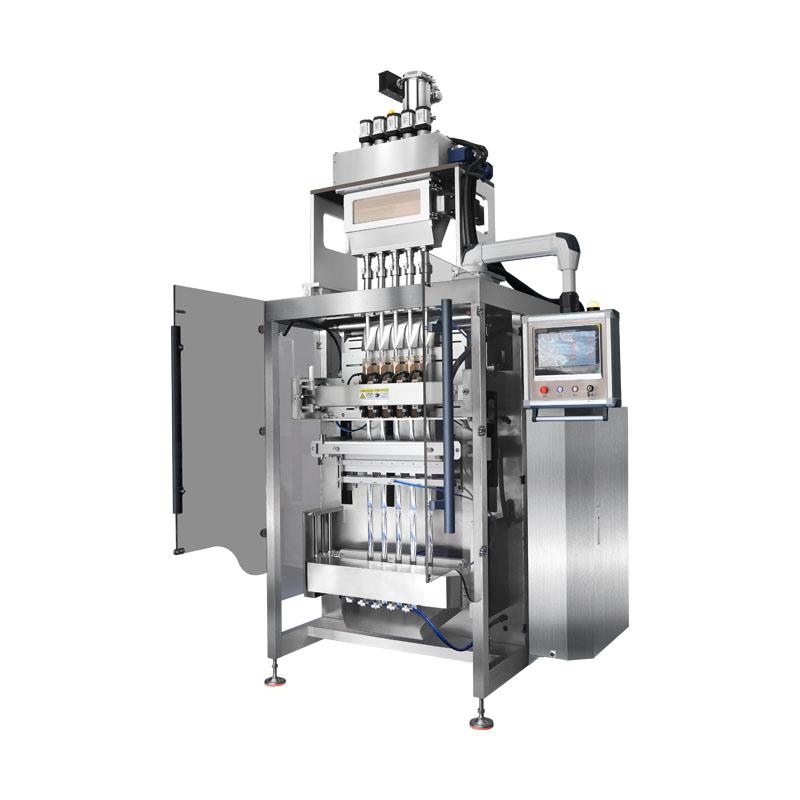
Supply the actual printed web or an approved equivalent with lane repeats, eye marks and roll direction. Observe lateral tracking, tension and registration at both outer lanes as well as the centre. A small skew can create different seal margins from left to right. Record waste during threading, warm-up and roll change instead of reporting only steady production.
Dust control protects seals and later maintenance
Map the powder path from hopper and screw outlets to the forming tubes. Look for airborne dust, late falling material and ledges where residue returns to the web. Seal samples should be opened and inspected after a sustained run, not only after clean startup. Define extraction if required, safe cleaning access and how powder is kept away from drives and electrical enclosures.
Accepted output is a lane-by-lane calculation
The stored rate is 20-40 bags per lane per minute. Record set cycles, active lanes and accepted sachets. Deduct weight, seal, registration, cut and code rejects by lane. A sixteen-lane machine with one unstable lane needs a documented response: stop, isolate, repair or continue under an approved rule. Total output without that decision is not an acceptance result.
Changeover time includes all synchronized lanes
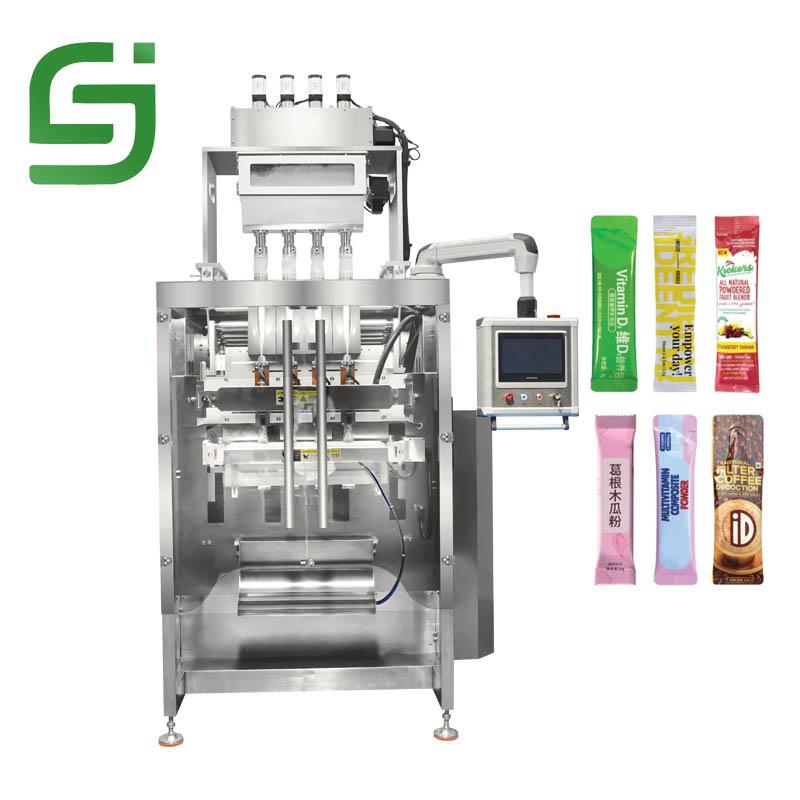
Time product removal, screw or cup changes, web threading, lane alignment, recipe entry, cleaning and the samples required to release every lane. Wider frames can increase access and verification work even when the control recipe loads quickly. Keep the accepted lane settings, powder lot, film lot and labelled samples as the maintenance baseline.
The final record should also identify the selected frame, verified model designation, lane map, screw parts, web drawing, cutting arrangement and utilities. Photograph lane labels and outer-lane registration marks during the accepted run. When output later shifts, these references make it possible to separate powder changes, mechanical wear and web-tracking drift instead of adjusting every lane at once.
Questions for a multi-lane powder acceptance test
Can weights from all lanes be averaged together?
No. Review every lane separately before calculating total accepted output.
How is frame size selected?
Use lane count, finished sachet width, spacing, trim and total printed web width.
Does 40 bags per lane mean accepted production?
Only when each counted sachet passes the agreed weight, seal, register, cut and code rules.
Why avoid the stored model names in the body?
The summary and table use inconsistent strings; the approved quotation should provide the final model identity.
What should be retained after the trial?
Keep lane-labelled sachets, settings, powder and film lots, reject counts and cleaning release evidence.
Conclusion
Choose this platform through a signed lane-and-web matrix, powder-specific measuring arrangement, per-lane data and dust-aware seal inspection. Review the multi-lane packaging machine category, then require the final quotation to reconcile the model designation with the selected frame.



 Tel: +8617350750975
 Email: info@vffspackingmachinery.com
 MP/WhatsApp: +8617350750975
 Manufacturer Address:Meixi Road, Tongan District, Xiamen,Fujian,China