

Hot Keyword:
Author:YISEN Pouch Packing Machine Manufacturer TIME:2024-08-20
A salt packaging machine can sometimes pack other granular products, but compatibility must be established from product behavior, dosing method, hygiene needs, film, and seal performance. Free-flowing sugar or uniform grains may be closer to salt than sticky crystals, dusty seasoning, fragile snacks, or irregular hardware. Changing a product name on the control screen does not make the product path suitable. A responsible conversion starts with samples and ends with a documented trial covering accuracy, flow, cleaning, and finished-pack quality.
Compatibility is more than getting material into a bag. The converted line must feed without repeated bridging, deliver acceptable quantity, keep product away from the seal, make an intact package, clean to the site's standard, and restart predictably. The result also needs to be sustainable across normal variation in incoming material. A short demonstration with an easy sample cannot answer all of those questions.
Write a pass condition for each new product. Include target pack weight, acceptable variation, bag dimensions, film specification, appearance criteria, contamination controls, required coding, and the production period that matters. If the same equipment returns to salt afterward, define how cleanliness will be verified. This converts a broad reuse idea into an operating scope that production and quality staff can evaluate.
The underlying granular packing machine may have useful flexibility, especially when the new material is dry and free-flowing. Even so, feeder geometry and product-contact details are configuration-specific. Confirm the installed equipment rather than assuming that every model sold for granules has the same conversion range.
Salt normally behaves as a granular material, yet grade, moisture, and crystal shape already create differences within salt production. A candidate product should be compared against the actual salt used on the line. Check bulk density, particle-size distribution, angle of repose, tendency to absorb moisture, dust generation, electrostatic behavior, and whether pieces break under vibration or drop impact.
Density affects the amount of material occupying the dosing chamber or weigh bucket. A lighter product can require more volume for the same net weight and may exceed hopper, filler, or bag capacity. An irregular product may settle differently between the start and end of a batch. A fragile item can reach the correct weight while arriving in the pouch visibly damaged. Sticky seasoning granules may coat surfaces that clean salt would leave relatively clear.
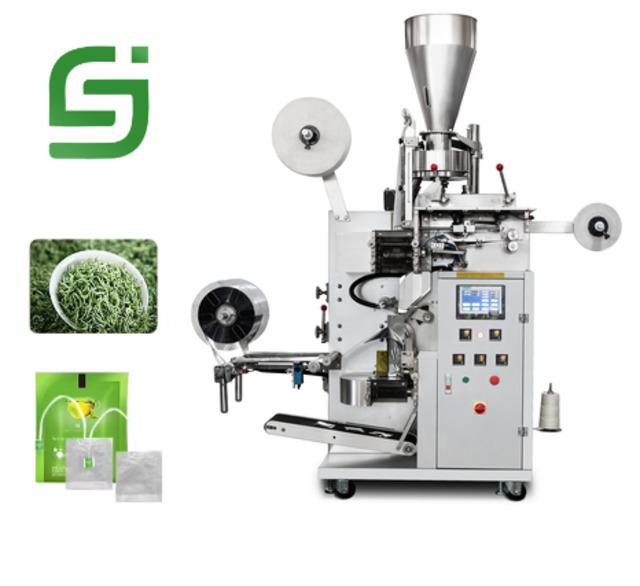
Gather samples from more than one lot when possible. The objective is to find the difficult normal condition, not to certify one convenient bucket of material. Record temperature and humidity if they influence clumping, because a product that runs in a dry trial room may behave differently beside a humid process area.
Salt lines may use weighing or volumetric dosing depending on the application. A weighing system responds to mass, but feed control, resolution, bucket volume, and vibration settings still determine whether it can dose a new product well. A volumetric cup system depends more directly on stable bulk density. When the candidate material compacts or aerates, equal cup volume may not deliver equal weight.
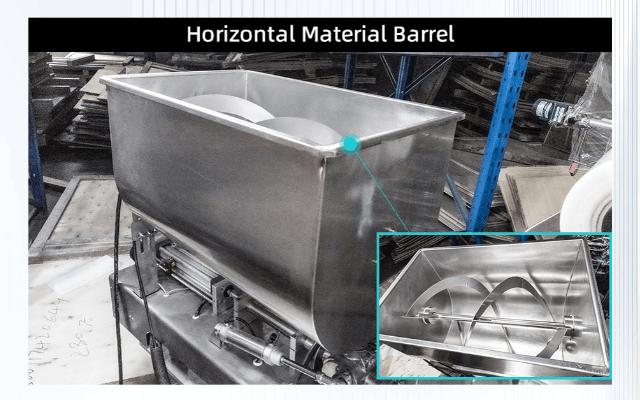
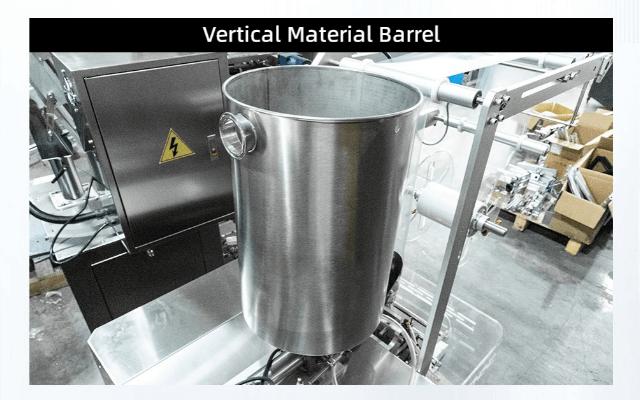
Inspect the entire route from supply hopper to bag. Confirm that the infeed can maintain a consistent level without crushing the new material. Check gates and chutes for trapping points. Ensure the filler can discharge within the timing available to the bagger and that the falling stream does not remain in the seal area. If the product contains large inclusions, the narrowest passage often sets the real limit.
Do not make repeated control adjustments without measuring the reason. Establish a baseline, change one parameter at a time, and weigh a defined sequence of packs. Observe refill and restart conditions separately from steady operation. If stable dosing requires operating at the edge of component travel or timing, a dedicated change part or another filler may be the safer solution.
A machine suitable for food salt is not automatically cleared for every food, chemical, or non-food product. Review construction materials, seals, lubricants near the product zone, and surface access against the new material's safety data and the factory's quality rules. Corrosive ingredients, aggressive cleaners, oils, colors, allergens, and fine dust can create requirements that the previous duty did not have.
Cross-contamination is a central question when products share a line. Trace how residue can remain in hopper seams, feeder pans, bucket joints, discharge chutes, forming tubes, guards, and horizontal frame surfaces. Determine which parts are removable and how they will be inspected before release. Cleaning must be realistic for the planned change frequency; a theoretical process that consumes an entire shift may defeat the economic purpose of sharing equipment.
Non-food conversion needs equal caution. Once a line handles a material that is not compatible with later food use, simple cleaning may not restore the original status. The owner should involve its quality and safety teams before mixing duties, and the supplier should confirm material compatibility rather than offering a blanket approval.
A product change can alter the package even when bag dimensions remain unchanged. Light particles may be carried upward into the seal. Sharp granules can puncture film or interfere with the closing surfaces. Oily seasoning can contaminate the seal band. A bulky product may prevent the bag from presenting flat to the jaws. These are process problems, not simply temperature-setting problems.
Confirm whether the existing film gives the required barrier, strength, and seal behavior for the new product. Packaging material selection belongs to the product owner and film supplier as well as the machinery supplier. Run the intended printed film when checking registration and cut position. Examine top and bottom seals, wrinkles, channels, product entrapment, and the way bags withstand normal downstream handling.
Coding location may also change if the new artwork or bag size changes. Ensure the print area remains flat and readable and that a coder fault is handled correctly by the line. Retain acceptable sample packs as references for future setups.
A controlled changeover should name the shutdown sequence, material removal method, parts to clean or replace, inspection points, recipe selection, first-off checks, and authority to restart. Color-coded or clearly labeled change parts help prevent a salt setup from being mixed with another product's configuration. Settings should be stored only after the trial is accepted.
Operators also need instructions for leftover material. Product trapped in an elevator, hopper, or feeder can contaminate the next run and distort initial weights. Plan recovery or disposal before opening the equipment. After cleaning, make sure all guards, fasteners, and sensors return to their correct positions; hurried reassembly is a common source of startup faults.
| Compatibility question | Low concern | Reason for engineering review |
|---|---|---|
| Product flow | Dry, uniform, freely moving granules | Bridging, dust, stickiness, segregation, or breakage |
| Dosing | Fits filler range with stable feed | Large density shift, oversized pieces, or unstable refill |
| Cleanability | Visible, accessible residue with approved procedure | Allergen, color, oil, corrosive material, or hidden retention |
| Package | Existing film and size are already qualified | New barrier, sharp product, seal contamination, or bulky fill |
| Change frequency | Long campaigns with planned sanitation | Frequent switches that create excessive downtime or risk |
Begin the trial with agreed product and packaging material quantities. Document the installed change parts and baseline settings. Check several first-off packs before increasing the run length. During the trial, sample weights in sequence rather than selecting only good-looking bags. Watch hopper level, feeder rhythm, product fall, seal cleanliness, bag shape, and discharge stability.
Introduce events that normal production will experience. Allow the supply level to fall and refill it. Stop and restart the machine. Remove a routine blockage according to the proposed method. These events reveal whether the process is robust or depends on constant expert intervention. Record rejected packs and their cause instead of reporting only gross machine cycles.
After the run, perform the proposed cleanout and inspect retention points. The trial is incomplete if the new product packages well but cannot be removed safely before salt returns. Photograph or list the accepted setup, and identify any limitations that remain open.
Sharing a line can make good use of installed equipment, but the benefit must include more than avoiding a new purchase. Count engineering changes, parts, trial materials, cleaning labor, lost production during changeover, storage for format sets, and the risk of scheduling two products on one asset. A low-volume seasonal product may fit well; frequent switches between incompatible materials may not.
Approve the conversion when the new duty sits comfortably inside the machine's mechanical range, passes quality checks, and has a manageable changeover. Consider dedicated equipment when hygiene separation is difficult, the filler is poorly matched, package demands conflict, or one product's schedule would repeatedly interrupt the other.
Document the final decision by product code and pack format. "Other granules approved" is too broad. Future products should return to the same comparison process, because similarity in appearance does not establish equivalent behavior.
Can the machine switch from salt to sugar without hardware changes?
It may be possible for compatible grades, but density, flow, hygiene, and dosing trials are still required. The installed filler and the factory's product-separation rules determine the actual work.
Is a new control recipe enough for a different granule?
A recipe can restore timing and feeder settings. It cannot change hopper volume, passage size, contact materials, or cleanability, so physical suitability must be checked first.
Can the same film be used for every dry product?
No. Barrier, strength, sealant layer, artwork, and product interaction are package-specific. The intended film should be qualified with the new contents.
What sample should be sent for a supplier test?
Send a representative production sample, preferably including the lot most likely to bridge, dust, break, or vary in density, together with target weight and bag details.
When is a separate machine preferable?
A dedicated line is easier to justify when contamination control is difficult, changeovers are frequent, the existing filler is unsuitable, or shared capacity creates a production bottleneck.
Using salt equipment for another product is a technical conversion, not a menu selection. Compare the material with the actual salt duty, verify the filler and product path, reassess contact and package requirements, and test the full operating cycle including cleanup. When those checks produce stable packs and a workable changeover, shared use can be practical. When they expose fundamental conflicts, defining the limit early protects both product quality and production time.

YISEN MACHINERY - The ONE-STOP VFFS PACKING MACHINE SOLUTION SUPPLIER
 Tel: +8617350750975
 Email: info@vffspackingmachinery.com
 MP/WhatsApp: +8617350750975
 Manufacturer Address:Meixi Road, Tongan District, Xiamen,Fujian,China