

Hot Keyword:
Author:YISEN Pouch Packing Machine Manufacturer TIME:2024-10-18
A pre-made bag packaging line automates the handling of pouches that have already been formed by a converter. Its value comes from coordinating pouch pickup, opening, filling, cleaning of the closure area, sealing, coding, inspection, and discharge without damaging the package. Buyers should judge the whole operating sequence with their actual product and pouch, because a glossy bag and a fast empty-machine cycle reveal little about dependable accepted output.
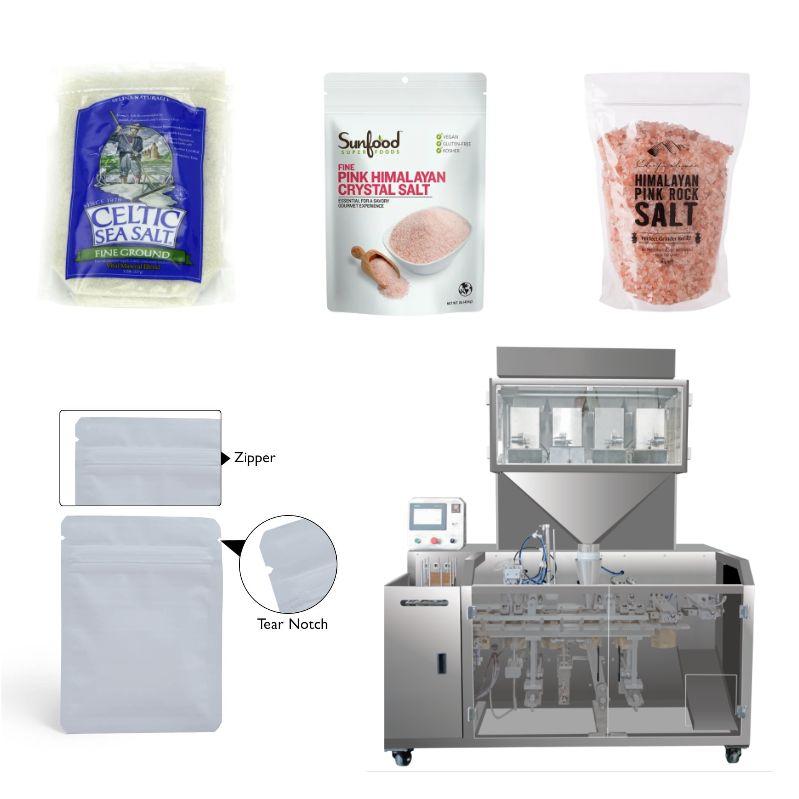
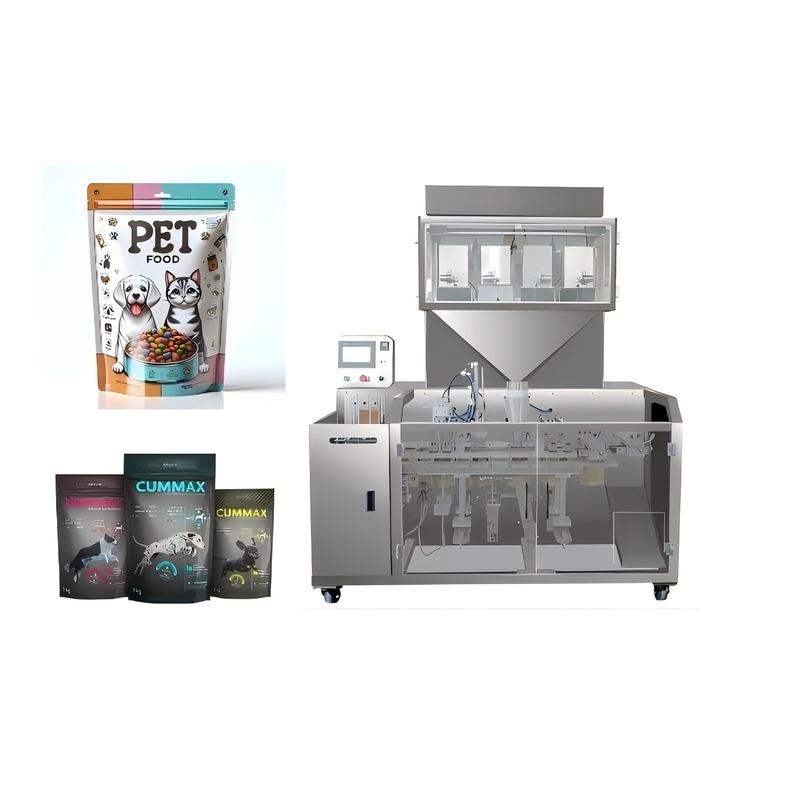
Most systems begin with a magazine or cassette holding stacks of empty pouches. A pickup device separates one package, transfers it to grippers, and presents it to an opening station. Sensors confirm that a pouch is present and sufficiently open before filling is permitted. Subsequent stations may spread the mouth, dispense product, settle or compact the contents, clear the closure zone, close a zipper, heat-seal the top, cool the seal, print or verify a code, and discharge the finished pack.
Rotary machines place these functions around an indexing carousel, while horizontal arrangements move pouches along a straight path. The layout changes access and footprint, but the control principle is similar: an incomplete step must prevent the next irreversible action. If a bag is missing or fails to open, the filler should withhold product. Reject handling should distinguish an empty pouch fault from a filled package that requires controlled recovery.
Ask for a station diagram showing each confirmation sensor, adjustment point, reject route, and operator access area. That drawing makes scope gaps visible. It also helps maintenance teams understand whether adding gas flushing, a zipper closer, a second seal, or an inspection device will require an unused station or a mechanical redesign.
Premade bags vary in width, height, gusset depth, zipper position, corner shape, hang hole, spout, laminate stiffness, surface friction, and sealant layer. Manufacturing tolerances also matter. A gripper that holds a stiff three-side-seal pouch reliably may distort a soft stand-up bag, while a narrow zipper area may leave too little gripping or sealing clearance. The machine range printed in a brochure is only a dimensional envelope, not proof that every pouch inside it will run.
Collect samples from normal production lots rather than using handmade prototypes alone. Measure critical dimensions and compare the tightest and loosest examples. Check whether bags block together, curl after storage, attract dust, or change friction under local humidity. Printed registration, matte coatings, metallized layers, and transparent windows can affect optical sensors. A converter should identify the recommended seal window and provide material construction information appropriate to the product.
During a trial, count double picks, dropped bags, failed openings, zipper damage, skew, wrinkles, and seal contamination. Run the magazine from full to its normal refill point because stack pressure changes pickup behavior. Refill while the machine operates if that is the intended method. A stable pouch supply often contributes more to useful output than a higher advertised index rate.
Vacuum cups, mechanical separators, air assist, and guides work together to isolate one pouch. Their settings must suit the package surface and stiffness. Too little vacuum causes misses; excessive force can mark a delicate web or pull two bags at once. Cups and filters also degrade as product dust accumulates, so access for inspection and replacement is part of the operating design.
Opening may use opposing suction cups, air jets, spreaders, or a combination. The machine should confirm an opening wide enough for the filling nozzle, not merely detect that a pouch exists. For zipper pouches, the opening mechanism must separate the zipper without tearing its profile. Gussets should be expanded consistently so the package develops its intended volume and base shape.
Grippers carry the pouch through multiple accelerations. Their pressure and position must secure the side margins while leaving the top accessible. Operators need repeatable scales or recipe settings for width changes. A trial should include stops and restarts because pouches held during a pause can slip, cool, or remain under heat longer than normal. Recovery instructions should identify which partly processed bags may continue and which must be removed.
The bag handler does not determine fill accuracy by itself. Multihead weighers commonly serve free-flowing snacks and granules; linear scales suit some lower-speed products; augers meter powders; pumps handle sauces and liquids; and counters place discrete pieces. Each filler needs a controlled product supply, enough time to complete its cycle, and a discharge path that enters the open pouch without striking the zipper or sidewall.
Product properties govern the transition. Fragile pieces need low drop height and gentle chutes. Fine powder benefits from a filling tube and dust control. Sticky food may require a cut-off nozzle and heated or jacketed path. Liquids can splash when the bag accelerates too soon. Bulky pieces can bridge at a narrow mouth even when target weight is correct. Test worst-case particle size, viscosity, temperature, and inclusion content.
Weight checks should use ordered samples from startup, steady production, hopper replenishment, low level, planned stops, and restart. Record both individual values and average giveaway. If a checkweigher provides feedback, establish adjustment limits and rules for uncertain packs. Closed-loop correction cannot compensate for a bag that is only partly open, a leaking nozzle, or product hanging in a transfer chute.

A good top seal requires a flat, correctly positioned laminate, a clean sealant interface, adequate pressure, controlled temperature, and enough dwell and cooling for the material. Product in the closure area is one of the main risks on premade pouches. Crumbs, powder, oil, or sauce can reduce seal strength or create a leak channel that is difficult to see.
Settling devices, bag vibration, mouth spreaders, extraction, wipe systems, and nozzle cut-off can help, but each must be proven with the product. A zipper should be fully closed before the final header seal where the package design requires it. Heat jaws must contact the intended zone without crushing the zipper, wrinkling a gusset, or covering consumer tear features. Cooling support can reduce distortion before discharge.
Specify test methods with the packaging and quality teams. Depending on the pack, checks may include visual examination, dimensional position, peel measurement, burst or leak testing, and retention after distribution simulation. Sample across warmup, speed changes, reel or pouch-lot changes, and restart. Record jaw temperature by channel, dwell, pressure setting, pouch lot, and defect location so adjustments have traceable causes.
Changing pouch width can involve the magazine, pickup position, gripper spacing, opening devices, filling nozzle, settling mechanism, zipper closer, seal jaws, code position, and discharge guides. A stored recipe reduces repeated entry but does not move hardware or verify that a part was installed correctly. Use labeled components, captive fasteners where practical, scales, gauges, and a documented first-pack approval sequence.
Product-contact parts must be removable or cleanable to the standard required by the application. Residue can remain inside hoppers, filler tubes, pump valves, auger flights, chute joints, guards, and extraction lines. Review drainability for liquids, dry-cleaning access for powders, and allergen or flavor change requirements. A rapid changeover is not complete until cleaning, reassembly, inspection, line clearance, and quality release are finished.
Time a full change with normal staffing and tools rather than accepting a demonstration performed by specialists on a clean machine. Record hands-on time, waiting, parts handling, verification, and the quantity of startup waste. Maintenance access should allow cup replacement, gripper inspection, heater service, sensor cleaning, and lubrication without dismantling unrelated stations.
The line may require electrical power, compressed air, vacuum, extraction, gas, hot water, chilled water, or product heating. Confirm pressure, flow, quality, connection points, and peak demand, not just nominal supply. Unstable air pressure can affect pickup and grippers. A gas-flush claim should include flow control and a method for verifying residual oxygen when that property matters to shelf life.
Upstream and downstream equipment need defined signals for ready, run, starved, blocked, fault, and emergency stop. When a checkweigher or metal detector rejects a pack, the reject device should be secure, monitored, and accessible for reconciliation. Printers need code data, verification, and a response to unreadable or missing marks. The machine should preserve batch and alarm records required by the operation.
Layout affects performance. Provide space for loading pouches, removing contact parts, cleaning, opening electrical enclosures, and reaching reject bins. Ensure a full bag can transfer without falling, folding, or accumulating against the next conveyor. The guarding concept should support necessary access while preventing exposure to grippers, jaws, and moving stations.
Begin with a matrix of products, pouch sizes, target fills, expected changes, output demand, seal tests, coding, inspection, utilities, and cleaning boundaries. Identify a challenging representative set rather than testing only the easiest combination. The selected pre-made bag packaging machine should then run with production material and approved pouch lots long enough to expose replenishment effects, buildup, heat stabilization, and routine intervention.
| Decision area | Trial question | Record to retain |
|---|---|---|
| Pouch handling | Does pickup remain stable as the magazine level changes? | Misses, doubles, opening faults, pouch lot |
| Filling | Can the worst product enter without spill or damage? | Ordered weights, loss, damaged-piece count |
| Closure | Are zipper and seal clean at target output? | Seal tests, defect map, machine settings |
| Changeover | Can operators reproduce setup and release? | Elapsed time, parts list, first-pack checks |
| Integration | Do faults stop and recover in a controlled sequence? | Alarm test, rejects, restart observations |
Calculate accepted packs over occupied production time, not empty cycles per minute. Include changeover, refilling, cleaning, minor stops, quality checks, and planned maintenance in the capacity model. Retain samples and raw observations from the factory test, then repeat critical tests after installation with local utilities and trained operators. Commercial comparison becomes meaningful when every supplier is measured against the same package and acceptance conditions.
What products can a premade pouch machine pack?
The bag handler can be paired with weighers, augers, pumps, counters, or other fillers. Suitability depends on product flow, bag opening, contamination risk, cleaning needs, and the tested dosing system.
Are rotary machines always faster than horizontal machines?
No. Useful output depends on pouch pickup, fill time, sealing, package size, interventions, and downstream capacity. Layout alone does not establish accepted speed.
Can one machine run both zipper and plain pouches?
Often it can when the size range and station equipment support both, but zipper opening, closing, gripping margins, and seal positions must be tested for each design.
How should quoted speed be evaluated?
Request a sustained run using production product and approved pouches. Count accepted packages and document stops, defects, refills, and operator actions.
What information should be sent to a supplier?
Provide pouch drawings and samples, laminate details, products and variations, fill targets, output, utilities, closure tests, coding, inspection, cleaning requirements, and layout constraints.
Premade pouch automation is effective when every station protects the bag, product, closure, and production record. The strongest advantages are flexible presentation, reduced manual handling, controlled filling, and repeatable sealing, but only when package tolerances and product behavior are qualified together. A documented trial, realistic changeover study, and clear interface scope turn a machine comparison into an engineering decision based on accepted output and maintainable operation.

YISEN MACHINERY - The ONE-STOP VFFS PACKING MACHINE SOLUTION SUPPLIER
 Tel: +8617350750975
 Email: info@vffspackingmachinery.com
 MP/WhatsApp: +8617350750975
 Manufacturer Address:Meixi Road, Tongan District, Xiamen,Fujian,China