

Hot Keyword:
Author:YISEN Pouch Packing Machine Manufacturer TIME:2026-10-07
Choose an integrated tea bag making machine when one supplier can demonstrate the complete inner-bag-to-envelope sequence for your approved pack. Consider separate outer wrapping when retaining an existing bag maker or separating production campaigns matters, but only after transfer, temporary storage, and stop responses are defined. The deciding issue is who controls the handoff between a finished inner bag and its envelope.
This comparison starts after the business has decided that each tea bag needs an outer envelope. Keep the finished pack drawing fixed while suppliers propose arrangements. Otherwise, a quotation can appear easier to integrate simply because it changes the bag orientation, attachment position, or envelope size that the customer expects.
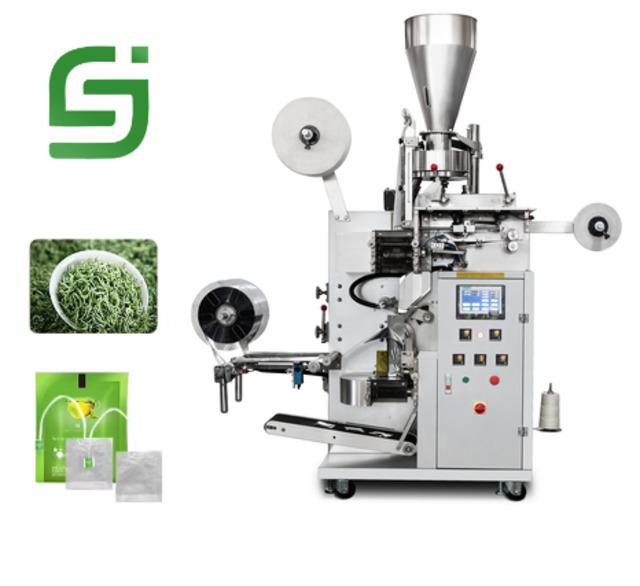
There are two useful references in the VFFS Packaging Machinery range. The YS-169 page describes inner and outer bags within a synchronized machine. The YS-ZF90 page discusses combination with downstream outer packing equipment. These establish possible architectures, not proof that any existing bag maker accepts any separate wrapper. A proposed connection needs its own equipment list and transfer trial.
Ask the supplier to mark the point where the inner bag is complete and the point where it enters the envelope. Everything between those marks belongs in the quotation: product support, orientation, sensing, temporary accumulation, and any operator handling. An unexplained gap on the layout is an unresolved purchase item, even when both machines have impressive individual demonstrations.
A wrapper receives a physical object, not the bag maker's nominal output figure. Describe the filled bag's dimensions, thickness, flexibility, and preferred leading edge. Where an attachment is already specified, record its resting position as a transfer constraint. The choice of attachment itself belongs to the finished pack specification.
For an integrated machine, request a demonstration of the internal transfer using the commercial bag. For separate equipment, require both suppliers to agree on discharge height, entry height, product spacing, and how orientation is preserved or corrected. Ask whether the proposed receiving system takes individual bags directly or requires a prepared stack or magazine.
Watch bags that arrive slightly skewed, after a pause, or near the end of a feed batch. The objective is to see where the supplier's arrangement accepts, corrects, or rejects them. Do not authorize improvised handling during a demonstration to stand in for the transfer device being purchased. Record any temporary operator assistance so that it cannot disappear from the final staffing discussion.
The distinction between integrated and separate equipment becomes useful when it changes a responsibility or operating condition. Complete the following comparison with the proposed equipment, rather than treating either column as a standard feature list.
| Purchase issue | Integrated inner and outer machine | Separate envelope wrapper |
|---|---|---|
| Bag delivery | Confirm the internal transfer and accessible inspection points. | Identify the supplied infeed, orientation method, and physical connection. |
| Envelope roll change | Demonstrate what happens to bags already in the sequence. | Specify whether upstream bags stop, accumulate, or enter approved containers. |
| Temporary storage | Ask whether any accumulation exists inside the quoted arrangement. | Name the buffer or handling process and its permitted contents. |
| Restart ownership | Assign one supplier to restore the full nested-pack sequence. | Agree who validates signals and transfer after either machine restarts. |
| Later modification | Obtain the limits of the delivered internal arrangement. | Document interfaces that must remain valid when either machine changes. |
A blank cell is more informative than an assumed benefit. It shows where engineering work, hardware, or operating labor has not yet been allocated. Ask for a revised quotation when the proposed solution changes the purchase boundary.
Compare responsibility during installation as well as during normal operation. For example, one supplier may provide the connecting conveyor while another adjusts the wrapper infeed. The contract should say who confirms that those two pieces work together, who attends the combined trial, and who supplies a replacement guide if the delivered bag does not follow the expected path.
Buffering may mean a controlled conveyor, a magazine, or approved containers handled between separate operations. These arrangements have different implications. A space on the floor does not establish that filled filter bags can be stored there without damage, mix-ups, or an unacceptable waiting period.
State which interruption the buffer is intended to absorb. An envelope roll replacement is different from a prolonged wrapper repair. Ask the supplier how incoming bags remain oriented, how the oldest bags leave first where required, and how the system responds when the available space is full. Agree on what happens to bags left inside at the end of a campaign.
The buyer should set any permitted waiting condition through its own product and quality review. The machine supplier should demonstrate that the proposed handling arrangement respects it. Do not buy a larger buffer as a substitute for resolving a transfer fault: repeatedly storing bags that cannot enter the wrapper only postpones the same problem.
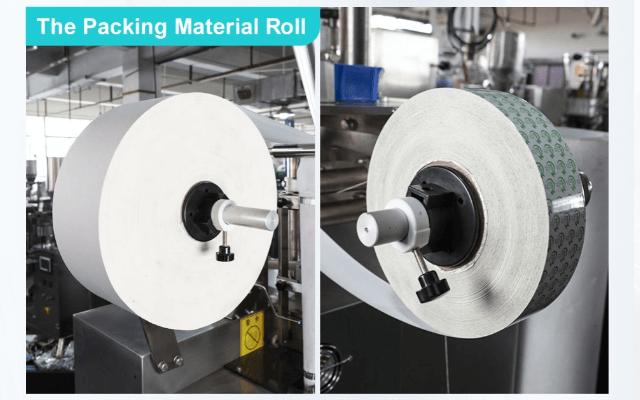
Walk through a normal envelope roll change, a missing inner bag, and a wrapper fault. For each event, have the supplier explain which stations stop, which continue, and where unfinished packs remain. This is an operating description for review, not an instruction to alter machine safety controls.
Separate frames do not automatically provide independent running. The upstream bag maker may have nowhere to discharge safely when the wrapper pauses. Conversely, an integrated arrangement may have a defined recovery sequence that suits the buyer's campaign. The relevant question is whether the proposed response preserves usable bags and allows operators to identify what needs attention.
Include restart in the demonstration. Observe whether bags waiting at the boundary are removed, checked, or returned through a specified recovery path. Ask who resolves a repeated problem if the bag maker reports that it delivered correctly while the wrapper reports an invalid arrival. The quotation should name an accountable integrator before this disagreement occurs on the factory floor.
For a staged retrofit, provide the machine identity, current bag samples, available drawings, and a recording of its normal discharge. Measure the surrounding access space and identify equipment that cannot move. A photograph alone will not establish the location, timing, or consistency of the proposed interface.
Request a list of alterations to the existing machine, including any controls work, guarding changes, mounting points, or replacement discharge components. Qualified personnel should assess those changes and their effect on the original equipment. Clarify whether the existing supplier supports the modified arrangement and who maintains the interface documentation afterward.
Make installation sequencing part of the proposal. If inner-bag production must continue before the wrapper is available, establish the temporary handling process and how it will be retired. If the original discharge cannot support the proposed infeed, resolve that limitation before ordering the wrapper. Public descriptions of downstream combination are not a retrofit compatibility certificate.
Compare layouts with roll loading, access doors, material replenishment, and removal of rejected or unfinished packs shown. Separate wrapping can create a handling route between operations; an integrated machine still needs access to both packaging paths. Neither arrangement can be assessed solely by adding the dimensions of the frames.
Ask operators to describe how they would replenish the envelope roll while another person attends to the tea bag section. Where containers are proposed, include their waiting and return locations. Where a conveyor is proposed, check access around its transfer points. The layout should not depend on someone repeatedly lifting bags over a guard or crossing an active replenishment route.
If the two operations will run in different rooms or shifts, ask how inner bags are presented to the wrapper at the start of work. Receiving bags from a container is a different task from accepting a regular stream directly from a bag maker. The proposed labor, infeed hardware, and available staging area should reflect that actual arrangement.
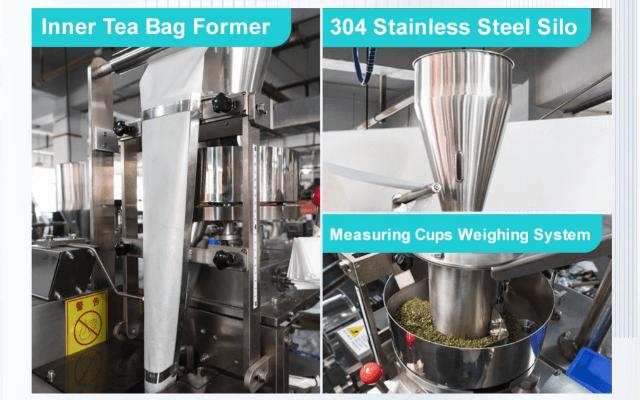
Attach a short interface schedule to the order. It should identify the approved bag and envelope drawings, transfer equipment, accumulation arrangement, normal stop response, and responsible supplier. List items supplied by the buyer separately from items included by each machinery supplier.
Use the tea bag packaging machine range to identify relevant starting configurations, then ask for the proposed arrangement to be demonstrated as a connected sequence. Separate demonstrations do not settle whether bags move reliably between the quoted machines. Retain a layout revision and finished samples associated with the demonstration.
For final acceptance, choose interruptions that expose the proposed boundary: a normal wrapper pause, a full accumulation point if fitted, and the return to complete enveloped packs. The result should establish who can restore the agreed operation and what unresolved changes remain. Avoid releasing the interface simply because both individual machines can make acceptable samples when operated alone.
Keep the purchase drawings and interface schedule together when later modifications are proposed. Replacing a discharge guide or changing the receiving pocket can affect the other machine even if its settings remain untouched. Require the relevant suppliers to review that connection before the modified configuration returns to production.
Can a separate wrapper be ordered before surveying the current bag maker?No. Discharge geometry, bag condition, receiving method, and any control changes need review first. A supplier may quote a preliminary concept, but the purchased connection should follow measured interfaces and representative bags.
Does separate wrapping let the bag maker run through every wrapper stop?Only if the approved handling or accumulation arrangement permits it. Its capacity, full condition, and acceptable waiting time set the practical limit. Separate frames alone do not establish continued production.
Should one supplier own the connection when two suppliers provide equipment?Assign an accountable party for the complete interface and agree on the other supplier's obligations. Otherwise, a transfer failure can remain unresolved even when each machine meets its individual purchase specification.
Can an integrated configuration be selected from the YS-169 page alone?The page provides a relevant inner-and-outer reference. The buyer still needs confirmation of the commercial nested pack, supplied transfer arrangement, and recovery behavior. It does not establish compatibility with a different pyramid bag maker.
The stronger proposal makes the space between inner-bag completion and envelope entry fully understandable. Choose integration when that complete sequence fits the pack and operating plan. Choose separate wrapping when the retained equipment or staged process justifies it and the interface is demonstrably workable. Before signing, remove every unassigned transfer, storage, and restart responsibility from the layout and purchase schedule.

YISEN MACHINERY - The ONE-STOP VFFS PACKING MACHINE SOLUTION SUPPLIER
 Tel: +8617350750975
 Email: info@vffspackingmachinery.com
 MP/WhatsApp: +8617350750975
 Manufacturer Address:Meixi Road, Tongan District, Xiamen,Fujian,China