

Hot Keyword:
Author:YISEN Pouch Packing Machine Manufacturer TIME:2026-10-16
Specify Tea Bag Making Machine discharge by defining the finished pack's orientation, attachment position, exit height, supporting surfaces, and route into the proposed cartoner feed. Put those conditions on a shared drawing and test them with actual bags, including downstream stops and rejected transfers. Confirm separately who supplies the receiving equipment; a tea machine photograph does not establish an included cartoner.
Begin with a representative finished pack placed beside the proposed receiving pocket, tray, or magazine. Specify whether that receiver takes exposed filter bags, individual enveloped bags, or a prepared group. These objects occupy different spaces and can require different handling. Define the configuration being purchased before discussing the connection.
The official YS-169 page provides inner-and-outer-bag context, including thread, label, transfer, and finished-envelope checks. The YS-ZF90 pages provide pyramid and rectangular filter-bag context. They help identify possible outgoing objects, but do not verify a particular cartoner, carton feeder, or automatic loading arrangement. Any such equipment needs its own scope confirmation.
Describe the filled pack as it leaves the machine, including its preferred leading edge, face, thickness variation, and resting attachment position. For a pyramid bag, show how it naturally sits rather than drawing it as a rigid rectangle. For an envelope, distinguish the envelope edge from any enclosed loose attachment. The carton-feed supplier should acknowledge that exact incoming condition.
Request a common layout showing the last supported position inside the bag-machine discharge and the first controlled position in the receiving equipment. Mark both heights from an agreed floor reference, the direction of travel, the support edges, and the receiving opening. Dimensions should come from the quoted configuration or a measured survey, not from a product image.
Include the path available to the bag between those positions. A receiver can fit beside the machine while a frame member, guide, or access door blocks the actual approach. Show the space occupied by protruding tags and loose string as well as the bag body. Where the transfer bends or changes level, identify the component responsible for keeping the pack presented correctly.
Add the normal accessible route for inspection, cleaning, and removal of stopped product. Confirm access with the intended supports and surrounding equipment drawn in place. The receiving module should not require routine collection through an inaccessible gap. Both suppliers should refer to the same drawing revision when they approve the mechanical connection and its service access.
Follow the underside of a real pack through every support transition. Identify where it moves between belts, onto a tray, across a guide edge, or into a pocket. A bag body can pass a transition while its tag remains behind. A flexible bag can also change shape as support ends, so an empty-pack demonstration may miss the loaded condition.
Have the machinery suppliers agree the permitted gap, vertical difference, and any drop distance for the commercial pack. There is no universal dimension to insert into this specification. If the proposal uses a gravity drop, specify its landing surface and the presentation that must result. If the proposal retains continuous support, show how the attachment travels with the bag.
Use samples spanning the expected filled thickness and shape variation. Observe whether they tip, bridge, fold, or arrive with an edge outside the receiving guide. Compare the proposed transfer with a directly inspected reference sample to distinguish existing pack features from transfer damage. A support change should be accepted only when the resulting pack remains suitable for the agreed carton feed.
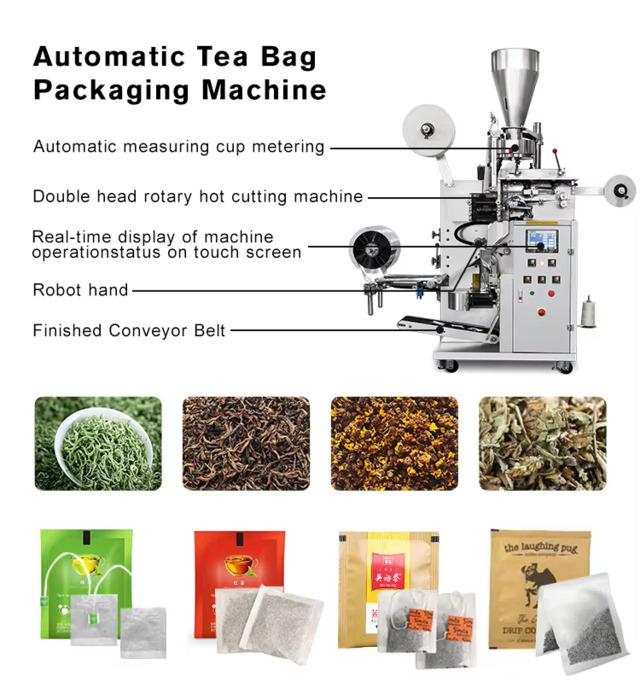
Approve attachment presentation as part of the incoming pack envelope. Identify where the string rests, which face carries the tag, and whether either can extend beyond the bag. The receiving guide must accommodate the quoted attachment condition. A tidy sample arranged by hand can conceal the loose geometry created during normal discharge.
Watch attachments as bags pass the support edges and enter their receiving positions. Useful observations include a tag catching under an edge, string connecting neighboring bags, a bag turning while its tag stays still, and contact that pulls on an attachment. Agree which conditions the transfer must accommodate and which require removal from the feed.
Inspect the bag seams, corners, string connection, and tag after passage. If the commercial unit is enclosed in an envelope, examine the envelope externally and open selected samples to check the inner bag. The objective is to preserve the purchased pack while presenting it correctly for cartoning. Changing the attachment design to suit a transfer requires a separate pack decision.
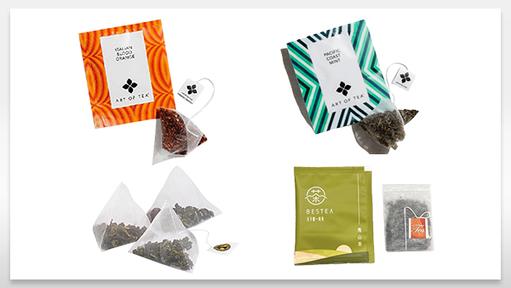
A tray that catches discharged bags has not necessarily prepared them for carton feed. Ask whether its purpose is temporary collection, organized presentation, or holding a defined quantity before another operation. State who removes the contents and how those bags reach the receiving magazine or pocket. Include any manual preparation in the proposed operating method.
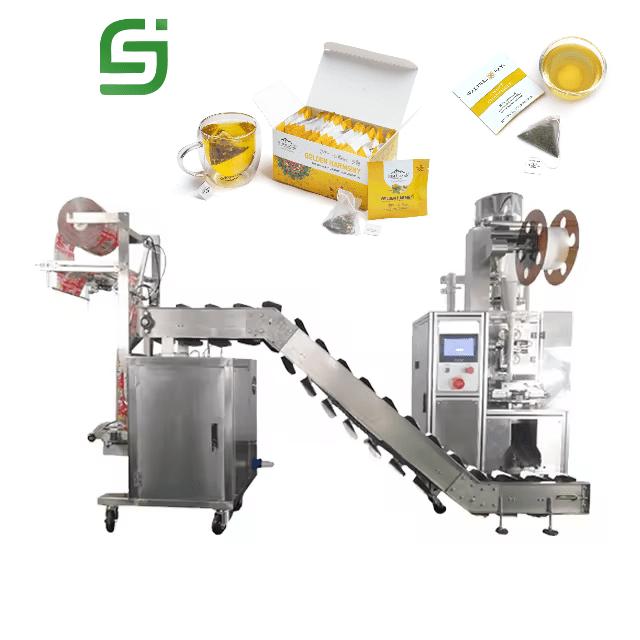
For a proposed accumulation device, define its entry, usable holding area, exit, and full condition. Confirm whether it preserves individual orientation or produces a bulk collection that needs a later sorting step. A bulk accumulation function must not be attributed to the current model merely because a conveyor appears in its photographs.
Agree how the arrangement deals with its last retained bags and the next incoming bags after a pause. The buyer should specify acceptable product holding conditions; the supplier should demonstrate the offered mechanical handling within them. If no accumulation is included, draw that boundary explicitly and define the approved collection or stopping arrangement. An empty space between frames is not a quoted buffer.
Review the connection component by component. The following questions concern delivery into carton feed after the selected tea pack has been completed. They do not decide how an inner bag receives its outer envelope.
| Interface item | Decision needed before purchase | Physical evidence to request |
|---|---|---|
| Outgoing pack | Name the finished unit, face, leading edge, and attachment position. | Commercial sample beside an annotated receiving outline. |
| Height and approach | Agree floor references and an unobstructed receiving path. | Joint layout with measured discharge and entry positions. |
| Support transition | Approve gaps, level changes, and any intended drop. | Trial samples inspected before and after each transition. |
| Catching or holding | Specify collection, ordered accumulation, or manual preparation. | Drawing of entry, retained product, exit, and full condition. |
| Failed arrival | Name the isolated route and person handling affected packs. | Demonstration that failed transfers remain outside carton feed. |
Assign the support plate, conveyor, guides, pockets, and any receiving preparation to a named supplier or buyer. Use the tea bag packaging machine range for starting configuration discussions, then obtain a specific equipment list. A cartoner should appear as a separate confirmed purchase item if required; the bag-machine description alone does not include it.
Mark the bags already between the two machines when the receiver becomes unavailable. Ask the suppliers to explain their proposed normal stop response and the final positions those bags occupy. A bag still traveling on a discharge belt and a bag already seated in a receiving pocket can need different handling.
Define whether the offered arrangement stops delivery, uses the quoted holding device, or directs output into approved collection. Treat each as a proposed behavior until demonstrated. Do not infer continuing upstream production or indefinite storage from separate machine frames. If holding equipment is fitted, include its full condition in the agreed test.
The trial should establish which retained bags are inspected, removed, or presented again before normal carton feed resumes. Note any operator assistance and the access used. Suppliers should perform these events through their approved operating procedures. The acceptance question is whether the physical path remains controlled when receiving pauses, rather than whether an attractive uninterrupted demonstration can be reproduced.
A skewed bag, a caught tag, or a pack that misses its receiving position needs a defined destination. Identify where an affected pack is caught or collected and how an operator can retrieve it through the approved access. Specify whether neighboring bags are also isolated when their presentation becomes uncertain.
Where a rejection or removal device is offered, follow the affected pack to its actual destination. Confirm that it cannot fall into the good-feed tray, remain hidden beneath a guide, or reappear in a receiving pocket after restart. A rejection indication alone does not prove physical isolation.
Keep trial failures apart from usable feed until their disposition is agreed. Any proposed return route needs confirmation of pack condition and presentation. Avoid solving a failed transfer during acceptance by repeatedly placing the same bag into the receiver by hand unless that handling is part of the purchased method.
Build the demonstration around the approved pack and mechanical drawing. Observe ordinary arrivals, expected variation in bag resting position, a receiver pause, and the treatment of a failed arrival. Include the proposed collection or holding equipment in its actual role. Note any temporary substitute parts before judging the result.
Inspect retained samples and record where each presentation problem appeared. When a guide or supporting surface changes, update the drawing and repeat the affected passage. Close the purchase with the agreed incoming condition, supplied components, normal handling, and outstanding site work. A trial ending at machine discharge proves only that boundary; carton-feed acceptance remains open until the proposed receiver has also been tested.
Does the connected-line picture establish automatic cartoning? No. It shows packaging units and a conveyor in composited artwork. The carton sample is not evidence of a fitted carton-loading mechanism. Obtain the cartoner scope and a demonstration of the proposed feed.
What discharge height should be written into the order? Use the height agreed from the quoted machine and receiving layout, measured from the shared floor reference. Check support edges and approach clearance too; a height alone does not define a workable connection.
Can loose string be ignored when an envelope is present? Confirm the actual outgoing pack. An enclosed attachment changes the external presentation, but opened trial samples can still reveal internal damage. Exposed attachments require their own clearance through the transfer and receiver.
Is a catching tray enough to keep production running during pauses? Only if the quoted operating method permits that use and its holding boundary has been demonstrated. A simple tray neither proves ordered accumulation nor prepares every collected bag for automatic carton feed.
Can the bag-machine trial close a later cartoner purchase? It can establish the measured outgoing condition. It cannot approve an untested receiver. Preserve that condition in the later enquiry and require a combined presentation trial before closing the receiving interface.
The purchase drawing should let both suppliers follow one completed tea pack from its last machine support into its intended carton-feed position. Resolve height, approach, gaps, attachment clearance, collection, and failed arrivals on that drawing. Then use commercial bags to test the offered path, including a stopped receiver. Leave cartoner supply and any undemonstrated accumulation function open until they have their own confirmed scope and physical evidence.

YISEN MACHINERY - The ONE-STOP VFFS PACKING MACHINE SOLUTION SUPPLIER
 Tel: +8617350750975
 Email: info@vffspackingmachinery.com
 MP/WhatsApp: +8617350750975
 Manufacturer Address:Meixi Road, Tongan District, Xiamen,Fujian,China