

Hot Keyword:
Author:YISEN Pouch Packing Machine Manufacturer TIME:2026-10-19
Qualify a filter-roll splice by agreeing its declared construction and marking, then witnessing how that joint behaves through the installed machine path. Acceptance of a Tea Bag Packaging Machine should establish whether the specified joint may pass or requires an OEM-defined stop, which filter bags are quarantined, and who decides their disposition. Ordinary unjointed material running well does not establish splice acceptance.
Ask the filter supplier to state its joint policy before approving a production order. The declaration should say whether joints are permitted, how their number is controlled, how each is identified, and what location information accompanies the roll. A statement that a roll contains a splice is incomplete if the receiving team cannot determine which joint construction was supplied or where the relevant declaration belongs.
Agree how a joint is marked: on the material, at the roll edge, on an accompanying label, or by another supplier method that the machine OEM can assess. These methods are not interchangeable. A packing label can declare the existence of a joint without providing a machine-readable signal. A visible marker may be useful to people yet invisible to the proposed sensor. Require the supplier to show the actual declaration and marker on the witness stock, including how an undeclared joint or unreadable indication would be handled.
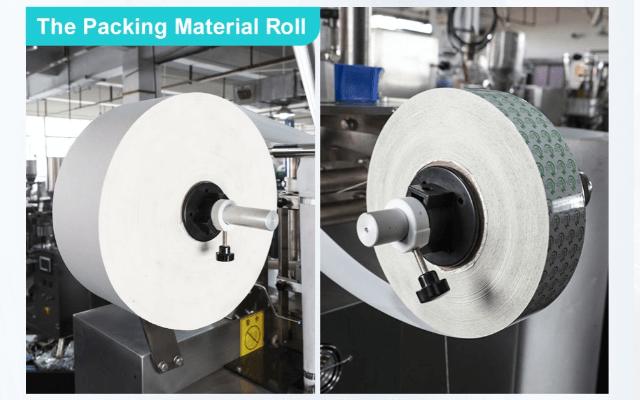
The ordinary filter specification describes most of the web, while the splice creates a local condition. Obtain the supplier's joint drawing or representative sample showing the connection method, overlap or butt arrangement, overall thickness, joint length along travel, edge alignment and any added joining or marking component. Identify the material face and travel direction on that sample so the OEM can assess the same construction that will arrive in production.
Also agree limits on variation: a nominal sample does not define allowable misalignment, thickness buildup or loose edges. The supplier should declare the construction it can repeatedly provide rather than asking the buyer to invent a universal splice dimension. Any joining component needs its own material documentation and buyer review for the intended use; neither the word tape nor a successful mechanical trial establishes suitability for the finished filter bag. If the proposed construction is unacceptable, resolve the material order with the supplier rather than asking operators to make an improvised alternative.
Have the OEM identify the stations that the declared joint will encounter on the offered configuration. Depending on the actual design, the review may cover guides, tension control, forming components, closing surfaces, cutting and any fitted attachment or transfer mechanism. Record where the joint's local thickness, alignment or edge condition could change passage or pack formation. This review concerns a discontinuity travelling through the web path, not whether the roll fits its holder.
A joint might move through one station without difficulty and still create a distorted bag or an incomplete cut later. Therefore, passage at the unwind alone cannot settle the question. Ask the OEM to connect each relevant station to an observable trial result and explain what remains untested. A different machine model, filter format or installed accessory can change that assessment; evidence from a photographed arrangement does not transfer automatically to the buyer's path.
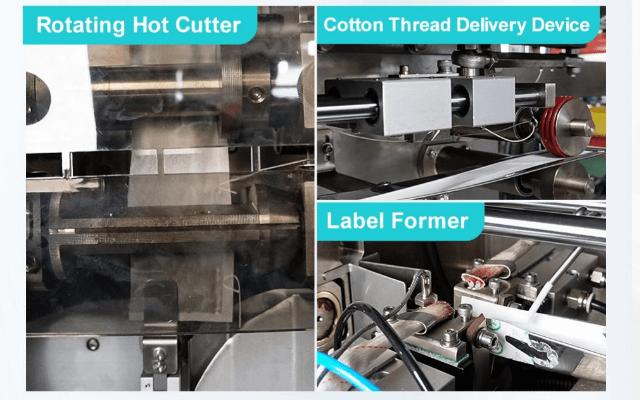
The purchase agreement needs an explicit policy for the declared construction: permitted passage under specified conditions, or a planned stop managed by the OEM's approved procedure. Permitted passage does not mean that bags containing the joint are saleable. It establishes only the agreed mechanical handling outcome, with affected-output treatment decided separately. A stop policy must likewise explain how the joint is recognized in time and what the equipment can reliably do.
Verify the proposed recognition method with the supplier and OEM. If automatic detection is offered, witness it using the actual marker and fitted device, including the stated limitations. If it is not offered, agree a feasible identification and stop arrangement rather than assuming the machine will find the joint. An unreadable declaration, an unrecognized joint or an arrangement that cannot achieve the agreed response remains an acceptance issue. Do not solve it by bypassing controls, removing guards or feeding a joint through an unapproved route.
Define the filter bags to be held around a joint event before collecting witness output. The boundary needs to cover bags incorporating joint material and any neighbouring bags whose formation, closure, cutting or attachment condition may be affected. Its extent should follow the actual path and observed result, not an arbitrary universal number of bags. Joint location on the web and the separation of machine stations can make the affected interval different from a single finished bag.
Agree how that interval will remain physically identifiable in the trial output and who can approve its disposition. If its beginning or end cannot be established reliably, hold the broader uncertain segment rather than selecting only the visibly unusual bag. Quality should distinguish discarded material, retained evaluation samples and any output eligible for release under the agreed acceptance rule. A mechanically successful passage must not allow uncertain filter bags to be mixed into accepted output by default.
Use a joint-specific decision table to connect observation with the purchasing outcome. Complete the relevant acceptance limits with the filter supplier, OEM and buyer's quality owner before the witness run. A demonstration is incomplete if its only conclusion is that the machine kept moving.
| Observed joint condition | Purchasing decision | Affected-output decision |
|---|---|---|
| Declared construction follows the agreed permitted path | Accept that construction only within witnessed conditions | Quarantine the defined segment; apply the agreed disposition |
| Joint requires the agreed planned stop | Verify recognition and OEM-approved handling before acceptance | Hold joint-related output and confirm the segment boundary |
| Marker is absent, unclear or not recognized as specified | Do not accept the recognition claim; resolve material or machine scope | Hold output whose exposure cannot be established |
| Joint passage produces distortion, closing or cutting defects | Reject unrestricted passage; revise construction or agreed policy | Retain examples and segregate all potentially affected bags |
Separate an OEM-approved stop result from a failure to recognize the joint. Both can involve a pause, but only one fulfils the intended policy. Similarly, an accepted marker response does not establish acceptable filter-bag quality. Recognition, passage and output disposition need separate conclusions.
The filter supplier should prepare witness rolls containing the agreed joint construction and declarations. The OEM approves the trial method and operating conditions. Define how many examples and which declared variation will be assessed so the result does not depend on one unusually neat joint. Use the intended tea, filter application and relevant fitted parts where they affect the passage result. The buyer should not create substitute joints or adjust protective functions to make the demonstration possible.
Keep the joint declaration, drawing, sample identity and observed station behaviour together. For each witnessed example, record whether the proposed marker was recognized, whether the pass-or-stop policy occurred, and which filter-bag segment was segregated. Retain joint-related specimens and neighbouring output needed to assess distortion, closing, cut and any applicable attachment effect. Record additional interventions as exceptions rather than quietly treating them as ordinary machine capability.
Document the limits of the trial. An example tested in one travel direction or joint position does not prove every construction that a converter might supply later. Where a declared variant is untested, identify it in the material order and acceptance record. A failed example needs an agreed construction or handling revision followed by a relevant repeat; a successful demonstration with ordinary web cannot substitute for that repeat.
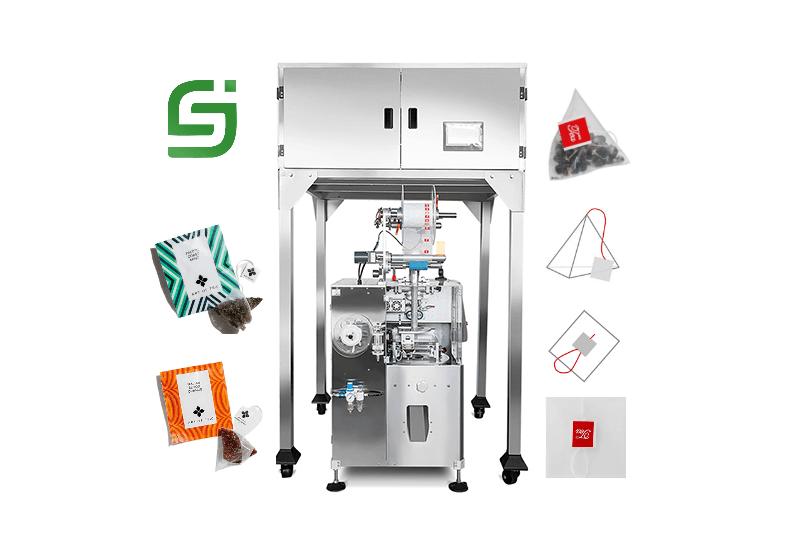
A filter-web joint affects the material forming the infusion bag. An outer-envelope joint belongs to a different web and can involve different handling, identification and finished-pack consequences. Where a machine handles both, give each its own joint specification and assessment. An envelope registration result does not qualify a filter joint, and smooth filter passage says nothing about the outer web. The YS-169 source provides this two-web context; it does not establish automatic joint recognition on either path.

Finalize a packaging-material agreement covering the permitted joint construction, declaration and marking method, allowable variation, witnessed handling policy, affected-output disposition and changes requiring reassessment. Specify what happens when delivered joints differ from the agreed stock. Review the offered configuration in the tea bag packaging equipment category, but obtain joint acceptance for the installed path and actual filter order. Category membership cannot replace a supplier-specific construction agreement.
Does an edge marker prove automatic splice detection?No. It identifies a marking method. Detection depends on the fitted equipment, marker position and demonstrated response. A marker intended for people may not be readable by the proposed machine arrangement.
Can a joint that passes without stopping remain inside a saleable filter bag?Not by default. Mechanical passage and product release are separate decisions. The buyer's agreed material and quality criteria determine disposition, including whether joint-bearing bags must be discarded.
What if the supplier declares a joint but cannot give its exact location?Assess whether the agreed recognition and handling method can still work reliably. If the exposure boundary cannot be established, affected output remains uncertain and needs a broader hold; the declaration alone does not prove acceptance.
Should the same splice policy cover the filter and outer envelope?Only if separate assessments justify it. The two webs serve different pack functions and may encounter different stations. Keep their specifications and results distinct even when one machine handles both.
When must an accepted joint be reassessed?When a relevant construction, marking method, declared variation, filter application or installed path changes beyond the witnessed scope. Agree these triggers in the material order so a later supplier substitution does not silently inherit approval.
A filter splice is a declared local construction that must be accepted through its actual journey, not merely through the appearance of the roll. Connect the supplier's joint policy and sample to an OEM-confirmed pass-or-stop method, witnessed station behaviour and a defined quarantine segment. Put those decisions into the packaging-material agreement. That gives purchasing a defensible answer when a delivered joint differs, fails to be recognized or produces output that cannot be released.

YISEN MACHINERY - The ONE-STOP VFFS PACKING MACHINE SOLUTION SUPPLIER
 Tel: +8617350750975
 Email: info@vffspackingmachinery.com
 MP/WhatsApp: +8617350750975
 Manufacturer Address:Meixi Road, Tongan District, Xiamen,Fujian,China