

Hot Keyword:
Author:YISEN Pouch Packing Machine Manufacturer TIME:2026-10-26
Audit compressed-air consumption quotes by matching their measurement boundary, volume basis, tested equipment and operating duty before comparing the figures. For a Tea Bag Packing Machine, a catalogue pressure entry cannot establish how much air a production campaign consumes. Ask for a consumption statement that can be traced back to readings and a named packing configuration.
A quotation may present a pressure requirement, an estimated running flow, a measured average, or a total volume from a demonstration. These entries answer different questions. Before ranking them, ask the supplier to classify its figure and identify the document from which it came. A number without its basis should remain an unanswered quotation item.
Use the response to decide whether the comparison can proceed. Pressure describes a supply condition; it is not the consumed volume. An estimate can support preliminary discussion if clearly identified, but it should not be placed beside a witnessed result as though both have equivalent evidence.
| Entry in the offer | Clarification needed | Decision for the comparison |
|---|---|---|
| A gas-source pressure only | Separate consumption submission for the ordered equipment | Leave consumption unranked |
| A flow figure without conditions | Volume reference, duty period and equipment boundary | Request a complete basis |
| A component-based estimate | Calculation assumptions and omitted consumers | Keep it identified as provisional |
| A witnessed volume with a run log | Comparable configuration, intervals and accepted output | Assess comparability before using the result |
Require the supplier to identify everything downstream of the measurement point during the reported demonstration. The submission should distinguish the base bagger from any separately supplied wrapper, dosing assembly or other quoted attachment. Include a configuration reference so a result from a simpler showroom arrangement cannot silently support a more extensive order.
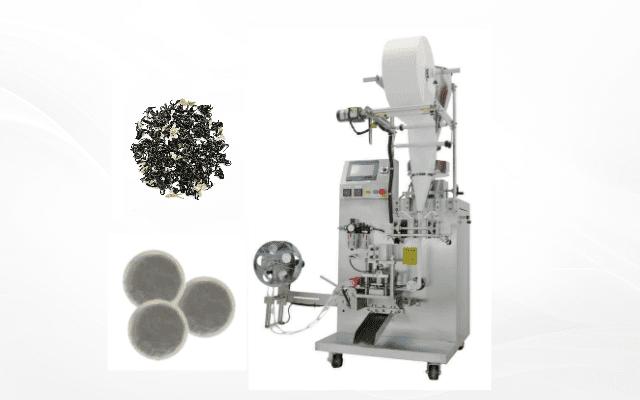
The saved YS-ZF90 description discusses downstream packaging, while the YS-169 page describes inner and outer bag functions within its machine arrangement. Those contexts justify different questions about measurement scope. They do not prove that a particular auxiliary is included or that all its air demand was captured in a supplier's number.
Ask for exclusions by equipment identity. If an auxiliary draws from another branch, its consumption may need a separate submission. If the reading includes unrelated equipment, the supplier must explain how that affects interpretation. Review the tea bag packaging machine range to identify the offered arrangement, then tie the audit to its actual quotation.
Do not compare figures merely because both display litres per minute. Ask whether each is reported at the measurement conditions or referred to another declared pressure and temperature basis. Terms such as normal, standard or free air need the supplier's stated definition. Abbreviations alone leave room for incompatible interpretations.
Keep the original unit and definition next to the submitted value. If a reviewer converts it to another unit, retain the method, assumptions and person responsible. Simple time-unit conversion does not resolve an unknown volume reference. Purchasing should obtain the missing basis rather than inventing conditions that make the offers appear comparable.
The stored tea-machine gas-source field supplies no air-volume measurement. Treat it as a prompt for clarification only. Ask the supplier to provide its controlled air-interface requirements separately from the consumption statement, so a pressure requirement cannot be copied into the wrong column or presented as a universal demand figure.
A running average describes only the interval used to calculate it. Ask how the supplier treats material replenishment, short waits, recipe selection and other pauses in the proposed operating pattern. A buyer planning small batches needs to understand those periods even if the sales demonstration favours one uninterrupted run.
Agree named states that the OEM can demonstrate using its approved operating procedure. Distinguish active production, powered waiting with air connected, and any defined isolated state. Do not assume that stopping bag motion also stops every air consumer. Equally, do not claim that the machine uses air while waiting without a relevant reading.
Record the time and volume for each observed state rather than blending them immediately into a shift forecast. The buyer can later apply its own proposed mix of running and waiting periods. That forecast remains an assumption until the duty pattern is reproduced; it should not replace the supplier's original measurements or be described as a guaranteed consumption level.
If an offer states air per bag, ask what bag means in that calculation. A machine cycle, an inner filter bag and an accepted enveloped unit need not be the same counted object. Use the commercial unit being purchased as the reference and state where acceptance is checked.
Keep total produced units, rejected units and accepted units identifiable within the same measurement interval. A volume divided by commanded cycles answers a different question from volume divided by released output. The supplier should name the denominator instead of using an attractive display count without explaining which physical population it represents.
The comparison also needs a rule for output made during adjustment. If that air is included but its bags are excluded from the accepted count, say so. If setup volume is recorded separately, preserve that separation. Do not borrow a bag counter's assumed accuracy to settle this audit; require a count method agreed for the witnessed consumption record.

Ask the responsible technician to record the instrument identity, indicated unit, measurement location and relevant verification information. Retain beginning and ending cumulative readings for each named interval where the instrument supports them. A photograph of a single changing flow display cannot by itself explain the total used over the demonstration.
The log should connect each reading to time, machine state and the quoted setup. Note whether recording is manual or automatic and how interval boundaries are established. Do not infer that the machine touchscreen can export air data merely because a screen appears in product imagery; external instrumentation may be needed if the OEM approves it.
Leave test connections and operation to authorized personnel. The buyer's contribution is a clear evidence request, not an improvised installation method. Ask for uncertainties or recording gaps to be marked explicitly. Where the evidence cannot distinguish two operating states, retain a combined interval with that limitation rather than presenting reconstructed values as measured facts.
A supplier may propose an attachment that was unavailable during the demonstration. Ask whether its air allowance is calculated, borrowed from a separate test or simply unknown. Record the option's identity and the reason its evidence differs from the base measurement. An arithmetic addition should not turn an untested complete arrangement into a witnessed claim.
For a calculated allowance, request the operating assumptions that matter to the estimate. These could include how often the proposed function operates and which duty state the calculation represents, depending on the design. The OEM must supply those assumptions; the buyer should not infer actuator behavior from a still photograph.
If an option is removed from the purchase, request a revised consumption statement rather than subtracting an undocumented number locally. If it is added, agree the further demonstration needed to close the gap. This keeps configuration changes visible and prevents an earlier measured figure from being reused after its equipment boundary has changed.
Place the submissions side by side only after their volume definitions, equipment boundaries, duty intervals and output denominators are understood. A lower figure from an empty cycle or a different pack cannot support a fair comparison with a production run containing all ordered functions. Identify the mismatch instead of forcing the data into one ranking.
Ask each supplier to answer the missing comparison item with a document or a relevant repeat. A revised statement may be enough to clarify units; an absent operating condition may require another observation. Keep the original submission with its replacement so reviewers can see what was corrected and which questions remain open.
Do not translate an air-volume difference directly into an electricity saving or a payback promise. Those claims would need separate site evidence and a declared calculation. This audit ends with comparable consumption information. Whether the factory can supply the required instantaneous air condition remains the responsibility of its utility review.
Before the order closes, identify the consumption statement, its revision and the exact equipment list it covers. Describe whether the figure is an estimate pending demonstration or a result accepted within witnessed conditions. An unresolved value should have a named follow-up and a purchasing consequence rather than disappearing into a general technical appendix.
Agree when the evidence will be delivered and who will assess it. The purchase team may need a preliminary submission before selecting the offer and a completed witness record before shipment. Those are different milestones. Signing the offer should not imply that an estimated duty figure has already been demonstrated.
Also agree which configuration changes reopen the submission. A substituted component or added module should prompt the supplier to review the affected claim. Retain the final boundaries and untested conditions alongside the run log so future buyers can recognize whether a later quotation is using evidence from the same arrangement.
Can a pressure-only catalogue entry support an operating-air comparison?No consumption ranking follows from that entry. Ask for a separate quantity or flow statement with its unit basis, equipment scope and operating conditions identified by the supplier.
Why can two litres-per-minute figures remain incomparable?The reporting reference, included equipment and averaging interval may differ. Obtain the definitions and run context first; matching the printed unit does not resolve those differences.
Should waiting time be included in a per-bag figure?Use an agreed interval and label it. A production-only ratio and a campaign ratio that includes waiting answer different planning questions. Preserve both bases when the supplier measures them.
What if the supplier has only an estimate for an outer wrapper?Retain the estimate with its assumptions and identify the wrapper as untested within the combined arrangement. Request the agreed additional evidence before treating the full-line figure as measured.
Does a complete consumption log approve the factory air network?It supports the quotation claim under recorded conditions. It does not establish destination supply adequacy, treatment requirements or connection approval; the site team still needs its own utility assessment.
An air figure becomes useful for purchasing when another reviewer can reconstruct what was measured, during which states, for which equipment and against which output. Keep missing definitions and untested options visible until the supplier resolves them. Choose between offers using comparable evidence, then preserve the accepted statement as the reference for later configuration changes. A smaller unexplained number should carry no more purchasing weight than a larger unexplained one.

YISEN MACHINERY - The ONE-STOP VFFS PACKING MACHINE SOLUTION SUPPLIER
 Tel: +8617350750975
 Email: info@vffspackingmachinery.com
 MP/WhatsApp: +8617350750975
 Manufacturer Address:Meixi Road, Tongan District, Xiamen,Fujian,China