

Hot Keyword:
Author:YISEN Pouch Packing Machine Manufacturer TIME:2026-11-17
Specify a piggable feed line when ketchup retained in a transfer route justifies a dedicated recovery system and the pipe geometry can accommodate it. The purchase concerns a defined traversable pipeline, its launcher, receiver and destination. It does not make every valve, dosing cylinder or nozzle on a ketchup packing machine piggable, and recovering product does not replace cleaning.
Product remaining in a transfer pipe and product remaining inside a dosing assembly are different recovery problems. Start by locating the part of the proposed installation that holds the ketchup of concern. A short connection beside the packer, a long route from processing, and several branches serving different destinations should not be priced as though they were one generic residual-product issue.
The relevant purchase question is whether a dedicated pipeline-recovery architecture addresses that location. It is not enough to know that sauce is expensive or cleaning sends material to waste. If most of the retained product sits in equipment outside the traversable pipe, adding a recovery system to the pipe alone leaves the main problem untouched.
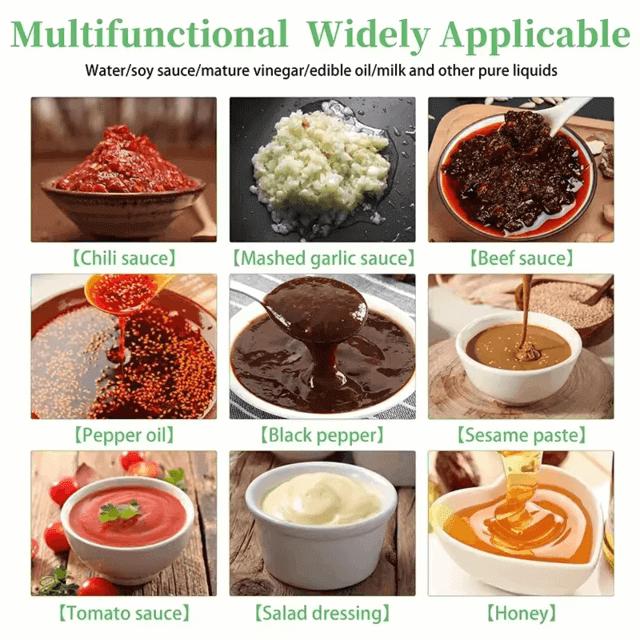
The ketchup product page establishes the sauce-packing application and illustrates its feed arrangements. Its application artwork does not show a pigging installation. Use the actual proposed layout to distinguish the transfer route from the machine's metering internals before asking for a recovery option. This keeps the discussion about an identifiable equipment change rather than an unsupported promise of higher yield.
HPS describes pipeline pigging as moving a dedicated recovery element through a liquid-transfer route. The element pushes retained material toward an intended destination. Launching and receiving components accommodate its movement. That is a different physical arrangement from allowing product to drain, removing a hose for emptying, or flushing the remaining material away.
This distinction changes the quotation. A drainable connection can be evaluated as a connection; a piggable route requires compatible internal passage throughout its defined length and equipment to manage the travelling element. A buyer cannot compare only the amount of sauce initially visible at the end of a batch and assume the underlying hardware commitments are equivalent.
The method's purpose is recovery, but the fact that material can be moved does not establish its future release status. The producer must decide what recovered ketchup can become under its own product controls. The machinery proposal should identify the destination and the physical recovery boundary without converting that movement into a guaranteed quantity of saleable output.
A pigging proposal needs an endpoint, especially where a transfer route meets a filling machine. The recovery element's ability to travel through a pipe says nothing about its ability to pass through a metering chamber, dosing valve or nozzle. A filler assembly can contain changes in geometry and moving components with purposes unrelated to pipeline passage.
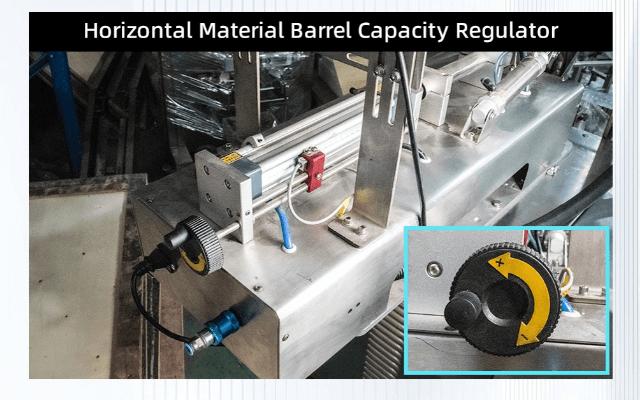
Identify the receiving and separation arrangement before the packer's internal product path. The dosing hardware in the source photograph helps locate the distinction: it shows a horizontal metering assembly, not a documented pig receiver. No traversable recovery route through that assembly is established. The boundary must come from the specialist's design rather than an interpretation of the machine image.
Deciding where recovery stops can reveal retained product that remains outside the proposal. That is useful information, not necessarily a failed design. The buyer can compare the benefit of recovering the transfer section with the separate work needed at the filler. What would be misleading is describing a recovered pipeline as a completely emptied packing system.
For a travelling recovery element, the inside of the route matters more than its external appearance. HPS's integration guidance emphasizes consistent internal passage and discusses obstructions within valves. A pipe bearing the expected nominal size can still connect to fittings whose internal geometry interrupts the intended path. A complete route review therefore extends beyond the straight tube.
The same guidance uses butterfly valves as an example of an internal obstruction requiring attention in its systems. The procurement lesson is to ask about the exact installed valve design, not to issue a blanket replacement instruction for every plant. A valve can perform its ordinary product-flow job while remaining unsuitable for passage of the selected recovery element.
Include branches and connection changes in the specialist's route assessment. A drawing that simply marks an existing line as piggable does not establish what happens at each internal discontinuity. Compatibility should identify the selected recovery equipment and the reviewed route together. It cannot be borrowed from another supplier's element or inferred from the general word hygienic.
A transfer line rarely consists entirely of straight sections. Bends, junctions and welded connections form part of the physical passage. HPS discusses the condition of weld interiors and the suitability of bends in its own integration explanation. These features deserve a place in the design review because the recovery element must negotiate the completed route, not an idealized straight pipe.
Do not turn one manufacturer's published bend capability into a universal limit. Recovery elements have particular constructions, and an application statement belongs to the system it describes. The purchaser should ask the proposed specialist to identify compatibility with the actual pipework. Accepting a competitor's bend claim would leave the selected equipment's suitability unproven.
Installation responsibility follows from this requirement. If one party supplies recovery components while another fabricates or alters the route, their agreed internal-passage requirements need to reach the installer. Otherwise individually specified parts can form an unsuitable assembled path. The buying decision should cover the completed installation and its documented interfaces, rather than stop at delivery of a launcher and a receiver.
The supporting hardware is central to the recovery function. HPS identifies launchers, receivers, detection, valves and controls among the elements of a pigging system. Their presence explains why the option is more than a plug added to an existing line. The package must manage where the recovery element is introduced, where it finishes and how that condition is recognized.
Consider the downstream interface from the receiving process's perspective. It needs the intended product, through an agreed connection, while the recovery equipment remains within its designed boundary. A requirement to keep filling does not by itself establish that the receiving hopper can accept every transition associated with recovery. Those transitions need an engineering description of their own.
Ask who provides the relevant detection and who owns its interpretation in the controls. A device can be listed in a component schedule without its relationship to the receiving equipment being explained. The scope should join the physical destination and the control function, including the destination of material that is not assigned to normal product flow. No operating sequence is prescribed by this comparison.
A recovery route has to distinguish product movement from the media or process used to accomplish it. HPS describes several possible propulsion approaches, selected for the application. That range is a reason to require a specific design, not a menu from which an operator should improvise a method. The proposed system must explain what can reach each destination.
The commercial requirement is clear identification of the recovered product boundary. Material assigned to production, material assigned to another controlled destination and cleaning transitions should not become one unexplained stream merely because they share pipework at different times. The producer's disposition rules and the specialist's physical routing design need to agree on that boundary.
This issue becomes more important when the route serves multiple tanks or packers. A recovery option for one source-to-destination connection does not establish every possible routing combination. Name the included routes and the interfaces to production equipment. That confines the purchase to the actual installation instead of implying that a recovery system automatically resolves all future product and cleaning combinations.
Recovery and cleaning have different purposes. HPS explicitly separates them: moving residual product out of a line does not clean or sanitize that line. A route that has completed recovery still needs the applicable hygiene process. This remains true even when a demonstration shows very little visible product behind the travelling element.
For procurement, include the recovery hardware itself in the cleaning scope. Launching and receiving housings, valves and other wetted components become parts of the product-contact system. Their intended cleaning arrangements should be identified by the supplier and reviewed by the producer. Adding equipment to recover product must not create an unexplained area outside the existing sanitation boundary.
The possible relationship between reduced residue and cleaning effort is not a guaranteed savings result for the buyer. No standard reduction in cleaning time, water, chemicals or product loss follows from the technology name. Keep that economic question dependent on the specific installation. The present decision is whether the equipment offers a coherent recoverable route while preserving the required cleaning function.
A compact route that can be handled within the existing approved changeover arrangement may call for a different investment from an extensive process-transfer line. Compare the location being improved and the additional hardware needed, rather than treating pigging as an automatic upgrade. The strongest option is the one that addresses the identified retained-product problem within the plant's actual layout.
The ketchup and sauce packing equipment provides the receiving-machine context. An alternate vertical-barrel assembly illustrates why that equipment needs its own boundary description. Neither barrel configuration establishes compatibility with a travelling recovery element, and neither photograph supplies a measured recovery result.
| Route option | Design question | Purchase implication |
|---|---|---|
| Short removable connection | Where does retained product remain? | Evaluate the connection and approved handling |
| Long non-piggable transfer | Which internal features prevent traversal? | Compare route modification with other recovery approaches |
| Engineered piggable line | Where are the launch, receive and destination boundaries? | Include specialist hardware, integration and cleaning scope |
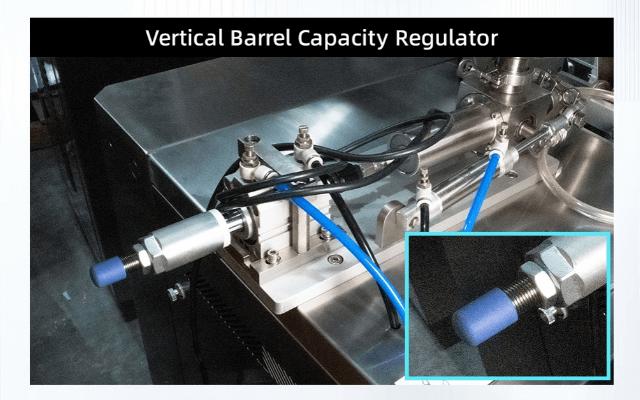
Can the recovery element pass through the dosing cylinder? Do not assume it can. A defined pipeline passage does not qualify the filler internals. The specialist must identify the recovery endpoint and its separation from the machine's metering components.
Does using a larger pipe make a route piggable? Size alone leaves internal valves, joints, bends and destinations unresolved. Suitability belongs to the selected recovery element and the complete route assessed for it.
Can the existing valve list be accepted without inspection? A valve's flow-control role does not establish an unobstructed recovery passage. Have the specialist review the exact designs and connections within the proposed traversable section.
Is physically recovered ketchup automatically saleable? No. Recovery identifies movement and destination. The producer's release and product-disposition rules determine whether the material can return to an accepted production stream.
Does pipeline recovery replace CIP? No. Recovering residual product and removing contamination are different functions. The added equipment must fit the applicable cleaning arrangement, with no universal savings or sanitation outcome presumed.
A piggable ketchup feed line is a defined recovery architecture. Its value depends on the retained-product location, a compatible passage and an engineered receiving boundary before the filler. Purchase the complete route, supporting components and cleaning integration only where they address the actual transfer problem. Keep untraversed machine internals, product release and economic outcomes outside claims that the design has not established.

YISEN MACHINERY - The ONE-STOP VFFS PACKING MACHINE SOLUTION SUPPLIER
 Tel: +8617350750975
 Email: info@vffspackingmachinery.com
 MP/WhatsApp: +8617350750975
 Manufacturer Address:Meixi Road, Tongan District, Xiamen,Fujian,China