

Hot Keyword:
Author:YISEN Pouch Packing Machine Manufacturer TIME:2026-11-19
Choose an oxygen analyzer for a small coffee stick by how it obtains the measurement, not by the size of its display or the outside dimensions of the pack. An extractive instrument needs gas to reach a sensor through its sampling path. An in-package small-volume probe measures inside the package instead. Either approach still needs a suitable filled pack, physical access and manufacturer confirmation for the application.
A narrow coffee stick contains product as well as gas. Its printed dimensions describe the package outline, not the accessible gas space after filling. Powder can occupy an irregular shape, and the flexible walls can lie close to the contents. Two externally similar sticks may therefore present different conditions to an analyzer.
Distinguish a gas space that exists from one the measuring system can actually reach. A pocket near the seal might not provide the clearance required by a particular probe or sample inlet. Equally, a visibly inflated package does not identify the composition of its contents. Appearance is neither a gas-volume measurement nor an oxygen result.
The useful purchasing object is the actual filled and closed format. Its film construction, fill presentation and accessible space establish the application to review. An empty bag or a larger demonstration pouch can help explain an instrument, but it cannot establish suitability for the production stick. Keep this distinction when comparing analyzers marketed for small packages: small is an application description, not one common physical condition.
In an extractive arrangement, gas leaves the package and travels to the measuring sensor. The relevant requirement belongs to the complete configured sampling path, rather than the sensor display alone. The instrument manufacturer defines the gas demand and operating conditions for that arrangement.
For a small stick, this creates a different selection problem from analyzing a generous headspace. A system can offer a suitable oxygen range yet still need more usable gas than the package can provide through the intended connection. A higher-resolution display cannot change that physical relationship. Nor should a buyer assume that every accessory or alternative hose arrangement preserves the quoted application capability.
WITT describes OXYPAD as a needle-sampling headspace analyzer with low sample-gas demand. It also lists sample-flow monitoring that warns of a blocked needle. Those are concrete features of an extractive alternative, not proof that every filled coffee stick is suitable. Compare the proposed configuration as a whole. Do not substitute improvised sampling connections, altered instrument settings or an assumed gas volume for an application assessment by its manufacturer.
AMETEK MOCON describes a different architecture for its CheckMate 4 SV small-volume model. Its probe is inserted into the package for oxygen measurement instead of withdrawing a gas sample. This changes where the measurement occurs; it is not simply a conventional sampling pump operating more slowly.
The manufacturer's technical information distinguishes optical small-volume modules from its standard sensor configurations. That distinction matters when quotations share a product-family name. A demonstration or specification for one module should not be attributed automatically to every instrument bearing that name. The offered module and its package interface must be identified together.
CheckMate's description also separates the control unit from its exchangeable sensor module. This makes configuration identity important when evaluating a demonstration unit, a replacement module or a quotation for another assembly. A familiar control screen does not establish which measuring route is present. Keep the module identity attached to the application assessment rather than relying on the appearance of the instrument housing.
Removing the need to withdraw a conventional sample can address one constraint without removing all constraints. The probe still has a physical shape, needs an appropriate relationship to the gas being measured and must suit the package application. The source identifies small-volume uses; it does not establish that the buyer's powder-filled stick has usable probe access. Treat this architecture as a candidate to evaluate, not a universal requirement for every small coffee pack.
Probe access and available gas are related but separate questions. A package can have too little accessible gas for one extractive configuration yet also provide insufficient clearance for a particular in-package probe. Selecting between architectures requires resolving both conditions, not moving automatically from one rejected instrument to another.
The position of the product, nearby seals and the space surrounding the intended measuring region all belong in the equipment supplier's review. A rigid coffee capsule and a flexible powder stick do not present identical geometry merely because both are described as small-volume packages. A manufacturer's capsule example is evidence of that example, not a dimensional approval for a different format.
Also distinguish measurement location from package disposition. Measuring inside a pack does not automatically mean that testing is non-destructive or that the tested unit can return to sale. Entry, package alteration and handling depend on the specified method. This article does not prescribe piercing, positioning or fixture construction. The purchase needs a supported interface and a clearly defined use of the tested package, rather than an assumption attached to the word optical.
AMETEK MOCON's coffee application material identifies coffee particulate among the conditions encountered during measurement. That makes product presentation relevant to instrument selection. A clear gas pocket above settled contents and an inlet presented with loose powder are not equivalent measuring conditions.
For an extractive system, the application discussion should identify how the specified sample path handles particulate and recognizes an unsuitable flow condition. WITT's blocked-needle warning illustrates why the availability of a displayed value is not the only consideration. An interrupted or restricted sample route must not be treated as evidence of an acceptable package atmosphere.
An in-package probe removes the conventional withdrawal route, but this does not establish that powder contact, probe access or the chosen sensing arrangement is irrelevant. The equipment manufacturer must assess the actual product and package interface. Purchasing should distinguish supported consumables and protection features from improvised additions. No filter bypass, needle-clearing technique or cleaning procedure follows from the comparison. The question is which offered configuration can obtain a valid measurement under the intended coffee-pack conditions.
Oxygen range, display resolution and application suitability describe different properties. A screen can show additional decimal places without establishing accuracy at the concentration of interest. A suitable measuring range likewise does not prove compatibility with the gases and other conditions present in the package.
The CheckMate product information lists different sensor technologies and small-volume modules with distinct application descriptions. Its coffee material also identifies carbon dioxide among the conditions encountered in coffee measurement. Neither statement justifies a universal ranking of sensor technologies. Instead, the selected module must be assessed against the intended measurement and relevant gas matrix.
Keep oxygen-only measurement separate from an offered oxygen-and-carbon-dioxide configuration. A capability listed elsewhere in the same product family may belong to another module or arrangement. The same caution applies to accessories: shared branding does not make every package interface interchangeable. Compare the specification for the proposed assembly, including its stated limitations, rather than combining the most attractive lines from several configurations into a machine that has not actually been offered.
A valid headspace oxygen result describes the measured gas under the defined method and package condition. It is not, by itself, a measurement of leak rate, film transmission or future package performance. Those are different questions involving different measurements and interpretations.
This boundary matters during a machinery purchase because an analyzer can be presented alongside gas-mixing, leak-testing and packaging equipment. The supplier's wider catalogue does not combine their functions into the quoted headspace instrument. AMETEK MOCON's coffee page itself separates headspace analysis, package-integrity testing and permeability instruments.
Likewise, a measurement at a gas supply or an open filling location is not automatically a measurement of a closed stick. Define the object being measured before comparing results. This is not a proposal for a sampling schedule or a nitrogen-flushing recipe. It prevents a suitable instrument from being credited with a broader answer than it supplies. No oxygen value in this selection discussion establishes product shelf life, a health benefit or an installed gas-control capability on the site's packing machine.
A meaningful comparison holds the package application constant while examining the measuring route. If one demonstration uses an empty stick and another uses a filled capsule, their results do not isolate the difference between extractive sampling and an in-package probe. Package geometry and product presentation have changed too.
Ask the suppliers to explain the suitability of their proposed configurations for the same defined production format. Relevant differences include accessible gas, probe clearance, sample-path demand and the product conditions reaching the interface. The comparison should identify an unresolved limitation plainly rather than convert a successful measurement on another package into an approval.
AMETEK MOCON's coffee compatibility table distinguishes stick packs, capsules and vacuum-packed coffee. It does not say that every stick requires an SV module. Nor does a general stick-pack entry establish suitability for every fill and physical interface. This prevents unnecessary escalation to a more specialized architecture while also preventing an unsuitable conventional sampler from being accepted on a broad package-type label. Selection follows the filled application, not the smallest package pictured in a brochure.
Logging, barcode identification and data export can make a valid measurement easier to manage. They cannot create missing sample gas or probe clearance. Resolve the physical measuring architecture before ranking those secondary features.
| Application condition | Architecture to assess | Unresolved purchase question |
|---|---|---|
| Usable gas supports the complete sample path | A suitable extractive analyzer | Does the offered configuration suit the actual filled stick? |
| Withdrawal is constrained but supported probe access exists | An in-package small-volume oxygen module | Are clearance and gas-matrix suitability confirmed? |
| No supported gas access is established | No automatic analyzer selection | What measurement is physically possible for this format? |
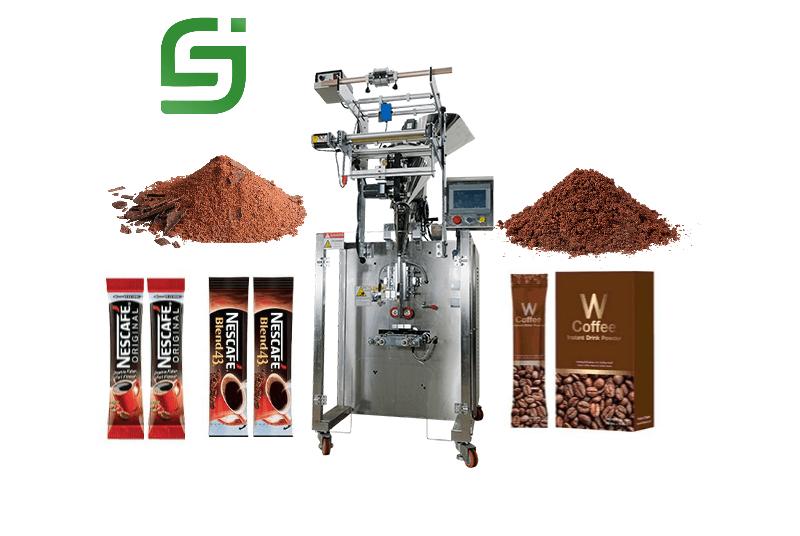
The coffee packing machine category provides the filling context, not proof of an included analyzer. Specify the measuring equipment separately from the packer and preserve the limits of each manufacturer's application statement.
Do empty stick dimensions establish enough sample gas? No. The filled package determines the available gas and access. Its outside outline cannot establish either condition alone.
Is an in-package optical probe automatically non-destructive? No. Measurement inside the package does not determine the consequences of entry or the disposition of the tested unit.
Does finer display resolution solve limited-headspace sampling? It does not supply gas to an extractive sensor or create space for a probe. Physical suitability remains a separate requirement.
Can coffee particles matter to a needle-sampling analyzer? Yes. The supported sample path and recognition of restricted flow belong in the application review, without improvising a cleaning or bypass method.
Does an oxygen reading prove leak rate or shelf life? No. A headspace result answers a gas-composition question under the defined conditions; it does not replace those separate assessments.
Select the analyzer around the filled stick and the actual measuring route. Compare extractive gas demand with the access required by an in-package probe, then confirm the offered sensor configuration for the coffee application. Keep package compatibility conditional until those physical questions are resolved. Data features become useful after the instrument can obtain the intended measurement.

YISEN MACHINERY - The ONE-STOP VFFS PACKING MACHINE SOLUTION SUPPLIER
 Tel: +8617350750975
 Email: info@vffspackingmachinery.com
 MP/WhatsApp: +8617350750975
 Manufacturer Address:Meixi Road, Tongan District, Xiamen,Fujian,China