


 Price:

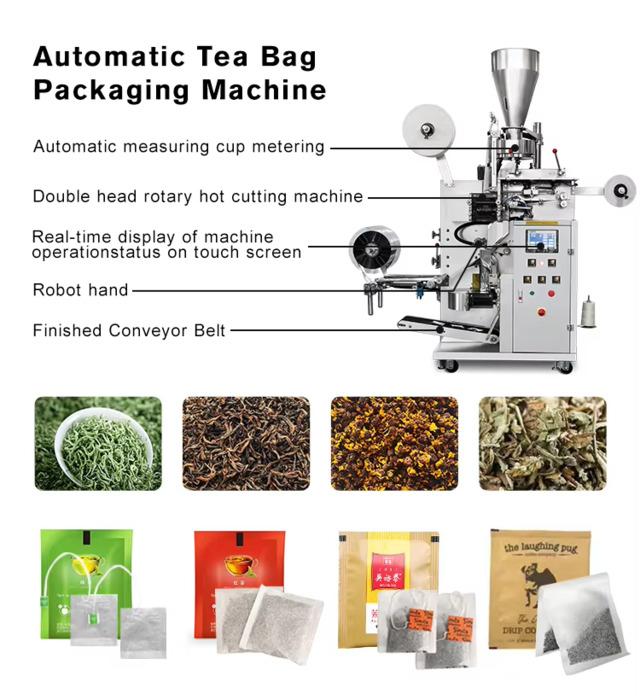
Read the machine around the finished tea bag
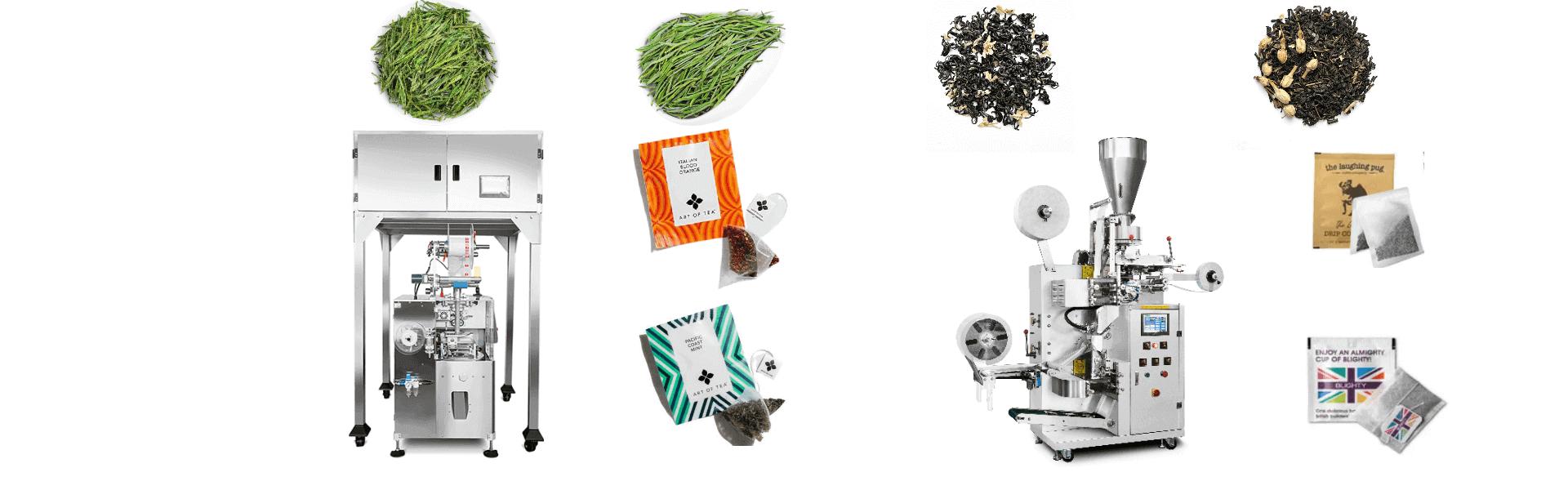
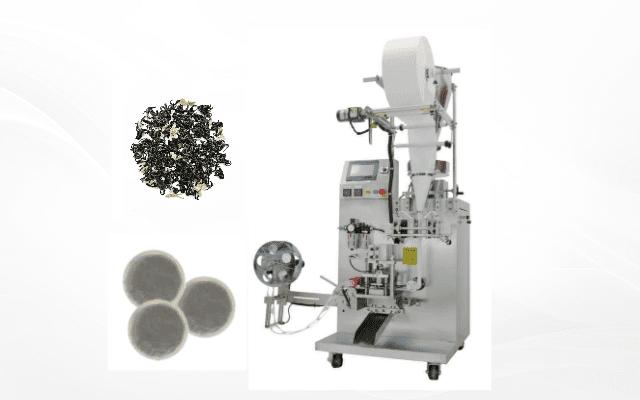
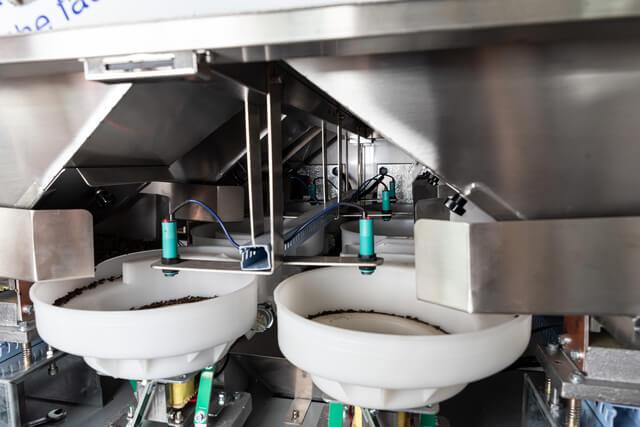
The stored specification describes a 1-10 g filling range, 45-90 mm bag length and 40-90 mm bag width. It also lists 2-head, 4-head and 6-head electronic scale arrangements. These are not interchangeable marketing numbers. A light, uniform black tea may settle predictably in a smaller number of weighing heads, while a blend of long leaves, petals and fruit pieces can divide unevenly unless the ingredient path and recipe method are tested.
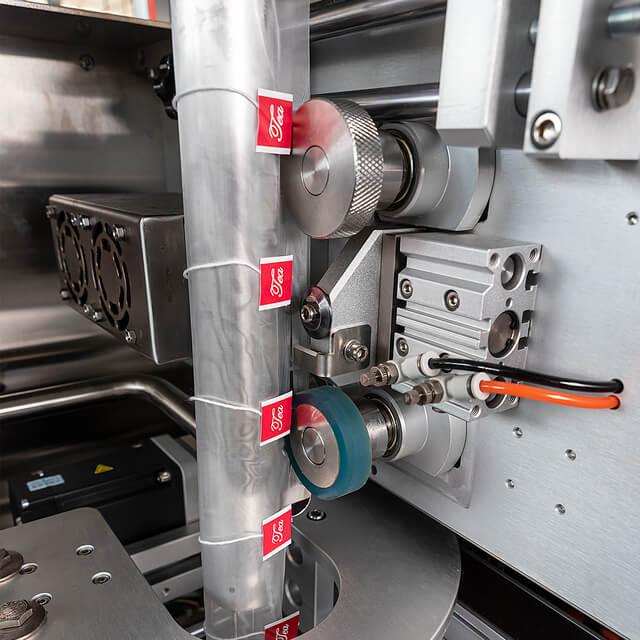
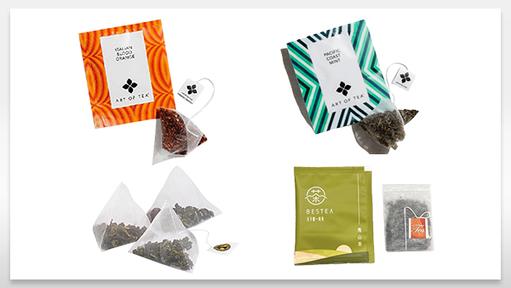
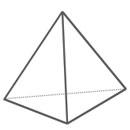
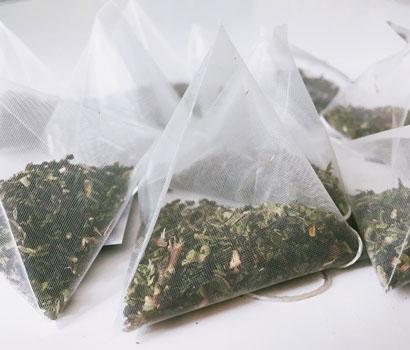
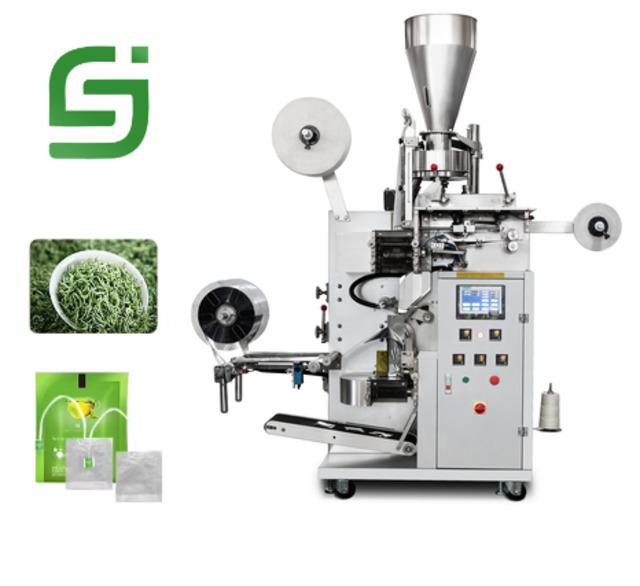
Pyramid and rectangular bags are both recorded for this machine. Changing the shape does not remove the need to approve the former, film width, sealing condition and cut position for each commercial format. The stored product page also shows versions with and without string and label; those attachments belong in the equipment scope only when they are shown on the required finished sample and included in the run test.
Leaf size and blend design decide how weighing should be tested
Tea is not one free-flowing material. Whole leaves can bridge across a narrow outlet, broken tea can settle densely, and fine dust can reach the seal area. A mixed recipe adds another problem: a visually correct total weight can still contain the wrong proportion of ingredients. Before discussing scale head count, record the largest leaf, the fines level, the target recipe, the acceptable weight tolerance and whether visible components must appear consistently from bag to bag.
A useful trial starts with separate samples of each ingredient and then runs the final blend. Inspect the hopper and feed trays after a low-level condition, because a system that behaves well when full can feed differently near the end of a batch. Retain bags from startup, stable operation, refill and restart. Compare both total weight and visible ingredient distribution rather than reporting only an average from a short run.
| Tea variable | Why it changes the setup | Evidence worth retaining |
|---|---|---|
| Long leaves or petals | They may bridge, orient across a gate or suffer breakage during feeding. | Ingredient sample, feed observation and rejected-bag reasons |
| Dense broken tea | Small volume changes can move the fill weight and headspace. | Individual bag weights and scale recipe |
| Fine dust | Dust may migrate toward the ultrasonic sealing area. | Seal-face inspection and leak samples after sustained running |
| Multi-ingredient blend | Correct total weight does not prove correct ingredient ratio. | Recipe record and visual distribution check |
Filter material is part of the sealing system
The legacy record names nylon, polyester net, non-woven fibre and corn-fibre materials. That list should be treated as a trial list, not a universal compatibility statement. Mesh thickness, basis weight, surface treatment and thermal or ultrasonic response vary between suppliers. Send the intended production roll and ask for the exact material identification to appear in the test record.
The stored feature field identifies ultrasonic sealing. Approval should look at all seal edges and especially the pyramid corners, where material tension and trapped leaf fragments can create a weak path. Open several bags dry, then use the buyer's normal infusion or handling test. A bag that looks tidy immediately after cutting may still shed fines or open after transport and brewing.
Use the stored operating window as a trial boundary
The page records 70-100 bags per minute, a 1000 x 1000 x 2260 mm machine envelope, approximately 410 kg machine weight, AC 220 V at 50-60 Hz with 2 kW listed power, and an air requirement recorded as at least 0.6 MPa. These values provide a planning baseline. They do not replace confirmation against the delivered configuration, attached scale system, string-and-label option or downstream outer-bag equipment.
| Stored item | Recorded value | Release question |
|---|---|---|
| Fill and bag range | 1-10 g; 45-90 mm long; 40-90 mm wide | Which exact tea, material and former were used at the limits? |
| Scale choices | 2-head, 4-head or 6-head electronic scale | How many ingredients and what dosing evidence define the selection? |
| Bag shape | Pyramid or rectangular | Which change parts, settings and seal samples belong to each shape? |
| Nominal speed | 70-100 bags/min | What accepted output was sustained with the required attachments? |
A tea-focused factory trial should reveal the weak condition
Do not spend the whole test on the easiest black tea and the most stable bag. Include the most fragile leaf, the dustiest approved blend and the smallest or fullest bag. Run long enough to include a refill and a normal stop. Count underweight, overweight, poorly distributed, wrinkled, cut and leaking bags separately. When an adjustment is made, note which control changed and keep the first acceptable samples after the correction.
Weigh consecutive bags from startup and stable running; for blends, also compare visible ingredient distribution.
Inspect corners and seal faces for trapped tea, wrinkles, incomplete bonding and fines leakage.
Run every approved pyramid or rectangular size with its named former, material and attachment set.
Stop with product in the system, restart by the approved method and isolate the first bags for review.
Cleaning is a recipe-control issue, not only a hygiene task
Fragrant tea, coloured petals and fine powders can remain in trays, scale buckets, chutes and the forming area. A change from one blend to another therefore needs a defined emptying sequence, accessible inspection points and a release standard for carryover. Ask an operator to perform the change using normal tools. Record removed parts, cleaning time, hard-to-see retention points and the first released bag from the next recipe.

Questions buyers ask about this configuration
Can the same setup run both loose tea and tea powder?
Not automatically. The stored page associates loose tea with electronic weighing and notes a screw-feeding option for powder. The powder sample and its flow behavior need a separate configuration review.
Does switching from pyramid to rectangular bags require only a screen setting?
No. The stored material states that the corresponding forming unit or former changes with bag size or shape. Film, seal condition and cut position must be approved again.
How should a buyer choose between 2, 4 and 6 scale heads?
Use ingredient count, recipe proportions, leaf behavior and required accepted output. The head count should follow a sample trial, not the highest number available.
What is the most useful seal sample to keep?
Keep labelled bags from startup, stable running, the dustiest product condition, a refill and restart. Include failed samples so later adjustments can be traced.
Can the outer envelope or cartoner be assumed to match the base machine speed?
No. Test the complete connected line with the required tea bag attachments and count accepted finished units at the final discharge point.
Conclusion
The YS-ZF90 should be released against a named tea, filter material, scale recipe and finished bag rather than a general pyramid-bag description. Review the related tea bag packaging machine range, then use retained samples and a signed test record to close the exact configuration.





 Tel: +8617350750975
 Email: info@vffspackingmachinery.com
 MP/WhatsApp: +8617350750975
 Manufacturer Address:Meixi Road, Tongan District, Xiamen,Fujian,China



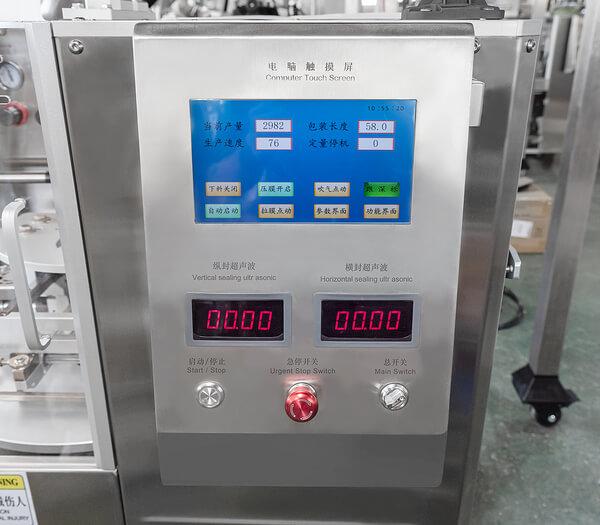
User-Friendly Design The intuitive design of this machine makes it easy for our operators to handle without extensive training.2024-08-09
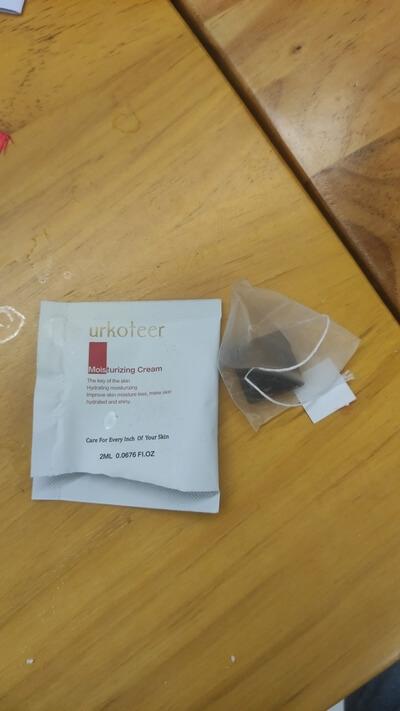
The inner and outer bags are packed perfectly.2024-08-09
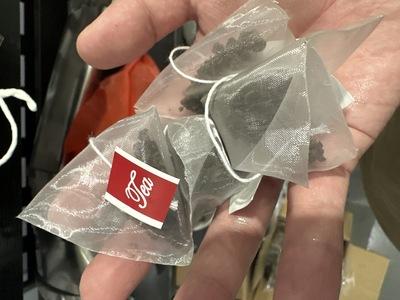
The pyramid tea bag is beautifully shaped and I am very satisfied. Thanks Ethan2024-08-09
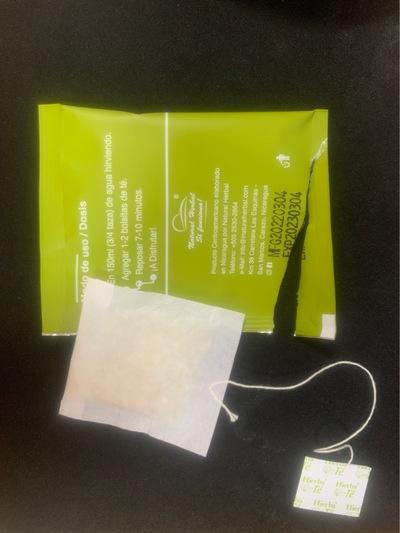
Cost-Effective Solution Investing in this machine has proven to be a cost-effective solution for scaling our tea production operations.2024-08-09