

Hot Keyword:
Author:YISEN Pouch Packing Machine Manufacturer TIME:2026-11-23
Bag deflation and powder deaeration are not interchangeable functions on a detergent powder packing machine. One can address free gas above the product; another acts on air within the bulk powder bed. Settling or flattening may change the package shape without establishing either result. Choose equipment by where the unwanted air is located and when it must leave, rather than buying an unexplained air-removal option.
A filled pouch can contain gas in several places. Some occupies the open space above the powder. Some lies between particles within the bulk material. The flexible bag itself can also have a loose or rounded outline that does not identify which gas volume dominates its appearance. These observations concern different parts of the package.
The first distinction is consequently physical. Is the powder bed unusually bulky at the filling point, is free headspace interfering with presentation of the bag top, or is downstream handling asking for a more regular shape? The same description, such as too much air, can conceal any of these conditions. Selecting a device from that description alone leaves its intended action uncertain.
Keep the terminology attached to a location. Powder deaeration concerns the bulk material, while headspace deflation concerns gas outside that bed. Neither term establishes removal of gas inside every individual particle. A supplier needs to describe the volume its equipment addresses, not simply show a flatter finished package and leave the mechanism to inference.
Equal detergent masses can occupy different bulk volumes. A high powder bed and excess free gas above a settled bed therefore call for different explanations. Deflating free headspace does not, by itself, establish a change in the material occupying the pouch.
Attach the quoted result to a specific handoff: powder leaving an upstream treatment chamber, powder delivered to the bag, or the filled package entering closure. A claimed change measured at one location cannot simply be assigned to another. This keeps the comparison focused on what each module delivers to the next operation, rather than repeating a general discussion of powder density or bag capacity.
Concetti's powder-packaging brochure describes a deaerating screw-dosing arrangement that removes air before the product enters the bag. Its example places the dosing screw within a vacuum chamber and uses a permeable element in the air-removal function. This identifies a treatment location and a material-handling concept; it does not specify equipment suitable for every detergent.
In that architecture, the powder condition is changed upstream of the package. The bag receives material that has already passed the relevant treatment stage. The engineering comparison therefore includes the relationship between that stage and the final outlet. A later transfer that changes the material again would also belong in the explanation of the finished filling route.
A description ending at the treatment chamber is incomplete for this comparison. The buyer still needs to understand where its discharged material waits and how it reaches the final meter. Otherwise, the quoted powder condition and the condition actually presented to the bag refer to different locations.
Do not reduce this option to the presence of a vacuum connection. A connection does not identify the chamber, the powder interface or the material path through which the described function occurs. These are matters for the supplied equipment design. No pressure, construction detail or adaptation is proposed here. The industrial example explains what pre-fill treatment means without establishing a fitted feature on the site's YS-80K machine.
The same Concetti publication describes other bagging arrangements that use deaeration probes and staged filling inside bags. That is a different location from treating powder before it enters the package. The material is already within the bag while a defined part of the line acts on it.
Such a sequence can involve more than one operation between initial filling and final closure. Its layout, package access and movement should be understood as part of that particular industrial system. The existence of those examples does not mean that a small retail-pouch machine has room for a probe, supports an additional station or handles the same powder condition.
For a comparison, identify what is presented to the treatment stage and what leaves it. Is the bag partly filled or at its final quantity? Does treatment occur at the filling position or after transfer? Which later operation receives the changed powder bed? These questions define the architecture without supplying an operating recipe. They also prevent an in-bag process from being represented as equivalent to an upstream module merely because both descriptions use deaeration.

Headspace is the gas space outside the powder bed and inside the package. A headspace-deflation option addresses that part of the pack. It should not automatically be interpreted as a device that draws air through the bulk powder or changes the material's condition before filling.
Fres-co's G21 brochure offers a useful terminology example: it lists a headspace-deflation system separately from a degassing-valve applicator and a gas-flushing option. Those entries identify distinct functions in that manufacturer's offering. They do not disclose the operating method of an unverified detergent-machine option, and they are not a claim that YISEN installs any of them.
Ask what free volume the offered deflator is intended to change and when the package is still open to that action. If the actual problem is powder reaching the top too early, a headspace label alone does not answer it. If the powder bed already fits but excess free gas affects presentation, an upstream powder treatment may be an unnecessarily different intervention. The distinction helps match the requested function to the observed package state.
Settling, compaction and flattening describe changes in particle arrangement or package geometry. Those names alone do not establish an air-removal path. When an offer uses one of them alongside deaeration, ask whether it describes a separate station or an additional effect of the same module.
A useful equipment description names the input state, the action and the downstream handoff. A photograph of the resulting shape cannot supply that information. The manufacturer should explain whether the offered device primarily changes geometry, removes gas, or combines functions under specified package conditions. This comparison does not propose pressing, perforating or modifying bags to imitate a supplied system.
Locate each quoted option before, during or after filling and closure. An operation performed after closure cannot create clearance at an earlier bag-top presentation stage. Two suppliers using the same function name may therefore be offering different process arrangements.
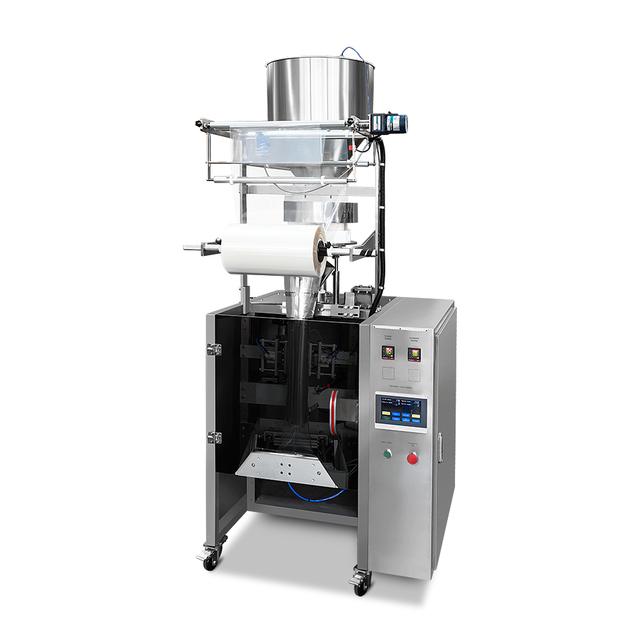
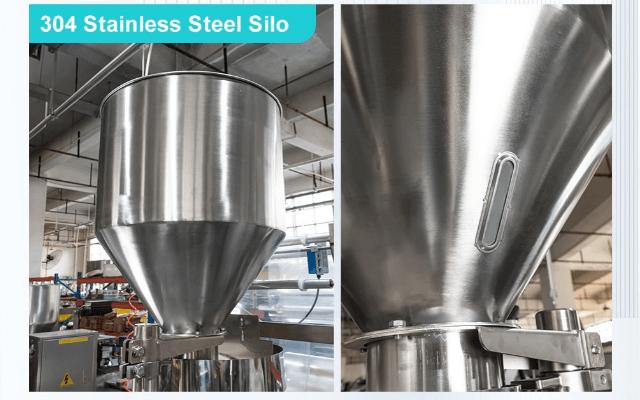
The site's washing-powder product and its archived YS-80K images provide the detergent-pouch context. They do not establish an installed deaeration chamber or headspace device. Review the powder packing machine range with that distinction intact. A standard machine photograph can show the ordinary hopper and packing route while leaving the proposed air-removal architecture entirely unconfirmed.
Request a sequence description showing which station receives the package next. That identifies the integration question without selecting sealing settings or assuming that an additional treatment station fits the existing machine.
Reducing a gas volume and changing its composition are different objectives. Gas flushing introduces a specified gas arrangement into the package process; it is not another name for withdrawing entrained air from powder. A package can have less free headspace without any established atmosphere-composition result.
A one-way valve adds another distinct package function. Its role should not be inferred from the word deflation, and a valve does not identify a pre-fill powder-treatment stage. Fres-co's separate brochure entries help prevent these functions from being collapsed into one option. They provide terminology, not a reason to transfer coffee-package features to detergent.
Similarly, an extraction connection used around an open filling point does not, by its name, establish powder deaeration. The relevant equipment description must show what the connected function acts on. Keep dust management outside this purchasing comparison's technical design scope. There is no instruction here to repurpose a collector, apply vacuum to an existing hopper or modify a powder line. The required distinction is between functions, not between improvised ways of producing suction.
Use a functional comparison when an offer contains several air-related terms. PAYPER's open-mouth bagging description treats bag deaeration and bag closure as project options, reinforcing the need to identify the particular arrangement. Its larger-bag application does not resolve suitability for a small detergent pouch.
| Function described | Reference location | Result that remains separate |
|---|---|---|
| Pre-fill powder deaeration | Bulk material before entry into the bag | Condition after the remaining transfer |
| In-bag powder treatment | Powder already introduced into a package | Available package access and closing sequence |
| Headspace deflation | Free gas space above the material | Air retained within the powder bed |
| Settling or shaping | Particle arrangement or external pack geometry | Whether gas actually left the package |
The useful choice follows the location of the problem. An unnamed reduction in bag volume is too broad to define the machine function being purchased.
Does a flatter bag prove the powder was deaerated? No. External shape does not establish whether gas left the powder bed, free headspace changed or particles rearranged.
Does headspace deflation remove air between powder particles? That capability requires its own equipment explanation. The headspace function name alone does not establish treatment through the powder bed.
Is powder deaeration the same as vacuum packaging? They describe different process objectives. An upstream powder treatment does not, by itself, establish a vacuum-packed finished pouch.
Can an extraction port be treated as a deaeration system? A port does not identify the complete function. The offered material route and equipment description must explain what the connection serves.
Do industrial bagging examples prove small-pouch suitability? No. They explain distinct architectures; the particular detergent, package access and machine sequence still require application-specific consideration.
Specify the air volume and process location that matter. Powder-bed treatment, headspace deflation and package shaping can influence different states, so their names should not be exchanged casually. A clear description of where each action occurs makes the purchase understandable without assuming that an ordinary detergent-pouch machine already includes the proposed equipment.

YISEN MACHINERY - The ONE-STOP VFFS PACKING MACHINE SOLUTION SUPPLIER
 Tel: +8617350750975
 Email: info@vffspackingmachinery.com
 MP/WhatsApp: +8617350750975
 Manufacturer Address:Meixi Road, Tongan District, Xiamen,Fujian,China