


Hot Keyword:
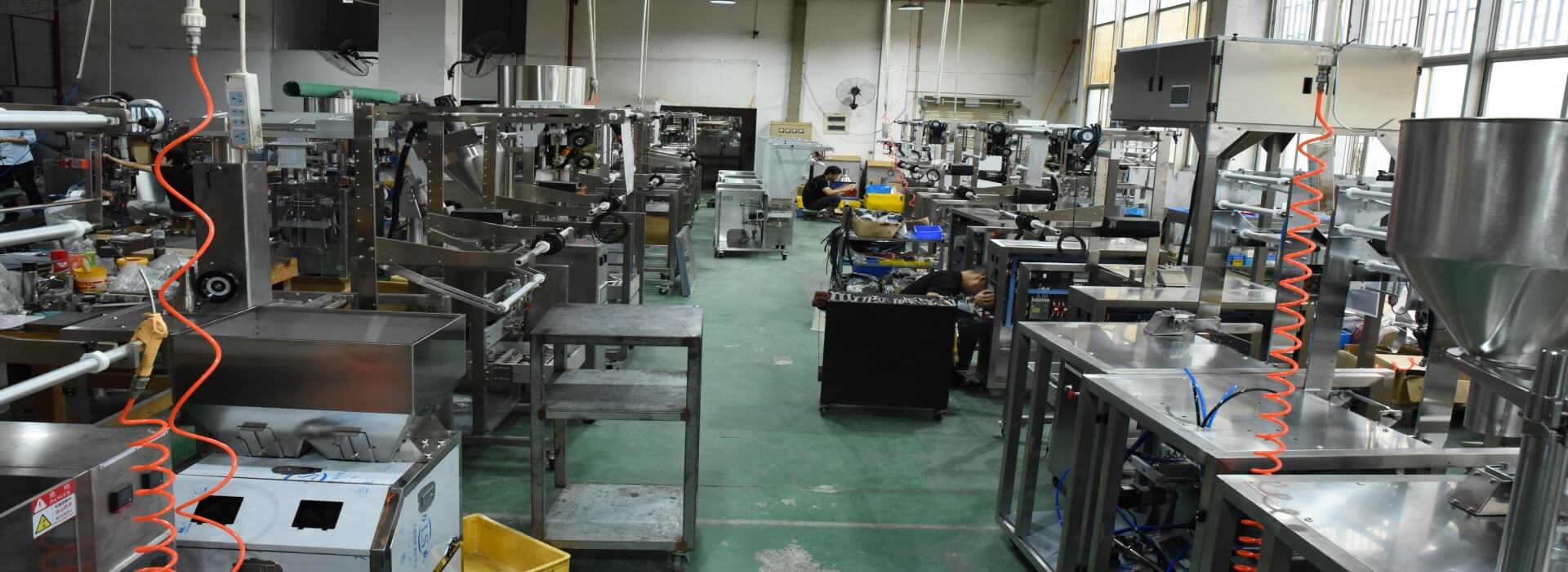
This Netherlands page is a B-level application reference for the proposed multi-ingredient electronic-scale pyramid or rectangular tea bag packaging line. It does not describe any specified contracting company, binding supply order, completed delivery result, or Dutch market authorization. Use the page to frame trial inputs, line scope questions, factory factory trials, and handover evidence for recipe control and auditable ingredient changeover.
Evidence boundary for Netherlands and recipe control and auditable ingredient changeover: level B recipe reference. Dutch market language is neither contracting-party evidence nor legal approval.
A Dutch packer in Netherlands should map the Dutch recipe and bag contract before choosing hardware. Define rectangular or pyramid infusion bags selected from approved substrate trial inputs, the recipe weight, approved bag look, identification fields, case pack, and Dutch manufacturing sequence. The proposed multi-ingredient electronic-scale pyramid or rectangular tea bag packaging line can be assessed only after those inputs specify dosing modules, recipe controls, available services, and a Dutch verification run. Exclude later Dutch recipe formats until their pack inputs and conversion pieces receive a separate review.
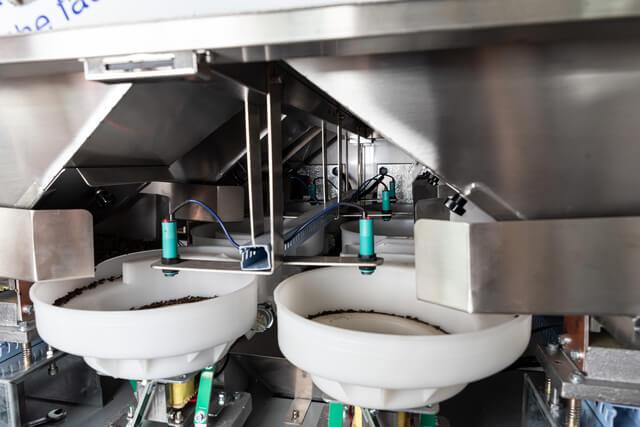
The planning focus here is recipe control and auditable ingredient changeover. Capture Dutch recipe volume, startup pattern, ingredient combinations, authorized interventions, line-clearance limit, identification need, and case transfer. Do not treat nominal cycles as guaranteed Dutch conforming packs. Approved output must be measured with the agreed tea and selected substrate under written conditions that include startup and recovery.
Evidence level B means the site can support the packaging line family, tea applications, and the referenced images, but it cannot prove a specific contracting-party performance. This Dutch note supplies no company details, commercial value, shipment capture, capacity increase, return figure, certification conclusion, or operator comment. Current packaging line technical points remain pending until the Dutch proposal and recipe test.
For the Dutch recipe study, keep proven references apart from unanswered decisions. The recorded direction is multi-ingredient electronic-scale pyramid or rectangular tea bag packaging line for mixed herbal recipes containing leaves, petals, peel, and granular inclusions. Items still to check include the exact model, all contact parts, guarding, languages, voltage, substrate specification, dose tolerance, seal method, print system, spare parts, and site acceptance. The Dutch packer should complete its own regulatory and food-safety review for the intended use in Netherlands.
The product definition must go beyond the word tea. For mixed herbal recipes containing leaves, petals, peel, and granular inclusions, document component-size range, recipe volume density, fragility, dust, static, ingredient moisture behavior, recipe stratification, and variation between lots. Trial inputs should represent regular Dutch recipe work plus the least uniform Dutch ingredient mix. A Dutch recipe feeder that operates with one blend may need changed Dutch values or feed modules for another blend.
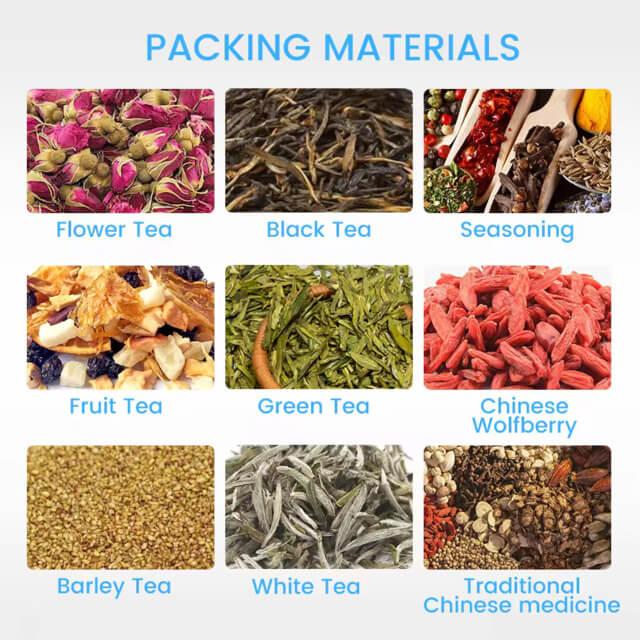
Dosing evidence should use consecutive finished bags, not selected examples. Capture the Dutch ingredient level, Dutch ingredient top-up sequence, installed Dutch recipe modules, recipe, target, Dutch recipe sample order, measured Dutch recipe variation, and any Dutch authorized intervention. Pay particular attention to component separation, inconsistent recipe volume density, cross-contact, and incomplete line clearance. When a Dutch recipe remains untested, keep it as a Dutch unresolved checkpoint rather than describing universal Dutch recipe fit.
The packaging contract for this Netherlands reference is rectangular or pyramid infusion bags selected from approved substrate trial inputs. Keep an approved sample and substrate data with the application study file. Check dimensions, sealant or ultrasonic response, thread and label requirements where applicable, Dutch identification registration, Dutch identification zone, permeability expectations, Dutch ingredient storage rules, and the method used to judge Dutch infusion-bag seal quality after handling.
Substrate trials should include normal Dutch pack-input differences. Observe tracking, forming, cutting, Dutch substrate tension, static, wrinkles, Dutch ingredient carryover near seals, finished geometry, and transfer to the next operation. The application must also control component separation, inconsistent recipe volume density, cross-contact, and incomplete line clearance. A substrate label or sustainability statement is not Dutch approval; keep supplier records with recipe-specific bags.
| Netherlands review area | Reference direction | Evidence required before approval |
|---|---|---|
| Tea and recipe | mixed herbal recipes containing leaves, petals, peel, and granular inclusions | Representative trial inputs and approved operating range |
| Finished pack | rectangular or pyramid infusion bags selected from approved substrate trial inputs | Substrate sample, dimensions, print, and seal criteria |
| Packaging line direction | multi-ingredient electronic-scale pyramid or rectangular tea bag packaging line | Installed options, utilities, controls, and exclusions |
| Primary risk | component separation, inconsistent recipe volume density, cross-contact, and incomplete line clearance | Witnessed test, defect capture, correction, and retest |
| Handover | ingredient-bin identification, recipe permissions, cleaning records, substrate declarations, and local food-safety review | Owner, document, training capture, and open-point closure |
The recommended factory acceptance route is recipe-by-recipe dosing checks using retained ingredient and finished-bag trial inputs. Register the Dutch recipe modules, ingredient lots, infusion-bag substrate, starting rejects, conforming bags, interventions, ingredient top-ups, alarms, and recovered production. Evaluate recipe dose, blend distribution, bag shape, seal, identification, and case transfer against the Dutch approval matrix.
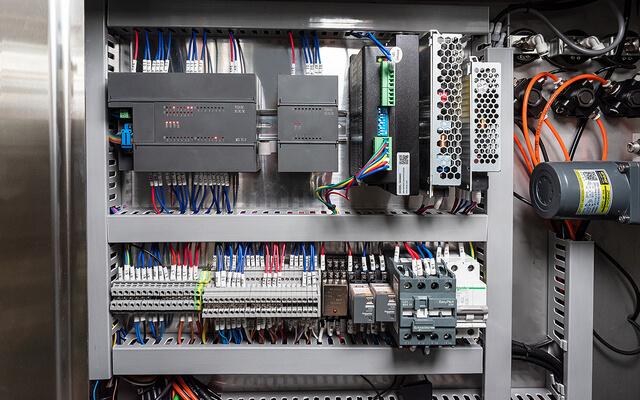
The Dutch acceptance run needs ingredient-bin loading, recipe authorization, first-bag approval, a scheduled stop, restart, and documented line clearance. This exposes segregation and carryover risks. Give each open issue an owner, due action, recipe-specific retest, and final closure signature before shipment.
Handover for the Netherlands application study should cover ingredient-bin identification, recipe permissions, cleaning records, substrate declarations, and local food-safety review. For the Netherlands, allocate power, ingredient preparation, bin handling, identification supplies, case transfer, lifting, site labor, and approved support connectivity. The Dutch responsibility matrix must retain every interface outside the packaging-line offer.
Dutch operators should train with each approved ingredient recipe on the installed multi-bin system. Include access control, first-bag release, ingredient clearance, sanitation, alarm recovery, and stop routines. Technical staff need module checks, spare codes, adjustment rights, and restart verification; unresolved recipe risks retain owners.
Is this a verified customer delivery in Netherlands? No. It is a B-level application reference built from verified site product substrate. Customer identity, order, delivery, and performance results are not claimed.
What trial inputs should be supplied before quotation? Send representative mixed herbal recipes containing leaves, petals, peel, and granular inclusions, the approved rectangular or pyramid infusion bags selected from approved substrate trial inputs, target dose, printed-substrate requirements, and the most difficult planned variation.
What should the factory acceptance test capture? Capture line scope, trial inputs, conditions, approved packs, rejects, interruptions, component separation, inconsistent recipe volume density, cross-contact, and incomplete line clearance, cleaning work, and every open point requiring retest.
Does this page check compliance for the Netherlands market? No. The Dutch packer must review applicable requirements for Netherlands and obtain the necessary declarations, technical files, substrate records, and local advice.
For the Netherlands, freeze each herbal recipe, ingredient lot, infusion-bag substrate, and clearance rule in one controlled file. The Dutch decision should follow witnessed segregation, refill, access-control, and recipe-recovery results. Match those findings to the tea bag packaging machine range, then close ownership for sanitation, identification, and downstream transfer.

YISEN MACHINERY - The ONE-STOP VFFS PACKING MACHINE SOLUTION SUPPLIER
 Tel: +8617350750975
 Email: info@vffspackingmachinery.com
 MP/WhatsApp: +8617350750975
 Manufacturer Address:Meixi Road, Tongan District, Xiamen,Fujian,China