

Hot Keyword:
Author:YISEN Pouch Packing Machine Manufacturer TIME:2026-09-06
Specify the complete presentation system before ordering a tea bag making machine: inner filter bag, thread attachment, tag construction, optional envelope, print controls, and finished-pack acceptance. These parts interact mechanically, so approving them as separate catalog options creates avoidable trial failures.
A buyer should send commercial samples and dimensioned specifications for every material layer. The supplier then needs to demonstrate the intended tea, filter material, thread, tag, envelope, and coding combination during one controlled trial. The decision should be based on accepted finished packs, not on an empty-cycle demonstration or an isolated sample made with substitute materials.
Acceptance note: Put the final specification into the request for quotation rather than leaving presentation choices for commissioning. Ask each bidder to identify included modules, required change parts, supported material limits, trial quantities, and exclusions in the same response format. This comparison exposes quotations that describe a generic machine but omit the thread, tag, or envelope equipment needed for the approved retail pack. It also gives the acceptance team a traceable baseline when the delivered configuration is inspected.
Start with the consumer pack rather than the mechanism. Record inner-bag shape, filled dimensions, target dose, headspace, thread length, tag position, envelope style, tear behavior, and any retail-carton constraint. A change to one element can alter timing or clearances elsewhere in the line.
Working method: Create a dimensioned pack sheet with tolerances and attach a physical approved sample. Mark which dimensions are functional, which are visual, and which may vary with tea bulk density. Ask the supplier to identify every forming part and recipe value tied to those dimensions.
Evidence to retain: Retain the signed drawing, material codes, sample photographs, and a list of machine change parts. During the trial, compare measured packs with the approved sheet at startup, stable running, refill, and restart.
Decision boundary: Do not treat a catalog photograph as a dimensional specification, and do not assume a bag shown with one tea will behave identically with another blend.
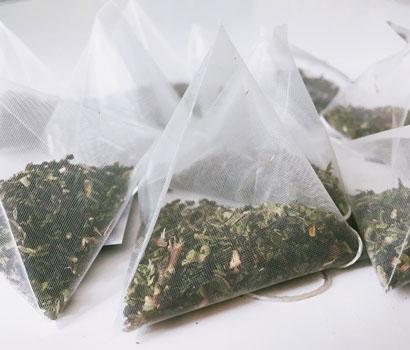
Filter paper, nonwoven webs, and mesh materials differ in stiffness, friction, stretch, porosity, sealing response, and edge behavior. The tea bag making machine must guide the selected web without wandering, wrinkling, or contaminating the seal with loose product.
Working method: Provide the actual roll width, core, winding direction, splice practice, thickness range, surface treatment, and supplier data. Run more than one roll when practical. Observe unwind tension, tracking, forming contact, cut quality, and seal appearance after the machine reaches normal temperature.
Evidence to retain: Record roll identity, ambient condition, tension settings, seal settings, rejected pieces, and retained samples. Inspect both dry bags and brewed samples when infusion behavior is part of the product requirement.
Decision boundary: Material names alone are insufficient. Two webs sold under the same general description may require different tooling, temperature, pressure, or dwell settings.
Thread handling affects appearance and reliability even when the filled bag itself is acceptable. Buyers should define attachment method, thread material, length tolerance, pull direction, knot or seal location, and whether the thread may touch the seal or printed area.
Working method: Feed production thread through the complete path and inspect tension changes during acceleration, normal running, and stop-start cycles. Check for fraying, missed attachment, loops, entanglement, and thread trapped in a cut or seal. Include low and high ends of the allowed thread diameter.
Evidence to retain: Count attachment defects separately from bag defects. Preserve failed pieces with the machine state and reason code, then confirm that the correction remains effective after a restart and a material splice.
Decision boundary: A visually attached thread is not automatically acceptable. The attachment must withstand the buyer's agreed handling test without damaging the filter bag or pulling the tag into the product.
Tag stock must be compatible with pickup, cutting, folding, or attachment hardware. Lock tag dimensions, thickness, stiffness, grain direction, print orientation, color registration tolerance, and the acceptable relationship between the tag, thread, and finished bag.
Working method: Use final printed tag material in the acceptance run. Review stacks or rolls for curl, static, edge damage, and dimensional drift. Challenge the feeder after replenishment and after a short stop, because pickup faults often appear when material pressure or surface condition changes.
Evidence to retain: Retain a sequence of tags from startup through stable output and compare print orientation, cut edge, attachment point, and final position. Link each reject to a feeder, sensor, timing, or material observation.
Decision boundary: Use the tea bag packaging machine configuration only as a product-family reference; the quoted tag mechanism still must be proven with the buyer's actual tag stock.
| Decision area | Items to lock | Acceptance evidence |
|---|---|---|
| Inner filter bag | Web, dimensions, dose, seal method | Forming, seal, cut, infusion sample |
| Thread and attachment | Material, length, position, pull rule | Missed attachment and handling test |
| Printed tag | Size, stiffness, orientation, artwork | Pickup, cut, print position, final presentation |
| Outer envelope | Film, pitch, eyemark, opening style | Insertion, registration, seal, cut, coding area |
An envelope can improve presentation and provide an additional barrier, but it adds film handling, registration, sealing, and synchronization requirements. Define whether the envelope is plain or printed, individual or connected, easy-open or fully sealed, and how the inner bag should sit inside it.
Working method: Send the commercial envelope roll and artwork proof. Verify pitch, eyemark contrast, unwind direction, sealant layer, coefficient of friction, and allowable curl. During testing, inspect inner-bag insertion, trapped thread, tag position, print centering, seal integrity, and cut location.
Evidence to retain: Measure envelope length and print-to-cut position across startup, stable running, speed changes, and roll splice recovery. Retain examples of every defect category and the settings used for accepted output.
Decision boundary: Do not add an envelope merely because the machine can form one. Confirm that its barrier, shelf presentation, coding area, and opening experience support the actual retail requirement.
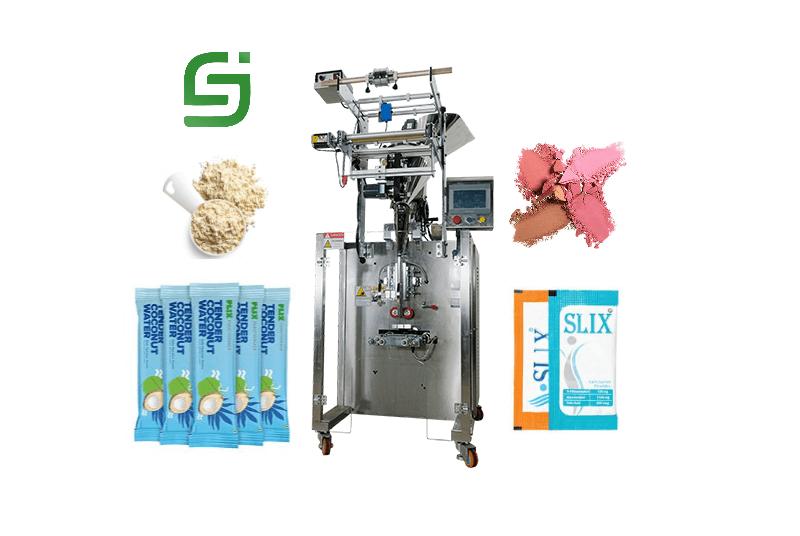
A tea bag can be mechanically closed yet fail the brand standard. Establish two release paths: one for functional integrity and another for visual presentation. This prevents subjective artwork comments from hiding a real seal problem, or minor cosmetic variation from being confused with leakage risk.
Working method: Define measurable checks for bag dimensions, dose, seal continuity, attachment, envelope closure, and coding. Then create a visual board for centering, wrinkles, tag orientation, thread presentation, print location, and allowable marks. Train reviewers to record the correct defect family.
Evidence to retain: Use a sample log that identifies time, recipe, material lot, operator intervention, and disposition. Review trends rather than selecting only the best packs from a long run.
Decision boundary: Acceptance limits belong to the buyer's product specification. The machine supplier can demonstrate repeatability under stated conditions but should not invent the brand's visual tolerance.
Testing filter web, thread, tag, and envelope in separate demonstrations misses the synchronization risk. The useful trial is an integrated run with the intended tea and all approved materials moving through the quoted machine configuration at the same time.
Working method: Plan phases for setup, stable production, material refill, controlled stop, restart, and one deliberate roll change. Include the most difficult tea in the product range, not only a free-flowing sample. Count accepted finished packs after all presentation checks.
Evidence to retain: Report elapsed time, consumed material, accepted packs, rejects by cause, manual interventions, and settings. Retain samples from every phase and note any substitute component used during the test.
Decision boundary: A short successful burst does not prove sustainable operation. The run must be long enough to expose replenishment, temperature stabilization, thread feeding, and registration recovery behavior.
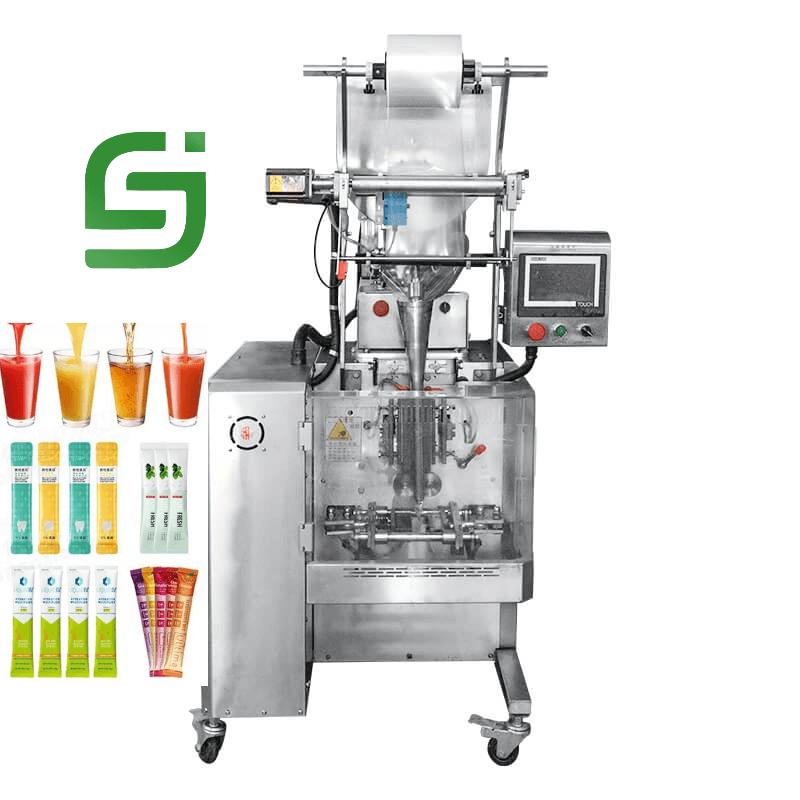
After approval, convert the trial into a controlled handover package. The package should connect material specifications, machine revision, tooling list, recipes, inspection method, spare parts, cleaning instructions, and released samples so later changes remain traceable.
Working method: Assign ownership for artwork changes, material substitutions, recipe edits, and change-part storage. Require a first-piece release after any approved change. Back up recipes and record who may alter attachment, registration, seal, or cut parameters.
Evidence to retain: Store the final parameter sheet, electrical and pneumatic drawings, maintenance list, training record, and sample archive together. Include supplier contacts and a procedure for submitting a reproducible fault report.
Decision boundary: Approval applies only to the documented combination. A new tag laminate, thread source, envelope pitch, or filter web should trigger a focused review before full production.
Can a buyer approve the machine with plain tag stock? Plain stock may confirm basic feeding, but final printed stock should be tested because ink, varnish, curl, stiffness, and cutting behavior can change pickup and placement.
Should thread length be checked only at normal speed? No. Check startup, steady output, replenishment, stop, and restart because tension and timing faults may appear only during transitions.
Does every tea bag need an outer envelope? No. The decision depends on barrier, hygiene, presentation, coding, distribution, and opening requirements. The envelope adds material and operating complexity.
What samples should be retained after acceptance? Keep accepted and rejected packs from each trial phase, the approved materials, dimensioned drawings, settings, material lot identities, and the signed inspection result.
Can a new tag supplier be used without another trial? Only after a controlled comparison confirms dimensions, stiffness, surface, curl, print, and feeding behavior remain within the released specification.
Specify thread, tag, and envelope choices as one finished-pack system. A reliable purchase decision links commercial materials to tooling, recipes, integrated trials, defect definitions, and retained evidence. Lock the approved combination in the handover package and use change control whenever a material or presentation detail changes.

YISEN MACHINERY - The ONE-STOP VFFS PACKING MACHINE SOLUTION SUPPLIER
 Tel: +8617350750975
 Email: info@vffspackingmachinery.com
 MP/WhatsApp: +8617350750975
 Manufacturer Address:Meixi Road, Tongan District, Xiamen,Fujian,China