

Hot Keyword:
Author:YISEN Pouch Packing Machine Manufacturer TIME:2024-08-27
An oil pouch packing machine is an integrated system that meters edible oil into a flexible package and closes that package for handling and sale. Understanding the product path, pouch method, dosing principle, and acceptance tests is more useful than treating the machine as a single sealed box.
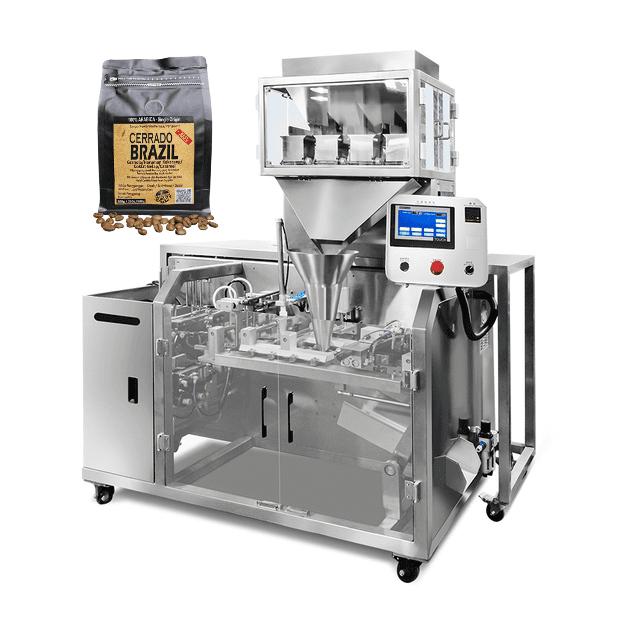
The name covers several configurations. Some machines form a pouch from printed rollstock, while others open and fill premade pouches. A dosing unit may use a pump, piston, flow measurement, or another liquid-metering method selected for the oil and required range. The packaging section then controls pouch presentation, filling position, sealing, cutting, coding, and discharge. Buyers need to define those interfaces carefully because a capable filler paired with unsuitable film handling or weak seal control will not create a reliable finished pack.
A clear definition begins at the product inlet and ends at an agreed discharge point. Upstream equipment may include a storage tank, transfer pump, filter, temperature control, and level management. The core machine commonly meters the dose, presents or forms the pouch, fills it, and seals it. Downstream scope may add checkweighing, leak detection, coding verification, conveyors, collection, or case packing.
Suppliers do not always draw the same boundary around their quotation. One proposal may include the product pump and coder while another assumes the buyer will provide them. Compare scope line by line, including piping, electrical panels, guarding, platforms, change parts, installation supervision, and commissioning material. This prevents a lower quoted price from hiding equipment that is essential to start production.
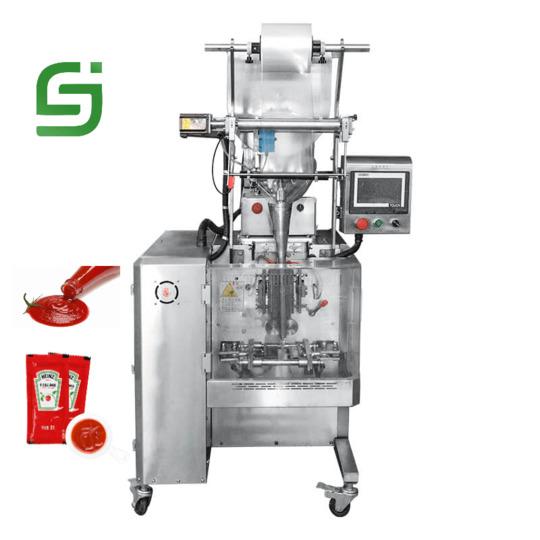
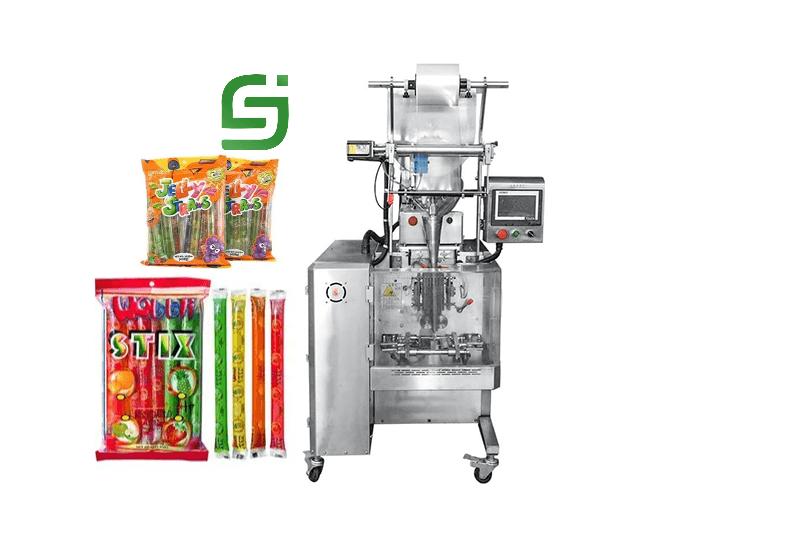
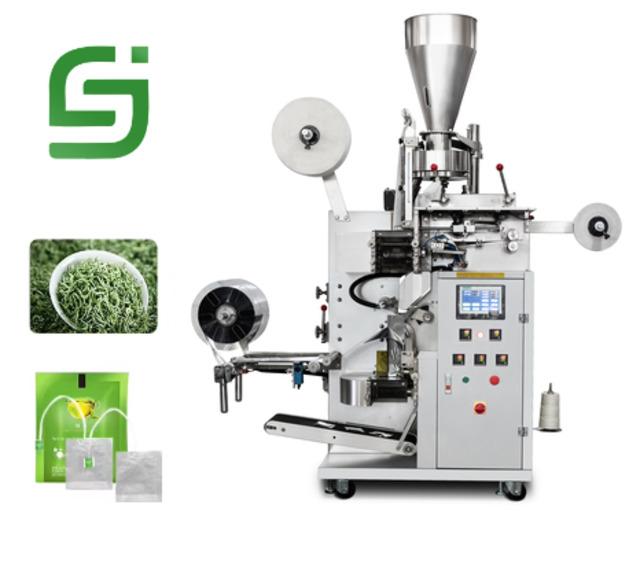
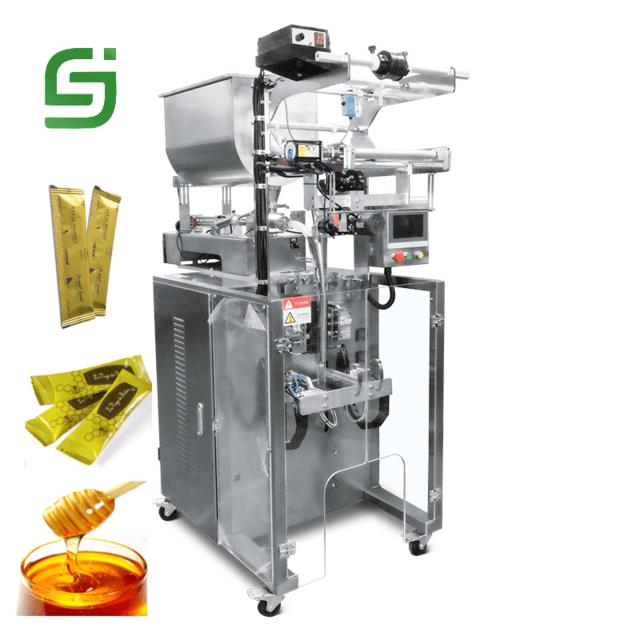
A vertical form-fill-seal arrangement pulls rollstock over a forming set, creates the longitudinal seal, doses oil into the tube, and makes the transverse seals that separate packs. It can use packaging material efficiently and support continuous production, provided the film tracks well and the forming geometry suits the pack. Printed artwork, registration marks, roll direction, core size, and maximum roll dimensions must be specified.
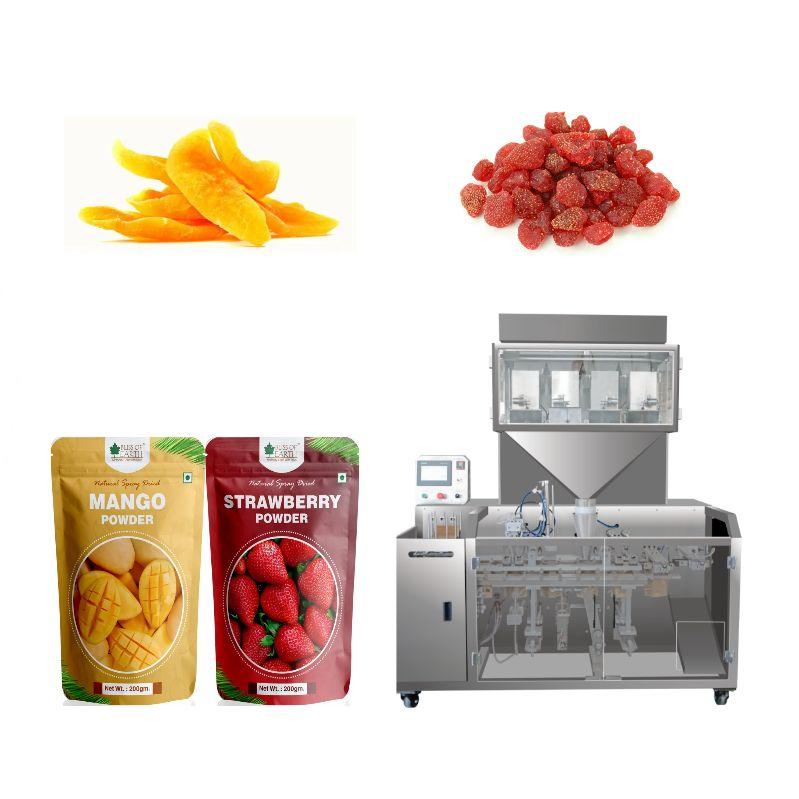
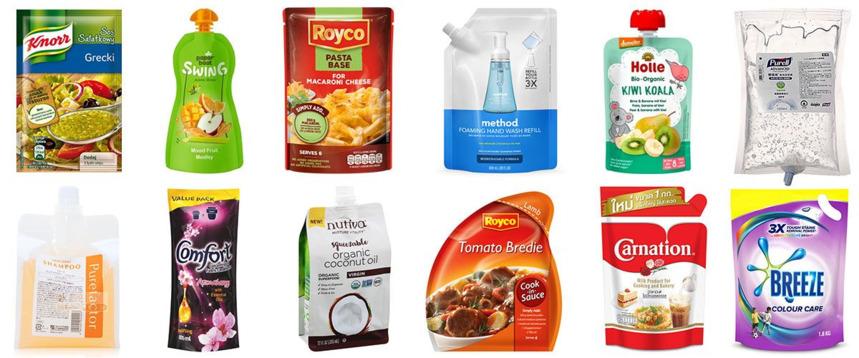
A premade pouch system receives bags that have already been converted. It opens each pouch, confirms presentation, fills it, and closes the top seal. This route may suit shaped packs, zippers, spouts, or formats that are difficult to form on the filling machine. Its performance depends on pouch dimensional consistency, stiffness, opening behavior, and magazine handling. Neither method is universally better; the correct choice follows the approved retail format and expected volume.
The dosing device controls how much product enters each pouch. Selection depends on fill range, target tolerance, oil viscosity at operating temperature, available head pressure, required hygiene, and the way the line is fed. A pump-based system must remain stable as tank level or temperature changes. Any flow-measuring approach requires suitable calibration, installation conditions, and a method for confirming the result with net-weight checks.
The nozzle matters as much as the meter. Its outlet size, shutoff design, position, and movement influence fill time, splashing, foaming, and trailing droplets. A small outlet may restrict speed, while an oversized or poorly controlled outlet may contaminate the seal zone. Trials should observe the final part of the dose in slow operation and at target speed, using the buyer's actual oil rather than water.
Flexible packaging is a functional component of the process. The laminate needs appropriate oil compatibility, sealant behavior, mechanical strength, barrier performance, print durability, and machinability. Thickness alone does not describe those properties. The packaging supplier should provide the construction and sealing guidance, while the machine trial confirms feeding, forming, and closure under realistic settings.
Heat-seal performance depends on temperature, pressure, dwell, jaw condition, cooling, and contamination. Edible oil left in the closing area can create channels that are difficult to see. Inspect seal position and width, then use a defined leak or peel test after the pouch has cooled. Store and handle trial packs before final approval because flexing, stacking, and temperature exposure can reveal weaknesses absent at the discharge conveyor.
| Configuration question | Rollstock system | Premade pouch system | Buyer verification |
|---|---|---|---|
| Package creation | Forms and cuts pouches in the machine | Receives converted pouches | Approve dimensions and finished appearance |
| Material input | Printed or plain film roll | Stacks or magazines of individual bags | Run production material from intended suppliers |
| Format flexibility | Depends on forming set and film range | Depends on opening and transport envelope | Witness smallest and largest planned formats |
| Primary process risk | Tracking, registration, and seal formation | Pouch pickup, opening, and dimensional variation | Record rejects by cause during timed trials |
| Cost comparison | Include film and forming change parts | Include converted-pouch price and handling | Calculate cost per accepted pack at expected volume |
The control system coordinates dosing, pouch motion, sealing, and fault response. Sensors may confirm film marks, pouch presence, opening, product level, guard status, air pressure, or temperature. Their exact functions should be documented. A sensor can detect a defined condition, but it should not be described as proving fill weight or seal integrity unless the system actually measures those outcomes.
Operators need clear status messages and controlled access to settings. Ask how recipes are created, backed up, restored, and protected from accidental changes. Review what happens after power loss, low air pressure, missing pouch, film end, or a dosing alarm. Safe recovery should avoid an uncontrolled oil discharge and should identify which pouches require inspection before the line returns to automatic operation.
Oil remaining in tanks, hoses, pumps, valves, and nozzles affects both sanitation and batch yield. The layout should support controlled draining without requiring improvised containers or opening pressurized fittings. Ask for the residual volume after normal drain-down and identify where product cannot leave by gravity. That information helps the buyer plan recovery, flushing, and the transition between different oils.
Cleaning instructions should state the sequence, compatible agents, temperatures, contact time, rinse method, inspection points, and reassembly checks. Product-contact materials and seals must be identified so the processor can evaluate compatibility. Observe routine disassembly during acceptance. A design that requires excessive tools, awkward lifting, or hidden inspection can consume more shift time than its filling speed saves.
Rated speed is normally tied to a particular fill quantity, pouch, film, and product condition. Larger doses need more filling time; difficult pouch handling or longer seal dwell can also reduce the cycle rate. Capacity planning should use accepted pouches over a sustained run, after deducting realistic replenishment, inspection, cleaning, and changeover time. Short demonstrations rarely show those losses.
Confirm electricity, compressed air quality and consumption, product feed pressure, ambient limits, drainage, and floor loading. Check equipment dimensions with doors open and change parts removed, not only the compact operating footprint. Access around guards and panels influences maintenance time. The line also needs enough downstream space so finished oil pouches are not dropped, bent sharply, or piled before seals have stabilized.
Start with a product-and-pack matrix listing each oil, temperature range, fill quantity, pouch dimensions, laminate, closure, code format, and daily volume. Mark the combination expected to be most difficult, such as the smallest pouch at high speed or the largest dose with limited seal time. The supplier should explain which conditions use standard settings and which require change parts or a different dosing configuration.
When exploring an oil and liquid pouch packaging solution, request a written functional specification before ordering. The acceptance plan should define a sustained run, sampling frequency, fill limits, seal tests, allowable reject categories, changeover demonstration, cleaning review, documentation, training, and unresolved-item process. Both parties then know what successful delivery means and which measurements support the decision.
Is an oil pouch machine only a filling device? No. The complete system also presents or forms the package, coordinates the dose, protects the seal area, closes the pouch, and manages discharge. Quotation boundaries vary, so the buyer should confirm which tanks, pumps, coders, conveyors, inspection devices, and utilities are included.
Can the same equipment pack several edible oils? It may be able to do so when the materials, viscosity range, cleaning method, and dosing components are compatible. Each oil should appear in the product matrix. Changeover trials must consider residual product, cross-contact policy, seal contamination, calibration, and the time needed to release the next batch.
How is fill accuracy verified? Use a suitable calibrated scale and an agreed tare method to measure consecutive production pouches. Record average, spread, and out-of-limit results after the process reaches normal temperature and feed conditions. Machine display values are useful for control, but finished-pack measurements provide the acceptance evidence.
What causes oil pouches to leak? Possible causes include contaminated seal bands, wrong temperature or dwell, uneven jaw pressure, damaged laminate, wrinkles, poor cooling, weak pouch geometry, and impact after discharge. Categorize failures rather than treating every leak as the same problem, then adjust the relevant part of the process.
What documents should arrive with the line? Expect operating and cleaning instructions, electrical and pneumatic drawings, product-contact material information, spare-parts lists, preventive-maintenance guidance, calibration procedures, software backup information, and records from agreed acceptance tests. Confirm language, file format, and revision status in the purchase specification.
An oil pouch system combines liquid metering with controlled flexible-package handling and sealing. Its suitability depends on how the oil is fed, how the dose ends, how the pouch is created or opened, and how reliably a clean seal is produced. Buyers should compare complete scope, run production materials, measure finished packs, observe cleaning, and define acceptance before shipment. That disciplined definition turns a broad machine name into a configuration the plant can install, validate, maintain, and use with predictable results.

YISEN MACHINERY - The ONE-STOP VFFS PACKING MACHINE SOLUTION SUPPLIER
 Tel: +8617350750975
 Email: info@vffspackingmachinery.com
 MP/WhatsApp: +8617350750975
 Manufacturer Address:Meixi Road, Tongan District, Xiamen,Fujian,China