

Hot Keyword:
Author:YISEN Pouch Packing Machine Manufacturer TIME:2024-10-11
Suitability is established by product properties and a finished-pack trial. The categories below help buyers decide which samples and questions belong in that trial.
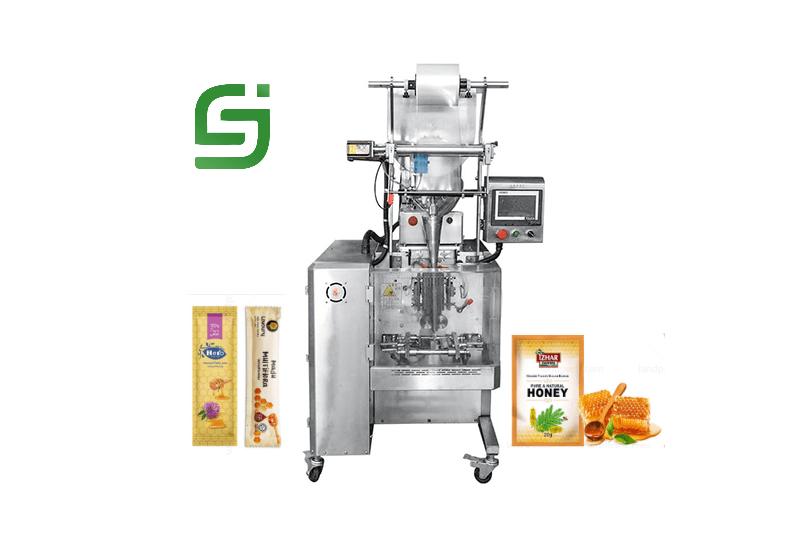
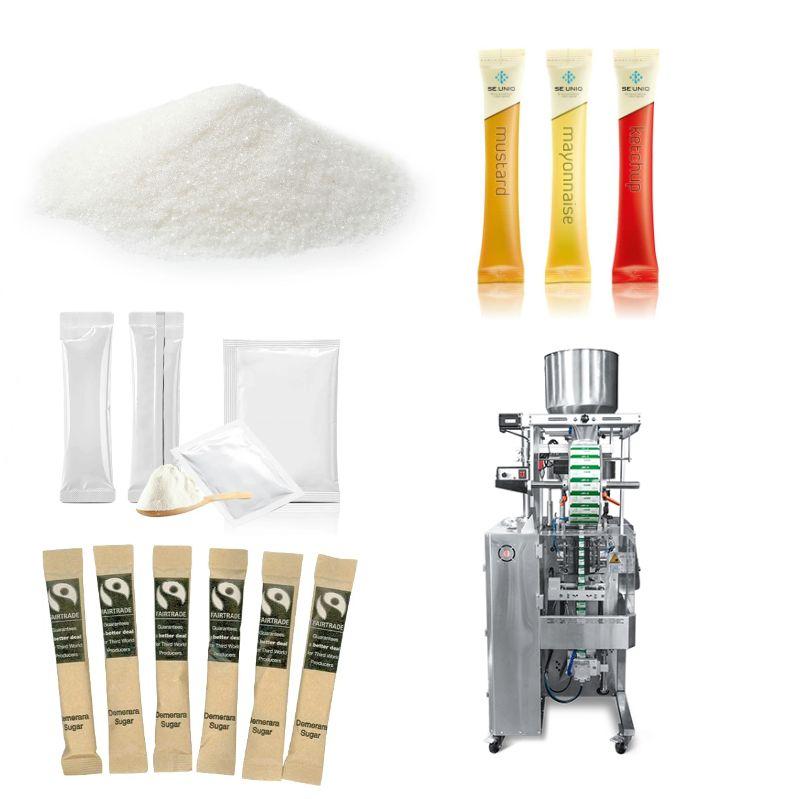
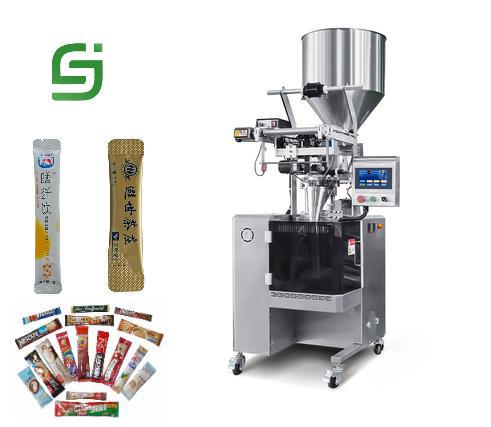
Stick packs can be suitable for free-flowing powders, controlled granules, tablets or small pieces, and pumpable liquids or pastes when the installed filler, narrow product path, film, and sealing system are designed for them. A stick machine is not universal: each material needs enough clearance to enter the pack cleanly and must be dosed without contaminating the seal.
Record physical state, particle or piece dimensions, density, viscosity where relevant, moisture sensitivity, dust or splash, temperature, fragility, and lot variation. Then define stick width and length, target quantity, headspace, seal widths, tear feature, print position, and opening behavior. The product and package cannot be qualified independently because a material suitable for a wide pouch may not pass through a narrow stick opening.
Identify the difficult condition. It may be the coldest paste, dustiest powder, largest granule, smallest dose, narrowest pack, or film with the tightest seal window. Use that boundary to screen equipment, but also test normal products so the final recipe set reflects actual production rather than one extreme.
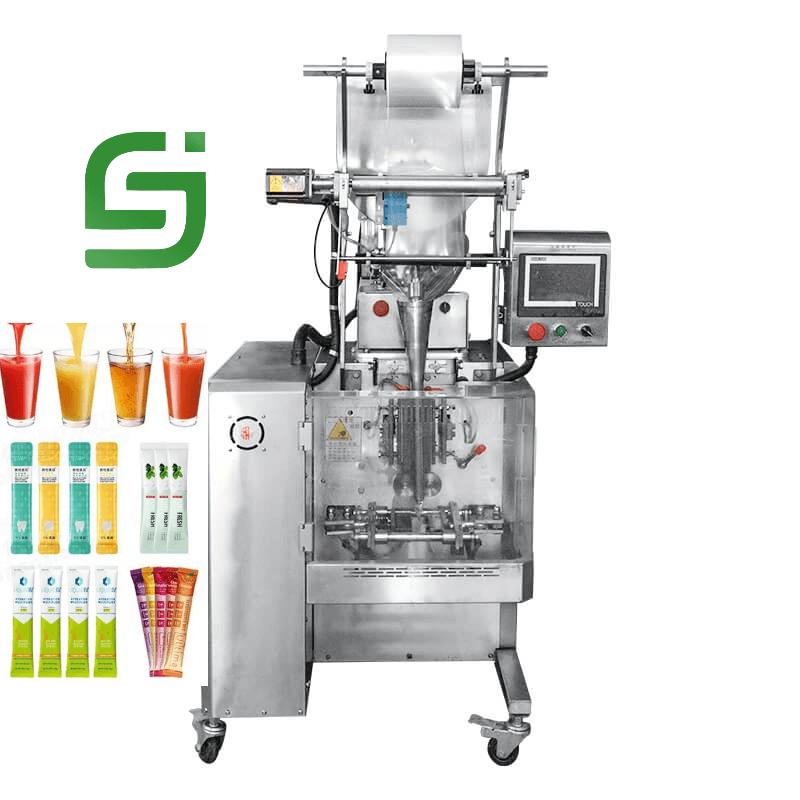
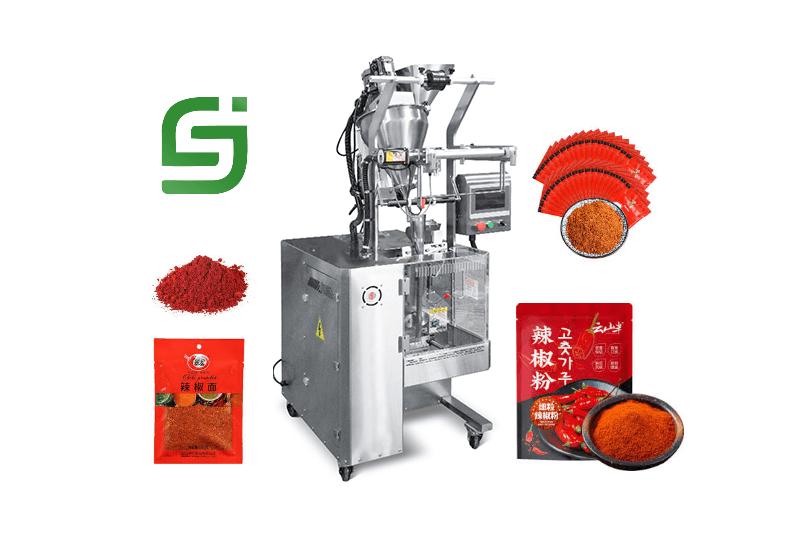
Sugar, salt, coffee mixes, drink powders, seasonings, and other dry products may fit stick applications when their formulation and intended use permit it. Fine or cohesive powders often require active metering such as an auger-based system, while more free-flowing materials may suit other methods. The exact choice depends on density variation, dust, target quantity, and cleaning.
Observe bridging, compaction, aeration, segregation, static, and powder left on the film. Small doses magnify the effect of product retained in the feeder or lost during transfer. Test hopper refill and restart because powder condition can change when it settles. Keep the seal area free; higher heat does not repair a seam containing fine particles.
Uniform crystals, seeds, small candies, pellets, tablets, or similar pieces may be candidates if they pass the feeder, forming tube, and stick opening without bridging. Measure the largest actual piece and shape variation rather than using an average. Chutes and closing jaws need clearance for product bounce and the final pieces of a dose.
Fragile or coated items should be checked before and after packaging. Vibration, gates, and long drops may break them or remove surface material. For mixtures, ensure each stick remains representative instead of separating by size or density. A quantity result alone cannot prove acceptable composition or appearance.
Water-like liquids, oils, syrups, honey, sauces, gels, and creams span a wide behavior range. A pump, piston, gravity, or another filling principle may be proposed, with valves and nozzles selected for viscosity, particulates, temperature, and cleaning. Test the complete product route, because tank level, hose length, air, and refill can alter the final dose.
Watch for dripping, stringing, foaming, splashing, and product drawn upward when the nozzle moves. Narrow sticks leave little tolerance for contamination near the transverse seam. Nozzle insertion, cutoff, timing, and headspace must work as a sequence. Product-contact compatibility and cleaning chemicals require a documented review for every formulation family.
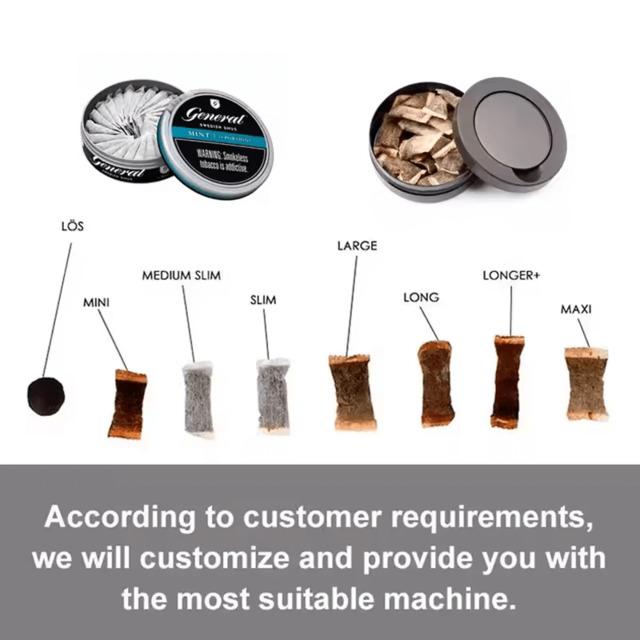
Hygroscopic powders may clump with humidity; volatile aromas may escape through poor barrier; oxygen-sensitive products may require a defined protective process; hot or cold materials may change viscosity. These factors affect product supply and packaging, but the machine supplier should not invent shelf-life or process requirements. The product owner and qualified material specialists need to define them.
When gas flushing, temperature control, dehumidified air, or extraction is proposed, state the acceptance measurement and utility conditions. Verify performance on finished sticks. Merely listing an option does not prove the required atmosphere, moisture control, or product protection. Include alarms and the response to loss of the supporting utility.
Flexible packaging structure must provide the barrier, contact suitability, strength, appearance, and opening behavior required by the product. For machinery, it must also unwind, register, form, seal, and cut consistently. Supply construction, thickness, roll width, core, maximum diameter, unwind direction, print mark, sealant layer, and converter tolerances.
Test commercial film rather than a visually similar substitute. Narrow webs can reveal curl, static, edge variation, and registration problems. Seal evaluation should include clean seams and realistic challenges such as product dust or a normal stop. The material supplier and equipment supplier should agree on the qualified window without turning a trial into an unsupported shelf-life claim.
Prepare samples at the edges of the intended range and state the inspection method before running. Record the installed filler, contact parts, stick dimensions, film lot, recipe, product condition, and events. Examine startup, steady operation, low supply, refill, pause, restart, and end cleaning. Selected show samples are not enough.
| Material group | Main packaging challenge | Required trial evidence |
|---|---|---|
| Fine powder | Density change, dust, seal contamination | Ordered dose results and clean seam inspection |
| Free-flowing granules | Bounce, clearance, product in jaws | Complete pieces, stable quantity, protected seal |
| Fragile solids | Breakage through feeding and drop | Incoming and finished condition comparison |
| Low-viscosity liquid | Splash, rapid flow, valve leakage | Clean cutoff through supply-level changes |
| Viscous paste | Slow dose, stringing, residue and drainage | Repeatable fill at the coldest permitted state |
List every material or format not demonstrated. A test supports the recorded combination and its defined variation; it does not prove all powders, all liquids, or all stick widths.
Create a matrix linking product code to filler parts, stick tooling, film, recipe, supply conditions, cleaning method, and release checks. Store removable components by identification and protect their surfaces. When product formulation or packaging changes, review the effect before copying an existing recipe.
The stick pack machine category can guide early equipment discussions, while qualification must use actual materials. Ask suppliers to state exclusions, change parts, cleaning access, recommended spares, and the evidence included at factory and site acceptance. This protects the approved scope from gradual undocumented expansion.
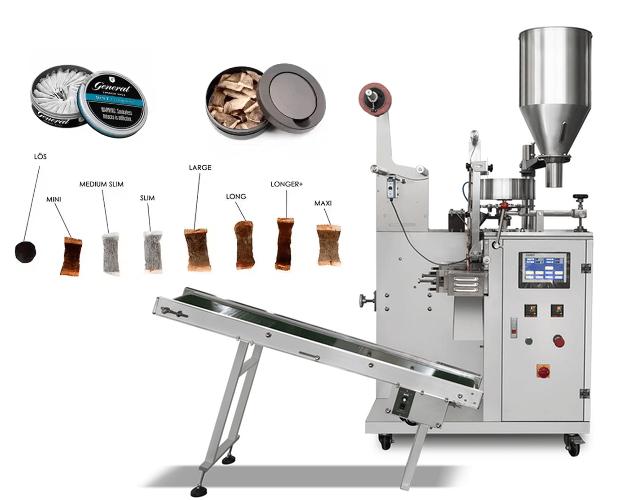
Can one stick line package both powder and liquid?
Some platforms may accept different filler modules, but contact paths, forming geometry, cleaning, controls, and qualification differ. Confirm the exact proposed conversion.
What is the largest granule that can be packed?
There is no universal size. It depends on feeder passages, tube and stick opening, piece shape, quantity, timing, and acceptable damage. Test actual maximum pieces.
Are all laminated films suitable for stick packs?
No. Barrier and contact suitability are only part of the decision; roll quality, stiffness, curl, registration, sealant response, and cutting must also work.
Why can a paste fill well but still leak?
Product may string or drip into the seam, the film may be unsuitable, or jaw contact and cooling may be unstable. Inspect the failure location before adjustment.
How should a new product be added later?
Review its properties against the approved range, select parts and film, conduct a controlled trial, document cleaning and settings, and authorize a new recipe only after release checks pass.
Pack size and material category should be reviewed together. A powder that works in a wide sachet may dust across the seam in a narrow stick, and a paste that fills a long pack may not clear the nozzle in a very short cycle. Use the smallest opening and both quantity limits during development. Record the headspace and actual product level rather than relying only on exterior dimensions.
Cross-contact control can restrict the apparent versatility of a modular filler. Separate powders, oils, colors, flavors, allergens, or non-food products according to the facility's approved risk process. Review residue in hoppers, screws, hoses, nozzles, formers, extraction, and frames. A removable filler module does not prove that the shared packaging section can be released for every product family.
Supplier scope should identify which material groups use installed equipment and which need later modules. Clarify controls, guards, utilities, change carts, tools, cleaning documentation, spares, and storage for unused assemblies. Ask for one integrated demonstration of each purchased filler type. A quotation that lists “powder, granule, and liquid” without configuration detail is not an acceptance plan.
Consumer interaction also limits material and package choice. Fine powder may need a controlled tear that does not create a cloud; granules should pour without catching; a liquid stick should open without squeezing product unexpectedly. Develop the tear notch, seal margin, pack stiffness, and opening instruction with representative users and package specialists. The machine then needs to reproduce those physical features consistently.
Utilities may differ by filler module. Liquid circuits can require controlled air or heating, powder systems may need extraction, and some products depend on a defined room environment. Confirm electrical load, connections, drainage, access, and alarms for every purchased mode before assuming a shared machine frame makes installation identical.
Document every approved material boundary clearly.
Stick packs can handle diverse powders, granules, small solids, and liquids, but only within a documented material and package window. Screen flow, clearance, cutoff, sensitivity, and film response, then test the difficult condition through normal operating events. A controlled compatibility matrix is more reliable than describing the equipment as suitable for every material.
Material trials should govern machine approval.

YISEN MACHINERY - The ONE-STOP VFFS PACKING MACHINE SOLUTION SUPPLIER
 Tel: +8617350750975
 Email: info@vffspackingmachinery.com
 MP/WhatsApp: +8617350750975
 Manufacturer Address:Meixi Road, Tongan District, Xiamen,Fujian,China