

Hot Keyword:
Author:YISEN Pouch Packing Machine Manufacturer TIME:2025-05-26
Successful selection depends on three items that must work together: the real blend at its operating moisture and temperature, a pouch material that can be transported and sealed, and a portion geometry that remains acceptable after filling and handling. Machine descriptions alone cannot prove that combination. Buyers need representative trials, measurable pack criteria, and a clear boundary between the portion machine and upstream or downstream equipment.
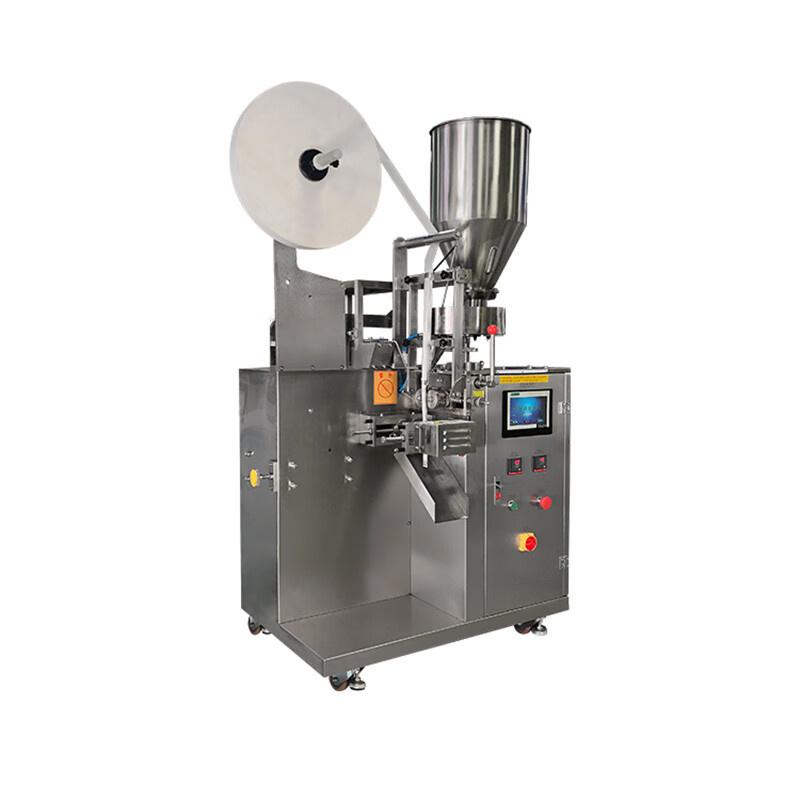
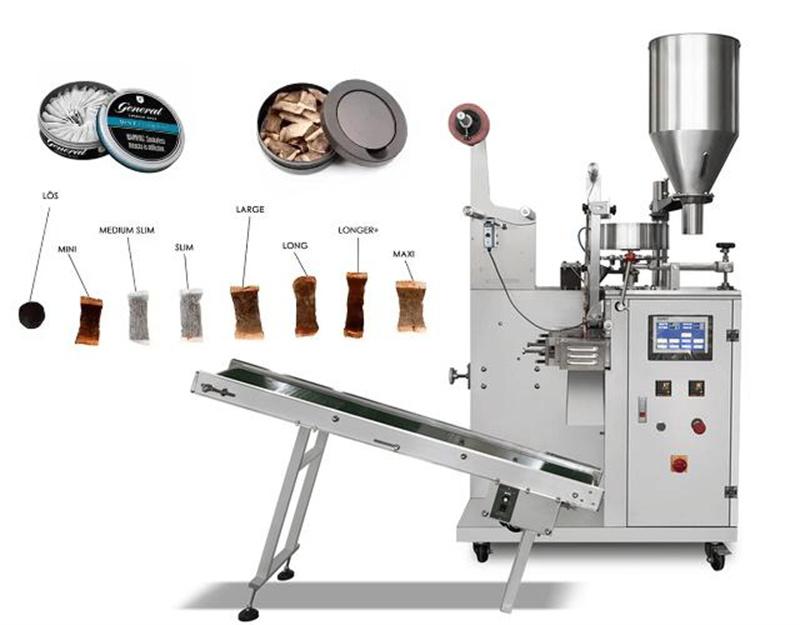
A snus portion line turns a prepared, moist particulate blend into small permeable pouches by feeding the material, metering a portion, forming or presenting the pouch web, closing the seams, and separating the finished pieces. Its job ends with a consistent inner pouch unless can filling, counting, lid application, or cartoning is explicitly added to the project scope.
Write the acceptance description for one finished pouch. Include target portion basis, allowed shape variation, seam expectations, surface cleanliness, cut quality, and the handling it must survive before reaching the consumer pack. State how the plant will sample and measure these points. Terms such as "standard portion" or "good seal" leave too much room for different interpretations during a supplier test.
Next, draw the line boundary. Identify who supplies prepared product at the required condition, who conveys it to the hopper, and whether the machine must buffer fluctuations. On the discharge side, define whether pouches fall into a collection bin, feed a counter, or transfer directly to can-loading equipment. Height, orientation, accumulation, and stop signals should be agreed before layouts are frozen.
Outer packaging is a separate process question. A portion former can make sound pouches while the complete line still struggles to count, orient, or place them into a can. Where a full line is proposed, acceptance should include the interfaces and not merely the central machine running on its own.
The pouch web has to permit the intended product interaction while also behaving like a machine material. Ask the material supplier for the relevant structure, basis information, width and thickness tolerances, roll construction, storage conditions, and joining method. Confirm that the material and closure process are suitable for the intended product and destination requirements; this decision belongs in the buyer's approved specification.
During machine trials, watch edge guiding, tension stability, wrinkling, stretching, static, dust release, and seal response. A soft porous web may not track like conventional flexible film. Changes in roll diameter or tension can alter the way it enters a forming section. Use production-intent rolls rather than a hand-prepared strip whose winding and width variation are unrealistically easy.
Seal trials should establish a usable process window, not one successful setting. Review appearance and integrity across expected material variation and after a controlled stop. Retain labeled pouches from each condition. If the supplier changes web grade during development, restart the qualification instead of assuming that similar appearance means identical machinability.
Moist particulate product can change as it waits. Moisture distribution, particle profile, compressibility, stickiness, temperature, and aroma carryover all influence feeding. Describe these properties at the machine inlet, after the blend has experienced normal mixing and hold time. A laboratory sample delivered immediately after preparation may not represent material used late in a production run.
Look for bridging above the dosing zone, smearing on moving parts, compaction caused by agitation, and separation of fine and coarse fractions. A device that keeps product moving can also alter it, so agitation style and running logic need observation. Product level matters because head pressure and residence time may change the amount entering a measuring cavity or screw.
Define a replenishment method and challenge it in the test. A large batch dumped into an almost empty hopper may disturb moisture distribution or dosing more than frequent controlled additions. Record the blend condition and hopper level alongside portion results so variation has a traceable possible cause.
The dosing mechanism must suit a material that may neither flow freely nor remain at constant density. Equipment may use cavities, screws, or another metering principle depending on the design. The important question is how the measuring action fills, releases, and clears with the approved blend range. Ask the supplier to explain which adjustments affect portion quantity and which compensate for product condition.
A checkweigher or laboratory balance can provide verification, but sampling has to represent the run. Collect sequential portions at startup, stable operation, low hopper level, after replenishment, after a short hold, and after restart. Report the individual results and their conditions rather than quoting only an average. An average can look correct even when light and heavy pouches alternate.
Do not correct every disturbance by increasing compression. A denser plug can affect release, pouch shape, and how product approaches the seam. If a target portion will not fit within the approved geometry without stress or contamination, the project may need a different pouch volume, product preparation, or metering concept.
Pouch quality comes from a sequence, not an isolated sealer. The web must enter squarely, the measured product must remain inside the usable pocket, seams must close on clean material, and the cutting action must separate pieces without pulling the closure apart. Timing changes made to improve one step can move the problem to another.
Inspect seam width and continuity around the pouch, especially where product can migrate. Check for trapped particles, folds, scorched or weakened material, uncut fibers, and edges that could interfere with downstream handling. Use an agreed integrity method suited to the pouch construction. Visual review is necessary, but appearance alone may not reveal a marginal closure.
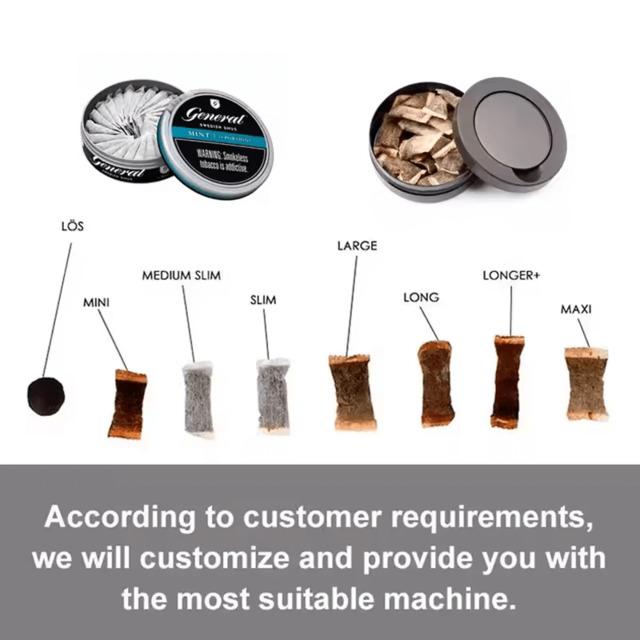
Geometry affects both dose and line handling. A longer or wider pouch may offer more volume but behave differently in counting and can loading. A compact pouch may crowd the product toward the seal. Approve each intended format with its matching product condition and portion, then control the recipe and change parts needed to reproduce it.
Map every surface touched by product or exposed to dust. The list should include the hopper, agitator, metering parts, funnels, guards near the open web, collection points, and any extraction connections. Ask how each part is accessed and visually verified. Product accumulating above a seam or inside a hollow fitting can undermine both hygiene and mechanical reliability.
Create a disassembly sequence with identified tools, safe handling steps, part locations, and reassembly checks. Small dosing pieces and seals should not depend on memory or an unlabeled tray. If wet cleaning is planned, verify that the machine design, electrical protection, drying method, and plant procedure are compatible. If dry methods are required, prove that they remove residue from the difficult locations.
A product or flavor change may require more than visible cleanliness. The manufacturer should define the plant's carryover criteria and validate the chosen method using an appropriate check. Time the complete change, including drain-down, cleaning, inspection, setup, priming, and the first released pouches.
Controls should help operators understand the process state. Useful alarms identify where material, web, dose, seal, or discharge failed without encouraging repeated blind resets. Recipe access, change records, user permissions, and backup expectations should match the site's operating practice. Ask which parameters are protected and which an operator is expected to adjust.
| Decision area | Question for the supplier | Acceptance evidence |
|---|---|---|
| Pouch material | Which approved web range can be guided and sealed? | Labeled rolls, settings, seam checks, and retained samples |
| Blend feeding | How are bridging, compaction, and level changes managed? | Observed low-level, refill, hold, and restart conditions |
| Portion control | How does the system respond to density variation? | Sequential measurements linked to product condition |
| Closure and cutting | How are contamination and incomplete separation detected? | Agreed integrity checks and classified reject samples |
| Line interface | What happens when downstream counting or loading stops? | Demonstrated accumulation, stop signal, and controlled recovery |
Decide what the machine does with a missed dose, web fault, suspect seam, or incomplete cut. Automatic rejection may be suitable for some faults; others may require stopping and segregating output since the last verified check. The response must be documented and testable, not inferred from a generic alarm list.
Prepare a trial matrix covering the normal blend and the difficult approved conditions, commercial web, each portion format, startup, stable running, replenishment, a planned stop, and restart. Define sample frequency and acceptance methods before seeing the output. Record adjustments, alarms, manual assistance, waste, and cleaning observations with timestamps.
Review the Snus Bag Packaging Machine configuration only against this matrix. The quotation should identify the included feeder, product-contact materials, web range, format tooling, inspection interfaces, discharge arrangement, documentation, and test materials required from the buyer. Mark any untested blend or format openly.
A factory test is not complete when acceptable pouches can be selected from the discharge. The useful result is a traceable run showing how the machine reached stable conditions, what happened at predictable disturbances, and how operators recovered. Keep measured samples and signed open-item records so remaining work has an owner and closure criterion.
Does the portion machine also fill and close the cans?
Not necessarily. Pouch forming and outer-can packaging are different modules. Counting, can feeding, pouch loading, lid application, and coding must be listed explicitly when a complete line is required.
Why must the actual moist blend be used for testing?
Moisture, particles, compressibility, and hold time influence feeding and release. A dry or unusually fresh substitute can conceal bridging, smearing, dose variation, and cleaning work.
Can one web setting cover every pouch material?
No assumption should be made. Web grades can differ in tension response, thickness, porosity, static, and seal behavior. Qualify each approved material and retain its operating window.
How should portion consistency be reviewed?
Use sequential measurements from defined machine and product conditions, including refill and restart. Examine individual spread as well as the average, and connect exceptions to the run log.
What should be checked after a format change?
Verify the installed parts and recipe, web tracking, portion result, pouch dimensions, seam integrity, cut quality, and downstream transfer before releasing routine production.
Small portion pouches demand close coordination between a changing moist blend and a delicate machine web. Reliable output comes from controlling product condition, metering the portion without damaging its release, protecting the seam, and cutting a shape that remains stable through downstream handling.
The best introduction to the equipment is therefore a boundary drawing, an approved material set, and a trial record rather than a feature list. When each blend, web, format, fault response, and cleaning step has observable acceptance evidence, the buyer can judge both the core machine and the work still required to make a dependable production line.

YISEN MACHINERY - The ONE-STOP VFFS PACKING MACHINE SOLUTION SUPPLIER
 Tel: +8617350750975
 Email: info@vffspackingmachinery.com
 MP/WhatsApp: +8617350750975
 Manufacturer Address:Meixi Road, Tongan District, Xiamen,Fujian,China