

Hot Keyword:
Author:YISEN Pouch Packing Machine Manufacturer TIME:2026-10-01
Specify round-bag tooling from a dimensioned finished-pack drawing that separates the outside cut diameter, usable tea cavity, and continuous sealing band. Then require the supplier to identify the matching forming, sealing, cutting, and waste-handling parts for each diameter. A round sample alone does not establish what the quoted tooling includes.
A round tea bag brings several dimensions together at one edge. Changing its outside diameter can alter the available filling area, the sealing surface, the position of the cutter, and the material left between successive packs. Treat the format as a coordinated set of parts rather than a diameter typed into a machine screen.
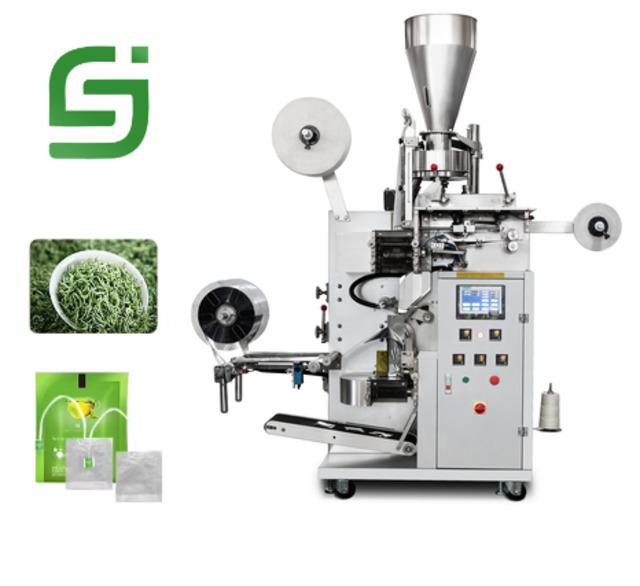
The YS-66 product page establishes a round tea format. It does not establish the cutting mechanism or the complete conversion kit for your order. Use the tea packing machine range to identify the equipment family, then put the proposed round format into the supplier's drawing approval process.
Start with the outside edge the customer will handle. Show its nominal diameter and agreed dimensional tolerance, but do not stop there. Add the inner boundary of the sealing band and the outer boundary of the intended tea-filled area. Those circles make it possible to discuss whether the bag can hold the portion without placing leaves across the closure.
Specify how the diameter will be measured on a flexible sample. A bag pressed flat under a ruler can give a different impression from a filled bag lying freely on a surface. Agree the sample condition and measuring method before suppliers return their drawings. Include several measurement directions so an oval cut cannot pass simply because one axis looks correct.
Give every commercial diameter its own drawing reference. If the buyer also specifies a visible border or printed feature, show where it sits relative to the cut. Avoid using a photograph as the only dimensional instruction: perspective and a raised tea mound can conceal the edge geometry.
Mark the sample orientation relative to material travel before measuring it. A narrow border repeatedly appearing at the leading edge suggests a different alignment question from a narrow border that changes position randomly. An orientation mark lets the tooling supplier compare those observations with the machine drawing, while preserving the distinction between a consistent geometric offset and movement of loose tea inside the pack.
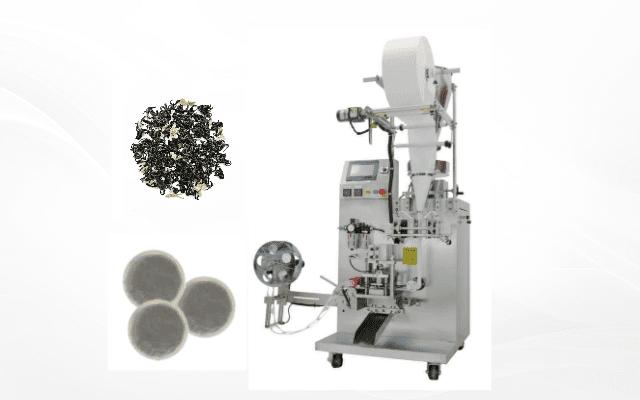
The same mass of two teas need not occupy the same space. Long leaves may lie across the cavity while a denser broken tea settles nearer its center. Send the intended tea cut and its normal variation with the drawing; otherwise a tooling proposal may be based on a compact sample that is easier to contain than the commercial blend.
Ask the supplier to demonstrate where the portion lands before the surrounding material closes. The useful observation is the position and spread of the tea relative to the sealing band. A consistent total dose can still produce an off-center mound, especially when the stream ends with a few late fragments.
Open retained bags and compare the footprint of the contents with the empty border. Record leaf entrapment by position around the circle instead of calling every affected sample a general sealing defect. If the problem repeatedly appears on one side, the relationship between delivery position and tooling alignment deserves investigation before the buyer asks for a larger bag.
A finished diameter does not tell the material supplier the required roll width. Request a layout showing the proposed web arrangement, direction of travel, successive pack positions, side margins, and any material connecting the cut shapes. Have the machine supplier identify which measurements belong to the supplied mechanism and which belong to the consumable specification.
For a circular format, the space outside the circle matters commercially because it may become trim. The amount depends on the actual layout and process. Do not estimate usable material from the circle area alone or assume that the supplier nests circles in a particular pattern. Ask for a material-consumption calculation based on the approved drawing and verify it with a measured trial length.
Keep web tolerances visible in the discussion. A layout that works with a perfectly centered laboratory roll may leave too little margin when real material tracks within its permitted variation. The supplier should state the permissible roll and guiding conditions that preserve the agreed border around the entire bag.
The closing surface and the cutting edge have different jobs. One creates a continuous boundary that retains tea; the other releases the intended outline. Ask the supplier's drawing to show the relationship between them and identify whether cutting and closure occur together or at separate positions. Do not infer a rotary die from the fact that the finished bag is round.
Review the remaining sealed width at several points around a cut sample. A clean-looking outside edge may sit too near the inner boundary on one side when the two operations are misaligned. Conversely, a wide border does not prove that it has bonded continuously. Keep dimensional inspection and closure evaluation as separate entries on the sample record.
Discuss how the chosen filter material behaves at the edge. Fraying, attached fibers, or an incomplete separation can affect handling even when the tea stays contained. Ask for representative examples of acceptable and unacceptable edges, tied to the material and tooling revision proposed for the order.
Have the supplier identify every waste stream the round format creates. Depending on the proposed arrangement, material may remain as a connected web, separate pieces, or another form. The purchase specification should describe the actual route from separation to collection instead of listing a generic waste-removal option.
Look for points where trim can follow the bag, pull against the remaining material, or accumulate near the next cut. Ask how a full collection container or interrupted waste movement affects the packaging cycle. Those questions establish the required handling response; they do not imply that automatic detection or a particular extraction system is included.
Inspect retained finished bags for attached offcuts as well as a clean perimeter. If waste handling requires an auxiliary device, give its supply and installation responsibility a separate line in the quotation. A bag trial that relies on someone continuously clearing scrap by hand does not demonstrate the quoted unattended waste route.
Changing the circle may affect more than the cutting edge. Ask the supplier to identify the forming support, closing parts, cut components, guides, discharge supports, and adjustments used by each size. Some may be shared; others may need replacement. The point is to obtain the actual parts map rather than assuming either complete interchangeability or a completely separate machine.
Mark each removable component with a part reference that can be associated with the bag drawing. A box described only as a small-format kit leaves operators to decide which pieces belong together. Confirm whether a quoted spare replaces a single worn component or a matched assembly whose geometry must be maintained.
Also distinguish a saved setting from a physical format part. A screen can recall operating values without changing the shape of a cutter or sealing surface. The supplier should demonstrate the full conversion, including identification of installed parts, before a second diameter is considered covered by the order.

Compare quotations against the same list of commercial formats. The matrix below separates the geometry being purchased from the parts and demonstrations needed to support it. Add a separate column for each supplier's response rather than accepting a single statement that round bags are supported.
| Drawing item | Quotation must identify | Reason to keep the item open |
|---|---|---|
| Finished cut circle | Diameter, tolerance, cutting component, and part reference | Only a photograph or nominal size is offered |
| Tea cavity and border | Filling footprint and corresponding closing geometry | The proposed tea reaches the closure zone |
| Material layout | Web dimensions, repeat, margins, and expected trim route | Roll requirements are inferred from bag diameter |
| Second commercial size | Shared components, replacement parts, and conversion demonstration | The quote lists a screen recipe without a parts schedule |
| Wear replacement | Orderable component or matched assembly and checking method | A replacement cannot be linked to the approved drawing |
Resolve quotation differences before comparing their total scope. One proposal may include only the first diameter while another includes several physical kits. An omitted trim collector or unconfirmed replacement assembly should remain visible, even when the basic machine description is identical.
A convincing tooling demonstration includes restoration of the approved setup. Ask the supplier to remove and reinstall the relevant format parts using its documented procedure, then repeat the dimensional checks. This tests whether the drawing and part references are sufficient to recover the circle without undocumented personal adjustments.
Compare the samples before and after reassembly for outside diameter, shape, border distribution, fill position, and attached trim. Record which differences reflect product movement and which reflect the edge geometry. Keeping these observations separate helps avoid changing the tea portion to disguise an alignment problem.
Retain examples from each approved diameter alongside the signed drawing revision and installed-part list. Include rejected samples where they explain an adjustment limit. The handover becomes useful when a later operator can identify the correct kit and reproduce the measured round pack, not merely recognize a familiar product photograph.
Does a larger outside diameter always provide proportionally more tea space? No. The sealing band and filling footprint also matter. Compare the usable cavity on the drawing and test the intended portion before treating a diameter increase as additional filling capacity.
Can one adjustable cutter cover every requested round size? That has to be established for the proposed mechanism. Ask which dimensions are adjustable and which require different components; a catalog format description does not prove a universal cutter.
Should a spare cutting part be ordered by bag diameter alone? Use the supplier's part reference and the approved tooling revision as well. Diameter alone may omit the mounting arrangement, matching components, or other geometry needed for a correct replacement.
Is trim collection automatically included with round tooling? Do not assume so. Require the quotation to identify the waste route, any auxiliary equipment, and the response to interrupted collection. Confirm that the demonstrated arrangement matches that supply list.
The round-format purchase is ready for technical approval when each diameter has a measured pack drawing, a tea-cavity check, an identified seal-and-cut arrangement, and a complete parts and trim-handling schedule. Resolve those items before treating the YS-66 reference as confirmation of a particular kit. Keep the accepted samples with the tooling revision so future replacements preserve the same circle, usable border, and filling position.

YISEN MACHINERY - The ONE-STOP VFFS PACKING MACHINE SOLUTION SUPPLIER
 Tel: +8617350750975
 Email: info@vffspackingmachinery.com
 MP/WhatsApp: +8617350750975
 Manufacturer Address:Meixi Road, Tongan District, Xiamen,Fujian,China