

Hot Keyword:
Author:YISEN Pouch Packing Machine Manufacturer TIME:2026-10-05
Choose a bulk-tea feeder by comparing proposed transfer routes with your actual leaf blend, available height, replenishment demand, and acceptable product change. Define its scope from the bulk container to the dosing hopper inlet. Mechanical and pneumatic arrangements are quotation alternatives to investigate; an automatic tea bag packing machine listing does not establish that either is supplied or suitable for your tea.
Mark the starting container and the receiving hopper on a layout before requesting feeder prices. Include the unloading position, travel route, delivery height, and the access needed to remove contact parts. End this purchasing comparison where bulk tea enters the hopper. The machine's subsequent weighing or dosing process is a separate selection.
Ask the packaging supplier for the receiving interface drawing, including the inlet position and any restrictions on the attached feeder. A hopper visible in a photograph does not tell you its usable capacity, mounting allowance, or replenishment controls. Obtain those details for the exact machine being quoted.
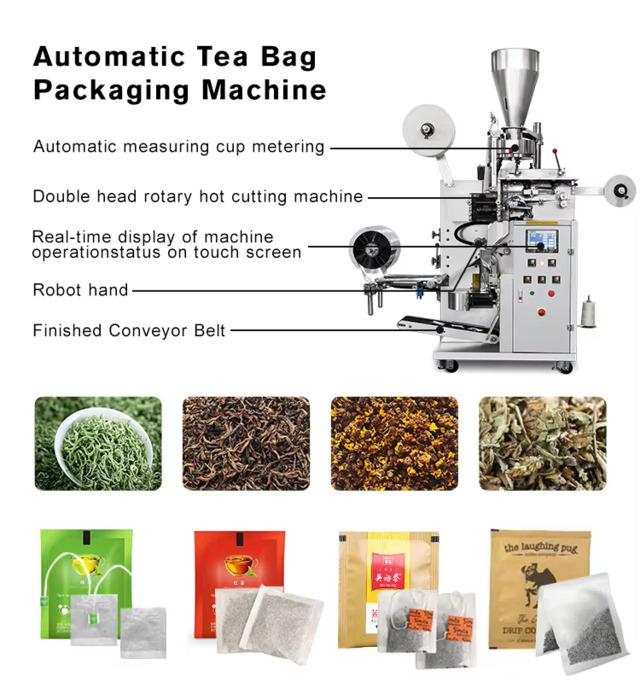
The YS-ZF90 product record discusses leaf behaviour along its feed path. Use that context to ask how a proposed upstream transfer would deliver tea to the ordered hopper. For a different model, such as the illustrated YS-169, request a separate interface confirmation. The two references should not be treated as mechanically interchangeable.
Supply the feeder vendor with a practical product description: leaf dimensions, visible fines, fragile inclusions, the intended blend, and the condition of tea arriving in its container. Record how long the tea has been stored or exposed before the trial. A proposal based on uniform broken tea should not automatically cover long leaves mixed with petals or fruit pieces.
Agree how you will compare tea before loading and after transfer. Depending on the product, the buyer may use an agreed particle-size comparison, photographs of retained portions, or a defined assessment of broken leaves. Choose the method and acceptance range before looking at results so the vendor knows what preservation means for this order.
Keep representative untransferred tea from the same lot as a reference. Without it, a bag of fines at the receiving point cannot show whether the transfer created the change or simply revealed the incoming condition. Avoid promising that a particular feeder type is universally gentle.
Ask vendors to sketch the entire route, including intermediate containers and discharge points. A short conveyor name cannot show the number of transfers, the path around the packing machine, or the contact parts that operators must reach. Compare complete proposed arrangements using the same tea and receiving interface.
| Quotation alternative | Question for the vendor | Trial observation | Scope to price explicitly |
|---|---|---|---|
| Enclosed belt or bucket transfer | How will tea load, travel, and discharge along this route? | Leaf condition and retained material at each handoff | Loading section, supports, enclosure, and outlet |
| Pneumatic or vacuum transfer | How is this tea conveyed, separated, and delivered? | Product change, retained fractions, and discharge pattern | Receiver, conveying equipment, filtration, and interfaces |
| Short gravity-assisted transfer | Does the available container position permit controlled replenishment? | Bridging, surging, and access at the proposed drop | Container support, outlet control, and guarded access |
These are options for supplier assessment, not confirmed standard equipment. Leave a route unapproved if its vendor has not addressed leaf preservation, blend distribution, and the actual installation geometry. A low equipment price cannot settle an unanswered product-handling question.
Give vendors a dimensioned drawing of the container unloading area and the installed hopper inlet. Include the space above the receiving point, surrounding equipment, and the intended access route. Ask for an arrangement drawing that distinguishes the operating envelope from the additional space needed to open, remove, or service components.
Review how containers reach the loading position and how operators would handle the end of a container. The buyer's site team should assess the proposed access and handling arrangement. Do not treat a supplier's overall machine height as sufficient information for an elevated feeder, a receiver, or a support structure.
Where the route uses several handoffs, ask the vendor to identify the expected product accumulation at each one. Additional height or an extra transfer may change the application trial needed for fragile leaves. Keep the approved route with the quotation so later layout changes trigger review instead of arriving as an undocumented installation adjustment.
Include the intended container sizes in the drawing review. A route demonstrated with a small workshop container may require a different loading position for the buyer's normal supply. Ask the vendor to show the proposed handling arrangement for both an unopened container and the remaining tea at the end of unloading.
Describe the demand at the receiving hopper in terms the packaging supplier can confirm. Ask how the proposed feeder starts and stops replenishment, who supplies the relevant sensing and control interface, and what happens when upstream tea is unavailable. Do not assume that the word automatic includes communication between independently supplied machines.
Have the vendors propose a demonstration that covers a full source container, its declining level, normal interruptions, and restart. Watch the transfer outlet for changes in delivery pattern. Record any manual intervention and the amount of tea remaining along the route when it stops.
Ask the packaging supplier to identify the replenishment conditions it requires at the hopper inlet. The feeder's nominal transfer capacity does not by itself establish whether that pattern will be met. Keep the comparison focused on continuity of bulk supply; changing the dosing method or comparing weighing-head counts belongs in another equipment decision.
For a mixed tea, compare the material arriving early, midway, and near the end of the transfer. A single attractive sample from the first delivery cannot establish whether heavier pieces, long leaves, or light inclusions remain distributed throughout the container. Agree a sampling approach with the buyer's product team before the vendor demonstration.
Record the incoming blend and retain corresponding samples at the hopper inlet. If the blend changes, investigate the starting container, loading method, transfer path, and held material before attributing everything to the feeder. The objective is to locate the change sufficiently well to evaluate the proposed arrangement.
Avoid relying on total transferred mass as proof of blend consistency. The correct mass may contain a different mix of ingredients. Ask how the vendor will demonstrate both product recovery and the agreed composition check. Do not turn a successful transfer trial into a claim about ingredient proportions in each finished tea bag.
Identify the places where tea may remain after the source container is empty. Ask the vendor to account for material in receivers, transfer sections, outlets, and accessible collection points. Compare the recovered tea with what was loaded using an agreed method that distinguishes retained product from normal sampling and handling losses.
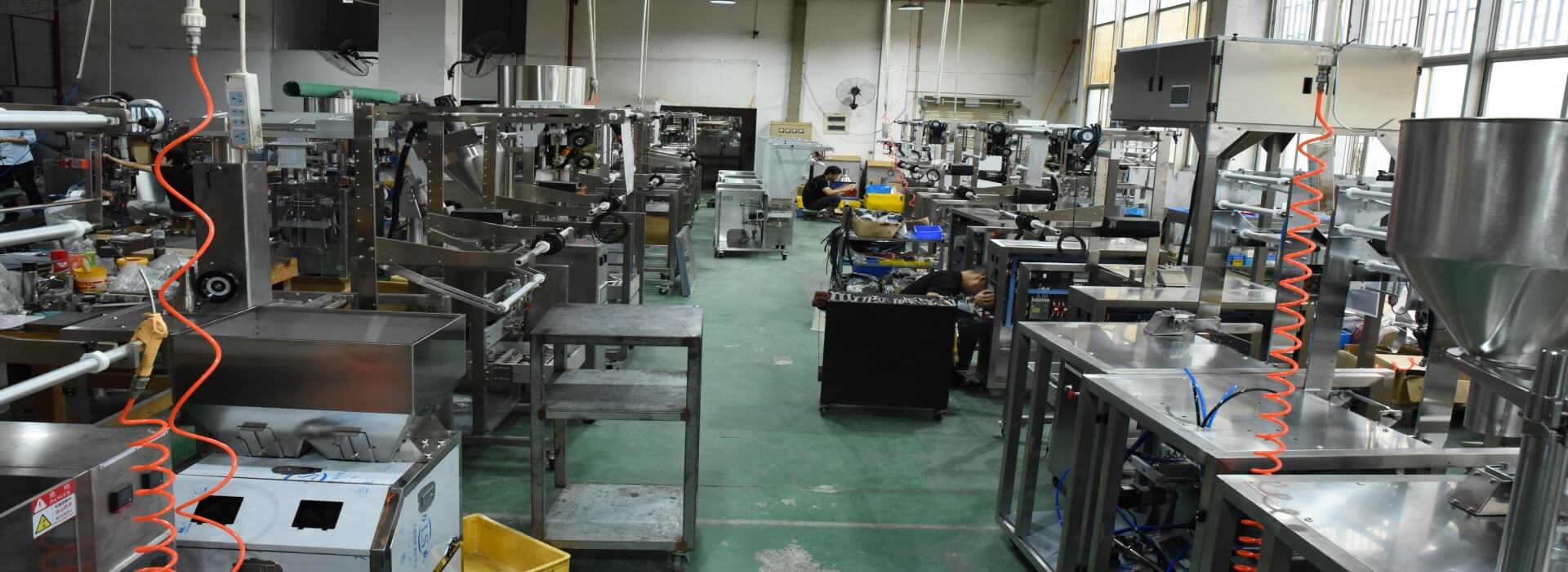
For frequent recipe changes, request a cleanout demonstration using the proposed contact parts. Ask which sections open, which parts are removed, and what inspection access remains once the feeder is installed beside the packing machine. A photograph of an open workshop assembly does not show how the ordered installation will be accessed.
Discuss product residence during planned pauses and the buyer's permitted treatment of remaining tea. The supplier should describe how the proposed arrangement supports that requirement without assuming a universal holding time. Include any special collection or cleaning equipment in the quote, together with the party responsible for approving carryover between blends.
Issue the selected vendor a boundary schedule that starts at the bulk container and ends at the confirmed hopper connection. List the loading arrangement, transfer equipment, supports, receiving parts, controls, and documentation. Mark each entry as included, separately priced, buyer supplied, or unresolved; leave no item implied by the term complete line.
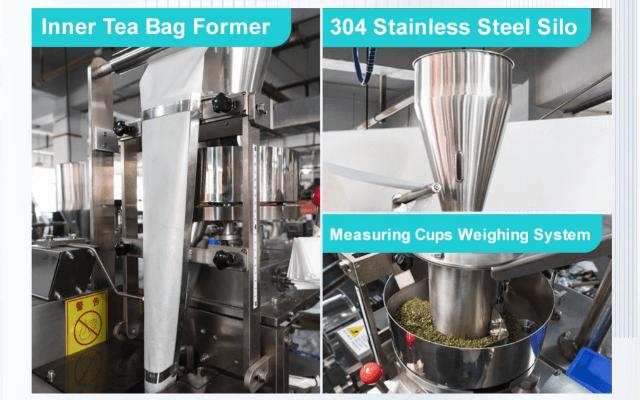
Use the tea bag packaging machine category to establish the receiving machine under discussion. Then ask for its exact inlet requirements and a separately identified feeder proposal. Neither the photographed weighing or forming parts nor a general automatic-operation statement establishes an included vacuum conveyor, elevator, or other bulk-loading device.
Compare quotations using the same product-change criteria, route drawing, and replenishment demonstration. Name the supplier responsible for resolving a mismatch at the inlet. Keep that responsibility in the purchase order when different companies supply the feeder and the packing machine; a drawing exchanged between vendors does not itself allocate the cost of correction.
Does a weighing assembly count as an automatic bulk feeder? No. This purchase covers movement from a bulk container to the dosing hopper inlet. A weighing assembly performs a different task, and its presence does not establish an upstream loading system or the required interface.
Should fragile tea always use vacuum transfer? There is no universal choice in the supplied product evidence. Ask the proposing vendor to trial your tea along its intended route, assess leaf condition, and explain the complete receiving and discharge arrangement before comparing it with mechanical alternatives.
What if one feeder must supply several blends? Provide each blend's relevant differences and agree which samples bound the purchase. Review retained product and composition at the end of a container as well as early delivery. Record any route changes or separate contact parts required.
Can a faster transfer rating solve hopper starvation? Not by itself. Ask both suppliers to examine the actual demand, delivery pattern, sensing, and replenishment interface. A capacity figure without the proposed route and product conditions leaves the cause of interrupted supply unresolved.
Who should approve the hopper connection? The packaging-machine supplier should confirm its receiving requirements, and the feeder supplier should show how its proposal meets them. The buyer should retain their agreed drawing and responsibility schedule before authorising the combined purchase.
A useful feeder comparison preserves the identity of the tea from its source container to the hopper inlet. Select the route only when the proposed geometry, replenishment behaviour, leaf condition, blend distribution, and cleanout have been assessed together. Keep bulk-transfer hardware and its interfaces itemised in the order. The final result should be a defined upstream supply arrangement whose scope and acceptance responsibilities are clear to both equipment suppliers.

YISEN MACHINERY - The ONE-STOP VFFS PACKING MACHINE SOLUTION SUPPLIER
 Tel: +8617350750975
 Email: info@vffspackingmachinery.com
 MP/WhatsApp: +8617350750975
 Manufacturer Address:Meixi Road, Tongan District, Xiamen,Fujian,China