

Hot Keyword:
Author:YISEN Pouch Packing Machine Manufacturer TIME:2026-10-09
Two independent lines are worth comparing with one faster tea bag production machine when a stoppage on one line would still leave a qualified route for the same finished pack. That advantage disappears if both lines depend on the same failed feeder, wrapper, utility, or unavailable operator. Compare the purchases through actual orders and interruption scenarios before assigning any value to redundancy.
Define the tea, dose, bag construction, attachment if required, and final saleable package before comparing the equipment. Both lines in a proposed pair must be qualified for that same pack if either is expected to replace the other. A second machine that makes a different construction may support another business need, but it does not cover this order during an outage.
The YS-ZF90 page supplies a useful product reference: it records pyramid and rectangular formats and discusses downstream outer packing. Those statements do not prove that two quoted configurations are interchangeable or that either will deliver a particular schedule. Have suppliers identify the exact tooling, settings, and downstream scope behind each proposal.
Give the single-line supplier and the two-line supplier the same order examples and quality requirements. Ask where each counts a finished unit. Inner bags waiting for an unavailable envelope wrapper should not be counted as shipped customer packs. A fair comparison starts at the same material input and ends at the same approved package.
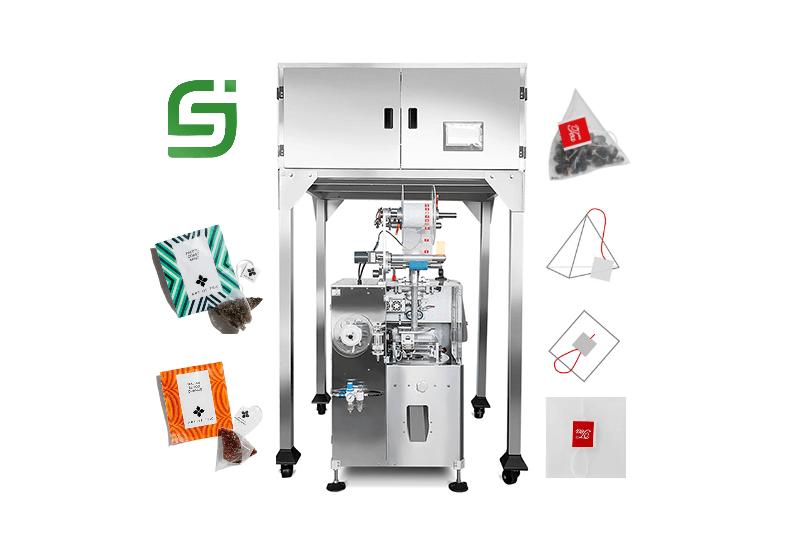
Place the proposed lines side by side on paper, then add the resources outside their frames. Include tea preparation, material delivery, compressed air, electrical distribution, final wrapping, inspection, carton handling, and the people who release finished packs. Mark a connection wherever one resource serves both lines.
A shared resource is not automatically unacceptable. It does mean that some failures can stop both routes. If both bag makers discharge to one outer wrapper, ask how either could produce the complete order while that wrapper is unavailable. The answer may require a qualified alternative route or may show that the proposed redundancy ends at the inner bag.
Also examine common supplies that are easy to overlook. Two machines using the same unsuitable material lot can lose production together without a mechanical failure. The buyer's purchasing and quality arrangements therefore affect continuity alongside the machinery layout. Keep these shared causes visible rather than presenting two separate frames as proof of independence.
Take interruptions from the plant's own experience where available. For each, describe the affected resource, the remaining qualified route, and the order that must still be completed. The table deliberately contains no assumed failure frequency or recovery duration; those belong to buyer records or clearly identified estimates.
| Scenario to examine | One faster approved line | Two proposed independent lines | Buyer information needed |
|---|---|---|---|
| One bag maker requires repair | No second bag-making route within this purchase. | The other may continue if the complete pack route remains available. | Repair history, remaining route qualification, and order deadline |
| The shared envelope wrapper stops | Complete packs depend on restoration or an approved alternative. | Both can be affected if they use that wrapper. | Wrapper dependency and any qualified alternative |
| A planned service overlaps an urgent order | Service and production compete for the same line window. | Staggering may preserve one route, subject to staffing and shared services. | Service window, crew availability, and committed orders |
| Two approved orders need overlapping campaigns | The orders run in sequence unless another route exists. | Concurrent running is possible only with suitable parts and available support. | Order quantities, due dates, and concurrent resource needs |
| A common material or utility problem occurs | The affected line cannot rely on its nominal rate. | Both lines may stop despite separate machines. | Common-cause history and recovery arrangements |
Discuss any row where the two-line proposal has the same result as the single-line proposal. It identifies a limit of the extra equipment, not necessarily a reason to reject it. The purchase should be justified by the interruptions it can actually address.
For a credible interruption, place the expected unavailable period on the buyer's production calendar. Then allocate only work that the surviving route is qualified and staffed to perform. Use demonstrated accepted-pack output for that configuration, with the buyer's normal release and dispatch steps included.
The surviving line need not reproduce the pair's combined output to be useful. It may protect a priority order while another waits. Equally, continuing to make some bags is not enough if the key customer deadline still cannot be met. Name the orders protected and the orders delayed so the value of continuity stays concrete.
Keep uncertain durations visible. Compare the buyer's shorter and longer plausible repair cases without inventing an uptime percentage. If the purchase changes depending on one uncertain assumption, request better service or recovery information before committing. This is a schedule exposure comparison, not a guarantee that either arrangement will avoid missed deliveries.
Use a representative week and a difficult week from actual demand. Start with both proposed lines available, then remove one at a time. Keep the same finished-pack requirement and move orders only to routes already approved for them. Record any tooling, material, or release step that prevents the intended reassignment.
Two lines can separate campaigns, but simultaneous orders require simultaneous support. If there is only one set of format parts for the agreed pack, confirm whether both lines can run it together. If one line is routinely reserved for another obligation, establish when it would genuinely be available as the backup route.
For the one-line proposal, ask how the schedule handles planned service and urgent orders between existing campaigns. A higher demonstrated production rate might provide recovery room, but only the order calendar can show whether that room exists at the needed time. Avoid treating unused theoretical capacity as an available shift or a released shipment.
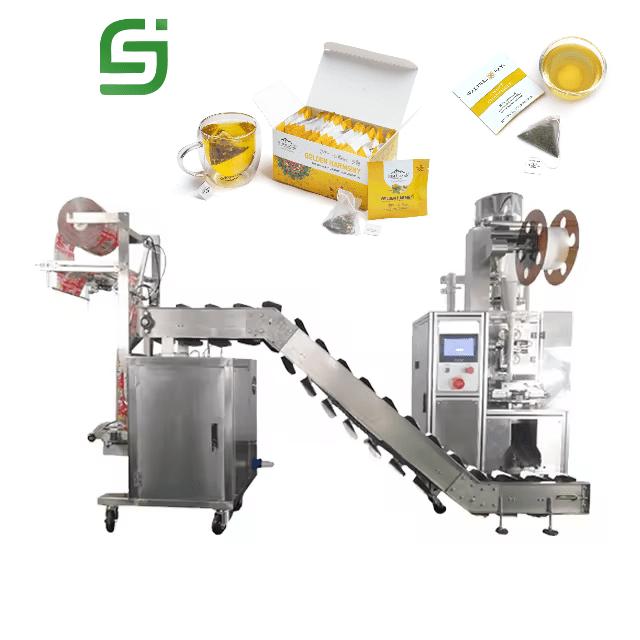
This illustration shows connected equipment from a tea product page. It is not a photograph of two independently qualified lines. The conveyor connection is a reminder to identify where a proposed production route depends on another machine.
Ask who attends to each line when a roll needs replacement, a bag is rejected, or a machine needs investigation. A staffing plan that assumes both lines always run without intervention cannot establish practical independence. Review overlapping calls for attention using the plant's proposed shifts.
Include the person who can approve a restart and the person who can complete a repair. If the same technician is needed to keep the second line running while repairing the first, clarify how the work will be prioritized. Supplier attendance during a demonstration should be distinguished from the support available during ordinary production.
There is no universal rule that two lines require twice the labor or that one operator can safely cover both. The answer depends on the delivered arrangements, work content, and site responsibilities. Ask the operations team to walk through the scenarios and record where a second simultaneous task would delay the remaining route.
Shared spare parts can simplify storage, but confirm actual interchangeability through the supplier's part numbers and revisions. Do not assume that two machines with the same family name accept every component from the same shelf. Identify any critical item whose absence could leave both routes waiting for the same delivery.
Discuss planned maintenance with the qualified service team. Staggering work may keep one line available only if the shared services remain usable and the work can be carried out safely. The supplier should define the approved arrangements; this comparison is not a reason to bypass isolation or protective systems.
The YS-169 is an integrated inner-and-outer reference, while the YS-ZF90 product descriptions discuss other tea bag configurations and downstream equipment. These references help define line boundaries. They do not establish that the models can substitute for each other, share spares, or produce an identical approved pack.
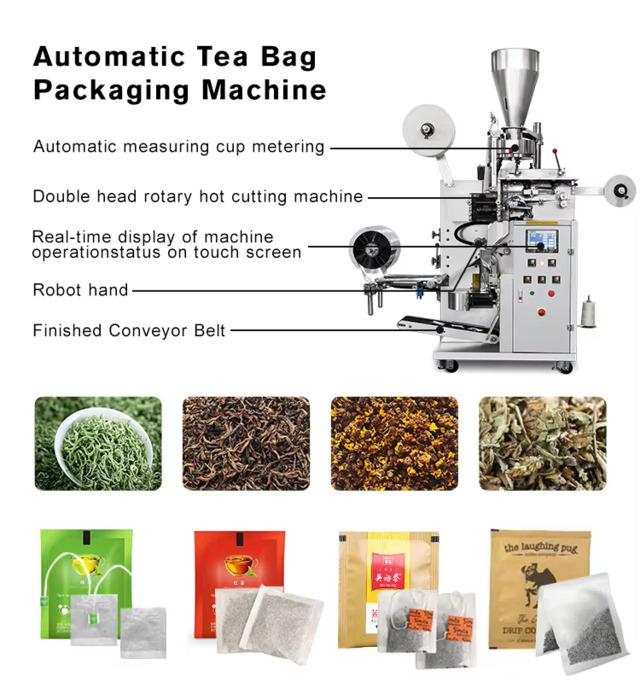
Provide the agreed pack, order calendar, outage scenarios, shared-resource map, and proposed staffing. Request a written response showing which complete orders remain feasible under each interruption and what additional equipment or support the answer assumes. Keep untested assumptions separate from demonstrated operation.
Review the tea bag packaging machine configurations as starting points, then compare complete proposed routes. For a two-line offer, require each line to demonstrate the intended finished pack individually. Any demonstration with one route unavailable should follow the supplier's approved safe procedure and include the downstream equipment needed for saleable output.
Choose the second line for a defined continuity or scheduling purpose. Choose the faster single line when its demonstrated operation and available recovery windows meet the buyer's obligations. Neither proposal earns a preference merely by having more machines or a larger advertised rate.
Are two bag makers sharing one wrapper two independent lines?Not for complete enveloped packs during a wrapper outage. They may provide redundancy for a bag-maker failure, but the shared downstream dependency must remain explicit in the purchase comparison.
Must the backup line match the other line's full output?No. It must support the continuity objective agreed by the buyer. Identify the priority orders it can complete during the interruption and any backlog that remains, using qualified operating data.
Do identical model names prove the same pack can run on both?No. Tooling, attachments, settings, downstream scope, and installed revisions can differ. Qualify the required pack on each delivered configuration before treating either as a substitute production route.
Can a spare machine count as protection without its own operator plan?Only after the buyer establishes how it will be staffed, started, supplied, and released during the interruption. An available frame does not by itself provide an available finished-pack route.
How should a buyer compare outages without reliable historical data?Use clearly labelled scenarios with plausible ranges supplied by operations and service teams. Identify which missing assumption changes the purchase choice. Do not convert an uncertain scenario into a promised availability or savings figure.
Buy redundancy around the customer order that must survive an interruption. Two lines have a useful role when either can keep producing the agreed pack with the resources actually available. A faster single line may fit when its proven schedule and recovery opportunities cover the same obligation. The deciding document is the completed outage-and-order comparison, with shared dependencies and unresolved assumptions visible to the purchaser.

YISEN MACHINERY - The ONE-STOP VFFS PACKING MACHINE SOLUTION SUPPLIER
 Tel: +8617350750975
 Email: info@vffspackingmachinery.com
 MP/WhatsApp: +8617350750975
 Manufacturer Address:Meixi Road, Tongan District, Xiamen,Fujian,China