

Hot Keyword:
Author:YISEN Pouch Packing Machine Manufacturer TIME:2026-10-21
For a Tea Bag Packing Machine purchase, assign dust extraction responsibilities at named connections, source by source. Ask which interfaces the offered machine actually includes, where the supplier's responsibility ends and what the facility contractor must provide. Approve the proposed capture arrangement only for the configuration and trial conditions demonstrated; a generic dust-collection statement does not establish a fitted connection or complete system.
Begin by asking the machine supplier to mark extraction provision as included, offered separately, absent or unresolved. Request that response against the exact quotation. A product family can contain different arrangements, so an accessory mentioned in general sales copy cannot establish what will arrive with the ordered machine.
Ask for a drawing or identified photograph of any proposed pickup and terminal connection. If neither is available, leave its geometry unconfirmed. A hose visible near a machine may serve another function. Have the supplier identify that function instead of treating every pneumatic or vacuum connection as a dust-extraction port.
Check what the quotation means by dust collection. It might describe a machine-side interface, a separately offered collector or an unconfirmed option. Those are different purchases. The stored YS-66 reference contains generic wording about some machines having dust collection; that wording does not verify a fitted system on the configuration being ordered.
Give each proposed capture location a name connected to the offered machine drawing. Candidate questions may concern a tea hopper opening, a dosing-to-filter transition or a closing-area enclosure, depending on the actual arrangement. Ask the supplier which location the proposal addresses and which locations remain outside it.
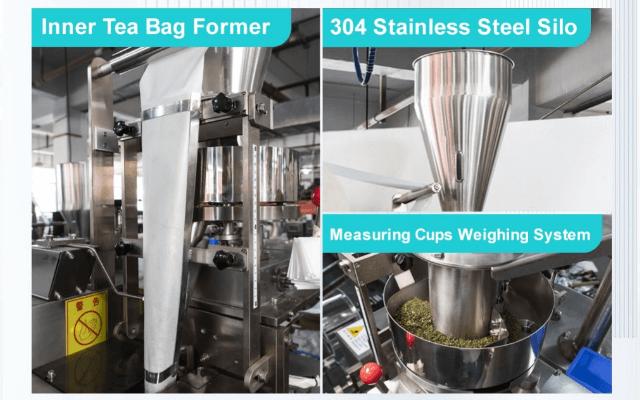
The YS-169 detail panels show different machine areas to identify in a discussion. No extraction pickup is verified here, and the printed alloy and weighing captions are not independent evidence of those properties.
Keep tea fines, filter fibers and thread or tag scraps distinguishable when recording observations. A capture proposal directed at a tea transfer point should not be accepted as proof that it handles every packaging-material fragment elsewhere. The supplier should describe its intended source and material, without a universal claim.
Exclude upstream bulk-transfer selection from this enquiry. If a separately supplied receiver needs a vent connection, identify it as another vendor's interface. Approval of that receiver connection cannot automatically approve the tea packer's own capture points.
Mark the physical point where supplied machine hardware meets the facility connection. It could be a named collar, flange or another supplier-defined interface if one is offered. Request its position, orientation, mating dimensions and reference revision. These details must come from the submitted design; the article provides no standard connection size.
Ask what remains upstream and downstream of that point. A machine-side pickup with no connecting piece differs from a pickup supplied with a hose ending at a remote termination. Identify both ends of any supplied connector. Otherwise, the machine supplier and facility contractor can each believe the other has included the same missing piece.
Distinguish an air path used for machine handling from a proposed path collecting tea dust. The supplier must explain whether they are separate and what each connection permits. Do not combine them into a common duct based on a similar-looking fitting or infer that a machine vacuum source supplies dust capture.
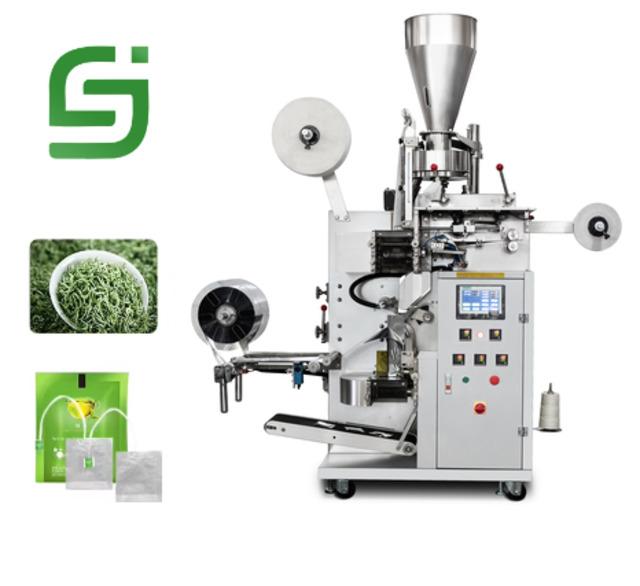
This YS-169 composite supplies whole-machine context. It does not establish a dust collar, an included collector or the function of any unseen air connection.
Use a source-specific connection register rather than one entry saying buyer supplies extraction. Complete the register jointly with the machine supplier and proposed facility contractor. Name one owner for each delivery and another for its review where necessary; two vendors exchanging drawings is not a completed allocation of responsibility.
| Connection item | Responsibility to agree | Evidence needed before accepting scope |
|---|---|---|
| Pickup serving the named tea source | Who designs and supplies the offered capture component | Source location, fitted geometry and included-item reference |
| Machine terminal and mating piece | Who provides each side of the physical joint | Matching drawings, connection plane and compatible parts |
| Connector and route to facility equipment | Who supplies the connector and accommodates movement | Approved route, permitted movement and access record |
| Facility-side operating conditions | Who submits requirements and verifies the delivered condition | Supplier-approved conditions at the named terminal |
| Quoted status indication or machine response | Who supplies the device, meaning and response verification | Applicable signal description and witnessed result |
| Combined application demonstration | Who resolves a mismatch between the two supplied portions | Agreed trial scope, observations and unresolved conditions |
Mark an unpriced item as unresolved rather than implying it is included. If a proposed revision crosses the handoff, agree who pays for the changed parts and who repeats the affected demonstration. Keep these answers beside the equipment quotation so a missing connector cannot disappear into a general commissioning allowance.
Ask the responsible suppliers to state which air conditions must be established at the identified terminal and how they will be verified. Where their design calls for airflow, pressure or another condition, obtain its value, units, measurement location and applicable operating state. Do not adopt a generic figure from another packer.
A collector's nominal rating does not establish the condition at the machine connection. Ask the facility contractor to assess the proposed route and the other equipment using its network, where relevant. The machinery supplier should confirm that the submitted terminal conditions correspond to the pickup arrangement it proposes.
Keep the submission conditional to the documented enclosure and access state. If an opening changes during a normal replenishment task, ask whether the proposed capture requirement covers that state too. The buyer requests and records those answers; the qualified designers choose and approve the system. This purchase comparison does not prescribe fan sizing, duct design or extraction settings.
Follow the proposed connector from its machine termination to the facility boundary. Show where it passes guards, material paths and access openings. Ask the supplier to identify whether a moving or removable machine assembly affects that route, and who provides the approved means of accommodating the movement.
Have the suppliers confirm any restrictions on forces transmitted through the terminal joint. A connection drawn in the right location can still leave an unanswered mechanical dependency if its attached route pulls on the supplied component. Resolve that question through their design review, without prescribing a makeshift support or connector type.
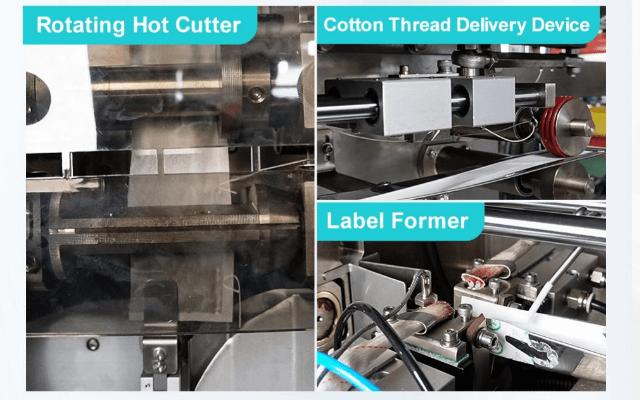
These YS-169 source details show machinery near material paths. They verify no extraction routing, cutter temperature or included attachment scope for another ordered version.
Ask authorized personnel to demonstrate the relevant access with the intended connector represented. Record whether a guard or contact part can be opened or removed through its approved route. Document disconnection and restoration responsibilities where required, rather than assume that every flexible hose is routinely removable.
Agree a demonstration for the named source using the intended tea, filter material and relevant fitted components. The stored YS-ZF90 copy identifies fines near the closing area as a question to examine. It does not establish that a particular pickup captures those fines or that another model shares its arrangement.
Observe the proposed source under the operating states included in the agreement. Record where material appears, which access state is present and the condition declared at the terminal. Include replenishment or a normal pause only when it is relevant to that source's claimed scope. A demonstration of an enclosed dosing point cannot close an unshown manual charging interface.
At the same time, inspect the agreed tea-pack characteristics that the proposed air arrangement could affect. Ask quality to choose appropriate checks for net contents, visible ingredient distribution or closure contamination where relevant. If collected material is examined, identify its source and record it as trial evidence; collection does not authorize returning it to production.
Separate an observed application result from any broader promise. A clean-looking photograph cannot establish measured capture efficiency, worker exposure or performance across every tea blend. Keep the conclusion within the nominated source, material and configuration actually assessed.
If the offer includes a status indication, ask which condition its device observes and where. A command indicating that a collector has been requested to run may differ from evidence of an air condition at the machine terminal. The supplier must explain the offered signal's meaning before the buyer treats it as proof of extraction availability.
For an offered machine response, obtain a description of the applicable state and authorized action. Ask the supplier to demonstrate it using a permitted method. Record whether the result is a display indication, a start restriction, a controlled stop or another specified response; do not infer one from another.
Where no automatic response is included, agree who monitors the relevant condition and what approved operating boundary applies. Mark that limitation in the order. This requirement is about one quoted extraction interface, not a new general alarm or material-runout scheme. Observers should never create a blocked duct, disconnect operating equipment or bypass controls to provoke a result.
A factory trial may use workshop extraction that differs from the destination system. Identify the temporary equipment and the terminal conditions it actually demonstrates. Retain that limited result, then list the checks needed with the proposed facility connection before closing the combined arrangement.
Before commercial approval, collect the source register, physical handoff drawing, allocated parts, terminal-condition submission and agreed witness scope. Compare the offered Tea Bag Packing Machine configuration with that register. Unverified pickups and collector options should retain their separate status even when the base machine is otherwise accepted.
At the receiving site, the assigned teams verify the final connection through their approved procedures and close the remaining observations. Name who resolves any difference from the factory arrangement. Preserve the final interface revision so a later tea change, moved pickup or additional capture source returns to the relevant designers for review.
What if the supplier cannot identify a proposed extraction collar?Leave that interface unresolved and request a specific drawing or fitted-component record. A claim that extraction can be added later does not define the delivered connection, necessary parts or responsibility for the addition.
Can a machine vacuum fitting be used as the dust connection?Only if the responsible supplier explicitly defines and approves that function for the ordered arrangement. Similar fittings do not establish equivalent air paths. Keep handling vacuum and dust extraction identified separately until their actual roles are confirmed.
Does a trial with the supplier's extractor approve the buyer's system?It approves only the demonstrated configuration and conditions within the agreed scope. Record the workshop equipment and terminal evidence, then complete the outstanding destination-interface checks with the final connection represented.
Does an extraction alarm prove capture at every source?No. Ask what the signal observes and which nominated interface it covers. A state at one location cannot establish another location's result. Capture observations and status-signal verification belong in separate entries.
Can a later pickup inherit the original connection approval?Request review of its changed source, hardware, terminal conditions and shared-system effects. The original register establishes a defined arrangement. It does not provide open approval for every additional connection attached afterward.
A completed extraction enquiry should identify the source, supplied pickup, terminal handoff, connecting parts and responsible vendors in one signed register. Witness the proposed interface alongside its tea-pack effects and explain any quoted status signal on its own terms. Preserve the factory result's limits until the destination connection is assessed. That record lets purchasing close a specific combined arrangement without turning a general dust-collection phrase into a guarantee.

YISEN MACHINERY - The ONE-STOP VFFS PACKING MACHINE SOLUTION SUPPLIER
 Tel: +8617350750975
 Email: info@vffspackingmachinery.com
 MP/WhatsApp: +8617350750975
 Manufacturer Address:Meixi Road, Tongan District, Xiamen,Fujian,China