

Hot Keyword:
Author:YISEN Pouch Packing Machine Manufacturer TIME:2026-10-22
Separate thread payout drag from attachment retention before accepting a Tea Bag Making Machine with string and tag. Ask the supplier to compare thread feeding, a supported finished-bag pull test, and ordinary pack handling using matched materials. A detached string does not identify its cause, and changing a tension setting cannot close an unexplained attachment failure.
Start with an already selected string-and-tag pack. This review does not choose a tag style, add an envelope, or select the attachment mechanism. Its purpose is to decide whether a failed attachment originated in thread delivery, attachment formation, or later loading of a sound connection. Those explanations lead to different purchase corrections.
Ask for a small failure map that names the observed location: thread broken away from the joint, string detached from the bag, tag connection released, or filter material torn around an intact joint. Photograph the complete failed unit before separating it for examination. A description such as weak string merges several mechanically different events and can send the investigation toward the wrong component.
Agree who owns interpretation of each result. The machine supplier assesses the offered thread path and attachment process; the thread supplier identifies its stock; the buyer sets acceptable handling of the commercial bag. Their signatures should resolve a specific failure explanation rather than record that an operator found a setting that briefly produced attractive samples.
Have the original equipment manufacturer mark the spool, guides, any supplied regulating device, delivery point, attachment location, and final separation point on the offered arrangement. Identify which parts the thread contacts and which lengths move together. Use the actual routing revision, because an alternative path can change resistance while leaving the screen recipe unchanged.
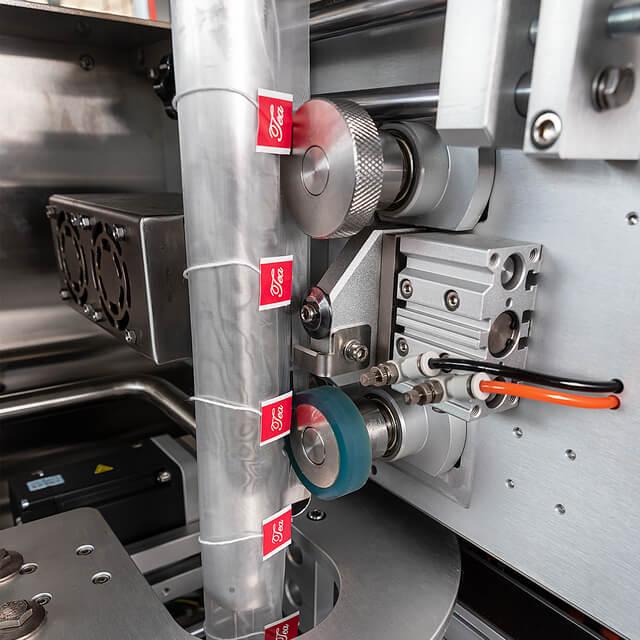
Distinguish the quantity being observed from the name used on a control. A numbered adjustment could represent a mechanical position rather than force at the thread. Request the supplier's explanation, its unit where applicable, and the point to which it refers. Do not convert a dial position into a force specification without an agreed measurement.
Observation must follow the manufacturer's permitted method. An offline thread-path check, a protected instrumented trial, and inspection of completed bags establish different facts. The supplier should choose a suitable way to obtain evidence without people pulling material near moving mechanisms or removing protection during operation.
Payout resistance is the opposition encountered as thread leaves its supply and travels through the specified path. It is distinct from the load needed to release a finished attachment. Ask the supplier whether resistance can be checked independently, and require the chosen method to identify its pulling point, direction, movement, and equipment.
A useful agreed comparison records resistance along the route under comparable conditions. Where the supplier permits separate offline observations, a result at the spool exit and a result after the guides can help locate an added resistance. Neither result should be presented as the thread load during production unless the measuring arrangement actually establishes that relationship.
Include the supplied spool presentations that the quotation intends to accept. A different spool support, thread crossover, damaged edge, or contact surface may change payout. Record these observations with the stock identity. If full and partly depleted supplies are compared, preserve the corresponding presentation rather than treating remaining quantity as the only changed factor.
No universal drag limit belongs in the enquiry. Ask the equipment supplier to propose a justified working boundary for this path and thread, then demonstrate why the delivered attachment remains acceptable within it. A low average reading cannot explain intermittent catches that the observation method did not capture.
A retention trial loads the completed connection according to a defined specimen method. Agree where the bag is supported, where the string is held, the pulling direction, and how the load is applied. These details determine whether the result concerns the joint, the thread, or unsupported filter material around it.
Use a fixture or support selected by the responsible test team. Clamping directly across the joint can reinforce it artificially; gripping the bag too far away can make a surrounding seam fail first. Record the support geometry and check that it neither conceals the intended failure nor introduces an unrelated cut into the filter.
Retain individual outcomes and failure locations. If the thread breaks while the connection remains intact, the observed result places a limit on what that specimen proves about joint retention. If filter material tears beside the connection, record that condition rather than silently classifying it as detached thread.
Where force measurement is agreed, document the instrument, unit, verification status, and relevant test motion. A maximum reading from one chosen bag is not an acceptance distribution. Where an agreed handling check is used instead, describe its observable pass condition and avoid reporting a numerical strength that was never measured.
Keep payout and finished-specimen findings beside each other. The following comparisons guide an investigation; they do not prescribe machine adjustments or claim that one result proves a unique cause.
| Matched observation | Question to investigate | What still needs proof |
|---|---|---|
| Payout catches; supported specimens retain the connection | Where does the offered thread path add intermittent resistance? | Whether a documented path correction prevents failures during production |
| Payout is consistent; supported specimens release at the joint | Does attachment formation match the approved material and geometry? | Retention after an attachment-specific correction using the same specimen method |
| Thread breaks away from an intact connection | Is stock variation or damage affecting the exposed thread? | Stock identity, break location and an agreed material comparison |
| Both isolated checks pass; downstream handling damages bags | Which later contact loads or catches the assembly? | A before-and-after comparison at the suspected handling stage |
| Findings change with the support or pull direction | Are the two laboratories testing equivalent specimens? | A reconciled fixture drawing and repeated comparable results |
More than one issue can coexist. Increased drag can expose a marginal connection, while a transfer snag may break thread that survived a different pull direction. Close the purchase item only after the explanation accounts for the failed samples and the relevant repeat observation.
Compare freshly completed bags with bags after the included transfer and discharge stages. Use adjacent, identified sample groups rather than assuming the very same destructively tested specimen can be tested again. The comparison should preserve material lot, settings and the stage at which each group was taken.
If an outer envelope belongs to the order, inspect matched enclosed units after opening them by an agreed method that avoids cutting the string. If attachments remain exposed, observe the ordinary collection arrangement. Look for a tag held behind an edge, a string crossing another bag, or a connection loaded while the bag body is restrained.
Extend the investigation only as far as the contracted handling scope. A successful machine discharge trial does not approve an untested carton packing process or consumer infusion condition. Any required later handling check needs its own method, ownership and identified specimens.
Identify the thread supplier, stock reference, supplied spool and lot for every paired comparison. Include any declared variation the order intends to permit. Two white strings may differ in construction or surface behavior, so appearance alone is a poor basis for calling them equivalent test materials.
Define when specimens are evaluated after manufacture and under what agreed conditioning. Keep dry tests distinct from a buyer-required infusion or wet handling evaluation. A dry attachment result cannot automatically establish behavior after contact with hot water, and this guide supplies no universal temperature, duration or acceptance force.

Allocate matched specimens before testing starts. Avoid assigning the neatest bags to retention measurement and leaving visibly damaged bags for handling checks. Record exclusions with reasons so the comparison represents the agreed output population rather than a selection made after seeing the results.
Ask the supplier to state which suspected cause its correction addresses. A rerouted guide concerns the delivery path; a revised attachment component concerns joint formation; a changed receiving edge concerns handling contact. Preserve the earlier routing, specimen results and failed samples so the proposed explanation remains reviewable.
Repeat the observation that exposed the problem and the related check that could be affected by the correction. Reducing resistance, for example, may alter the way thread arrives at attachment. Demonstrate acceptable delivery and finished retention together for the corrected configuration instead of closing the issue from either isolated result.
If several components must change together, identify that combined change openly. The resulting trial may qualify the revised assembly without proving which original component caused the fault. Record that limit rather than claiming a precise diagnosis that the comparison cannot support.
Attach the agreed routing sketch, thread references, payout observation method, retention fixture drawing, handling stages, and individual failure categories to the order. Require unresolved items to name an owner and a further observation. The supplier response should distinguish a demonstrated boundary from a proposed acceptance condition.
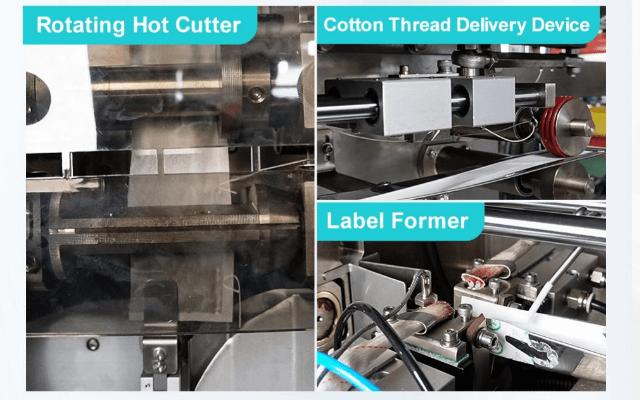
Use the Tea Bag Making Machine product range to locate the relevant equipment family, then confirm the offered string-and-tag arrangement in writing. The public YS-169 description identifies thread-delivery and label-forming context; it does not supply a transferable force limit for another configuration.
The handover should let a later team repeat the same comparison when a thread source, guide arrangement or attachment component changes. Purchasing then receives a diagnostic commitment it can inspect, rather than an unexplained tension setting and a few undated good bags.
Is a tension dial reading an attachment strength?Only a defined measurement establishes what a number represents. Ask where the adjustment acts and which quantity, if any, it controls. Finished retention requires a separate specimen method with the bag support and pulling direction recorded.
What can a broken string specimen establish about the joint?It shows where that specimen failed under the specified test. An intact joint after thread breakage does not reveal its ultimate retention. Keep the break location and avoid assigning the measured peak to a joint that never released.
Why compare bags before and after transfer?The comparison helps identify damage added after attachment formation. Use matched groups because destructive testing consumes specimens. A later failure needs a handling investigation even when newly made bags passed the agreed supported pull check.
Can two suppliers compare retention using different grips?They can report their own results, but a purchase ranking needs an equivalent support and loading method. Reconcile the fixture and pull direction first; otherwise the difference may describe the tests rather than the attachments.
Does passing a dry pull test approve consumer use?Only the documented dry test is covered. Infusion, wet handling and later packing are additional conditions when required by the buyer. Their samples, method and acceptance rules must be agreed separately.
An attachment investigation becomes useful when each observation has a defined mechanical meaning. Locate payout resistance in the delivered thread path, evaluate completed connections with a recorded support method, and identify damage introduced by contracted handling. Require the correction to explain the failed evidence and survive the same comparison. The purchase can then close on a reproducible relationship between delivery, retention and handling, without treating one tension setting as a universal answer.

YISEN MACHINERY - The ONE-STOP VFFS PACKING MACHINE SOLUTION SUPPLIER
 Tel: +8617350750975
 Email: info@vffspackingmachinery.com
 MP/WhatsApp: +8617350750975
 Manufacturer Address:Meixi Road, Tongan District, Xiamen,Fujian,China