

Hot Keyword:
Author:YISEN Pouch Packing Machine Manufacturer TIME:2026-11-05
Compare noise figures for a tea bag packaging machine by identifying the acoustic quantity, the machine arrangement, the stated production conditions and the uncertainty accompanying the result. A smaller number is not a purchasing advantage when the offers describe different quantities or configurations. Start with comparable declarations, then decide whether the information is sufficient to rank the offers. No acoustic measurements for the pictured equipment are reported here.
Sound power level characterizes the acoustic output of the source as a whole. Workstation emission sound pressure describes sound attributable to that machine at a specified position. A worker's noise exposure concerns the sounds encountered over time. These are different questions, even when the information uses decibel notation.
The HSE's machinery-noise glossary distinguishes these quantities and cautions against comparing sound power and emission sound pressure numerically. For purchasing, first separate the offers by the quantity actually declared. Two entries headed only "machine noise" are not yet a usable comparison. Ask the supplier to expand that heading before using the figures in a selection.
A statement about an employee's exposure cannot stand in for an emission declaration for the proposed bag maker. Equally, a machine declaration alone cannot establish exposure throughout a working day. Keep the buying comparison limited to machine information; the plant's assessment of people and their work requires its own competent review.
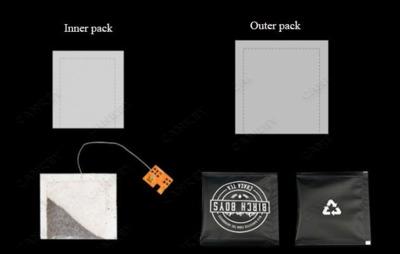
The YS-169 product reference describes an inner filter bag transferred into an outer envelope, with thread and label handling between the packaging operations. That provides a concrete arrangement to discuss. It does not provide a measured acoustic result for the machine shown.
Ask which model and supplied arrangement the declaration identifies. Does it describe the complete enveloped-tea configuration in the quotation, or a related machine producing an inner bag only? If the answer refers to a family of models, request an explanation of how that evidence applies to the particular offer. Similar names and photographs do not settle this relationship.
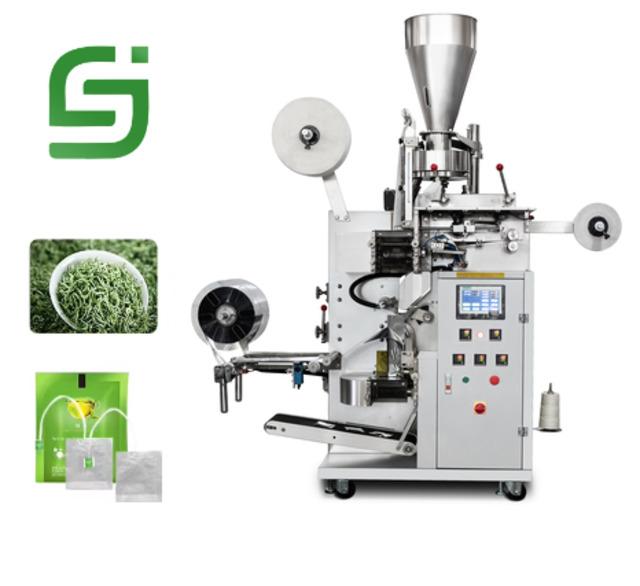
Use the overview to locate the hopper, material rolls, control area and finished-pack discharge when discussing the scope. Name the included functions in the supplier's reply. A photo helps the parties identify equipment; it supplies no ranking of which part is louder or how much sound the assembled line emits.
A number needs an account of what the machine was doing when the underlying information was obtained. HSE reporting guidance identifies operating conditions, active components and the processed material as relevant declaration context. A description such as "automatic operation" leaves important purchasing questions unanswered.
For the tea application, ask whether the stated condition involved tea dosing, filter forming, thread and label functions, and outer-envelope production together. Request identification of the load, packaging format and stated operating rate associated with the result. These are questions about the existing declaration, not instructions to alter a machine or conduct a test.
An empty demonstration and a declaration describing loaded production should not receive the same label in a comparison sheet. If an offer provides information for several states, retain the separate descriptions. Choose the comparison relevant to the intended order rather than taking the lowest entry from each supplier. Where the intended use is not represented, ask what additional information the bidder can supply and what remains unknown.
Workstation emission sound pressure is position-specific. A figure assigned to a control position therefore needs that position identified in the accompanying information. It should not acquire a different meaning simply because a sales summary calls it the operator level.
Ask each bidder to identify the position addressed by its declaration using the offered machine layout. Clarify whether both replies concern the same intended task and a corresponding location. A statement tied to a control panel and another tied to a discharge position leave a location difference to resolve before ranking the pressure figures.
This does not require the purchasing team to select microphone positions or calculate corrections. Request the supplier's documented meaning and have a competent acoustic adviser review unclear comparisons. Keep conclusions proportionate: information about a specified workstation does not describe every location around the bag maker, and a product photograph cannot supply the missing positional definition.
List the equipment covered by the acoustic information separately from the equipment included in the price. Ask about any quoted bulk-tea supply, outer wrapping, discharge or downstream equipment. If an air supply or another shared service is discussed, request an explicit statement of whether it is within the reported boundary. Do not infer the answer from a utility requirement.
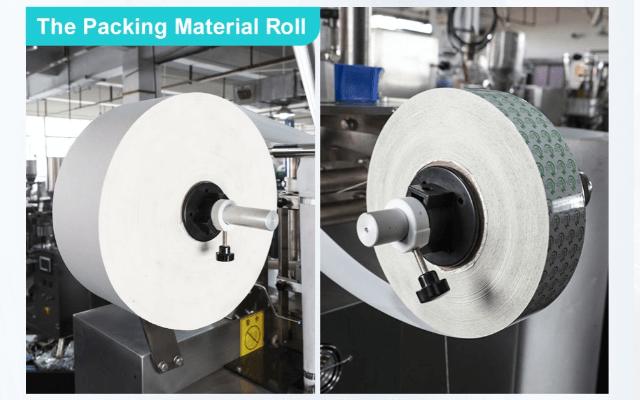
The material-roll photographs identify the web-feed arrangement being discussed. They do not establish validated materials, running conditions or sound from any component. Ask whether the declaration covers the inner-filter and outer-envelope feed functions in the offered arrangement, with the active functions named.
Two offers can have different boundaries without either being incorrectly described. One may price additional equipment whose noise information is separate. Preserve that distinction in the buying decision instead of calling the complete offers acoustically equivalent. Ask the supplier to explain any excluded equipment before treating the declaration as information about the whole proposed line.
A test-code name is useful only when its reference is sufficiently specific to identify the applicable conditions. HSE guidance calls attention to the edition and relevant part, as well as the declared quantity and associated uncertainty. Copy those references with the figures rather than dropping them to make a shorter comparison.
Ask whether the uncertainty belongs to the particular result being discussed and how the supplier presents it. It is not a discretionary purchasing tolerance or a statement that an employee may receive additional exposure. This article supplies no calculation for combining results or turning one acoustic quantity into another.
When two bids cite different references, ask for an explanation of whether their reported quantities, positions and operating conditions are comparable. A more recent date by itself does not resolve differences in scope. Likewise, a small separation between declared values should not be promoted into a decisive advantage without understanding the associated uncertainty. Refer that interpretation to a suitably qualified reviewer when it could affect the purchase.
Classify the information before assigning an acoustic preference. The table distinguishes a potentially usable comparison from a missing explanation. It does not set an acceptable sound level, determine compliance or certify a machine as quiet.
| Information supplied with the offers | Meaning for the buyer | Next purchasing action |
|---|---|---|
| Same acoustic quantity with corresponding configuration, state and location where applicable | The replies may support comparison once their references and uncertainty are understood | Have the responsible reviewer interpret the complete declarations |
| Sound power in one offer and workstation emission pressure in another | The entries describe different quantities | Request corresponding information before ranking them |
| Same quantity but an unexplained load or auxiliary boundary | The proposed equipment or duty may not match | Ask the bidder to identify the condition and coverage |
| A bare noise figure without an identifiable reference or uncertainty | The basis for an acoustic preference is incomplete | Return the specific omissions for clarification |
| Only a low-noise claim or a workplace exposure statement | No comparable machine-emission result has been established | Leave acoustic ranking open and request suitable machine information |
Apply the same interpretation to every bidder. A detailed declaration should not lose to an unsupported smaller figure merely because the latter is easier to place in a spreadsheet. Record an unresolved comparison as unresolved.
A useful return to a bidder identifies the exact obstacle: the wrong acoustic quantity, an unnamed workstation, missing uncertainty or an unclear machine state. Ask for the corresponding information for the quoted configuration. Avoid a broad request for more certificates when the actual problem is that the figures answer different questions.
If the bidder cannot supply a comparable result, ask whether it can offer further information, propose an agreed basis for comparison or revise the scope of its statement. Keep the cost and availability of any additional work open until the parties agree. The request does not make new testing or an acoustic guarantee an included deliverable.
HSE purchasing guidance recommends considering intended-use conditions alongside reference conditions. Use that principle to explain why an otherwise valid declaration may leave this particular selection unresolved. Acknowledge useful information without turning the remaining gap into an assumed pass or failure.
Before choosing between offers, check that the machine arrangement discussed still matches the current quotation. The YS-169 reference in the tea bag packaging machine range identifies a nested inner-and-outer-bag application; it does not validate an acoustic declaration for every option sold under that name.
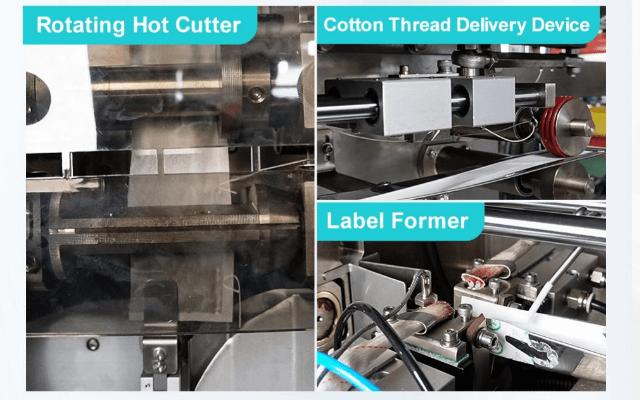
The closing-area, thread-routing and small forming-mechanism photographs provide further identification points. Their printed labels are not acoustic findings. Ask the supplier to identify any difference between those references, the declared configuration and the offered equipment. Do not attribute a noise change to a particular mechanism from its appearance.
When the offer changes, revisit the relevance of the earlier information. An added function or substituted assembly needs a supplier explanation of whether the acoustic evidence still applies. Close the buying comparison with the quantities and conditions understood, or state plainly which acoustic question remains open. Neither outcome is a promise about exposure, legal conformity or the sound experienced after delivery.
Can I choose the lower figure when both offers use A-weighting? First identify the acoustic quantity. A-weighting does not make a whole-source sound-power result interchangeable with emission pressure at a workstation. Request corresponding information and review the stated conditions before assigning a preference.
Does a machine declaration tell me an operator's daily exposure? It provides information about the machine under declared conditions. Daily exposure concerns the person's activities, time and sound from relevant sources. The purchasing comparison does not replace the site's competent assessment of that work.
Can an inner-bag-only declaration represent an enveloped-tea line? Ask the supplier to explain whether the declared configuration covers the quoted outer-envelope, thread and label functions. Information for an inner bag alone does not establish the complete line's acoustic output. Keep the comparison open until that relationship is supported.
What should I do when the uncertainty is absent? Ask the supplier to explain the presentation and provide the uncertainty associated with the relevant result where applicable. Keep that limitation visible to the reviewer; do not create your own allowance to complete the comparison.
Is an incomplete reply evidence that the machine is noisier? It establishes an information gap. Seek a focused clarification or leave the acoustic ranking undecided. A complete competing declaration can be more useful for purchasing without proving the performance of an undocumented alternative.
A useful acoustic comparison begins with matching meanings: the same quantity, an identified machine arrangement and an understood production condition. Retain the workstation definition, equipment boundary, dated reference and uncertainty with the result. For an inner-and-outer tea bag line, use product images to identify the configuration and supplier information to explain the declaration. When those pieces do not align, request a precise clarification and keep the acoustic decision open.

YISEN MACHINERY - The ONE-STOP VFFS PACKING MACHINE SOLUTION SUPPLIER
 Tel: +8617350750975
 Email: info@vffspackingmachinery.com
 MP/WhatsApp: +8617350750975
 Manufacturer Address:Meixi Road, Tongan District, Xiamen,Fujian,China