

Hot Keyword:

Author:YISEN Pouch Packing Machine Manufacturer TIME:2026-11-09
A zero-defect trial on a tea bag packing machine establishes that no inspected units were classified as nonconforming under the stated checks. It does not establish that the underlying nonconforming fraction is zero. A broader inference needs a defined population, identifiable units, suitable selection and defensible statistical assumptions. Interpret the clean sample before deciding whether it answers the purchase question; this guide reports no machine trial results.
The observed sample fraction divides the number of inspected units classified as nonconforming by the number inspected for those criteria. When the numerator is zero, that fraction is zero for this sample. The unknown fraction in the population remains a different quantity.
NIST's binomial model allows a finite sample to contain no nonconforming units even when the underlying per-unit probability is positive. This statement assumes that the model is appropriate; it is not a report about any particular machine. An observed zero can contribute useful evidence without proving that no unseen nonconforming unit exists.
Read a supplier's claim accordingly. A description of the inspected sample should identify its scope. A claim about the process requires an additional inferential argument. If the wording moves directly from a clean tray to defect-free future production, ask which population, selection method and assumptions support that extension. The attractive appearance of the retained pieces cannot supply the missing argument.
A filter bag, an enveloped tea bag and a retail carton are different candidate units. The YS-169 reference within the tea bag packing machine range describes inner bags transferred into outer envelopes with thread and label handling. That configuration makes the unit definition a practical question.
If the stated result concerns complete enveloped packs, several observations on their components do not automatically become several independently produced complete packs. Define how a unit is classified when more than one required characteristic is examined. NIST distinguishes the count of nonconforming items from the individual nonconformities that an item may contain.
A missing tag and an unacceptable envelope on the same unit therefore need careful counting. Their defect descriptions may both matter, while a binary unit-level analysis still classifies that unit once. Ask whether the report counts nonconforming units, individual defects or separate inspection opportunities. Each denominator has a meaning; interchanging them changes the statistical question.
The target might be output from an identified demonstration, one released material combination or a defined production population under specified conditions. State which is intended. Evidence from one tea and envelope combination should not silently acquire the scope of every product the buyer may run later.
NIST's population-and-sampling guidance explains that sample observations do not automatically become population facts. Representativeness matters alongside the amount of information collected. Describe the selection and population clearly enough for the responsible statistical reviewer to judge their relationship.
The material-roll photographs identify positions on the product reference, not the lots used in a trial. A report still needs to say which filter and envelope materials its inspected units represent. If the intended purchasing claim includes future substitutions, ask how those substitutions enter the target population. A shared model name or a photograph of a roll does not establish equivalent conditions across suppliers or batches.

Sampling a released-output stream and sampling production before rejection can answer different questions. Packs retained only after passing an earlier check belong to a selected population. A clean sample from that stream does not, by itself, estimate how often the machine initially produced nonconforming packs.
This does not make every study of accepted packs invalid. The buyer may genuinely want information about outgoing released units. Keep that objective explicit, including the checks that selected them. The error is to describe the selected result as though the rejected population had also been represented.
| What was actually observed | Question the evidence can address | Extension needing further support |
|---|---|---|
| No nonconforming units in an identified inspection sample | What those inspections found under their criteria | The unknown nonconforming fraction in a wider population |
| No failures among packs selected after an earlier release check | The inspected subset of that released-output population | How frequently the full production stream generated rejects |
| Several successful inspections of the same retained pack | Repeated observations on that specimen | The number of independently produced units represented |
| A statistical bound reported with its model and population | A conditional inference under the stated method | An unconditional promise or automatic contract acceptance |
Useful output per hour and the population fraction nonconforming are also separate quantities. Keeping accepted packs for a capacity calculation is not the same task as selecting observations for this inference.
The NIST discussion of binomial nonconforming counts assumes independent successive units and a stable per-unit probability, with a random sample for the stated analysis. Those conditions need justification in the application. They do not follow merely from a long list of inspection rows.
Reinspect one bag and the report gains another observation on that bag, not another independently produced bag. Such work may answer a measurement-repeatability question. It should not silently enlarge the unit count in an analysis intended to describe produced packs.
Shared production conditions also deserve attention. Output close together may share an adjustment, material condition or unresolved process disturbance. That is a reason to examine the independence assumption, not proof that every consecutive unit is correlated. Conversely, placing packs into different boxes does not establish independence.
Ask the analyst to explain the observational unit and treatment of dependence before interpreting the reported precision. This article supplies no replacement effective sample count. Re-labeling observations cannot resolve an unsuitable model, and a visually clean sequence cannot demonstrate independence by itself.
Several clean groups can still concern different questions. Inner-bag output and completed enveloped output have different endpoints. Results collected before and after a changed material or adjustment also need an explanation of whether they describe the same target and statistical model.
A buyer may legitimately define a population containing several production conditions. In that case, the combined inference must address that declared population using an appropriate method. It does not automatically describe each subgroup equally well or establish a result for the most difficult unobserved condition.
The former, hopper and chamber views identify parts of the YS-169 product route. They do not identify a sampled load, establish unchanged conditions or demonstrate a common nonconforming probability. The actual evidence must connect the inspected units to the product and configuration that the claim concerns.
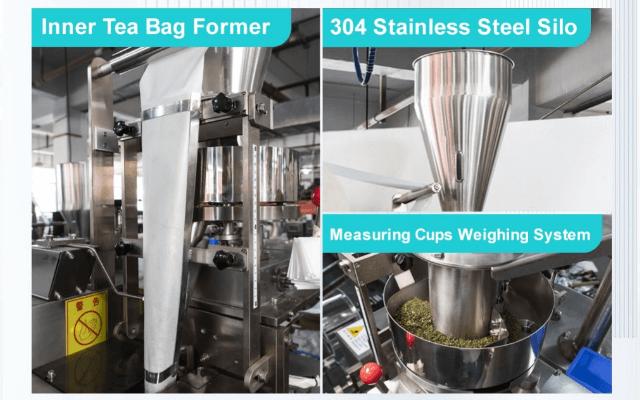
Keep corrections visible when interpreting groups. A successful group made after an adjustment does not erase the earlier observations. Whether groups can be combined is an analytical question tied to the target, not a reason to present only the cleanest stage as the entire trial.
A bound on the unknown nonconforming fraction goes beyond quoting the observed fraction. Its interpretation depends on the chosen statistical procedure, confidence level, population and assumptions. Ask what method produced the statement and why it fits the observations.
In the frequentist explanation given by NIST, confidence concerns how the interval procedure covers the fixed population parameter across repeated sampling. It does not assign an after-the-fact probability that the parameter lies within this particular calculated interval. A reported confidence level is also not the percentage of future packs guaranteed to pass.
NIST's proportion-interval guidance warns that normal approximations can be unsuitable when few failures are observed. A zero at the boundary needs an appropriate method, not an unexplained calculation that returns zero uncertainty. Have the responsible reviewer explain the handling of that case without borrowing a shortcut from a different sampling situation.
No sample count, confidence level or numerical bound is prescribed here. A larger collection of observations is not a cure for selection bias or unjustified dependence assumptions. The inferential method must still answer the buyer's defined question.
Statistical interpretation needs an understood classification. A unit recorded as passing the named checks has passed those checks as performed. It has not thereby demonstrated every property that might matter to the finished tea product.
Ask which characteristics make a pack nonconforming in the report and how the stated inspection relates to them. Counting apparently acceptable units cannot establish the absence of a characteristic that was never examined. Nor does a confidence calculation establish an inspection's unknown ability to detect a defect.
The closing and thread-routing photographs help identify possible areas to name when defining the inspected assembly. They show neither inspected specimens nor an inspection outcome. Printed component labels cannot establish the sensitivity of a check or a population's conformity.

Keep this limitation separate from sampling uncertainty. More suitable observations may improve an estimate for the defined classification, but that does not expand the classification to unmeasured characteristics. If the purchasing requirement is broader, identify the missing evidence rather than presenting the clean sample as a complete answer.
A buyer can use the inference to understand what remains uncertain without allowing it to create a new acceptance rule. The purchasing agreement and responsible quality review determine how the evidence is used. A statistically explained result does not automatically approve shipment or establish a legal conclusion.
Request wording that separates the inspected outcome, the population addressed, the conditional statistical conclusion and any wider claim still unsupported. If the supplier cannot identify the selection or analytical basis, preserve the observed result and leave the wider inference unresolved. Do not invent the missing units, reconstruct rejects from a photograph or choose a sample count retrospectively to support the desired conclusion.
The useful question is what the buyer can reasonably conclude from this evidence. A clean demonstration may contribute to that decision while leaving uncertainty about other materials, states or requirements. Acknowledge both its contribution and its limits instead of converting an observed zero into a promise.
Does zero observed nonconforming output mean the true fraction is zero? It describes the inspected sample. Under an appropriate binomial model, a positive underlying probability can still produce a clean finite sample. Any population statement needs the sampling basis and model assumptions.
Can I combine clean groups from different tea materials? First define the population and unit-level question. Combining groups may address a stated mixture under an appropriate method, but it does not automatically provide the same inference for each material or an untested condition.
Do repeated checks on one pack increase the produced-unit sample size? They provide more observations of that specimen. They are not additional independently produced packs. Preserve the relationship between the observation rows and physical units when the analysis concerns production output.
Is a sample of accepted packs always the wrong choice? No. It can address the defined released-output population. It should not silently be used to estimate the full production stream's nonconforming fraction after the earlier rejection step has removed units from consideration.
Does a confidence statement guarantee contract acceptance? It explains an inference under its assumptions and chosen procedure. It does not select a buyer's acceptance conditions, prove compliance or guarantee future production. The responsible parties still need to decide how the evidence addresses the agreement.
Read a zero-defect statement as a defined observation before treating it as a population claim. Identify the inspected unit, selection, target population, production conditions and classification, then examine the statistical assumptions behind any bound. Separate repeated observations from independent units and selected released output from the full stream. The result can inform a purchase when its meaning is clear; the word zero alone cannot supply missing evidence or decide acceptance.

YISEN MACHINERY - The ONE-STOP VFFS PACKING MACHINE SOLUTION SUPPLIER
 Tel: +8617350750975
 Email: info@vffspackingmachinery.com
 MP/WhatsApp: +8617350750975
 Manufacturer Address:Meixi Road, Tongan District, Xiamen,Fujian,China