

Hot Keyword:
Author:YISEN Pouch Packing Machine Manufacturer TIME:2026-11-13
A magnetic flowmeter can measure a liquid only when its electrical conductivity suits that instrument. Its success with water therefore does not establish suitability for edible oil. Before choosing a metered oil pouch packing machine, distinguish conductivity-dependent sensing from Coriolis mass measurement, then examine how the selected device works with an intermittent dose, a shutoff valve and the machine controller.
Two quotations can both describe flowmeter filling while proposing fundamentally different instruments. One may detect movement of a conductive liquid; another may measure mass through an oscillating tube. A familiar percentage beside each instrument does not make their application requirements equivalent. First establish whether the actual oil is measurable by the proposed principle.
Separate the sensor from the device moving the oil. A pump creates or maintains product movement, a valve admits or stops that movement, and a flowmeter supplies a measurement. These functions may be coordinated by one controller, but naming the pump does not identify the sensor. Likewise, an electronic screen displaying a volume does not establish that a flowmeter produced the number.
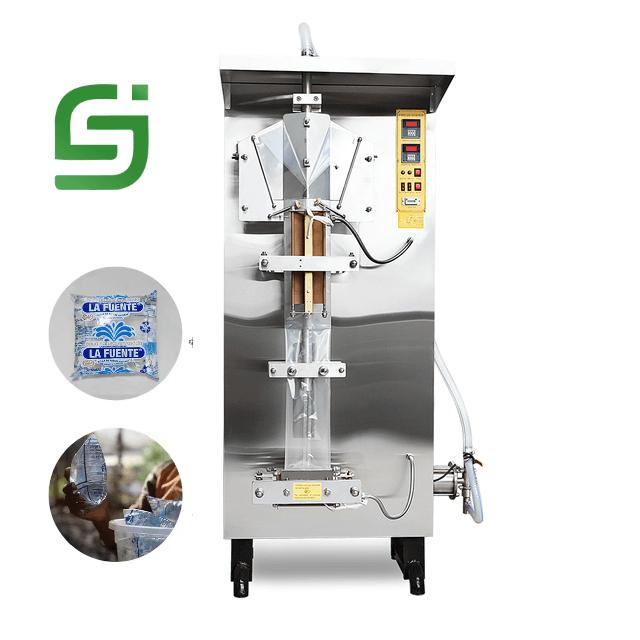
The archived YS-80Y artwork identifies an oil-and-sauce packing platform. It gives a useful starting point for discussing the offered liquid path, but it does not reveal a fitted flowmeter. Ask which quantity the offer measures directly and which values are calculated or commanded. That distinction prevents an instrument option from silently becoming an assumed standard feature.

Electromagnetic flow measurement relies on an electrical signal generated as a conductive fluid moves through a magnetic field. Endress+Hauser's technology overview identifies conductivity as a condition for this measuring principle. The liquid is part of the sensing arrangement, so the instrument cannot be selected solely from pipe size or the fact that a material pours readily.
KROHNE's edible-oil application report gives a concrete example: the vegetable oil concerned was non-conductive, requiring another measurement approach. This supports screening ordinary magnetic metering carefully for edible-oil service. It does not establish the conductivity of every formulated oil blend. Water-containing emulsions and neat oils should not be treated as identical applications merely because both appear on a liquid-products list.
A water demonstration can therefore exercise a measuring principle under a condition the production oil does not share. Neither a responsive display nor repeatable water batches closes that gap. Have the instrument supplier assess the actual product against the specific device requirements. Avoid adopting one published conductivity threshold as a universal specification for every magnetic meter.
A Coriolis instrument uses the response of vibrating measuring tubes to flowing mass. Its sensing principle does not require the liquid to provide the electrical conductivity used by a magnetic meter. Endress+Hauser explains the relationship between tube motion, phase difference and mass flow; KROHNE documents a Coriolis batching application for vegetable oil in a bottle filler.
This changes the eligibility question, but it does not make the complete filling duty automatic. The meter still has a particular geometry, operating range, output arrangement and installation requirement. A device used on a continuous process stream and one intended for rapid filling can share the Coriolis name while offering different integration choices. Choose the actual device, rather than purchasing the principle as an abstract promise.
The bottle-filling example establishes a relevant oil measurement route, not a pouch-machine result. Its named instrument, connections and control arrangement belong to that installation. Treat the example as evidence that conductivity-independent batching exists, then require a separate engineering explanation for the proposed packer. No accuracy figure or included retrofit follows from the external case.
Locate the measuring point relative to the final outlet. The instrument reports material passing its sensing region; the pouch receives material leaving the delivery route. The quotation needs to explain how those events correspond during a complete dose. A sensor reading alone does not identify what remains downstream, what enters a return branch or how an interrupted fill is accounted for.
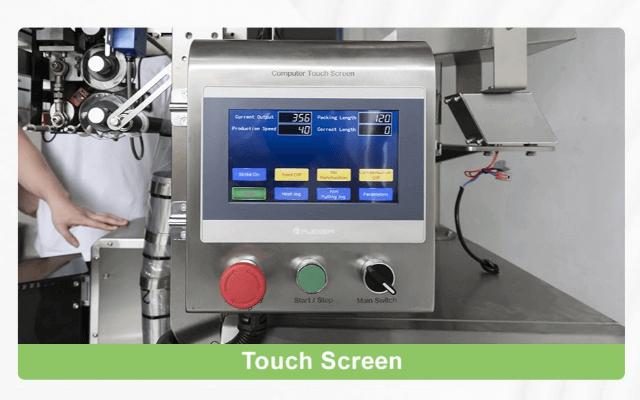
Units also need an explicit meaning. Mass flow, accumulated mass and a displayed volume answer related but different questions. Where a system converts one quantity into another, the calculation basis belongs in the technical description. A touchscreen label should not require the purchaser to guess whether it represents direct measurement, a converted total or a recipe command.
Consider a proposed arrangement with an extra branch after the meter. The engineering question is whether all measured product reaches the intended package during that batch. This is a layout inference, not a claim that any particular machine loses oil. Resolving it may change the measuring location, branch arrangement or accounting logic rather than the selected dose value.
An instantaneous flow indication is not a completed batch. The controller needs an identified beginning, a way to accumulate the relevant measurement, and a defined relationship between the accumulated quantity and the shutoff command. For an intermittent packer, that sequence must correspond to the particular receiving pouch rather than a convenient interval chosen by the instrument display.
KROHNE's oil application describes pulse communication between the batching meter and the receiving controls. The practical purchasing implication is to identify the complete signal chain: what the meter sends, what each signal represents, and which controller turns it into a batch total. A statement that both devices have digital electronics leaves those interface questions unanswered.
A continuing instrument total and an individual pouch total need different boundaries. The first can accumulate material across many cycles; the second must associate the relevant portion with one receiving package. If a fill is interrupted, an accumulated number alone does not explain whether it belongs to that package or a later cycle. The proposed controls must make that association explicit.

The installation belongs to the measurement decision. Both the OPTIBATCH handbook and Dosimass filling-system instructions discuss the need for filled piping. A suitable sensing principle cannot compensate for an arrangement that leaves its measuring region in an unsuitable condition. The instrument supplier should review the proposed geometry, rather than accepting a meter symbol placed anywhere on a sketch.
Ask how the offered supply and shutoff arrangement maintains the required measuring condition across its stated application. Include the connection to the hopper or upstream feed and the location of the final valve. The concern here is the instrument's usable installation, not a general recommendation to add pressure or restrict a line. Device-specific mounting instructions belong with the responsible designer.
The OPTIBATCH installation guidance distinguishes a filled measuring route from locations where gas can collect or liquid can leave an open-ended section. Those are geometric conditions, not corrections achieved by changing the target quantity. A proposed layout should identify the meter's location and associated components clearly enough for its supplier to assess the actual measuring condition, without transplanting another model's mounting prescription.
The OPTIBATCH handbook describes an effect called ringing: rapid valve action can excite tube vibration that appears in the instrument signal. This is a measurement-system effect, distinct from visible oil dripping after a nozzle closes. Confusing the two could lead a buyer to request the wrong component change, even though both observations occur near the end of a dose.
Its purchase significance is the interaction between the selected meter and the actual closing hardware. The meter cannot be assessed only while flow is steady if its intended duty includes repeated valve movements. Equally, a clean mechanical cutoff does not establish that the electronic batch total is unaffected by those movements. The supplier needs to explain both sides of that event.
The named handbook provides model-specific suppression functions; their existence is not permission to copy settings into another controller. Ask how the proposed instrument handles this phenomenon and how its valid measurement period relates to valve action. Keep the explanation separate from nozzle-tail correction, because one concerns an indicated signal and the other concerns product physically leaving an outlet.
A conductivity problem rejects an unsuitable sensing choice; it does not require every buyer to purchase Coriolis filling. Mechanical displacement or a weighing arrangement may remain appropriate for the intended pack and production scope. Their inclusion in the comparison prevents a technical discussion about sensors from becoming an unsupported recommendation to replace otherwise suitable filling hardware.
Compare what each route controls directly and what remains outside that measurement. A displacement device controls a mechanical portion; package weighing concerns the receiving package; a flowmeter observes material crossing its measuring region. These references are different enough that one headline accuracy entry cannot rank complete machines. Select the architecture that answers the buyer's actual quantity-control problem.
| Route | Question before selection | Unresolved interface |
|---|---|---|
| Magnetic flow measurement | Does the product meet the device's conductivity requirement? | Actual liquid and batch controls |
| Coriolis batch measurement | Does this instrument suit the intermittent filling duty? | Filled tube, signal and shutoff |
| Mechanical displacement | Does the installed displacement range suit the portions? | Delivery and verification |
| Package weighing | Can the receiving format support the weighing arrangement? | Package handling and cycle |
A metered-filling option should name the sensor, its product duty, the receiving controls and the hardware that ends the dose. It should identify which supplier is responsible for integrating those parts. Otherwise the instrument vendor can supply a suitable sensor while the packer vendor supplies a different interpretation of the required filling function.
Use the oil-compatible sauce-packaging range to identify the platform being discussed, then separate its documented base arrangement from proposed instrumentation. The source photographs show machinery, vessels and controls. They establish no fitted Coriolis device, magnetic sensor or implemented pulse-counting function. Any additional measuring route needs an explicit place in the offer.
For the purchasing decision, the useful deliverable is a coherent description of how actual oil becomes a valid measured batch and then reaches its package. Resolve conductivity eligibility first, installation second, and the signal-to-shutoff relationship with the selected components. A stronger instrument brochure cannot close an undefined interface between those stages.
Does a successful water trial qualify a magnetic meter for oil? No. Water and the production oil may have different conductivity. Establish suitability using the actual liquid and the selected instrument's requirements before interpreting the water result as evidence for that duty.
Is every Coriolis instrument a suitable batch filler? No. The sensing principle does not identify its usable flow range, batch output, installation or controller integration. Those properties belong to the named device and the proposed machine arrangement.
Can meter accuracy be used as finished-pouch accuracy? It cannot simply be transferred. The meter observes a defined point in the product circuit; the finished pouch also depends on the delivery route and the way the batch is ended.
Is signal ringing another name for nozzle dripping? No. Ringing concerns vibration affecting a measurement signal. Dripping concerns product leaving an outlet. The required explanation and potential equipment response differ even when the observations occur close together.
Must an existing displacement system be replaced? Only an application-specific comparison can justify that purchase. If displacement meets the intended duty, adding a flowmeter needs a defined benefit and a complete integration scope rather than preference for an electronic label.
Conductivity determines whether magnetic measurement belongs on the edible-oil shortlist. Coriolis sensing offers another physical route, but a suitable sensor still needs a workable installation and a batch signal that agrees with valve action and delivery. Read those interfaces before comparing performance claims. The defensible purchase is an identified measurement chain for the actual oil, not a meter name attached to an otherwise unexplained pouch machine.

YISEN MACHINERY - The ONE-STOP VFFS PACKING MACHINE SOLUTION SUPPLIER
 Tel: +8617350750975
 Email: info@vffspackingmachinery.com
 MP/WhatsApp: +8617350750975
 Manufacturer Address:Meixi Road, Tongan District, Xiamen,Fujian,China