

Hot Keyword:
Author:YISEN Pouch Packing Machine Manufacturer TIME:2026-11-25
Specify a salt packaging machine around the chloride exposure of its separate assemblies, rather than accepting one stainless-steel label for the entire build. Dry crystals, damp deposits, trapped cleaning liquid and spilled salt create different material questions. The useful purchase decision combines alloy selection with accessible joints, sound fabrication and a clear boundary between product-contact components and exposed surrounding structure.
A product name does not describe the environment against a metal surface. Salt can pass briefly through a chute, remain on a horizontal ledge, or collect around a joint where moisture later reaches it. These locations deserve separate descriptions even though the incoming product is identical. Begin with the route taken by both intentional flow and ordinary spillage.
Then identify where water can enter that route. The relevant source might be the product condition, the surrounding process or the plant's cleaning method. A machine operating beside another wet operation has a different exposure boundary from one protected within a controlled dry packing room. The purchasing description should make that distinction visible before material substitutions are discussed.
This approach does not prescribe wet cleaning or prohibit it. It asks the designer to consider the environment that the finished assembly will actually encounter. Describing the line simply as a dry-product application leaves the behavior of retained residue unresolved.
Outokumpu's corrosion guidance distinguishes localized pitting from attack within confined spaces. It identifies chloride-containing environments as an important concern and explains that temperature, chemistry and surface condition influence susceptibility. A broad statement that stainless steel resists rust cannot settle those separate mechanisms.
For a buyer, the distinction changes the construction discussion. A visibly polished panel says little about the condition inside a covered overlap. Likewise, a shallow sliding mark along a crystal path should not automatically be described as chemical attack. The supplier needs to identify the affected location and the environment before proposing a material change.
Small surface dimensions can also be misleading. The area visible from outside does not describe the geometry of a localized defect. Avoid using a photograph to estimate remaining thickness or service life. The useful response is an engineering assessment of the component, rather than a confident prediction drawn from appearance.
Trace the boundary between adjacent parts, not just the broad surfaces facing the product. A removable cover, a seal seat or an overlapping support can create a location that is difficult to see after assembly. The question is whether salt and liquid can enter and remain there, and whether the construction permits their removal.
Outokumpu notes that crevices can arise from joints and from deposits. That observation makes geometry part of the material decision. Replacing an exposed sheet with a more resistant alloy does not explain a concealed retention point beneath it. The joint still needs a coherent design for its actual duty.
Compare alternatives by their assembled condition. A component may look accessible on a workbench yet sit behind another mechanism once installed. Conversely, a deliberately removable interface may offer a practical inspection route. Neither welded nor removable construction is universally preferable; consider the connection's function, surface continuity and realistic access together.
An alloy designation describes a material, while the delivered component also has welds, edges, joints and a finished surface. Outokumpu associates resistance with alloying and also emphasizes fabrication practices, including clean surfaces and removal of weld oxides. Material selection should therefore remain attached to the way the part is made.
Do not turn a familiar grade into a universal salt-machine answer. The same nominal grade can appear in an easily inspected hopper and in a sheltered joint with a different exposure. A proposal should explain why its construction fits each location instead of assigning one reassuring name to everything visible.
Comparative alloy indices also have limits. Outokumpu describes PRE as an indication for rough comparison, not a prediction of behavior in a real environment. It cannot authorize a complete packer or establish a maintenance-free lifetime. Where a difficult chloride duty needs specialist selection, the material expert needs the actual environment and component geometry.
The material boundary often starts with the hopper because it is prominent in a product photograph. Follow the route further: product discharge, connecting parts, fasteners, supports and any surfaces below a normal spill point. Decide which of these are within the supplied corrosion-resistant construction and which have another declared protection.
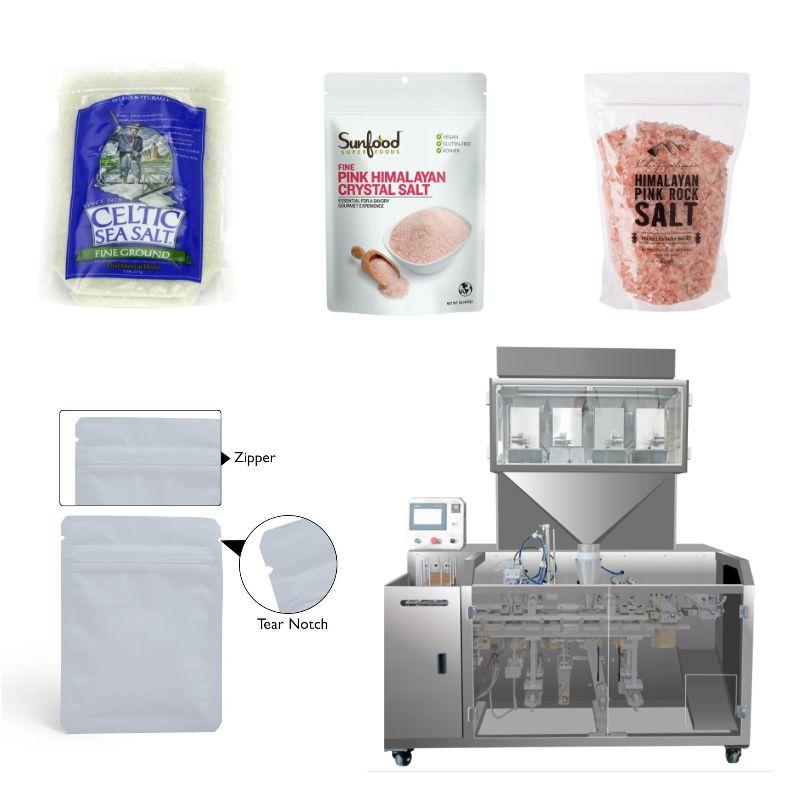
The separate salt-pouch examples show why this cannot be inferred from packaging appearance. Fine salt and coarse crystals can be presented in similar retail formats while the surrounding installation differs. The images establish a product context; they identify neither the alloy of hidden parts nor the plant's moisture exposure.
A material schedule can distinguish direct contact, likely spill contact and surrounding structure. That distinction helps purchasing evaluate a proposed change without demanding identical construction everywhere. It also exposes an incomplete offer: a specified hopper with unspecified exposed fixings leaves a real interface unanswered, even when the machine's front panels look consistent.
For example, consider a contact chute mounted through a bracket below its outlet. The chute's declared alloy answers one question. It does not identify the bracket, its fixing or the assembled interface between them. If spilled salt can reach that interface, the construction description should follow the spill rather than stop at the chute's product-contact boundary.
Replacement scope matters for the same reason. A quotation may offer an upgraded hopper while retaining the original supporting assembly. That can be a deliberate choice, but its limits should be explicit. Otherwise purchasing may read the upgrade as covering a region that the supplier intended to exclude. Comparing the component boundaries avoids that misunderstanding without inventing a requirement for the entire frame.

Cleaning is an input to the equipment design, not an afterthought added to an alloy name. The plant and equipment supplier should establish which parts are cleaned in place, which are removed and which areas may encounter liquid. The resulting layout needs to make those boundaries understandable to the people operating it.
Consider a removable product-contact assembly above a fixed support. Taking the first part away does not necessarily expose the underside of the support or a pocket behind its fixing. A drawing that follows only product contact can therefore omit a location affected during the cleaning operation. Look at the complete assembled route through removal and replacement.
The purpose is to prevent conflicting requirements. A joint cannot reasonably be treated as permanently dry in its material selection while the proposed sanitation method routinely wets it. Resolve that construction issue with the responsible engineers. This discussion supplies no chemical concentration, washing procedure or authorization to alter the machine's documented cleaning method.
Separate the physical exposure from the commercial shorthand used in quotations. The following comparison organizes the construction question; it does not assign a universal grade to any zone.
| Location | Construction question | What a broad stainless label leaves open |
|---|---|---|
| Open product passage | How are its material, surface and connections defined? | The condition of joints and adjacent parts |
| Covered retention point | Can deposits enter, remain and be reached? | The concealed geometry after assembly |
| Welded contact component | What fabrication and finishing condition is supplied? | The finished state beyond the base alloy |
| Structure below a spill | Which exposure and protection are included? | Whether the hopper specification extends there |
Two offers become easier to distinguish when their boundaries are expressed this way. One may cover more surrounding structure; another may make a retained-salt location accessible. Those are concrete differences in the supplied construction. An isolated grade name cannot express both, and a lower price cannot explain an omitted boundary.
Carry the selected boundary into replacement-part identification as well. A visually similar part is not evidence that the originally specified construction has been retained.
Salt machinery also has a mechanical duty. Crystals move across surfaces, pass through clearances and contact moving components. A response aimed at mechanical wear should identify that interaction. A response aimed at corrosion should explain the chemical environment and affected location. Calling every deterioration problem wear makes those decisions harder to separate.
The distinction matters when a replacement part changes several characteristics. A different surface, connection or clearance may alter product movement as well as material exposure. The replacement should remain suitable for the component's mechanical function; a corrosion discussion does not remove the need for a functioning product path.
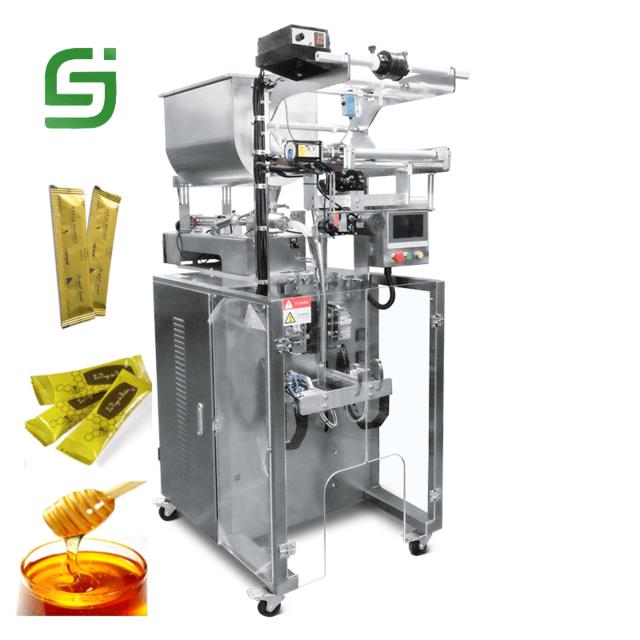
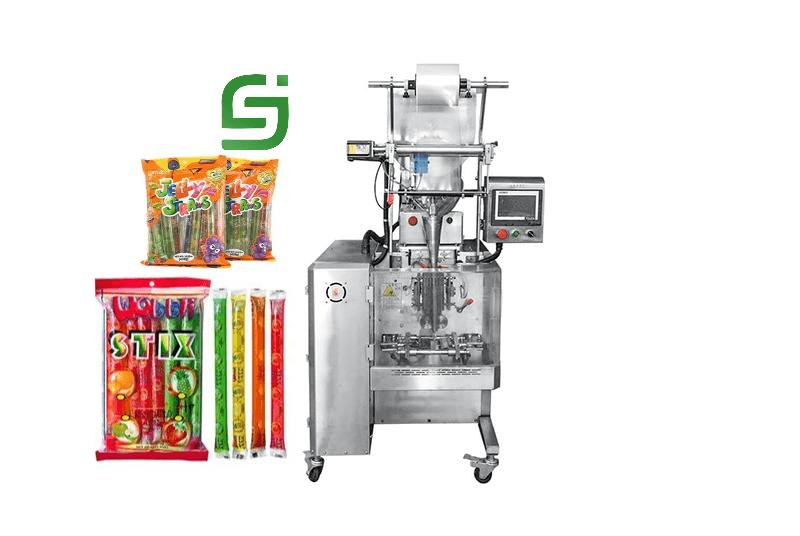
The stick-packing reference offers another view of a hopper and exposed assemblies, but it is not evidence of either failure mode. Use such a view to locate the component being discussed. Technical interpretation must come from its actual condition, rather than from the product montage surrounding the machine.
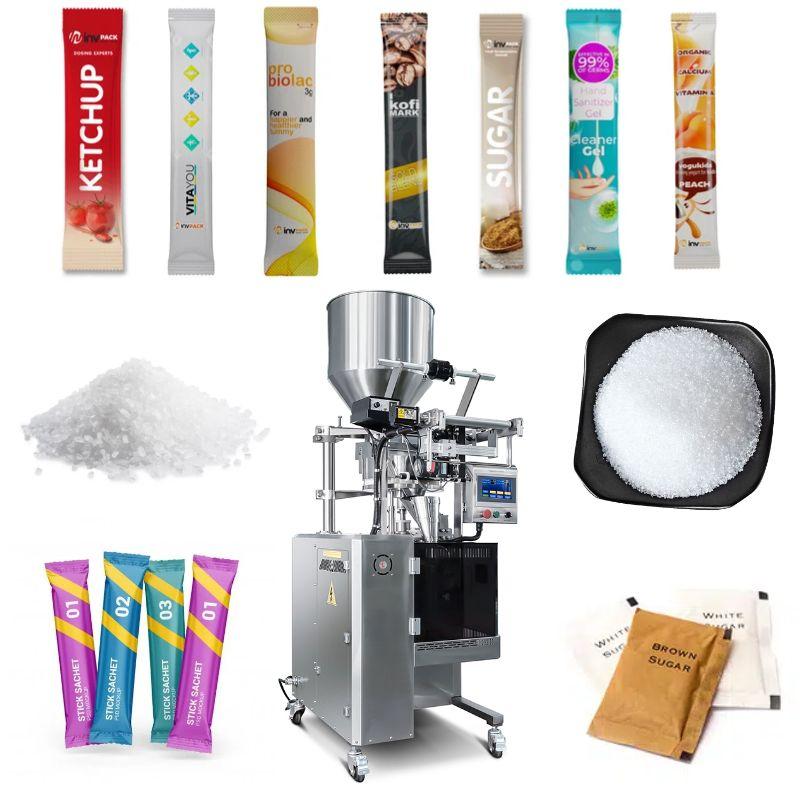
Bring the material and geometry decisions into one description of the purchased build. Identify the assemblies, their declared construction and the environment assumed for each. If a supplier offers alternative materials, the explanation should state which part changes and why that location benefits. It should not imply that one upgraded component transforms the whole machine.
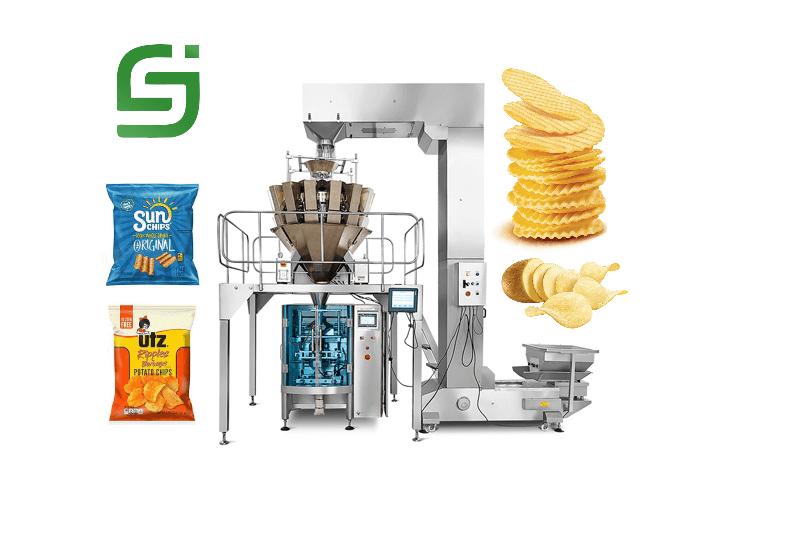
The granular packing machine range provides a starting point for discussing product handling. The salt-specific order still needs its own construction boundary. Existing photographs and broad catalog fields do not establish the material identity of an individual offered assembly.
Keep later changes attached to that same boundary. Moving the machine beside a wet process or changing the cleaning method can change the assumptions underlying a material choice. The initial purchase becomes more useful when those assumptions are explicit, because a future engineer can see what needs reconsideration instead of treating a stainless label as permanent approval.
Does a stainless hopper identify every exposed component? It describes only the assembly actually specified. Fasteners, supports, covers and connecting parts require their own material or protection description.
Is a more resistant alloy enough to solve a hidden deposit pocket? It does not remove the pocket. Material resistance, the retained environment and access remain connected construction questions.
Can a shiny surface prove that localized attack is absent? Appearance alone cannot establish the condition beneath deposits or inside joints. A relevant assessment must address the location in question.
What does PRE contribute to the purchase? It supports rough alloy comparison. It does not predict the complete assembly's performance under the buyer's actual salt and cleaning exposure.
Why include non-contact structure in the discussion? Salt can reach it through spillage or cleaning. A product-contact-only schedule may omit surfaces exposed during ordinary use.
A useful salt-machine material specification follows exposure through the assembled equipment. It distinguishes dry passage from retained damp deposits, broad surfaces from confined joints, and mechanical wear from localized chemical attack. Alloy choice becomes meaningful when combined with fabrication, access and a stated cleaning environment. That combination gives purchasing a defined construction to compare, while leaving unassessed chemistry and lifetime claims outside the promise.

YISEN MACHINERY - The ONE-STOP VFFS PACKING MACHINE SOLUTION SUPPLIER
 Tel: +8617350750975
 Email: info@vffspackingmachinery.com
 MP/WhatsApp: +8617350750975
 Manufacturer Address:Meixi Road, Tongan District, Xiamen,Fujian,China