

Hot Keyword:
Author:YISEN Pouch Packing Machine Manufacturer TIME:2024-08-27
Choosing a snack packaging line starts with the product's behavior, not with a generic speed target. Chips, roasted nuts, seeds, coated pieces, granola clusters, and seasoned mixes travel differently through a feeder and react differently to drops, vibration, oil, dust, and sealing heat.
A productive selection process connects four elements: the snack, the portioning method, the package, and the factory workflow. Buyers should supply representative product and production film, then measure accepted packs under conditions that resemble a normal shift. The machine must achieve the required weight, protect appearance, keep crumbs and seasoning away from the seal, and remain practical to clean. The most useful specification therefore describes limits and test methods instead of relying on statements such as suitable for all snacks or high accuracy.
Begin by recording piece size distribution, bulk density, surface oil, seasoning dust, fragility, tendency to bridge, static behavior, and acceptable breakage. A light chip can float or bounce at a transfer, while a dense nut moves quickly and may strike the pouch bottom with more energy. Granola clusters may separate into fines, and sticky coated pieces may cling to contact surfaces. These differences determine feeder design, drop height, and cleaning access.
Do not send only a perfect laboratory sample for a trial. Provide product from normal production, including expected fines and size variation, in enough quantity to warm up and run continuously. State the product temperature and the time between cooking or seasoning and packing. Fresh warm snacks can flow differently from conditioned product, so the trial material should represent the state the factory will actually present to the line.
Multihead weighing is commonly considered when buyers need combination weighing across a range of free-flowing pieces. Its performance depends on stable product distribution, suitable feeder settings, enough pieces in the weigh hoppers, and a discharge path that does not damage the snack. Volumetric cups can suit products with consistent bulk density and simpler weight expectations, but density changes may move net weight even when cup volume stays constant.
Linear weighers, counting systems, augers, or specialized fillers may be appropriate for particular snacks. No label guarantees the result. Ask the supplier to explain how the proposed system handles the smallest pieces, largest pieces, fines, and seasoning. During testing, measure consecutive finished packs and record both average giveaway and out-of-limit results. Product left in hoppers at the end of a batch should also be included in yield planning.
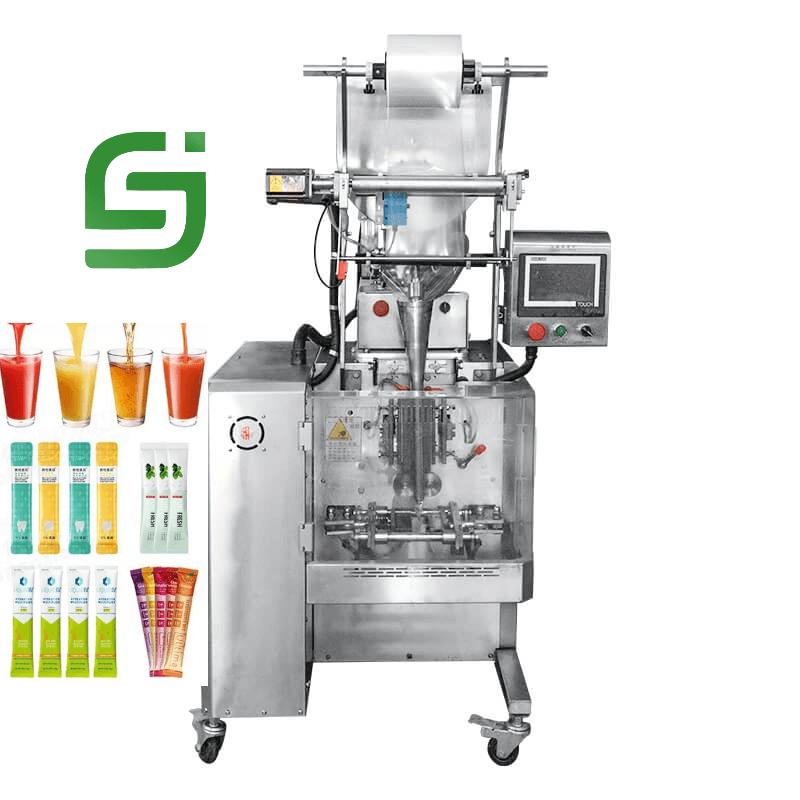
Fragile snacks can pass a weight test while failing the customer's appearance expectation. Review every transfer from the feed conveyor to the final pouch. Hopper discharge, timing funnels, bagger tubes, and the fall into an empty bag each add impact. Shortening uncontrolled drops, cushioning transitions, and coordinating the filler with the bagger may protect pieces without slowing every part of the cycle.
Create a repeatable damage method before the trial. One practical approach is to sieve or visually classify a defined sample before and after packaging, using agreed categories for whole pieces, acceptable fragments, and fines. Compare the packed result with the incoming baseline. The method need not be elaborate, but it must be consistent. Without a baseline, buyers and suppliers can look at the same handful of chips and reach different conclusions.
| Snack condition | Machine concern | Trial evidence | Selection response |
|---|---|---|---|
| Fragile chips or crisps | Impact and long product drops | Whole-piece and fines comparison | Review transfer geometry and synchronized discharge |
| Oily nuts or coated pieces | Residue on feeders and seal area | Run-time buildup and seal inspection | Improve cut-off, access, and cleaning frequency |
| Seasoning-rich mixes | Dust, segregation, and dirty seals | Blend distribution and leak results | Control vibration, extraction, and fill timing |
| Variable-density clusters | Weight spread and bridging | Consecutive pack weights at normal feed | Choose suitable weighing and agitation controls |
| Mixed large and small pieces | Component separation | Composition samples across the run | Manage feed depth and gentle distribution |
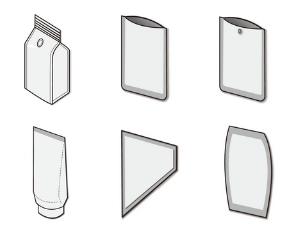
Package selection affects machinability, product protection, presentation, and unit cost. Define net quantity, bag dimensions, gussets, hang holes, zipper or reclose features, print registration, display orientation, and case arrangement. A pillow bag made from rollstock may support efficient production, while a premade stand-up pouch may serve a different retail position. The packaging route must be decided early because it changes the machine architecture.
Film structure should be selected with the packaging supplier according to moisture, oxygen, light, aroma, grease, and mechanical requirements. Nitrogen flushing may help some products when residual oxygen targets and shelf-life work justify it, but a gas connection alone does not prove protection. If gas is required, define measurement location, sampling method, timing after packing, and acceptable residual result. Seal tests and shelf-life evaluation remain necessary.
Product in the seal band is a frequent source of channel leaks. Long pieces can bridge across the pouch opening, while fines or oil can coat the sealing surfaces. The line needs controlled product release, enough settling time, suitable bag length, and a clean closing window. Brushes, air movement, vibration, or product-stopper devices may help in specific applications, but their effect should be demonstrated rather than assumed.
Inspect the entire seal width under good light and categorize defects such as trapped crumbs, wrinkles, burns, weak areas, or misalignment. Use a leak or seal-strength method appropriate to the package and repeat it after handling. Record defects by cause during a timed run. This points the correction toward feeding, bag geometry, sealing settings, or material quality instead of encouraging random temperature changes.
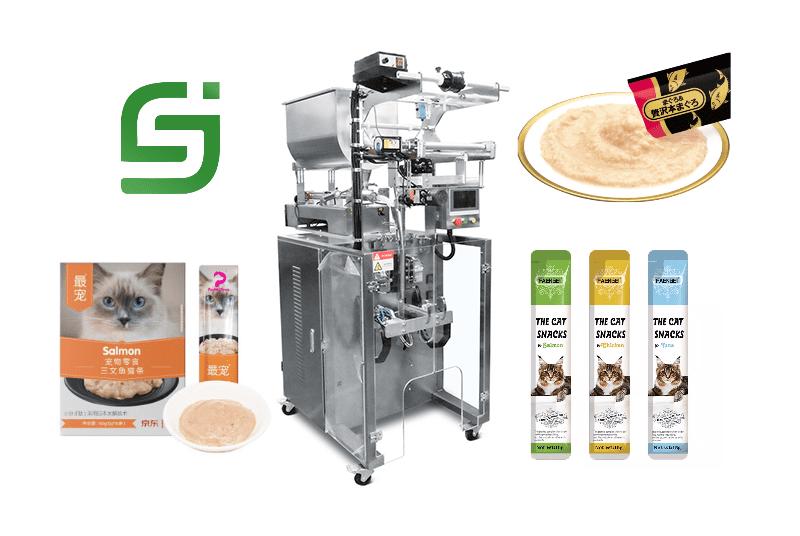
The stated packs per minute normally refers to a defined product, dose, and pouch. A larger fill requires longer discharge; a fragile snack may need gentler timing; a zipper pouch may need additional handling. Calculate capacity from accepted packs over a sustained period, including realistic stops for product replenishment, film changes, quality checks, cleaning, and minor faults. The slowest connected operation limits the complete line.
Upstream supply must deliver product evenly enough for the weigher or filler to remain stable. Downstream conveyors, metal detection, checkweighing, case packing, and carton removal must accept the same output without compressing bags or creating queues. Ask for a line balance drawing and a fault strategy. When one device stops, the system should protect product and prevent uncontrolled accumulation.
Snack plants may handle nuts, dairy seasonings, gluten-containing ingredients, or other allergens according to their own control program. The machine must support that program through accessible product-contact zones, removable parts, identifiable tools, and a cleaning method compatible with the materials. The equipment supplier cannot define the processor's allergen release standard, but should explain construction, retained product points, and disassembly steps.
Observe a complete clean after a representative run. Check feeder trays, weigh hoppers, chutes, forming surfaces, sealing jaws, ledges, cable routes, and guards where dust can settle. Record labor, tools, water or dry-cleaning needs, drying time, inspection access, and restart checks. Rapid removal claims are less useful than a witnessed changeover performed by plant operators with the proposed components.
Prepare a product-and-pack matrix covering every planned snack, fill weight, pouch format, film, code, and target volume. Identify the combinations expected to challenge flow, damage, or sealing. The factory acceptance test should define duration, sampling frequency, weight limits, breakage method, seal checks, residual oxygen limits when relevant, reject categories, changeover tasks, and the amount of usable output required.
A granular product packaging configuration can provide a useful equipment reference, but the purchasing decision should follow documented product evidence. Add utilities, footprint with access doors open, guarding, training, manuals, software backup, spare parts, and service response to the comparison. The preferred line is the one that meets product quality and output requirements with manageable cleaning and support, not necessarily the machine with the highest displayed speed.
Which filler is best for potato chips? There is no automatic answer, although combination weighing is often evaluated for free-flowing pieces. The buyer should test weight distribution, product breakage, discharge timing, fines, and cleaning with representative chips. Package size and required output also influence whether the complete line is suitable.
How can a buyer compare snack breakage? Define categories and a sampling method before testing. Measure the incoming product baseline, then assess samples collected after normal packaging. Keep sample size, sieve or visual rules, and handling consistent. Report both acceptable fragments and excess fines so that adjustments can be evaluated objectively.
Does a faster bagger always increase production? No. The weigher, product supply, sealing time, inspection equipment, and downstream packing must support that rate. Faster cycling can also increase damage or dirty seals. Use accepted output from a sustained integrated run rather than the fastest short burst shown on a screen.
When is nitrogen flushing worth considering? Consider it when package atmosphere is part of a validated product-protection plan. Define gas quality, flow control, residual oxygen target, test method, and sampling time. Shelf-life work and film barrier selection are still required because flushing cannot compensate for leaking seals or unsuitable material.
What samples should be sent to a supplier? Send normal production snacks with representative size variation, oil, seasoning, and fines, plus the intended film or premade pouches. Include pack drawings, weight limits, code requirements, damage criteria, expected product temperature, and enough material for stable operation and cleaning assessment.
A suitable snack line is selected by matching product behavior to portioning, transfer, package handling, sealing, sanitation, and factory capacity. The decision should be supported by consecutive weight data, a defined damage comparison, categorized seal defects, accepted output, and an observed clean or allergen changeover. When representative product and packaging are tested against written limits, the buyer can choose equipment that protects both throughput and the eating experience customers expect.

YISEN MACHINERY - The ONE-STOP VFFS PACKING MACHINE SOLUTION SUPPLIER
 Tel: +8617350750975
 Email: info@vffspackingmachinery.com
 MP/WhatsApp: +8617350750975
 Manufacturer Address:Meixi Road, Tongan District, Xiamen,Fujian,China