

Hot Keyword:
Author:YISEN Pouch Packing Machine Manufacturer TIME:2024-12-09
Machine selection should connect the actual sauce, filling temperature, particles, package, hygiene boundary, and downstream handling. Qualified buyer personnel remain responsible for hazards and product release, while the equipment supplier should demonstrate that the proposed contact parts, filling cycle, controls, and cleaning access can support those requirements.
A sauce packaging machine supports food safety by providing a cleanable product path, controlled filling, protected seal areas, correct packaging identity, and traceable recovery from faults. It executes part of an approved production process; it does not replace validated cooking, formulation, sanitation, shelf-life work, or the producer's food-safety plan.
Draw the route from the approved sauce process to the sealed pack. Identify holding vessels, temperature control where required, pumps, hoses, filters or screens, filler, package handling, seals, cooling, inspection, rejects, and case packing. State who monitors product condition at the handoff and who can place material or packages on hold. The packaging line should preserve the defined state; it should not be expected to correct an upstream process deviation.
Include normal waiting and interruption. Product may remain in a tank, hose, pump, valve, or nozzle when the packaging machine stops. Time and temperature effects depend on the sauce and process, so buyer quality specialists must set limits and disposition. The control system can support those rules through timers, alarms, status, and records only after the rules are defined. A generic machine setting is not a food-safety decision.
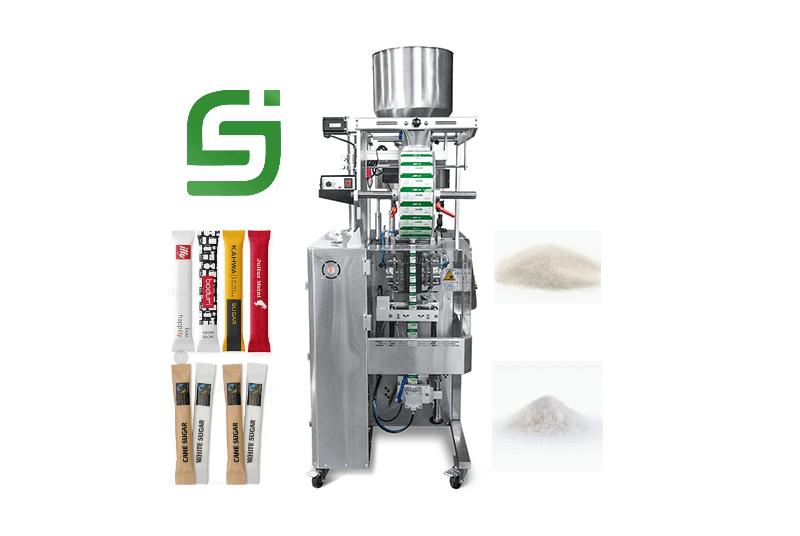
Characterize viscosity across the filling temperature range, oil and sugar content, acidity where relevant to material review, foam, strings, particles, particle dimensions, settling, and allergens. A smooth dressing and a sauce containing vegetable or meat pieces can need different pump, valve, hose, and nozzle passages. Large or fragile particles may be cut, blocked, or unevenly distributed by an unsuitable route even when total pack weight is correct.
Review product-contact materials, surface condition, seals, joints, drainability, disassembly, and inspection access with the buyer's sanitation team. Avoid hidden cavities and connections that cannot be verified by the approved method. Provide relevant product information to the supplier and document compatibility decisions. A visually polished machine does not prove that every internal valve, gasket, hose, or instrument connection fits the actual sauce and cleaning process.
Stable filling begins before the doser. Tank level, agitation, product temperature, pump inlet condition, hose routing, refill, and air entry can affect the dose and composition. Particles may settle if supply is poorly managed; foam can disturb volume; changing viscosity can alter cutoff. The line should recognize low or unavailable product and prevent incomplete packs from mixing with normal output.
At the pouch or film, nozzle diameter, tip, position, motion, fill profile, and valve response should limit splash and trailing product. Test startup, normal running, a planned pause, interrupted strokes, and restart. Collect doses consecutively and inspect composition where particulates matter. Record the exact pump, valves, nozzles, product temperature, and recipe so the supplier's result can be repeated on site.
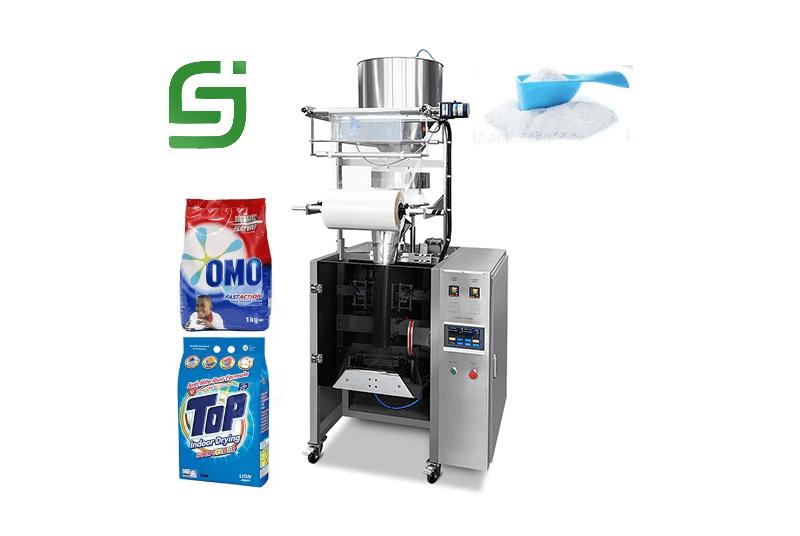
The closure region needs enough clean space after filling. Overfill, splash, strings, particles, product on the pouch wall, unstable support, or early movement can contaminate it. Pouch-top cleaning or a drip-control feature may help where trials justify it, but it should not hide an unstable filler. If sauce reaches the closure repeatedly, find the event and source before changing seal settings.
Use approved packaging material to develop heat, pressure, dwell, alignment, and cooling. Inspect seals from startup, a stable period, short stops, and restart. The buyer's selected integrity method should be applied to identified samples. A higher temperature cannot reliably close through trapped sauce and may damage the material. Fresh seals also require controlled discharge so a soft or heavy pouch does not stretch before cooling.
Cleaning should cover the complete route from supply connection to nozzle, including tanks or buffers in scope, pumps, hoses, valves, seals, manifolds, drip trays, guards, and nearby surfaces. The buyer approves cleaning agents, temperatures, circulation, disassembly, rinse, inspection, and verification according to the sauce and facility. Supplier instructions define safe access and equipment-material limits. Neither party should assume that flushing reaches every internal point without evidence.
Witness product recovery, drainage, isolation, opening of specified components, cleaning, inspection, reassembly, and first-off release. Check low points, dead legs, valve cavities, gaskets, and particulate traps. If water or cleaning solution remains, define how it is removed before product enters. Allergen or flavor changes need the buyer's validated boundary. Store cleaned contact parts so they remain protected and identifiable.
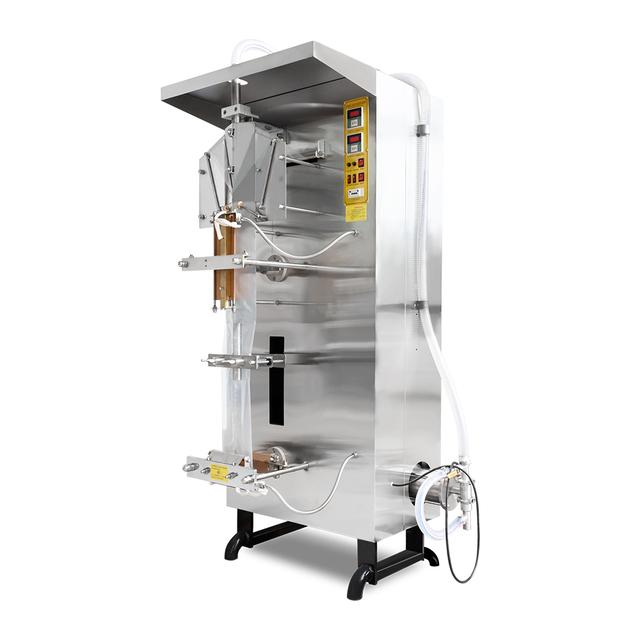
A safe sauce in the wrong package, with an incorrect label or code, can create a serious release problem. Verify product batch, pouch or film code, machine recipe, date or lot message, closure feature, and secondary packaging at startup and changeover. Access controls can protect recipes, but physical material and printed information still require first-off checks.
Reconcile printed packaging removed during line clearance and control work in progress. Test code triggers, legibility, position, and the response to a missing or wrong mark. If a scanner or vision system is used, challenge its detection and reject path. Traceability records should link accepted packages to identified product and packaging lots plus meaningful machine events, not merely store a production count.
When filling stops, determine the status of sauce in the supply path, the pouch under the nozzle, units between filling and sealing, and finished packs not yet inspected. Written hold rules should state what is segregated, what may be assessed, and who authorizes disposition. Operators should not manually complete a questionable pouch and return it to output without the defined checks.
Restart can require product-condition verification, priming, leak inspection, consecutive dose checks, clean closure areas, seal approval, and correct coding. The exact sequence belongs to the buyer's process and machine instructions. Test expected alarms during acceptance so messages and recovery are understandable. A controlled response to ordinary interruptions is a stronger food-safety support than a short demonstration with no stops.
The sauce packaging machine should be assessed through completed packages. Define dose, composition where needed, seal, leakage method, code, appearance, pouch cleanliness, cooling, and downstream handling. Inspection devices may support release, while off-line tests and quality sampling may still be required. No single check proves every characteristic.
| Control point | Machine contribution | Buyer evidence | Release question |
|---|---|---|---|
| Product handoff | Stable receiving and defined unavailable-product response | Approved sauce condition and hold limits | Is the filler receiving suitable product? |
| Filling | Controlled supply, dose, nozzle movement, and cutoff | Sequential dose and composition checks | Does the pack contain the intended product state? |
| Closure | Protected seal area and repeatable sealing cycle | Integrity method on traceable samples | Does the package meet the approved closure standard? |
| Sanitation | Accessible path and safe disassembly provisions | Validated cleaning, inspection, and first-off release | Is the line ready for the next approved product? |
| Identity | Recipe, code trigger, alarms, and reject interface | Correct product, package, message, and reconciliation | Can each accepted pack be released and traced? |
Run filled pouches through conveyors, checkweighing, detection where applicable, rejects, cooling, and case packing. Check stops and accumulation because fresh seals can be stressed after discharge. Record rejected units and prevent their return. Shelf life and food safety remain outcomes of the complete validated product-package process, not the packaging machine alone.
Does a sauce filler sterilize the product? Generally, filling equipment meters and packages sauce. Product processing and any sterilization functions must be defined separately and validated by responsible specialists.
Why do particle dimensions matter? They affect pumps, valves, nozzles, dose composition, blockage, pouch opening, seal contamination, and cleaning access.
Can more seal heat close through sauce? Product should be prevented from entering the seal band. Sealing parameters require validation with clean approved material and the finished-pack test method.
What should happen after a filling alarm? Identify affected product and packages, segregate uncertain output, correct the cause, and complete documented restart and first-off checks.
Who approves the cleaning procedure? The producer's authorized quality and sanitation roles approve it using product requirements, site controls, and supplier equipment instructions.
Utilities and instruments also need defined control. Product temperature probes, pressure indications, scales, timers, and seal-temperature systems require suitable location, verification, and maintenance under the buyer's program. Compressed air or other services contacting product or package interiors need quality requirements appropriate to the application. A displayed value is useful only when its sensor is identified, maintained, and connected to an action. Include relevant instrument checks in commissioning and after work that could change the measured process.
Periodic review should compare sanitation findings, filler interventions, closure defects, and held production. Trends can reveal a developing valve, hose, cleaning, or package problem before it becomes a repeated release concern.
Sauce equipment supports food safety when the product handoff, contact path, filling cycle, closure protection, sanitation, identity, and restart process all follow an approved plan. Its role is consistent execution and evidence, not independent validation of the recipe or package life.
Use representative sauce and production packaging in acceptance, deliberately test interruptions, and keep every sample tied to product and machine conditions. That discipline gives quality staff a traceable basis for release and gives operators clear limits for normal production.

YISEN MACHINERY - The ONE-STOP VFFS PACKING MACHINE SOLUTION SUPPLIER
 Tel: +8617350750975
 Email: info@vffspackingmachinery.com
 MP/WhatsApp: +8617350750975
 Manufacturer Address:Meixi Road, Tongan District, Xiamen,Fujian,China