

Hot Keyword:
Author:YISEN Pouch Packing Machine Manufacturer TIME:2026-08-21
An inner-and-outer-bag label tea packaging machine coordinates tea dosing, inner filter-bag formation, thread and tag handling where configured, transfer into an outer envelope, outer sealing, coding, and discharge. The tag is not necessarily an adhesive label; terminology and attachment method depend on the machine. Its practical advantages are a controlled sequence, repeatable presentation, and added outer protection when every material and station is qualified. Buyers should verify the delivered workflow rather than assume all machines use the same mechanism.
The process usually begins with tea supplied to a hopper and metering device. Filter material is fed and formed into an inner bag, the dose enters, and the bag is sealed and separated. If thread and tag are included, their feed, attachment, placement, and cut are synchronized with the inner package. The inner unit then moves to the envelope station, where outer material is formed or presented, closed, and cut.
Exact construction differs. Some platforms use a continuous roll for the envelope; others may use another presentation. Thread can be attached or positioned by different methods. The buyer should request a station diagram and process sequence for the quoted model.
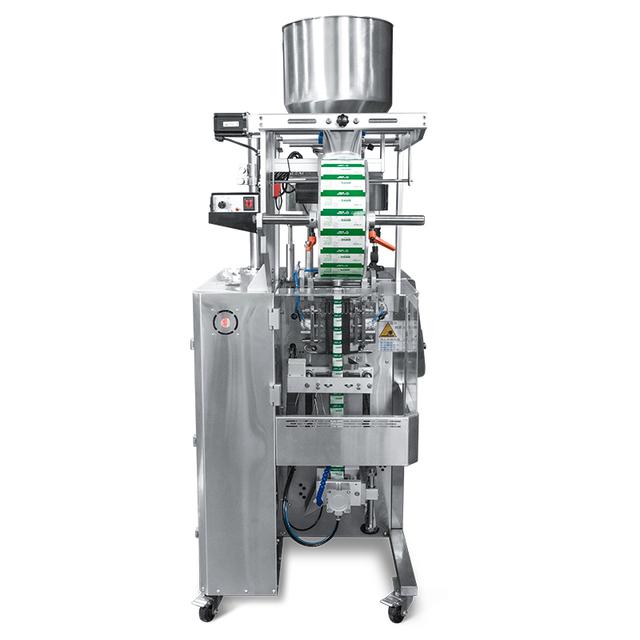
For every transfer, define the valid state. The next station should receive an intact, correctly oriented component. If an inner bag, tag, or envelope is missing, the line response and affected output need to be known.
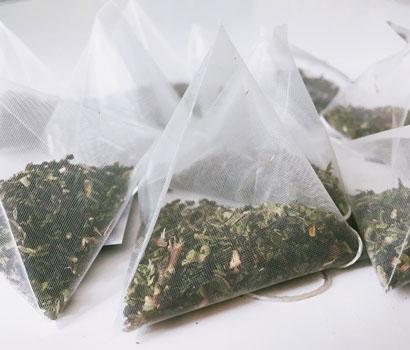
Tea can include fine broken leaf, long pieces, flowers, stems, or fruit inclusions. The feeder and dosing method should match density, flow, fragility, target quantity, and bag volume. Stable hopper replenishment is important because loose and settled tea may meter differently.
Collect consecutive dose samples through startup, stable production, refill, and restart. Measure with the producer's approved method and inspect product condition. Blends may also need composition checks because correct total weight can hide segregation.
An inner and outer bag tea packaging machine must inhibit dosing when valid inner material is not ready. Product should not fall into the machine or enter a questionable bag during a material or seal fault.
Filter paper or mesh unwinds through guides and forming components. Material tension, width, stiffness, friction, static, and curl influence tracking. The sealing system creates the specified seams, and cutting separates the inner bag at the intended allowance.
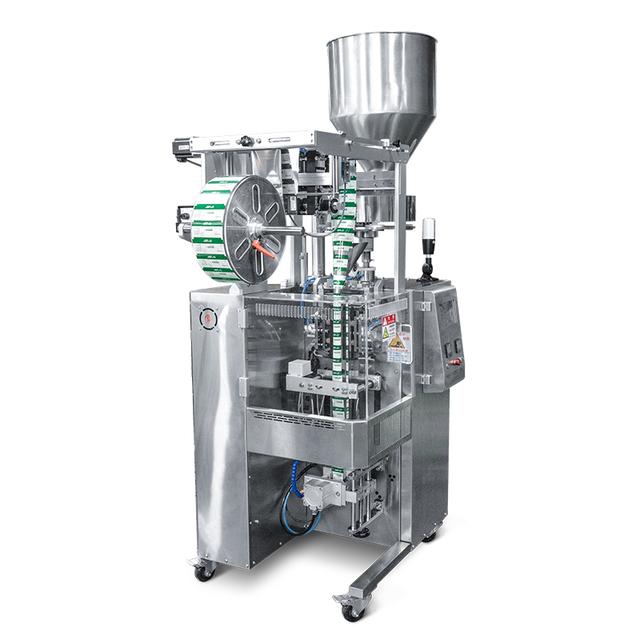
Tea must clear the seams. Fragments trapped between layers can create channels, and raising heat is not a reliable correction. Coordinate dose timing, transfer, bag volume, and forming motion. Qualify heat, pressure, and dwell for the intended material, then apply the producer's seal test.
Inspect inner-bag dimensions, tea retention, seam continuity, cut edge, and shape. A bag can look acceptable after outer wrapping while hiding an inner defect, so sampling should include opening selected envelopes.
Thread and tag systems add consumer convenience and brand presentation, but they create several material interfaces. Thread must feed without tangling, excessive tension, or slack. Tag stock needs correct orientation, print registration where present, separation, and placement. Attachment must follow the approved package design.
Use final thread and printed tags during trials. Thickness, stiffness, friction, adhesive or heat response where applicable, and winding quality affect operation. A plain substitute cannot validate artwork position or handling.
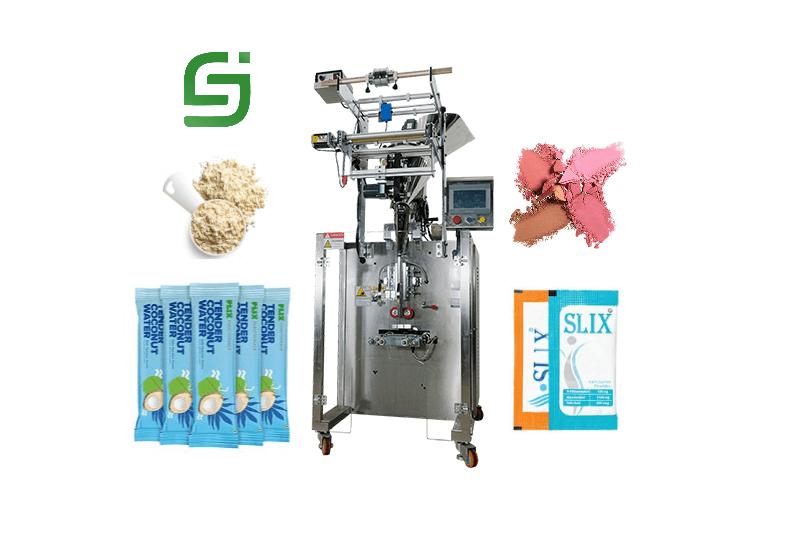
Inspect whether thread or tag becomes trapped in inner or outer seals. Trend faults by event and station. A missing tag may originate in material feed, detection, cutting, attachment, transfer, or envelope insertion, so retain the complete failed package.
The outer envelope can provide a print surface and additional protection according to the product owner's validated package. The inner bag must arrive in the correct orientation and timing. Envelope material then tracks or presents, receives the inner unit, seals, cuts, codes, and discharges.
Envelope width, repeat, stiffness, friction, registration mark, sealant, curl, and storage condition affect operation. Thread and tag must sit within the designed arrangement without crossing critical seals. The final package drawing should show acceptable placement.
| Process station | Primary control | Finished evidence |
|---|---|---|
| Tea dosing | Stable feed and product-specific metering | Ordered quantity and blend-condition results |
| Inner-bag forming | Material tracking, bag geometry, and clean seams | Dimensions, seal integrity, retention, and cut |
| Thread and tag | Tension, feed, attachment, placement, and detection | Consumer-use function and visible position |
| Envelope insertion | Inner-bag orientation and station timing | No folds, trapped components, or missing inner bag |
| Outer closure | Registration, sealing, cutting, coding, and discharge | Retail appearance and qualified outer-package result |
Barrier and shelf performance are not proven by the presence of an envelope. Material selection and finished-product validation remain the responsibility of the tea brand or producer with packaging expertise.
The line should define responses for low tea, missing inner material, abnormal seal condition, thread or tag feed fault, missing inner bag at envelope transfer, envelope-end, registration fault, coder issue, guard opening, and downstream blockage. Detection should be linked to stop, inhibit, or reject logic appropriate to the process.
Identify packages made between detection and removal. When an outer envelope closes around an invalid inner unit, visual inspection of the exterior may not find the problem. Traceability and controlled reject timing matter.
Alarms should name the station and expected operator action. Repeated clearing without root-cause correction can turn a detectable fault into normal waste. Protect engineering settings and record approved recipe changes.
A coordinated line can reduce manual transfer among dosing, inner packaging, tagging, and envelope operations. It can produce repeatable presentation and keep the inner tea bag inside a separate printed package. These advantages depend on reliable materials, balanced stations, and manageable cleaning and replenishment.
Measure accepted finished envelopes over a representative period. Include inner rejects, tag faults, envelope waste, product refill, roll and tag replenishment, changeover, stops, restart, and operator interventions. Nominal cycles do not show whether every package contains the correct inner bag and tag.
Compare automation with the real alternative. A smaller producer may value flexibility and simple maintenance, while a high-volume stable format may justify more integrated handling. Avoid universal labor or payback claims without a measured baseline.
Use representative tea, final filter material, thread, printed tags, outer-envelope roll, code requirements, and downstream presentation. Select the most difficult tea, smallest or largest dose, and demanding material. Define samples for inner dose, inner seal, tag position, envelope seal, code, and finished count.
Run startup, tea refill, material replenishment, stable production, controlled stop, and restart. Challenge no-material and missing-component interlocks where safe and agreed. Open selected finished envelopes to inspect the hidden inner package.
Demonstrate a product or format change and the cleaning method. Record settings, physical parts, substitutions, rejects, and open site conditions. Approval should name the exact package system rather than broadly cover every tea bag and envelope.
Maintenance should follow the dependency chain. A worn tea feeder can disturb dose; contaminated inner jaws can create hidden leaks; thread residue can affect tag handling; envelope dust or melted film can disturb registration and outer seals. Trend faults by station and preserve the complete failed package so technicians can see whether the problem started before or after transfer.
Changeover records should identify tea, dose hardware, inner material, forming parts, thread, tag roll, envelope material, coder, recipes, and first-off samples. Similar-looking tag or envelope stock can have another stiffness or registration repeat. Linking every consumable to a package code prevents the control screen from becoming the only source of setup truth.
For retail complaints, retain enough traceability to distinguish missing tea, invalid inner closure, tag placement, outer seal, or print. Those defects have different owners and corrective paths. The integrated machine creates one finished unit, but investigation still needs the individual process stages.
Preventive maintenance should preserve timing among those stages. Inspect feed rolls, guides, sealing surfaces, cutters, thread paths, tag devices, transfer grippers, sensors, heaters, and drives according to the delivered schedule and actual defect history. After work, verify a complete package rather than testing the serviced mechanism alone.
Does "label" always mean an adhesive sticker?
No. In tea packaging terminology it may refer to the printed tag connected to thread. Confirm the quoted machine's actual method.
Can the outer envelope hide a defective inner bag?
Yes. Sampling and interlocks should address inner dose, seal, cut, and presence before or after outer closure.
Does an outer bag guarantee longer shelf life?
No. Shelf performance depends on product, inner and outer materials, seals, storage, and validation by the product owner.
What usually limits accepted output?
The least stable station, material supply, replenishment, rejects, and interventions determine usable output, not one nominal cycle value.
Why test final printed tags and envelopes?
Print repeat, stiffness, friction, registration, sealant, and construction influence automatic feeding and final presentation.
The inner-and-outer system works by synchronizing several dependent packages: tea dose, filter bag, thread and tag, and protective envelope. Its advantages become real only when every component arrives in the correct state and incomplete combinations are controlled. A full-material trial that opens and inspects finished envelopes provides stronger evidence than judging exterior appearance or machine motion alone.

YISEN MACHINERY - The ONE-STOP VFFS PACKING MACHINE SOLUTION SUPPLIER
 Tel: +8617350750975
 Email: info@vffspackingmachinery.com
 MP/WhatsApp: +8617350750975
 Manufacturer Address:Meixi Road, Tongan District, Xiamen,Fujian,China