

Hot Keyword:

Author:YISEN Pouch Packing Machine Manufacturer TIME:2026-08-30
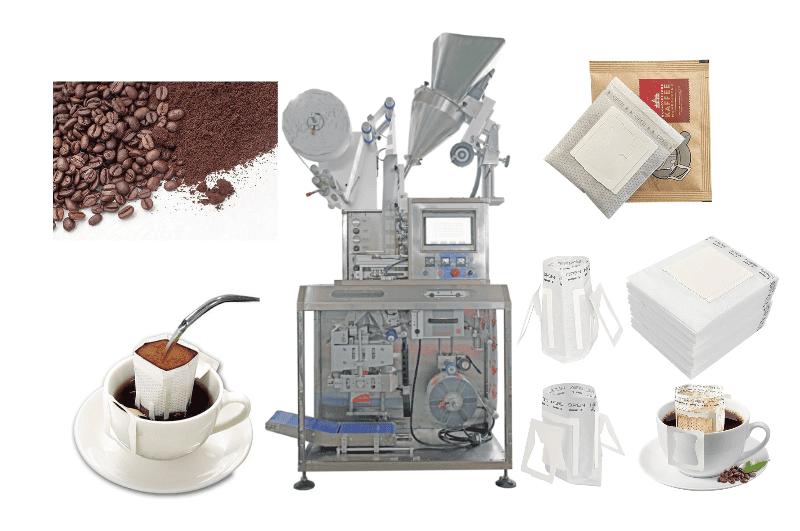
Choose pyramid and double-chamber tea bag equipment as two format-specific production systems. Approve each with its real tea, filter material or mesh, dose, forming and sealing method, thread, tag, optional envelope, accepted-output test, cleaning route, and change parts; one successful format does not prove the other.
Define the finished architecture first. Pyramid mesh bags and folded double-chamber filter-paper bags differ in geometry, material path, seal pattern, thread and tag attachment, and optional envelope presentation, so the required components must be listed separately.
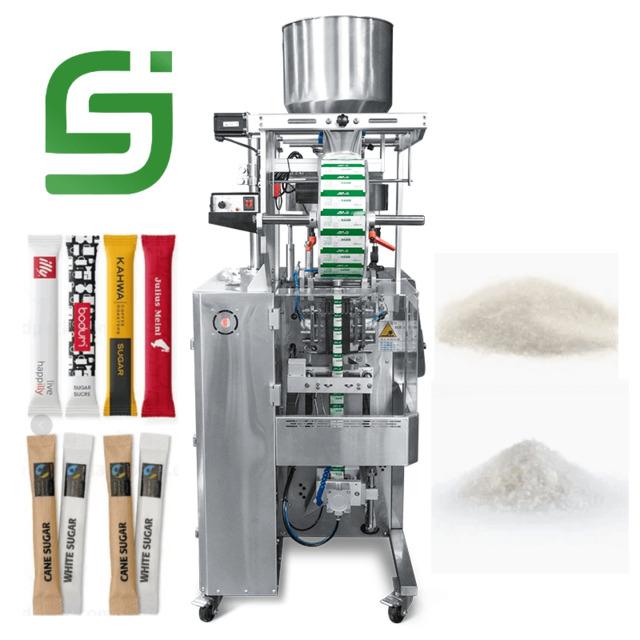
Also compare inspection workload. Pyramid bags and double-chamber bags need different visual checks, reject categories, and retained samples. The buyer should decide who performs those checks, where rejected pieces are collected, and how the line is released after a material or format change. Quality-control effort is part of operating suitability even when both machines can make an acceptable display sample.
Profile every tea grade by particle size, long leaves, stems, flowers, dust, bulk density, fragility, and tendency to bridge or separate. Match filler and drop path to the bag volume and containment area available in each format.
| Format factor | Pyramid tea bag | Double-chamber tea bag |
|---|---|---|
| Bag architecture | Three-dimensional mesh or filter material with corner forming and sealing | Folded filter paper chambers with thread/tag and optional outer envelope |
| Product fit question | Can larger leaves or herbal pieces feed without bridging or damage? | Can the selected tea dose consistently while paper folding remains stable? |
| Visible quality | Triangle shape, mesh condition, corner seals, cut position, and infusion space | Chamber balance, fold, thread attachment, tag position, and envelope appearance |
| Material system | Mesh or filter material and any thread/tag option defined for the project | Filter paper, thread, tag stock, and envelope film when required |
| Conversion claim | Requires demonstrated change parts, material path, recipe, and accepted sample | Requires separate demonstrated tooling and process; a shared product name is not proof |
Format terminology: Pyramid describes the three-dimensional bag architecture, not a universal machine mechanism. Double chamber refers to a folded filter-paper presentation with two tea zones and commonly a thread/tag system. Conversion scope means the documented tooling, material path, recipes, procedures, and evidence needed to reproduce another accepted format.
Approve commercial mesh or filter paper, thread, tag stock, envelope film, print orientation, roll construction, and supplier tolerance with the intended line. Material family names do not establish tracking, cutting, folding, sealing, or attachment performance.
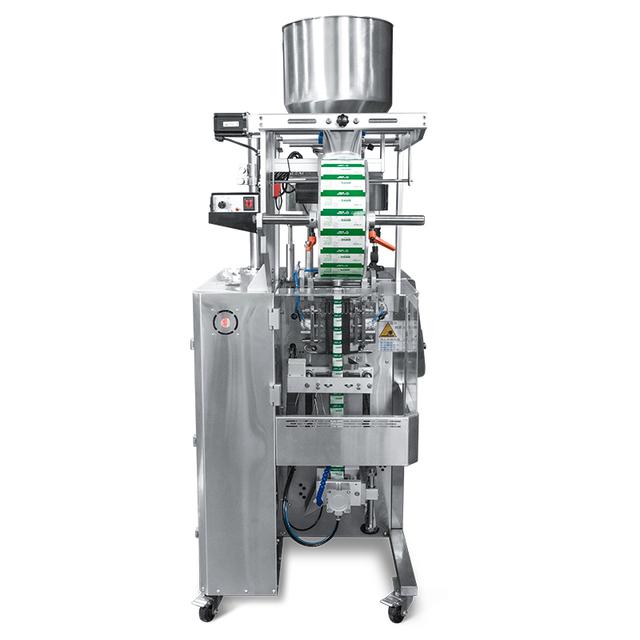
Review the supply chain for consumables: Confirm that the intended filter paper or mesh, thread, tag, and envelope material can be purchased consistently in the required specification. Ask which dimensions and properties are essential for the approved setup and how a substitute is tested. A technically attractive format can become difficult to operate when materials have long lead times or inconsistent tolerances. Material availability therefore belongs in the machine decision.
Compare failure modes by format: Pyramid projects should examine mesh feeding, triangular forming, seal corners, cut position, product trapped near the seal, and damage to large leaves. Double-chamber projects should examine paper folding, chamber balance, thread attachment, tag location, envelope registration, and counting. Create separate reject categories instead of combining both formats under general sealing quality. Format-specific evidence shows where operator skill, material quality, and machine adjustment have different effects.
Lock a format-specific requirement sheet: For each bag type, state target fill, bag dimensions, material specification, tag and thread need, envelope requirement, coding, counting, expected product range, cleaning expectation, and the FAT evidence required. Record which items are standard, optional, or buyer-supplied. Then compare changeover time, operator skill, material availability, and retail presentation alongside machine cost. The best choice is the format and configuration that the factory can supply, operate, inspect, and maintain consistently for the intended tea range.
Test product behavior before choosing the format: Send the planned tea grades and identify large leaves, stems, fruit pieces, dust, moisture sensitivity, and density variation. Pyramid material must enter the bag without excessive breakage or bridging. Double-chamber dosing must remain stable while the paper is folded and the thread-and-tag process stays aligned. Inspect loose tea near seals, chamber symmetry, tag position, thread security, mesh or paper damage, and outer-envelope appearance. Use retained samples from startup and stable production rather than judging a single display piece.
Treat the two formats as different production systems: Pyramid bags provide space for larger leaves or herbal pieces, while a double-chamber bag uses folds, thread, tag, and often an outer envelope to create a familiar presentation. The relevant machine mechanisms, materials, and inspection points therefore differ. A buyer should not accept a claim that one model makes both formats unless the supplier demonstrates the exact conversion scope, change parts, material path, controls, and finished samples. In many projects, separate equipment or a clearly defined multi-format configuration is the more realistic comparison.
Compare how each format forms and closes. Pyramid trials should examine mesh tension, triangular geometry, corners, cutting, and seal continuity; double-chamber trials should inspect folds, dose distribution, paper damage, thread attachment, and envelope handling.
| Trial stage | Pyramid evidence | Double-chamber evidence |
|---|---|---|
| Startup | First formed bags, mesh tracking, seal corners, and product entry | Paper threading, first chamber folds, thread/tag setup, and envelope registration |
| Stable run | Bag volume, product distribution, leaf damage, seal continuity, and cut consistency | Dose, chamber symmetry, loose tea, thread/tag position, envelope seal, and count |
| Refill | Bridging, blend separation, and recovery after adding product | Dose recovery and dust behavior around folded paper and seals |
| Restart | First released triangle bag and rejected pieces after a short stop | First released inner bag and envelope after temperature and registration recover |
| Cleaning | Access to mesh path, hopper, feeder, and contact areas | Access to feeder, paper path, thread/tag area, envelope path, and loose-tea collection |
Compare the available tea bag packaging machine options against one locked requirement sheet for pyramid bags and another for double-chamber bags before accepting a shared-machine claim.
Assign conversion responsibility: The quotation should state whether format change parts, control recipes, forming sets, sealing tools, training, and documentation are included. Ask which adjustments the operator can perform and which require a technician. Store labeled parts and a verified setup record for each accepted format. Without this boundary, a machine described as flexible can arrive without the tooling or knowledge needed to reproduce the second bag style.
Measure dose and finished presentation together. Check tea distribution, bag volume, loose product, seal contamination, dimensions, thread length, tag position, envelope registration, code, and reject categories across distributed production samples.
Time startup, product refill, material loading, product and format change, cleaning, recipe restoration, and first acceptable output. Include tools, loose parts, operator reach, retained tea, and inspection workload rather than comparing nominal cycle rates alone.
Format review: Buyers should treat bag appearance, tea behavior, material supply, inspection work, and changeover responsibility as one decision. A supplier demonstration is relevant only when the tested format and materials match the configuration being purchased.
Run a realistic acceptance sequence: Test startup, stable production, a controlled speed change, replenishment, short stop, restart, and cleaning with the real tea. Record accepted and rejected samples from each stage. When one platform is proposed for multiple formats, add a timed conversion test and list every removed, installed, or adjusted component. This reveals whether the promised flexibility fits the factory's production schedule.
Build a separate trial row for each format and tea. Use the same phases, labeled materials, speed condition, sample method, reject definition, and retained evidence so a commercial decision rests on comparable accepted output.
| Decision question | Evidence required | Locked output |
|---|---|---|
| Which tea products will run? | Representative easiest and most difficult tea samples | Approved product list and retest triggers |
| Which retail format is required? | Finished bag, tag, thread, and envelope specification | One format-specific requirement sheet |
| Can one platform make both? | Timed conversion, complete part list, recipes, and accepted samples | Included conversion scope or separate-machine decision |
| Can the factory maintain quality? | Operator tasks, inspection categories, cleaning method, and material supply | Training and quality-control responsibility |
Lock the selected format to its filler, forming or folding set, seal tools, thread and tag parts, envelope module, materials, recipes, utilities, test samples, and limitations. The quotation and technical agreement must carry the same configuration.
Can one tea bag machine normally make both pyramid and double-chamber bags? Only when the supplier demonstrates the exact conversion scope, tooling, material paths, recipes, and accepted samples. The two formats use different forming and presentation systems, so a product-name claim is not enough.
Which format is better for large herbal pieces? A pyramid format may offer more infusion space, but feeding, mesh handling, seal corners, and piece damage still need trials with the actual blend.
What should be inspected on double-chamber bags? Check dose, chamber symmetry, paper folds, loose tea near seals, thread attachment, tag location, envelope registration, envelope sealing, and counting.
Why should the buyer review consumable availability? The approved filter paper or mesh, thread, tags, and envelope film must remain obtainable within the tolerances used during testing. Substitutes can change feeding, forming, and sealing.
How should a multi-format changeover be accepted? Time the conversion, list every changed component and setting, then run startup, stable production, and restart tests for the second format with retained samples.
Pyramid and double-chamber tea bags should be treated as separate production architectures. The machine choice depends on tea particle behavior, packaging materials, forming and sealing mechanisms, retail presentation, inspection workload, and the factory's ability to reproduce each setup.
Build one requirement and sample matrix for each format. Accept a shared platform only when the conversion components, responsibilities, changeover method, and finished output have been demonstrated and documented.

YISEN MACHINERY - The ONE-STOP VFFS PACKING MACHINE SOLUTION SUPPLIER
 Tel: +8617350750975
 Email: info@vffspackingmachinery.com
 MP/WhatsApp: +8617350750975
 Manufacturer Address:Meixi Road, Tongan District, Xiamen,Fujian,China