

Hot Keyword:
Author:YISEN Pouch Packing Machine Manufacturer TIME:2026-08-30
Choose between a rotary and a linear premade pouch packing machine by testing the same product, pouch, filler, functions, and reject rules on the quoted layouts. Compare accepted output, operator access, changeover work, fault recovery, maintenance clearance, and floor interfaces; neither transfer arrangement is automatically better.
Start with a controlled comparison boundary. List every pouch size and feature, product condition, target fill, filler, coder, inspection device, reject rule, discharge, and accepted-output definition. A layout comparison is invalid when one candidate excludes a function or uses an easier pouch.
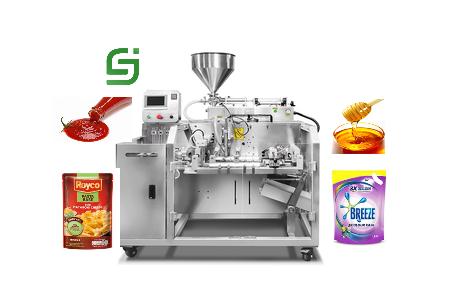
Compare complete process scope: Identify pouch magazine, pickup, opening, detection, filling, settling, zipper closure, top sealing, cooling, coding, inspection, rejection, and discharge. A rotary machine commonly allocates functions around indexed stations, while a linear machine moves pouches along a straight process path. Station count or footprint alone does not establish performance.
A rotary machine indexes pouches around a carousel, assigning pickup, opening, filling, settling, sealing, and discharge to successive stations. Review the actual station count and dwell allocation because an added zipper, gas flush, code check, or cooling step can change the usable sequence.
| Comparison area | Rotary review | Linear review |
|---|---|---|
| Process layout | Indexed stations arranged around rotary transfer | Stations arranged along a straight transfer path |
| Access | Review central/perimeter reach and guarding | Review side access, line length, and station clearance |
| Changeover | Grippers, station tooling, magazine, filler, and recipes | Transfer, station tools, guides, filler, and recipes |
| Output | Accepted pouches across the complete indexed sequence | Accepted pouches across the complete linear sequence |
Layout terminology: Rotary indexing allocates functions around a circular transfer. Linear transfer allocates them along a straight path. Accepted output counts released finished pouches, while intervention records the operator work needed to maintain that result.
A linear machine transfers pouches along a straight process path. That geometry may change station access, line length, filler clearance, and downstream integration, but the category name does not establish easier maintenance or lower output. Judge the dimensioned proposal and demonstrated cycle.
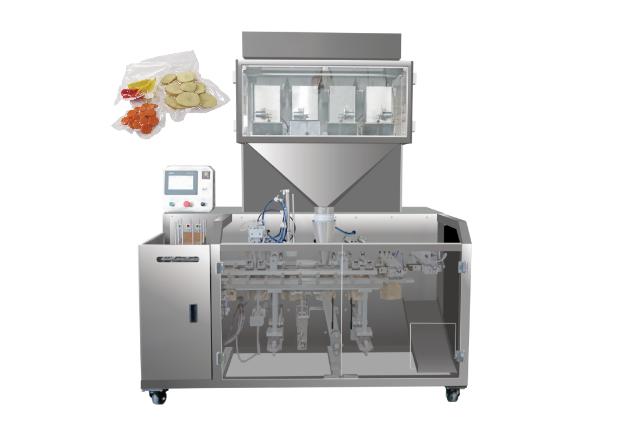
Pouch control determines whether mechanical cycles become saleable packs. Observe magazine loading, pickup, opening detection, no-bag-no-fill logic, product entry, contamination at the top, sealing, cooling, reject isolation, and restart behavior with normal pouch-lot variation.
| Fair-test input | Keep equal | Report |
|---|---|---|
| Product/pouch | Same lot, target, features, and condition | Opening, filling, seal, and reject results |
| Functions | Same coding, inspection, reject, and discharge boundary | Accepted finished units |
| Duration/events | Same timing, refill, stop, restart, and changeover method | Intervention and lost time |
| Support | Same document, training, spares, and service questions | Lifecycle gaps and owners |
Review the quoted premade pouch packing machine options against the station-by-station trial, then confirm that pouch opening, filler timing, sealing, rejection, utilities, and handover documents belong to the same rotary or linear configuration.
Map fault isolation by station: Ask how each layout identifies pouch pickup, opening, fill, seal, code, reject, and transfer failures and how operators access the affected station. Record whether a fault stops the complete line, skips one pouch, retains product in transit, or creates doubtful output. Recovery evidence often reveals more about daily usability than a clean stable run.
Use the same product and pouch: Supply commercial pouches with dimensions, zipper or feature details, material, stiffness, and normal lot variation. Test the actual product and target through startup, stable operation, refill, short stop, and restart. Record opening failures, no-bag-no-fill events, contamination, seal defects, rejected pouches, and manual intervention for both candidates.
Place both layouts on the factory drawing with guarding, doors, utility drops, product supply, pouch replenishment, reject collection, cleaning routes, and maintenance removal space. Time a complete format change with normal operators and include first acceptable output, not only wrench time.
Check staffing and visibility: Observe where operators replenish pouches and product, collect rejects, inspect seals, and respond to alarms. Record blind areas, crossing paths, and service clearance on the buyer's layout. The chosen arrangement should support safe repetitive work and the planned downstream flow, not only fit inside the outline drawing.
Review format expansion honestly: Compare the gripper range, station spacing, pouch magazine, opening system, filler clearance, seal width, coder area, and control recipes against future formats. Mark what can be adjusted, what needs change parts, and what lies outside the design. Do not award flexibility points for a dimension that fits mechanically when the pouch has not been opened, filled, sealed, and released.
Inspect access and changeover: Ask operators to load pouches, empty product, access contact parts, clean filling and sealing areas, change the format, restore recipes, and release the next run. Measure time, tools, loose parts, reach, guarding steps, and first acceptable output. A compact layout can be difficult to access; a longer layout may use more floor space but offer different station visibility. The actual design must be reviewed.
Layout note: Rotary and linear premade pouch machines should also be compared by floor space, operator access, cleaning route, and future product changes. A compact rotary machine may fit a high-output room well, while a linear machine may give easier access for special pouches or slower manual checks. Buyers should ask for a layout drawing with infeed, discharge, air supply, inspection, and maintenance space before treating machine speed as the only deciding factor. The drawing should also show where operators stand during film or pouch loading, reject handling, cleaning, and routine maintenance so the quoted layout reflects real production work instead of only catalog dimensions.
Use accepted pouches per defined interval as the main output measure. Count opening failures, unfilled or unsealed pouches, quality rejects, stops, replenishment, and operator interventions. A faster index rate has little value when the complete line cannot sustain released production.
Layout review: Compare equivalent products, pouches, functions, phases, and reject rules. Category-level speed or footprint claims should not replace a test of the quoted machine.
Measure usable production: Report accepted pouches over a defined timed interval with the same reject rules and attached modules. Include replenishment, normal pauses, downstream accumulation, and the person-hours needed to maintain the line. A higher mechanical index rate is not a fair comparison when pouch opening or sealing loses control.
Compare the as-built lifecycle burden: grippers, vacuum components, transfer drives, chains or guides, seal tools, sensors, lubrication points, drawings, alarms, software backup, and critical spares. Confirm safe access and the test required after replacement or adjustment.
Review lifecycle evidence: Compare grippers, vacuum components, chains or transfer mechanisms, drives, seal assemblies, sensors, lubrication, cleaning, drawings, alarms, critical spares, and service access. Lock the selected layout to the tested pouch, product, functions, speed condition, utilities, change parts, and acceptance samples rather than choosing by a category-level claim.
Select the layout only after the technical record and commercial scope agree. The approval file should identify the tested machine revision, pouch and product lots, settings, accepted samples, drawing, utilities, staffing assumption, change parts, open actions, and conditions that require another trial.
At final review, place the dimensioned layout, accepted sample report, utility list, station scope, parts, and staffing assumptions beside the commercial total. This prevents an apparent price or speed advantage from surviving after required modules and operating space are added.
Layout selection should be based on a timed product-and-pouch matrix. Test the rotary and linear concepts against the required bag sizes, opening behavior, filler, seal area, output, and change frequency. A rotary machine may concentrate stations around an indexed carousel, while a linear layout may provide a different access pattern and route for larger modules; neither arrangement is automatically better for every factory. Mark operator positions, pouch loading, product supply, utilities, cleaning access, reject collection, maintenance clearance, and downstream conveyor interfaces on the proposed drawing. Then compare sustained accepted output, interventions, format-part changes, recovery from a pouch-opening fault, and the time needed to clean or inspect the filler path. Include floor constraints and future modules without assuming unused space guarantees easy expansion. The final decision record should connect the selected layout to observed trials and an approved drawing, so a later commercial revision cannot silently change access, machine scope, or the production assumptions behind the choice.
Is a rotary premade pouch machine always faster? No. Accepted output depends on the exact design, stations, pouch, product, filler, sealing, attached modules, reject rules, and operator intervention.
Does a linear machine always require more floor space? Layouts vary. Compare dimensioned drawings, service clearance, loading, guarding, upstream and downstream interfaces, and real access at the buyer's site.
Which layout is easier to clean? That depends on contact-part design, access, product drop and collection, guarding, removal procedures, and the buyer's cleaning method, not the category name alone.
How should two machines be speed-tested fairly? Use the same product, pouch, fill, functions, duration, reject definition, sampling, replenishment, and production events, then compare accepted output.
What should be locked after selection? Lock the layout, station functions, filler, pouch specification, options, change parts, settings, utilities, performance condition, documents, and retained samples.
Rotary and linear premade pouch machines organize the packaging process differently, but category names do not decide suitability. Product, pouch handling, station functions, access, changeover, accepted output, maintenance, and site layout must be compared together.
Run both options under equivalent conditions and record intervention and rejects alongside speed. Select and purchase the exact tested configuration, not an assumed advantage of one layout label.

YISEN MACHINERY - The ONE-STOP VFFS PACKING MACHINE SOLUTION SUPPLIER
 Tel: +8617350750975
 Email: info@vffspackingmachinery.com
 MP/WhatsApp: +8617350750975
 Manufacturer Address:Meixi Road, Tongan District, Xiamen,Fujian,China