

Hot Keyword:
Author:YISEN Pouch Packing Machine Manufacturer TIME:2026-09-29
No-bag-no-fill logic should prevent product discharge unless the premade pouch reaches the valid presence, position, opening, and holding state defined by the machine. Buyers must test missing, unopened, dropped, doubled, or mispositioned pouches with the actual filler and verify alarms, rejects, cleanup, reset, and output isolation.
Define the protection boundary before testing. The phrase may cover pouch presence only, or it may also include pickup, opening, position, gripper state, filler permission, reject confirmation, and downstream release; the cause-and-effect record must state which.
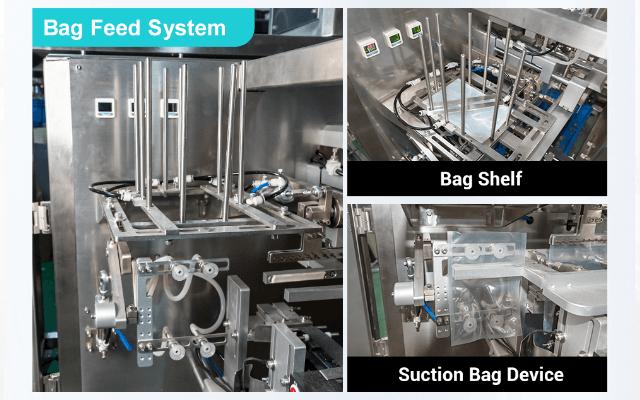
Identify how sensors and controls confirm magazine supply, pouch pickup, transfer, mouth opening, location, and gripper hold. Record sensor references, timing, thresholds, recipes, and failure states without assuming one detector validates the complete pouch condition.
| Pouch state | Expected control response | Acceptance observation |
|---|---|---|
| No pouch | Filling permission withheld | No uncontrolled product discharge at that station |
| Failed pickup | Invalid station tracked or stopped according to design | Alarm/reject and no accepted empty sequence |
| Poor opening | Fill inhibited when opening confirmation is part of the design | Sensor boundary and failed-pouch handling |
| Valid pouch | Fill command synchronized with station and product path | Correct dose and clean transfer |
| Signal loss | Defined alarm, stop, or inhibited state | Reset and doubtful-output isolation |
Control terminology: Pouch state is the evidence available to the controls at a station. Fill permission authorizes product discharge when required conditions are valid. Cause and effect maps an input or fault to machine and operator response.
Assign recovery responsibility: Train operators to identify pouch-supply and opening faults, isolate doubtful output, and perform approved resets. Define when maintenance must inspect vacuum, sensors, grippers, wiring, valves, or software and when supplier support is required. The handover should include safe diagnostic information without encouraging sensor bypass.
Map the cause-and-effect sequence: Ask which sensor or control confirms each state, when fill permission is created, how the permission is removed, what output is isolated, which alarm appears, and what the operator must do. Review vacuum switches, photo sensors, gripper or clamp feedback, opening confirmation, encoder or station tracking, filler communication, and the response if a signal arrives late or disappears.
Understand what the phrase does not guarantee: No-bag-no-fill usually means the machine prevents a fill command when a required pouch condition is not confirmed. The exact design may sense pickup, station presence, opening, position, clamp state, or another sequence condition. It does not automatically prove correct product weight, good pouch quality, clean sealing, or rejection of every malformed bag.
Trace the interlock from valid pouch state to filler command. Confirm when fill permission is created, how it is removed, which upstream or downstream signals participate, and what happens to product already moving through the feeder or nozzle.
An invalid pouch must remain associated with the correct station as the machine indexes. Ask the supplier to demonstrate a sequence containing a valid pouch, an invalid position, and another valid pouch, using its documented safe challenge procedure. Observe whether the expected station is inhibited and whether the following good pouch receives the intended command. Record how the controller treats an interrupted cycle before indexing resumes. This checks the relationship between the detected fault and the physical bag position; a changing indicator on the screen alone cannot establish that the correct station was protected.
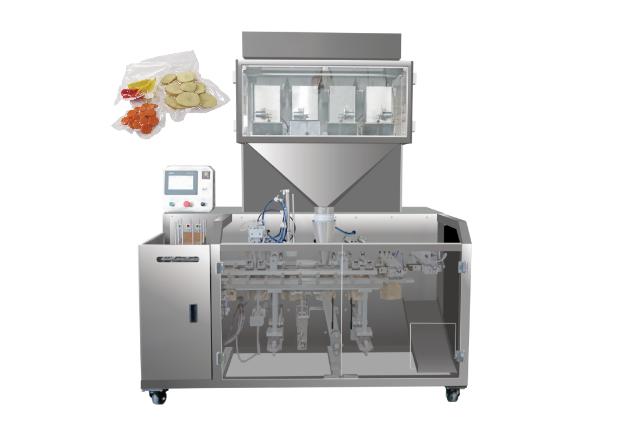
Challenge missing, double-fed, unopened, dropped, and mispositioned pouches through a safe supplier procedure. Record station response, alarm, filler inhibition, counters, reject route, doubtful output, and the operator steps needed to resume.
| Fault challenge | Record | Recovery proof |
|---|---|---|
| Missing pouch | Station, signal, filler state, and alarm | Next valid pouch handled correctly |
| Vacuum/opening issue | Sensor threshold and physical pouch condition | Cause corrected without bypass |
| Short stop | Product already in transit and sequence state | Cleanup and first accepted output |
| Control change | Software/parameter revision and reason | Cause-and-effect retested |
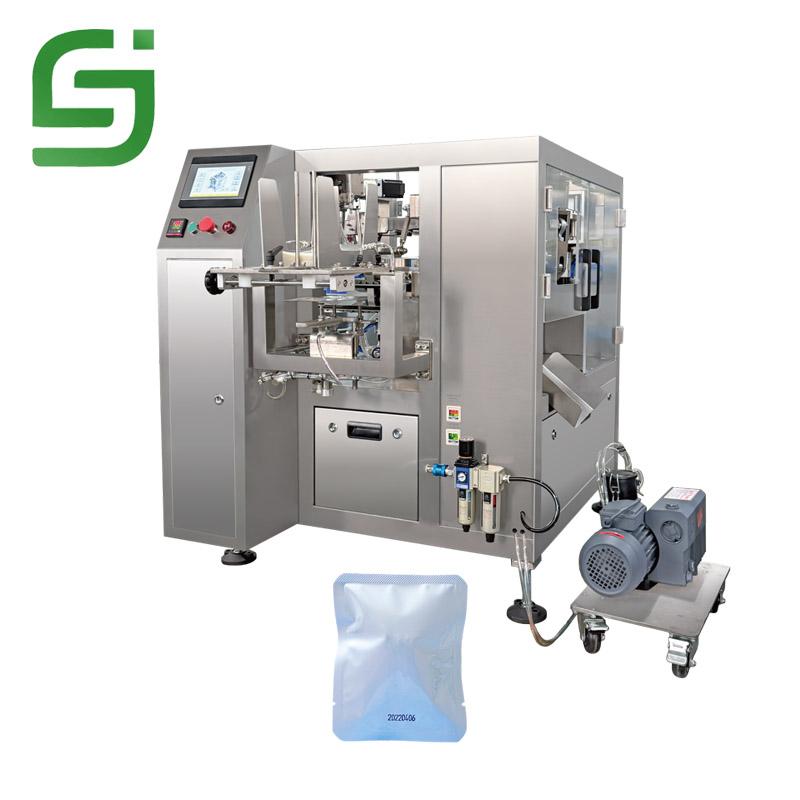
Trace pouch validity through magazine supply, pickup, transfer, mouth opening, position, gripper hold, filler permission, reject confirmation, and downstream release. The cause-and-effect table must show which signals participate instead of treating one presence sensor as proof of a usable pouch. Review the premade pouch packing machine page against this recorded scope.
Challenge representative failures: Under the supplier's safe test method, present a missing pouch, failed pickup, unopened or poorly opened pouch, dropped pouch, interrupted vacuum, and short stop where supported by the design. Confirm product is not discharged into the machine, an invalid pouch is not advanced as accepted output, and normal production resumes only after the cause and doubtful product are handled.
Use the real powder, granule, liquid, or paste because the consequence differs. Dust can spread, granules can scatter, and liquids or pastes can contaminate grippers, sensors, seals, and guards; cleanup and restart evidence must match that risk.
Include the accepted sensor settings and cause-and-effect revision in backup and change control. Any replacement sensor or control update should be verified against the same failure cases before unrestricted production resumes.
Use the actual product: Powder can create dust, granules can scatter, and liquid or paste can contaminate equipment if the interlock fails or timing is wrong. Test filler communication and cleanup consequences with the purchased configuration. Observe whether product already in transit can still discharge after permission is removed and how that condition is contained by the machine design.
Repeat representative faults during startup, normal continuous operation, a short stop, and restart at the intended operating range. Manual setup mode or low speed can hide timing behavior that appears only in the production sequence.
Approve no-bag-no-fill behavior with the actual filler and product across missing, unopened, doubled, dropped, and mispositioned pouch challenges. Record alarms, inhibited discharge, uncertain output, reject destination, cleanup, reset authority, restart evidence, and revalidation triggers for sensor, software, timing, or mechanical changes.
Logic review: The phrase no-bag-no-fill describes a control objective, not a universal sensor set. Acceptance must show the purchased sequence, product already in transit, alarms, cleanup, and recovery.
Check timing at the operating range: Repeat representative fault challenges at startup and at the intended stable rate because sensor windows, station tracking, filler delay, and product in transit can respond differently as cycle time changes. Preserve the control parameters used and prevent unauthorized timing changes after acceptance.
Verify clear alarms, safe cleanup, sensor inspection, output isolation, reset authority, restored pouch supply, filler recovery, and first acceptable packs. Operators should not bypass the interlock or release uncertain output merely to clear a recurring stop.
Lock the tested logic: Store a cause-and-effect table, sensor and station references, control version, alarm text, reset steps, fault videos or records, and accepted samples after recovery. Train operators not to bypass sensors or repeatedly reset without identifying the cause. Changes to the pouch path, filler, controls, or software require review of the affected interlock.
Accept the logic with a cause-and-effect table, controller and recipe revision, sensor settings, test cases, expected responses, actual evidence, retained samples, recovery instructions, responsible roles, and revalidation triggers after software, sensor, filler, or mechanical changes. The record should also show the product condition, pouch lot, operating phase, station counter, alarm text, filler response, reject destination, cleanup needed, reset authority, first released pack, and any uncertain packs isolated after each challenge. Those details distinguish a verified interlock from a screen message observed during an empty-machine demonstration. Repeat the approved challenge after restoring normal supply and after a controlled restart, and sign the result against the unchanged software, recipe, sensor position, and filler timing references.
Verify no-bag-no-fill behavior with a written cause-and-effect test. Present the machine with a missing pouch, a pouch that is not fully opened, a double-fed pouch, a mispositioned pouch, and a sensor obstruction where these conditions can be created safely. For each case, record the sensor state, alarm, station response, filler command, reject path, counter behavior, and restart sequence. Check fill inhibition for the tested pouch conditions. Confirm separately how seal defects and dose errors are detected and isolated by the purchased inspection controls. Repeat selected faults at normal production speed and after a short stop, because timing can differ from manual setup mode. The test should include the actual filler and any upstream or downstream interlocks, not only the pouch machine in isolation. Preserve the approved cause-and-effect table, controller revision, sensor settings, samples, and recovery instructions so later software, recipe, sensor, or mechanical changes can trigger a focused revalidation under production conditions.
Does no-bag-no-fill detect every defective pouch? No. It confirms only the states and signals designed into the machine. Pouch integrity, seal quality, code, and other defects need separate controls.
Can product still be released after fill permission is removed? Product already moving through a filler or drop path may behave differently by design. The supplier should demonstrate the exact stop sequence and containment method.
Why should the logic be tested with real product? A failure with powder, granules, liquid, or paste creates different contamination, cleanup, and restart consequences that an empty dry cycle cannot show.
Should operators bypass a faulty pouch sensor to keep running? No. Follow the machine and site safety procedures, diagnose the cause, and restore the validated control. Bypass can defeat product and equipment protection.
What is the best acceptance evidence? Use a written cause-and-effect record plus controlled fault challenges, alarm and reset observations, output isolation, cleanup, and first accepted samples after recovery.
No-bag-no-fill logic coordinates pouch-state evidence with filler permission to reduce product discharge when a valid pouch is absent. Its protection is limited to the sensors, sequence, product path, and control response actually designed and tested.
Challenge relevant faults with the purchased line, document cause and effect, and verify cleanup and recovery. Keep operators within the approved logic and reassess it after pouch-path, filler, or software changes.

YISEN MACHINERY - The ONE-STOP VFFS PACKING MACHINE SOLUTION SUPPLIER
 Tel: +8617350750975
 Email: info@vffspackingmachinery.com
 MP/WhatsApp: +8617350750975
 Manufacturer Address:Meixi Road, Tongan District, Xiamen,Fujian,China