

Hot Keyword:
Author:YISEN Pouch Packing Machine Manufacturer TIME:2026-10-03
Place a proposed checkweigher after the pack you intend to assess is complete and can travel individually through the weighing and rejection stages. Choose between the closed inner tea bag and the wrapped retail pack by testing transfer stability, packaging tare variation, and reject handling. Neither position is automatically suitable for every tea line.
A dosing scale measures material before or during filling. A downstream checkweigher assesses a completed pack presented to it. Those tasks have different physical interfaces, so the presence of weighing equipment above a tea machine does not establish a finished-pack inspection system.
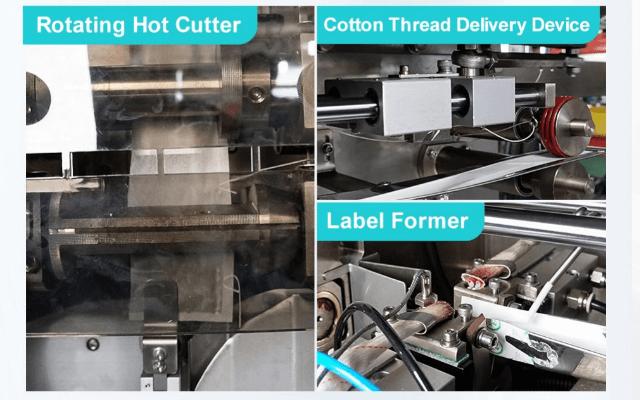
The YS-169 product page describes an inner bag transferred into an outer envelope. The YS-ZF90 reference describes tea bag formats and a possible downstream outer-packing interface. These references help define the pack stages under discussion; neither establishes that a checkweigher, reject device, or suitable inspection accuracy is included.
Begin by naming the object that will pass the inspection point. A closed filter bag before wrapping and a sealed outer envelope containing that bag are different objects, with different shapes and non-tea mass. Write the result the buyer needs beside each: detecting an unacceptable total weight, assessing portion consistency, or identifying a possible missing inner unit.
Next, mark where those objects exist as accessible individual packs. On an integrated inner-and-outer machine, the inner bag may remain inside a synchronized transfer mechanism. A point on a process diagram is not automatically a usable conveyor position. Ask the machine supplier whether access for inspection is actually available without disrupting the approved transfer.
If the inner bag is not presented as a stable, separated item, a downstream wrapped-pack position may be easier to investigate. That practical advantage still requires a trial. It does not prove that the finished envelope provides the weighing sensitivity needed for the buyer's intended decision.
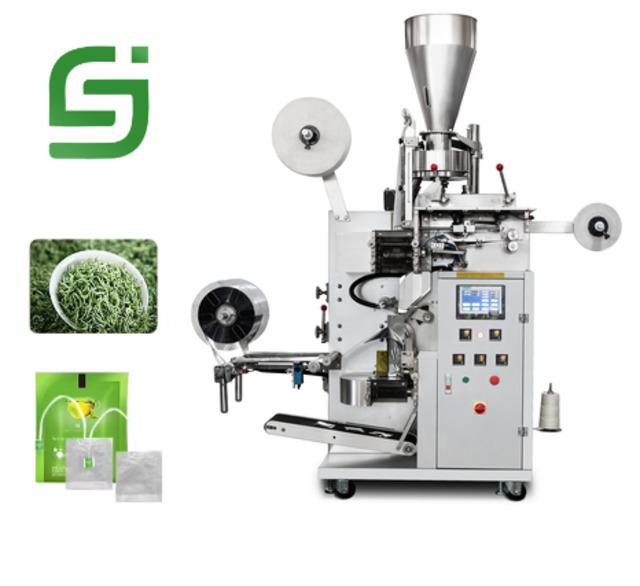
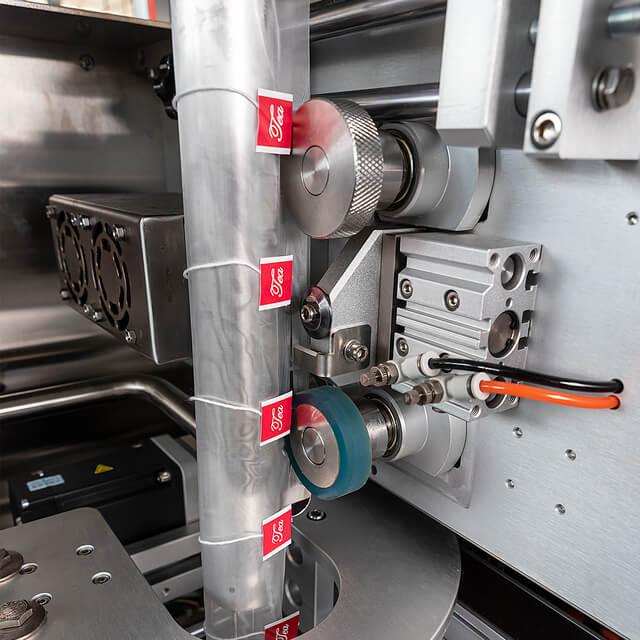
The machine shown provides context for the nested pack; the photograph does not show a checkweigher installation.
A checkweigher reading includes everything presented on its weighing section. For an inner bag, that can include filter material and the fitted attachments. For a wrapped pack, the outer envelope adds another contribution. The mass of these non-product components is the packaging tare, and its variation affects how confidently gross pack weight describes the tea inside.
Measure representative empty components and completed packs using a method agreed with the inspection supplier. Include the actual filter and envelope materials, thread, and label where fitted. The useful question is how much the packaging varies relative to the tea-weight difference the buyer needs to detect.
Subtracting one nominal tare value from every gross reading produces an estimate, not a direct measurement of the contents of each sealed pack. Ask the supplier to show whether the proposed limits can distinguish unacceptable tea portions from normal packaging variation. Do not resolve an uncertain result by assuming an accuracy figure that has not been demonstrated on this application.
Compare locations with the same decision in mind. One may reduce the amount of packaging included in the reading but introduce a difficult transfer. Another may offer a more manageable shape while adding tare variation. Ask both equipment suppliers to review those trade-offs against the actual proposed layout.
| Proposed position | Question it can address | Application trial needed |
|---|---|---|
| After inner-bag closure, before wrapping | Can the completed inner portion be assessed before an envelope is added? | Accessible discharge, stable support, loose attachment handling, and a route for removed bags |
| After outer-envelope sealing | Can the finished retail pack be classified by its gross weight? | Envelope tare variation, consistent orientation, and distinction between acceptable and unacceptable samples |
| After packs have accumulated together | Can individual inspection still be achieved at this point? | Separation and controlled presentation before any individual-pack weighing claim is accepted |
The location should remain provisional until the supplier has seen real packs. A nominally convenient space on the floor plan may lack the approach length, discharge route, or access needed by the proposed inspection equipment.
Take representative packs to the transfer review, including their normal variation in fill distribution and attachments. A light filter bag may change shape or orientation as it leaves the packaging machine. Thread and tags add geometry that a simple rectangular outline on a layout drawing can overlook.
Ask the suppliers to demonstrate the transition into and out of the proposed weighing section. Watch for a bag bridging two surfaces, a tag remaining behind, adjacent bags becoming connected by loose thread, and tea shifting enough to change how the bag sits. These observations identify presentation problems; they are not grounds for assuming that every checkweigher design will respond identically.
Compare the trial arrangement with the intended installation height, direction of travel, and discharge method. A demonstration using manually flattened bags may not represent the output of the tea machine. Require the offered transfer to handle the actual discharge condition, or make the necessary conditioning or handling step an explicit part of the proposal.
The inspection supplier should define the permitted pack presentation and separation for its proposed equipment. There is no universal gap to copy into a tea-line specification without that review. Ask how the upstream discharge will deliver the required spacing and what happens when two packs arrive together.
Observe the line during normal interruptions, not only during evenly spaced steady running. A restart or a downstream pause can change the arrival pattern. Packs may bunch, overlap, turn, or reach the inspection point sooner than the transfer can clear them. The response to an unsuitable presentation needs to be included in the demonstrated operating sequence.
Confirm how the proposed system distinguishes a valid measurement from a pack it could not assess reliably. A reading displayed on a screen is not enough if the product did not travel through the equipment as required. Assign a clear disposition to unassessed packs so they cannot silently join accepted output.
The inspection decision and the physical removal are separate events. Ask the supplier to demonstrate that the specific pack classified for rejection reaches the intended collection point. For a lightweight tea bag or envelope, the proposed removal method must be tested with the real pack rather than inferred from another product demonstration.
Follow the removed item through the entire route. Check whether it can rebound, hang on a guide, remain among neighboring packs, or return to the accepted stream when the line restarts. Agree how the operator identifies and handles collected packs without casually feeding them back into production.
Where confirmation sensors, collection-container monitoring, or stop signals are proposed, list each function in the scope and test it. Their presence cannot be assumed from the word checkweigher. Ask what response is required if removal cannot be confirmed, and establish how potentially affected output will be contained until the problem is resolved.
An inner-bag rejection also affects the next wrapping operation. The two suppliers should demonstrate how the missing item is handled at that handoff, without presenting an empty or otherwise incorrect envelope as accepted production.
Build a labelled sample set that represents acceptable packs and the specific weight conditions the buyer needs to distinguish. Verify their reference weights with suitable equipment and an agreed method before the conveyor trial. Keep the packaging construction representative so the exercise measures the real gross-weight problem.
Run the samples through the proposed transfer and inspection arrangement repeatedly, including normal orientation changes that the equipment is expected to tolerate. Record valid classifications, false rejects, missed detections, and packs that could not be assessed. Follow the rejected samples to collection so the test covers both the decision and its physical outcome.
Then introduce the relevant operating events, such as a pause and restart or a temporary accumulation. Have the suppliers define safe challenge procedures; the buyer should not improvise interference with moving machinery. Repeat the checks after any adjustment that changes presentation, weighing parameters, or reject timing.
Keep results tied to the exact inspection location and finished pack. A successful wrapped-pack trial does not establish the performance of the same equipment on an exposed filter bag, and an isolated bench check does not establish performance on a moving line.
Record who supplies the approach transfer, weighing equipment, pack separation, rejection hardware, collection arrangement, and necessary control connections. For each boundary, name the signal or physical condition the neighboring equipment needs. This prevents an inspection purchase from leaving an unowned gap between the tea machine and the conveyor.
Use the tea bag packaging machine configurations to discuss the actual inner and outer pack stages. Confirm the selected model and discharge arrangement with the packaging supplier, then have the inspection supplier accept those inputs as the basis of its application trial.
The final layout should preserve access for clearing, cleaning, sample introduction, and collection under the suppliers' approved procedures. Keep the promised classification performance conditional on the tested pack and operating conditions. A floor-space reservation or a product-page photograph should not become a statement that the complete checkweighing system is already supplied.
Is the weighing unit above the tea filler a checkweigher? Not merely because it weighs tea. A dosing unit measures material for filling; the inspection discussed here weighs a completed pack downstream.
Is checking before the envelope always more accurate? No universal conclusion follows. It removes the envelope from the measured object, but the light inner bag may be harder to present consistently. Compare both locations using application trials.
Can a wrapped-pack weight prove the exact tea quantity? Only within a validated interpretation of the gross measurement and packaging variation. A single assumed tare does not directly measure the contents of each individual envelope.
Does a low-weight result always mean tea is missing? No. The result can reflect the tea, packaging components, or an invalid presentation. Investigate the actual pack and the measurement conditions before assigning a cause.
Should rejection be tested separately from weighing? Yes. A correct classification must be followed by removal of the intended pack and controlled collection. Verify the full sequence, including the proposed response when removal fails.
Approve an inspection location only after the actual pack can reach it consistently, its gross weight supports the intended decision, and failed or unassessed packs have a verified disposition. For tea lines, the decisive comparison is between inner-bag accessibility and wrapped-pack tare and transfer behavior. Keep the resulting interface drawing and trial record with the quotation; they establish what the proposed checkweighing system must deliver.

YISEN MACHINERY - The ONE-STOP VFFS PACKING MACHINE SOLUTION SUPPLIER
 Tel: +8617350750975
 Email: info@vffspackingmachinery.com
 MP/WhatsApp: +8617350750975
 Manufacturer Address:Meixi Road, Tongan District, Xiamen,Fujian,China