

Hot Keyword:
Author:YISEN Pouch Packing Machine Manufacturer TIME:2026-10-17
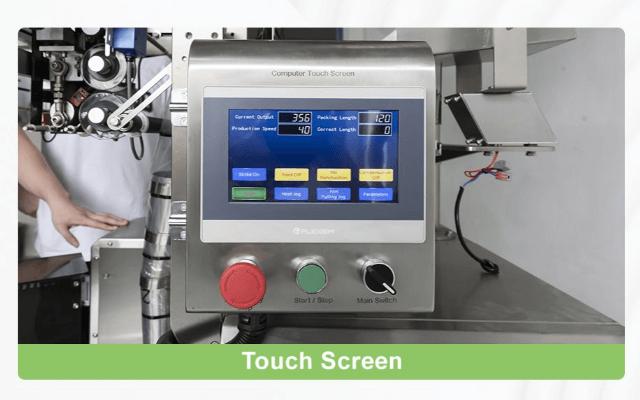
Verify bag counting on a Tea Bag Production Machine by defining one physical counted unit and comparing known bag presentations with the displayed increments at an agreed count point. Challenge isolated bags, pairs, incomplete cycles, removals, and container changes. Ask the OEM to demonstrate the proposed detection window and reset behavior; neither drive cycles nor a touchscreen photograph establishes an accurate finished-bag counter.
Place the commercial pack next to the proposed counter description and finish the sentence: one credit means one of these objects has completed this named passage. Specify whether the object is a filled filter bag or an individual envelope containing a bag. An inner bag and its envelope are two stages of one commercial pack, not automatically two countable outputs.
Likewise, two chambers within one bag do not necessarily mean two bags. If the quoted arrangement produces two separate bags in a mechanical cycle, define whether the display advances for each individual object or for the pair. That distinction must be explained and demonstrated by the OEM; it cannot be inferred from a machine model name.
The YS-169 and YS-ZF90 sources provide nested-pack and filter-bag context. They do not establish a fitted counter, increment source, or accuracy. Label a cycles display according to its demonstrated meaning rather than calling it a verified physical-bag count.
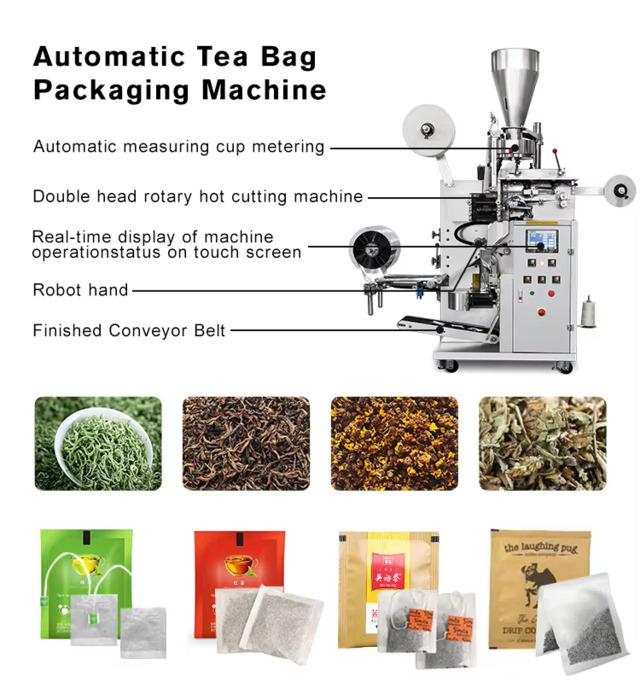
Make a small reference set that the witnesses can tally directly. Use the intended bag construction, filled profile, and attachments. Arrange the agreed tests so the physical number is known before passage and remains observable afterward. The supplier should approve the presentation method and perform any challenge near operating equipment.
Include the variations that the offered counting arrangement is expected to accept. The table below proposes questions for its application trial; it is not a claim that the current machine can separate touching packs or detect an empty passage.
| Known presentation | Physical units to verify | Question for the OEM demonstration |
|---|---|---|
| One isolated commercial bag | One agreed counted object | Does its complete passage produce exactly one credit? |
| Two separated bags | Two individual objects | Does each receive a credit within the agreed separation conditions? |
| Two touching or overlapping bags | Two objects with unsuitable or difficult presentation | Are they distinguished, held for separation, or declared outside the accepted window? |
| One bag with a trailing string and tag | One object with fitted attachments | Can its changing outline create an extra credit or an incomplete event? |
| No completed bag at the defined point | No physical output unit | Does a cycle event still advance the display, revealing a different count meaning? |
Keep accepted and excluded presentation conditions separate in the specification. If touching bags must be separated before counting, identify that preparation as a required function. An unexplained missed pair should not become acceptable by quietly redefining the counted unit.
Have the OEM mark the proposed count point on the physical flow drawing. Ask what event gives the display permission to advance: completion of a machine cycle, confirmation of a pack at a station, passage out of a defined area, or another declared condition. No sensor type should be specified as fitted until the offered equipment has been identified.
For a proposed bag-detection instrument, request its permitted presentation window. The OEM should describe the area and operating conditions in which a bag can be recognized once as the intended unit. Discuss permitted orientation, separation, bag profile, and any time condition. These limits need application evidence rather than a generic sensing-distance figure.
Ask when an event becomes complete and when the arrangement is ready to recognize another bag. A bag paused partly through the window may test a different condition from a freely traveling bag. Agree whether such a presentation is valid, produces a declared uncertain result, or requires removal. The demonstration must make the resulting display behavior understandable to the witness.
Start with isolated bags so one visible object can be compared with one increment. Repeat with the permitted changes in resting position and attachment direction. A missed credit occurs when a qualifying bag completes the agreed passage without the required increment. A double credit occurs when that same qualifying object produces more than one increment.
Then present two distinct bags under the supplier's approved conditions. Compare well-separated arrivals with the closest permitted approach and any paired condition relevant to the quoted discharge. If the proposed instrument sees a touching pair as one object, the supplier must either demonstrate a suitable separation method or exclude that arrival condition explicitly.
Where the offered arrangement permits a bag to pause within the count window, include that case. Ask whether renewed movement creates another event for the same object. Test only supplier-approved variations; observers should not reposition packs inside moving equipment. Passing an isolated sample repeatedly demonstrates repeatability for that presentation, not automatic correctness for every arrival.
Ask the OEM to show what happens when the operating sequence advances but no completed bag reaches the defined count point. Use a permitted demonstration or a safely observed normal interruption. A display tied to drive motion may change even though the required physical unit has not appeared. Record that behavior as the meaning of the instrument, not as proof of delivered bags.
If the quoted configuration produces separate bags as a pair, examine an approved condition in which only one unit reaches the count point. A fixed increment per cycle might then credit the expected pair rather than the actual arrival. The supplier should demonstrate whether the proposed counting method distinguishes that case or requires a separate exception response.
Also clarify the definition of a completed bag. A cut but empty or damaged bag can be a physical passage without being an accepted commercial pack. The instrument may count movement and leave quality decisions elsewhere. Specify that limitation clearly instead of expecting the word counter to imply inspection of contents, seals, or an enclosed inner bag.
Identify one permitted manual withdrawal before the agreed count point and another after it. Compare the known physical route with the observed increment. Removing a bag before a true passage count should affect which units reach that point. Removing it afterward does not by itself show that the earlier passage was miscounted.
Apply the distinction to upstream and downstream rejects, which can leave different display results despite reaching the same isolated tray. Ask whether the figure means gross passages, accepted output, or another quantity. Any offered correction after removal needs its own demonstrated event rule.
Keep withdrawn and rejected trial bags in separate, visibly identified groups until the case is closed. This makes the physical challenge checkable and prevents accidental second passage. It does not require a batch traceability system or a production ledger. The narrow question is whether each known arrival, absence, or removal affects the proposed instrument as declared.
Give every challenge its own short worksheet row. Note the display before the presentation and after the relevant bags have cleared the agreed window. Pair that difference with the directly witnessed bag tally and the separately held bags. Avoid evaluating only a final total: one missed single and one double-counted single can cancel numerically while both tests fail.
| Worksheet field | What the witness records | How it tests the counter |
|---|---|---|
| Known input and presentation | Actual bag number, single/pair arrangement, orientation, attachments. | Defines the physical challenge independently of the display. |
| Count-point passage tally | Actual qualifying units observed crossing the agreed boundary. | Supplies the reference for the declared counted unit. |
| Display before and after | Readings and observed difference after the event completes. | Exposes missed, duplicate, or cycle-based credits. |
| Segregated bag counts | Bags withheld before passage and bags removed afterward, listed separately. | Distinguishes an absent arrival from a credited unit removed later. |
| Expected versus observed behavior | Agreed increment, actual increment, unresolved event or presentation limit. | Shows whether this particular challenge meets its stated rule. |
Mark untestable or excluded conditions explicitly. The worksheet is an instrument acceptance tool, not evidence that every displayed unit is saleable. Ask the OEM to explain any difference while the known samples remain available, before another test obscures the event.
If the proposal promises a counted quantity in a receiving container, define where counting ends and which container receives the last credited bag. Observe a complete test container and the transition to the next one. A terminal display does not prove that its final bag landed in the intended container rather than remaining between the counting point and collection.
Ask what starts the next count and what happens to bags still traveling when the container changes. Agree how a partially filled container is handled. Where automatic container indexing or stopping is proposed, require the OEM to demonstrate it; the commercial box pictured below establishes neither function.
Test only the reset conditions relevant to the offered controls: an authorized reset command, normal stop and restart, or another declared transition. Ask which displayed values clear, remain, or resume. If reset is permitted with a bag within the detection window, challenge the resulting assignment under the OEM's approved procedure. A bag must not disappear from the test or gain a second credit because the boundary changed.

After the OEM changes the proposed detector arrangement, count-event setting, or upstream presentation, repeat the challenge that failed and the basic isolated-bag and pair checks. A correction that fixes one arrival may affect another. Preserve the final declared window with the corresponding sample conditions.
Review the tea bag packaging machine configurations for pack-stage context, then obtain instrument-specific confirmation. Close acceptance against witnessed increments, physical presentations, removals, and the terminal boundary. Leave unproven arrival conditions open rather than describing the complete machine as count-accurate.
Can a cycles display be used as a physical bag counter? Only after its relationship to actual output has been established for the claimed use. Empty or incomplete cycles and paired output can break a simple equivalence. Keep the displayed unit named according to what the OEM demonstrates.
Does a sensor specification prove that two touching bags are counted separately? No. The proposed instrument and pack presentation need an application trial. If the accepted window requires separation, that condition and the means of achieving it belong in the quotation.
Should a loose tag receive its own count? It is part of the defined bag assembly unless the purchase specifies a different object. Test the trailing tag and string with that bag to see whether their passage creates an unwanted additional event.
Does a withdrawn bag automatically reduce the displayed figure? That depends on the declared count meaning and fitted functions. Test withdrawals before and after the count point separately. A gross passage count may retain a valid earlier credit after the bag is removed.
Why test the last bag before a container change? It reveals whether the final credit and physical delivery refer to the same container. A bag retained between counting and collection can be assigned incorrectly at a reset even when the display reaches its target.
A credible bag-count specification names the physical object, the event that credits it, and the presentation conditions the instrument accepts. Prove those meanings with known singles, pairs, incomplete arrivals, and controlled removals, then challenge the last bag and reset boundary. Keep the test worksheet tied to observed objects and display changes. Purchase accuracy for the demonstrated conditions rather than attributing finished-bag detection to a machine cycle or a screen image.

YISEN MACHINERY - The ONE-STOP VFFS PACKING MACHINE SOLUTION SUPPLIER
 Tel: +8617350750975
 Email: info@vffspackingmachinery.com
 MP/WhatsApp: +8617350750975
 Manufacturer Address:Meixi Road, Tongan District, Xiamen,Fujian,China