

Hot Keyword:
Author:YISEN Pouch Packing Machine Manufacturer TIME:2026-11-02
A coffee packing machine for hanging-ear drip bags should be accepted with retained bags that work on the intended cups during the coffee producer's agreed brewing trial. A neat envelope and correct dry dose do not establish usable ear supports, an intact wet filter, satisfactory drainage, or grounds retention. Connect each brewed sample to its coffee, filter, machine-made bag and outer envelope before deciding what needs correction.
The purchase starts with a serving format, not only a filter-bag drawing. Identify the cups intended for the product and keep physical examples. Rim shape, opening and usable space below the suspended bag belong in the comparison. A demonstration on a convenient showroom cup cannot settle a different commercial use.
Record the bag's opening feature, ear layout, coffee charge and intended position above the drink. Ask the coffee producer to define its brewing method and acceptable consumer result. The machine builder should demonstrate the offered bag construction against that brief; it should not be expected to invent the coffee recipe or promise a taste outcome.
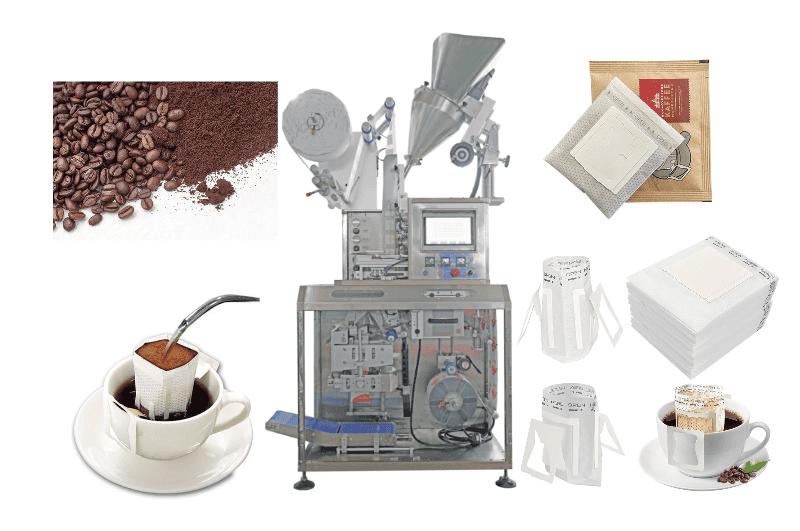
Product reference 1739 describes ground-coffee dosing, hanging-ear filter bags and transfer into individual outer envelopes. That establishes a relevant configuration to investigate. It does not establish a tested cup range. Keep cup compatibility and the exact bag revision as named purchase requirements rather than extending approval to every cup pictured in promotional material.
Retain samples from the offered machine while the supplier records which coffee and packaging materials produced them. Identify the grind lot, filter construction, ear component, bag revision and envelope material. A sample without that identity may be useful for discussion but cannot close an unresolved production issue.
Request bags from identified parts of the demonstration, including ordinary running and the return to complete packs after an agreed interruption. Preserve the relationship between the filter bag and its envelope when opening the samples. Otherwise an ear defect found during brewing can become detached from the pack that experienced a transfer problem.
The record can remain simple: sample identifier, production event, material references, visible dry condition and subsequent brewing result. Add the observer's name and photographs where they clarify the failure. Use separately retained samples when a test consumes or damages the bag; do not imply that one specimen demonstrates several incompatible checks.
Agree which physical examples stay with each party. If the material supplier needs a failed ear for investigation, retain its photographs and a matched unused example before sending it away. Keep the failed construction identifiable after a replacement arrives, so a later successful demonstration cannot accidentally erase the original unresolved question.
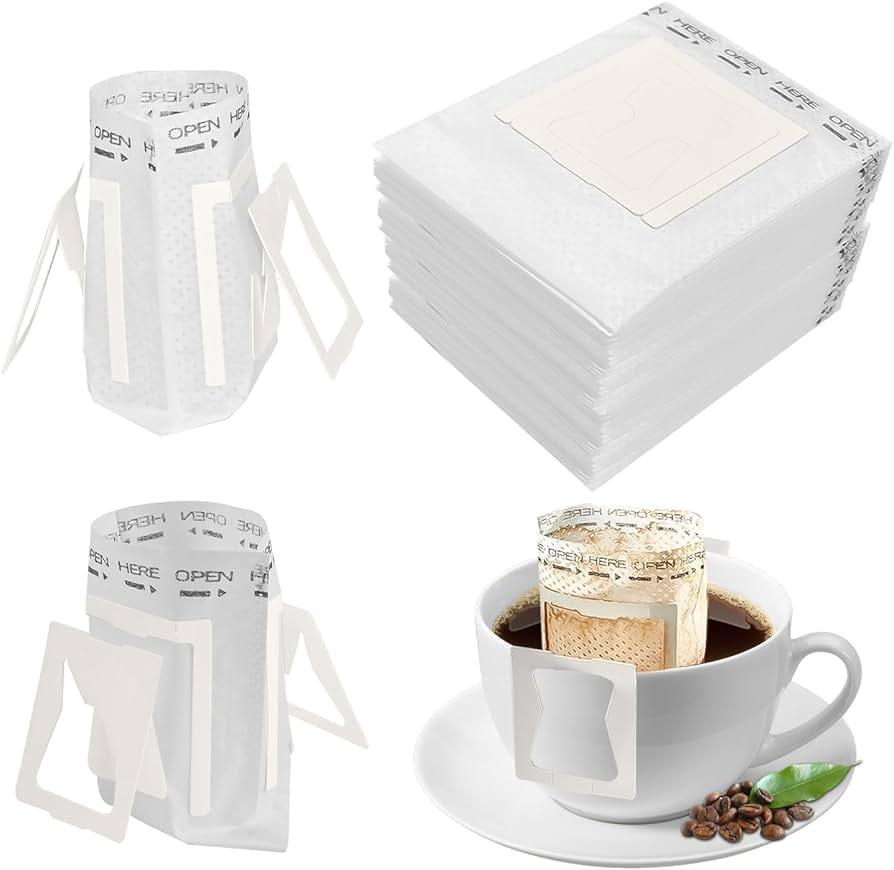
Ear attachment and ear deployment answer different questions. An ear may remain attached to the dry filter yet be difficult to unfold, miss the rim or leave the bag tilted. Evaluate the complete action of opening the commercial pack and placing the bag on each intended cup.
Observe whether the user can identify the opening direction, separate the supports and position them without tearing the filter or disturbing the coffee. Record damaged folds, detached joints, restricted movement and an ear that slips away from the rim. Keep a failed bag with its original condition visible whenever possible.
Compare repeated examples of a suspected problem before changing the machine setup. Ask the component supplier and machine builder to examine whether the cause follows the ear design, its placement, a closing operation or the envelope transfer. This comparison assigns an investigation; it does not assume every ear problem can be corrected by an adjustment at the packer.
A dry hanging demonstration leaves the central use condition untested. During the producer's brewing method, observe the bag as water enters, coffee becomes wet and the supported load changes. Record the cup, sample identity and method so the observation can be repeated.
Look for movement of the supports, progressive leaning, a joint beginning to separate, filter distortion or the bag entering the drink unexpectedly. Note when the change occurs. A bag that fails immediately on placement presents a different question from one that loses support during the later pour.
The producer should agree the intended water application and assessment conditions before comparing candidates. Keep them consistent; do not rescue one sample by changing the pour while judging another under the original method. Avoid creating a universal load rating from the result. Approval concerns the tested coffee charge, bag construction, cup and use method, with untested combinations listed separately.
Drainage and grounds retention should have separate observations. Record whether liquid leaves the intended filter area, collects unusually, rises toward the opening or escapes through a damaged region. Describe where visible particles reach the cup instead of recording every unsatisfactory drink as a leaking bag.
Examine the used bag alongside its dry reference. Look for a local split, an open seam, damage near an ear or material extending across the intended opening. These observations help distinguish a construction defect from a coffee-and-filter combination that needs further review. A photograph of the drink alone rarely identifies the route.
Grind and filter differences belong to the coffee producer and material supplier's evaluation as well as the machinery discussion. Keep the bag construction fixed when comparing coffee lots, and keep the coffee fixed when examining a filter change. Any proposed drainage criterion should follow the product's brewing brief; do not borrow an unexplained time limit from another brand.

A useful comparison asks which part of the proposed combination changes the result. If available, retain the filter supplier's reference construction and compare it with machine-made bags using the same coffee and cup. Identify how the reference was assembled. A hand-prepared example is a comparison sample, not proof of automatic production.
Where machine-made output differs, ask the builder to examine placement, forming, closing and transfer against the agreed bag drawing. Where both constructions behave similarly, review the coffee, filter and serving brief together. Neither observation proves a cause by itself; it narrows the next controlled comparison.
Document any correction and test fresh output made with that correction. Reusing a successful reference bag after changing the production setup leaves the revised machine-made bag untested. Keep unsuccessful results in the record so approval does not depend on selecting only the most attractive cups from several different configurations.
State what counts as a repeatable result before the comparison begins. The producer may need different decisions for visible grounds, a support that slips and a preference about the drink. Record those categories separately, including who can approve each one. A satisfactory taste discussion should not silently close an unresolved bag-construction defect.
The outer envelope and the suspended filter have separate jobs. A closed envelope may look acceptable while the ear inside has folded incorrectly or suffered a transfer defect. Conversely, a usable filter bag does not establish the envelope's protective performance.
Open retained complete packs after the handling included in the buyer's trial. Inspect the ear and filter before placement on the cup. Compare those observations with samples collected at an agreed earlier point where the offered equipment permits observation. Have the supplier define suitable sample collection; do not assume an intermediate access point is available.
Keep envelope opening damage separate from damage already present inside. If the consumer opening action catches an ear, the correction may involve pack layout or the opening feature rather than the coffee dose. Protective barrier and shelf-life work remain separate product qualifications. Brewing a freshly packed sample cannot establish how the coffee will perform after commercial storage.
Use a defect record that preserves the failed specimen and identifies the comparison needed next. Agree who reviews each type of failure before the demonstration. This keeps a coffee-quality decision from being assigned automatically to the machine builder, or a damaged joint dismissed as a brewing preference.
| Observed result | Comparison to retain | Purchase decision still open |
|---|---|---|
| Ear slips on one intended cup | Same bag revision on the named cups | Permitted cup range or revised support design |
| Wet bag loses support | Failure stage, joint condition and repeat specimen | Bag construction under the agreed brewing method |
| Grounds enter through a damaged area | Dry reference and opened used filter | Correction to the identified damage route |
| Drainage differs without visible damage | Matched coffee, filter and brewing records | Product-and-filter assessment before machine approval |
| Ear damage appears after enveloping | Identified samples before and after that operation | Transfer or pack-layout correction and fresh output |
Do not combine these outcomes into one average pass rate that hides a failed intended cup or bag revision. Close the affected combination explicitly and keep any unresolved condition outside the approved purchase scope.

The order should identify the accepted filter and ear construction, coffee condition, envelope revision, cups and brewing assessment. Record which combinations passed, which require correction and which were not evaluated. Proposed deliverables need supplier agreement; a checklist does not make them included equipment.
Keep the machine configuration consistent with the evidence. Reference 1739 uses different model wording in its heading and legacy description, so obtain the offered model and fitted arrangement in writing. Do not resolve that discrepancy by copying a capacity, utility figure or performance promise from the page.
When comparing the coffee packing machine configuration for hanging-ear inner and outer bags, ask the supplier to identify the arrangement demonstrated. Retain the approved physical examples and the record needed to reproduce their construction after delivery. A later change to the ear, filter, coffee charge or serving cup should receive its own review before inheriting the earlier approval.
Agree how the receiving team will reproduce the accepted combination. Send the identified cups and material references with the handover record, and distinguish a locally substituted component from the demonstrated version. If delivery samples behave differently, that record gives the parties a concrete comparison instead of relying on memories of a satisfactory supplier demonstration.
Is a dry bag hanging on a cup enough for acceptance? It confirms only that example's dry placement. The agreed brewing trial should also observe wet support, filter condition, drainage and grounds retention on the intended cups.
Does a brewing failure always mean the machine needs adjustment? No. Coffee condition, filter construction, ear design, cup fit and pack handling all need consideration. Preserve the failed specimen and compare matched samples before assigning a correction.
Can the same result approve every cup size? Approval should name the cups actually evaluated. A different rim or usable space changes the use condition and needs review rather than an assumed extension of the original result.
Should the envelope be removed before comparing ear condition? Inspect complete retained packs as consumers receive them, recording damage during opening separately. Earlier-stage samples can help investigate transfer effects where the supplier can provide them appropriately.
Does a successful fresh brew prove shelf life? No. It supports the tested serving result. Storage protection, aroma retention and shelf-life claims require the producer's separate product-and-package validation.
Accept the drip-bag configuration on identified machine-made output used with the intended cups and brewing method. Keep ear deployment, wet support, drainage, grounds retention and envelope handling as distinct observations. The purchase is ready to close when corrections have been demonstrated on fresh output and the accepted coffee, filter, ear and cup combination can be reproduced.

YISEN MACHINERY - The ONE-STOP VFFS PACKING MACHINE SOLUTION SUPPLIER
 Tel: +8617350750975
 Email: info@vffspackingmachinery.com
 MP/WhatsApp: +8617350750975
 Manufacturer Address:Meixi Road, Tongan District, Xiamen,Fujian,China