

Hot Keyword:
Author:YISEN Pouch Packing Machine Manufacturer TIME:2026-11-26
A sugar packing machine needs a defined inlet temperature because drying sugar and cooling it are different process duties. Sugar can leave an upstream process with moisture removed while still carrying heat that the packing hopper was never designed to remove. Establish the thermal handoff before choosing feeder accessories: already conditioned purchased sugar and direct feed from a refinery create different equipment boundaries.
Removing excess moisture does not mean that the product has reached the temperature required at the next operation. Solex's technical explanation separates heat-assisted drying from the cooling used before storage and transport. That distinction is useful when a buyer receives an offer covering only the final packaging stage.
Think of the handoff as two questions. What condition does the upstream process deliver, and what condition can the downstream equipment accept? An answer about one property cannot silently answer the other. A statement that sugar is dry leaves its temperature unspecified; a temperature reading alone does not describe its complete moisture history.
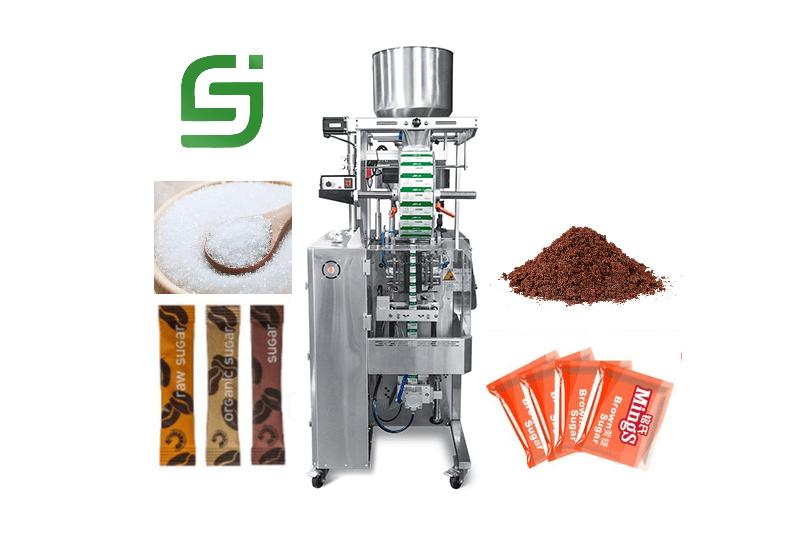
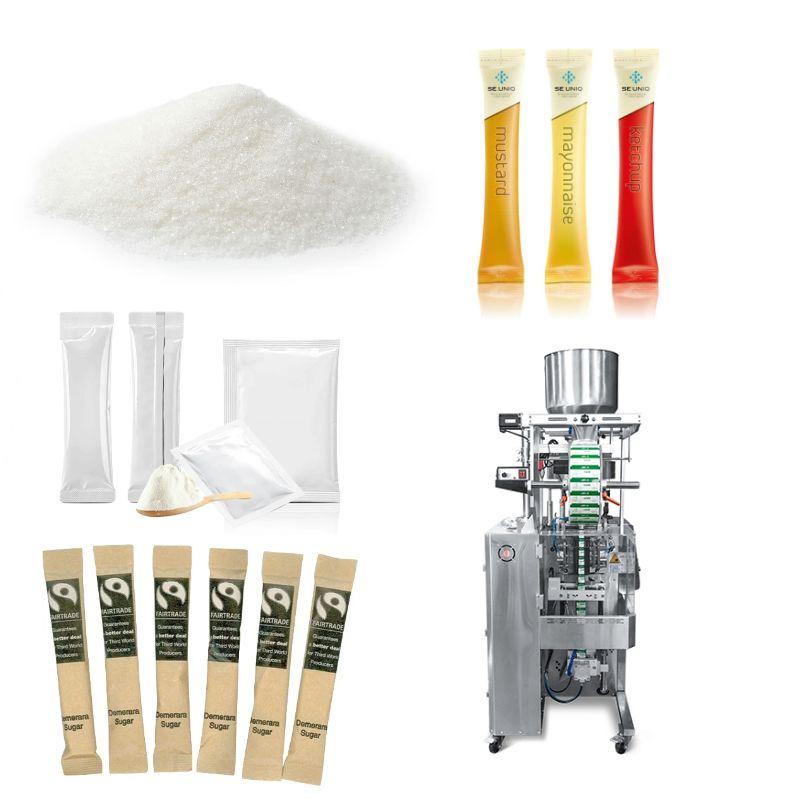
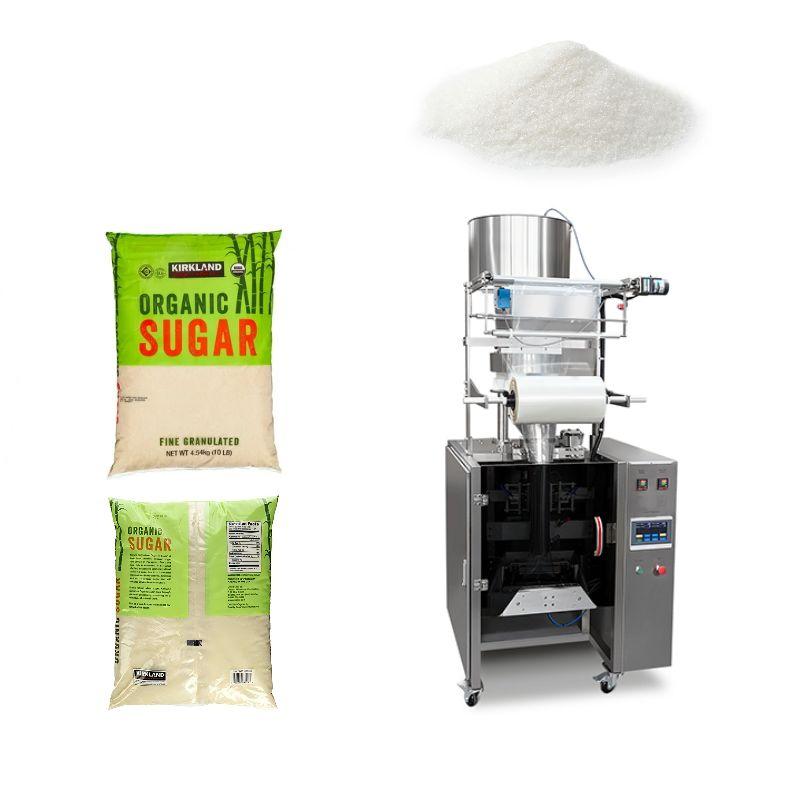
The pictured vertical sugar packer identifies where packaging occurs. It does not show a dryer or a cooling unit. If the incoming product still requires thermal conditioning, placing it in this machine's hopper does not establish that the missing duty has been supplied. That duty needs its own process explanation.
BMA describes a capacity-expansion situation in which combined drum equipment can still dry the increased sugar flow while its cooling function becomes inadequate. Its example introduces a separate fluidized-bed cooler. The useful lesson is the separation of duties, not a claim that every factory needs that particular arrangement.
A packing project can therefore inherit a problem created elsewhere. The packer may be unchanged, and the sugar may have the same commercial name, yet the upstream plant is delivering more material through an existing conditioning route. An earlier acceptable inlet condition should not be assumed to survive that change automatically.
Two cooler offers can also state a similar outlet condition while assuming different incoming sugar. One may start with a warmer stream or a different material flow. Their stated endpoint alone does not make their duties comparable. Describe the beginning and end of the thermal change together, keeping the product and flow assumptions attached to the equipment being considered.
Include the route between processing and packaging in the capacity discussion. A storage stage, transfer arrangement or separate cooler may be involved, but its name does not establish its thermal capability. Identify which equipment actually removes the heat before attributing a change in hopper behavior to the filling mechanism.
Locate the point at which the packing supplier receives responsibility for the product. It may be the discharge of a conditioning unit, a storage outlet or receipt of purchased sugar. Each boundary has a different upstream owner. The quoted packing system should describe which of these arrangements its inlet assumption concerns.
For a refinery, the distinction may divide the cooling plant from the bagger feed system. For a repacker, it may concern the condition of sugar arriving from storage and transport. The second business does not necessarily need to purchase the first business's processing equipment. It does need to understand the condition handed to its dosing stage.
Use a defined product location rather than an ambiguous room-temperature statement. Air in the packing room, the exterior of a container and sugar entering the filler describe different objects. Keeping them distinct prevents an apparently precise temperature entry from referring to the wrong part of the process.
Temperature must be considered with the moisture environment around the product. A request for the coldest possible sugar leaves the intended process condition undefined. The responsible process designer should explain the relationship between the proposed cooling endpoint and the air or equipment the sugar encounters afterward.
GDV's white-sugar transport guidance associates temperature variation and recrystallization with agglomeration. It also warns that sugar must be protected from condensation water. These are reasons to consider thermal history and moisture exposure together. The cargo guidance does not establish that a particular packer inlet temperature causes or prevents condensation, or supply a universal cooling endpoint.
Keep the consequence attached to the actual route. Sugar leaving a conditioner, waiting in a buffer and then entering a different environment may encounter more than one thermal transition. A single favorable reading at the cooler outlet cannot describe all those later locations. The purchase boundary should identify which transition is controlled and which remains a site-process responsibility.
The physical route taken by heat distinguishes cooling arrangements more clearly than a generic conditioning label. Solex describes an indirect plate system in which sugar passes between heat-transfer surfaces while cooling fluid remains inside the plates. The product and cooling fluid follow separate paths. Its explanation also identifies traditional air-contact approaches.
BMA's fluidized-bed example provides a different equipment context involving conditioned air and cooling elements. These references establish that more than one process architecture exists. They do not determine the preferred arrangement for a particular buyer or prove that either arrangement is incorporated in the pictured sugar packer.
For purchasing, identify the boundaries of the proposed cooler and its supporting equipment. Distinguish the product path, the heat-removal route and the handling of any process air. Compare the complete duty rather than borrowing an energy-saving claim from another installation. An advertised cooler outcome remains tied to the conditions under which that supplier obtained it.
Solex identifies product thermal properties, inlet condition and flow among the inputs used in its cooling design. This helps explain why a bagging rate alone cannot size a thermal stage. Counting completed pouches describes the packaging rhythm; it does not identify how heat moves out of the incoming sugar.
A hopper's inventory also needs interpretation. Holding more sugar may change how long material remains there, but inventory is not itself a defined cooling mechanism. The vessel must have an understood heat-transfer route if a cooling duty is assigned to it. Otherwise a larger buffer merely changes the amount waiting between operations.
Consider changing flow as well as nominal throughput. A conditioner and a packer can have different operating patterns even when their average production appears compatible. The process explanation should connect those patterns without treating a larger storage volume as an automatic thermal solution. That connection belongs in the line design before feeder performance is compared.
Intermediate inventory can further separate a process change from the moment it becomes visible at packing. Sugar already waiting in a vessel and sugar newly entering it may have different histories. A measurement taken at one end of that route should be described by its location. This does not prescribe a sampling plan; it prevents the designer from assigning an upstream condition to downstream material without explaining the intervening hold and transfer.
Keep the meaning of inlet consistent across the suppliers' drawings. A cooler inlet and a packing inlet are separated by whatever equipment the layout places between them.

A packing feeder responds to the material that reaches it. Changing its movement may alter how that material travels, but it does not establish that the sugar has completed its upstream thermal duty. First distinguish an inlet-condition change from a different mechanical dosing requirement.
This is especially useful when the complaint appears after a processing change. Ask whether the sugar entering the packing system has changed before attributing the symptom to a familiar control setting. A feeder modification might address a genuine handling issue; it should not silently become the substitute for an unspecified conditioning stage.
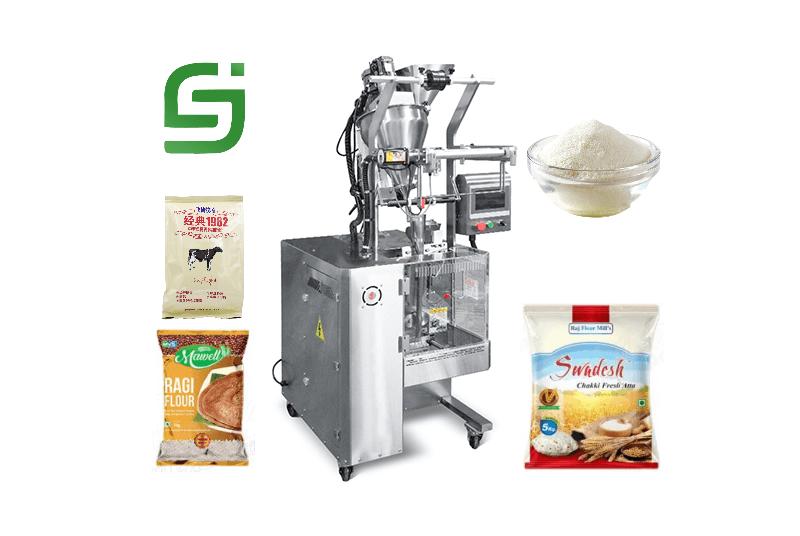
The hopper photograph locates a product inlet on the grain-family reference. Its printed construction label provides no temperature measurement and shows no cooling circuit. The visible cylindrical vessel should therefore remain a packing component in the explanation. Any proposal assigning it a thermal function needs separate engineering support from the responsible supplier.

Conditioning ownership changes with the business and the material supply route. The comparison below keeps those differences visible without prescribing another machine to every sugar buyer.
| Supply situation | Question before the filler | Scope to clarify |
|---|---|---|
| Purchased, already conditioned sugar | What condition reaches the packing inlet? | Receipt, storage and transfer assumptions |
| Direct feed after refining | Where is the required cooling completed? | Processing-to-packing thermal handoff |
| Higher flow through an existing plant | Does the cooling duty still fit the changed flow? | Conditioning capacity, not just bagger capacity |
| Intermediate storage or buffering | What thermal role is actually assigned to the vessel? | Inventory versus engineered heat removal |
A processor may need a coordinated process expansion, whereas a repacker may need a better-defined incoming-material boundary. Treating both as the same purchase can add unnecessary equipment or leave a missing duty unnoticed. The distinction should be resolved from the product route, rather than from the similarity of the finished retail bag.
A cooler's result concerns the product condition achieved through its own process. Packing performance concerns what the downstream system does with the material it receives. Connect the two through an explicit inlet condition, while keeping their individual functions understandable.
The granular packing machine category helps locate the packaging options in this discussion. Its model descriptions cannot establish an unpictured conditioning installation. Likewise, a successful cooling case elsewhere does not prove a particular filling configuration, package range or output at the buyer's site.
The resulting order should make the division practical: one party supplies the stated product condition, another accepts that condition at an identified inlet, and any transfer between them has a defined owner. If the processing route changes later, this description shows which assumption needs review. It is more useful than treating a broad sugar application statement as a complete process design.
Can sugar be dry but still too warm for the agreed handoff? Yes. Moisture removal and cooling are separate duties, so the upstream process must explain both where they matter.
Does a repacking business automatically need a sugar cooler? No. Purchased sugar may already be conditioned. Determine the actual incoming condition and handling route before assigning an additional process duty.
Will a larger packing hopper complete the missing cooling? More inventory does not establish a heat-transfer function. A claimed cooling duty needs an engineered explanation beyond vessel capacity.
Can a lower inlet temperature guarantee freedom from condensation? No such guarantee follows from these references. GDV warns against condensation-water exposure; the responsible designer must assess the cooling endpoint together with the subsequent product route and surrounding conditions.
Do the sugar packer photographs show a conditioning unit? They show packing-stage references and package examples. No installed dryer, cooler or measured inlet temperature is established by those views.
Define the sugar arriving at the filler before assigning a remedy to the filler. Drying, cooling, intermediate holding and packaging have separate roles, even when they belong to one production line. Identify the thermal handoff, reconsider it when upstream flow changes, and describe the process equipment that actually removes heat. This gives a sugar packing machine a usable inlet assumption without inventing a universal temperature or treating ordinary hopper motion as conditioning.

YISEN MACHINERY - The ONE-STOP VFFS PACKING MACHINE SOLUTION SUPPLIER
 Tel: +8617350750975
 Email: info@vffspackingmachinery.com
 MP/WhatsApp: +8617350750975
 Manufacturer Address:Meixi Road, Tongan District, Xiamen,Fujian,China