

Hot Keyword:
Author:YISEN Pouch Packing Machine Manufacturer TIME:2025-03-05
A defensible selection uses a product matrix, production packaging, and consecutive-pack trials. It measures accepted output after weight, damage, seal, code, and food-control checks rather than selecting from an empty-machine rate.
Food manufacturers should choose a granule packaging machine by matching product flow and fragility to a dosing system, then matching the filled dose to a validated package and hygiene plan. Rice, sugar, nuts, candy, frozen pieces, and snack inclusions may all be called granules, but their handling risks are different.
Record piece dimensions, shape, bulk density, flow, fines, static, surface oil, temperature, moisture sensitivity, and vulnerability to breakage. For blends, note component ratios and the possibility of segregation. Frozen or coated products may change as temperature rises. Samples should represent normal variation and the least cooperative approved condition. A broad description such as "dry food" gives suppliers too little information to select contact surfaces, gate geometry, hopper volume, or product supply.
Define target weights, pack frequency, batch size, quality limits, allergens, and storage before filling. Identify how material reaches the machine and how long it can wait in a hopper. Upstream conveyors and refill events can damage pieces or change the mixture before dosing begins. Keep these interfaces inside the trial plan.
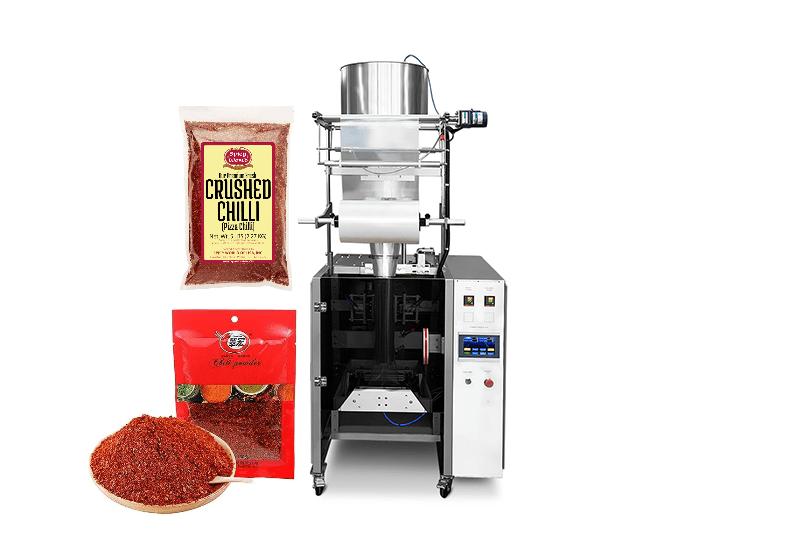
Multihead or linear weighing, volumetric cups, and other granular dosing methods solve different problems. Weighing can suit many discrete products, but feeder energy, gate movement, product adhesion, and available height matter. Cups may be practical for consistently free-flowing material when volume remains a useful measure of weight. Mixed products may need coordinated supply. The correct principle is established by sequential results, not by the food name.
Test the lowest and highest dose through refill, low product, stop, and restart. Identify settings, contact parts, and the measurement method. Separate package tare from net-content findings and compare product condition before and after the filler. If change parts are needed across the range, include cleaning, storage, and setup verification.
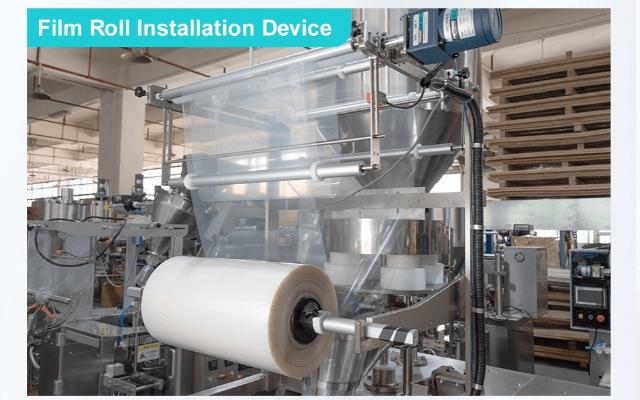
Rollstock bags and premade pouches use different paths. Film lines form, seal, fill, and cut material during production; premade systems separate finished bags, open them, fill, and close the top. Provide production-intended structure, dimensions, features, friction, stiffness, print registration, and sealant information. The product needs enough opening clearance and internal volume without entering the closure zone.
Test boundary sizes with assigned foods. Large pieces can bridge in narrow tubes, and heavy doses may pull on seals or grippers. Filled packs should pass through the intended inspection and case route. Retain approved material lots and require review when the converter, laminate, or geometry changes.
Review hoppers, feeders, weigh buckets, chutes, forming parts, guards, ledges, and downstream surfaces that can receive food. The buyer's sanitation and allergen program determines cleaning methods and verification. Ask how contact parts are removed, inspected, dried, identified, and protected in storage. Access must be reviewed on the final elevated layout, not only on a floor-level demonstration component.
Provide relevant product and site requirements so the supplier can state materials, finishes, drainage assumptions, and exclusions. A food-use claim does not replace the buyer's hazard analysis or local compliance review. First-off release after cleaning should include product identity, dose, package, code, seal, and line-clearance checks.
Map the fall and transfer route from bulk supply to bag. Compare samples before and after each major stage. Fragile pieces can break on gates and chutes; blends can separate during vibration; small granules can leak from clearances. Adjustments should target the observed point. Simply slowing the package machine may not correct damage created upstream.
Record spills, fines, giveaway, underfill, and rejected food separately. Product loss can occur during startup, clearing, and changeover as well as stable running. A configuration that makes more machine cycles but damages a valuable product may deliver lower saleable yield.
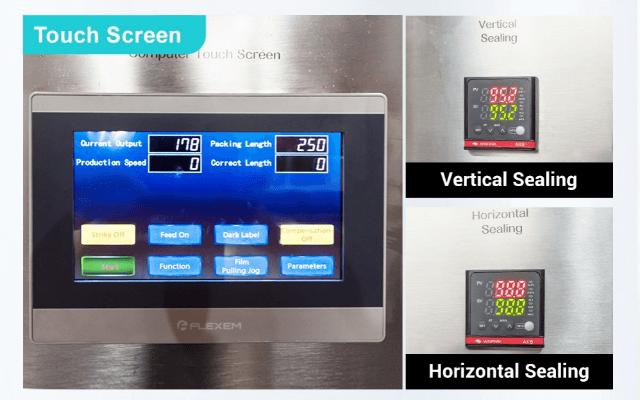
Product must clear the cross-seal or pouch-top region before closing. Chute cutoff, bag length, settling, static, support, and timing influence trapped pieces. Develop heat, pressure, dwell, alignment, and cooling with approved packaging. Inspect startup, steady operation, stop, and restart; increasing heat cannot repair a granule physically crossing the seal band.
Coding and downstream transfer belong to finished-pack approval. Confirm legibility, reject disposition, seal handling, and bag orientation. Apply the buyer's defined integrity method and keep sample identity linked to material and product lots.
Schedule data reveals whether flexibility has value. List campaigns by product, pack, allergen, and filler parts. Witness a complete transition from product recovery through cleaning, package replacement, code change, recipe selection, and first-off approval. The time to move a guide is not the full changeover.
Store tooling with clear identity and protect clean surfaces. Restrict critical settings and define recovery after alarms. Operators need procedures for startup and partially processed packs, while maintenance needs documented wear points and spares. These controls make the approved operating range repeatable.
The granular packing machine category frames available concepts. Use one requirement sheet and make every candidate demonstrate the same boundary products.
| Area | Trial evidence | Approval question | Record |
|---|---|---|---|
| Product handling | Incoming and post-line condition samples | Is added damage or segregation controlled? | Sample method and comparison |
| Dosing | Sequential results through refill and restart | Does the proposed filler cover the range? | Parts, recipe, and event log |
| Packaging | Production material at boundary sizes | Do bags form or open, fill, seal, and discharge? | Approved package list |
| Food controls | Witnessed cleaning and first-off release | Can the buyer's sanitation boundary be met? | Cleaning and line-clearance record |
| Output | Accepted packs after all inspections | Is useful production supported by evidence? | Yield, reject, and intervention summary |
Normalize quotations for filler, product supply, packing machine, coding, inspection, conveyors, change parts, training, installation, and spares. Untested products should stay outside the approved list until a defined test closes them.
Is a multihead weigher always required? No. It is common for many discrete foods, but product behavior, dose, damage, budget, height, and cleaning guide the choice.
Can one line handle fragile and dense products? Possibly, with suitable settings or parts, but each family needs evidence for dosing, damage, transfer, and sealing.
Why test more than net weight? Correct weight can coexist with broken product, poor blend composition, contaminated seals, or damaged packaging.
What is the best boundary sample? Use the product-and-pack combination most likely to challenge flow, opening clearance, breakage, cleaning, or closure quality.
How is practical speed established? Count accepted packs under stated conditions after replenishment, interventions, rejects, and downstream limitations.
Capacity planning should use the sequence in which products will actually run. A long stable batch consumes the line differently from short orders that each require cleaning, material reconciliation, code changes, and first-off checks. Put those tasks into the weekly model before deciding that a higher theoretical cycle rate solves the production need.
Training should cover causes as well as controls. Operators need to recognize bridging, product damage, closure contamination, film tracking changes, and incorrect codes. Maintenance needs reference condition for feeders, forming parts, seals, sensors, and drives. Quality needs samples identified by operating state. Shared terms make investigation faster and preserve the approved process.
The acceptance team should include production, quality, maintenance, engineering, and purchasing because each role sees a different operating limit. Their shared sign-off should reference the same product lots, package materials, inspection sheets, and unresolved actions.
A final layout review should follow the movement of people, raw food, packaging, cleaned parts, rejects, waste, and finished cases. Check platform access, lifting needs, replenishment routes, guard opening, cleaning clearance, utilities, and emergency access with the proposed equipment dimensions. Upstream supply must keep the filler stable without damaging or segregating product, while downstream equipment must receive bags without uncontrolled drops or blocked discharge. Assign every conveyor, signal, reject device, and interlock to a supplier. Running filled packages through that integrated route before handover can reveal problems that neither an isolated filler test nor an empty packaging-machine demonstration will show.
For contract acceptance, define how deviations are recorded and closed. A statement such as seal needs improvement does not identify the product, material lot, machine position, defect, proposed correction, or retest. Use an open-point register with those details, an owner, and required evidence. Retain representative good and failed packages from identified operating states where site rules allow. This gives engineering a factual basis for corrections and prevents unresolved trial conditions from becoming ordinary production work for operators.
Lifecycle support belongs in the purchase comparison. Confirm manuals, drawings, software backups, recommended spares, wear-part lead times, training, and service boundaries. A suitable machine still creates risk when the plant cannot identify a replacement component or restore an approved recipe after maintenance.
After installation, use factory-trial materials and inspection methods as a commissioning reference. Record site adjustments and repeat affected package checks so production settings remain connected to purchase evidence.
The right food granule line matches product behavior, dosing, package geometry, sanitation, sealing, and the plant schedule. It is an approved system, not a generic model selected from weight alone.
Build the product matrix, test boundary combinations, and retain evidence from incoming food to finished case. Those records support a safer purchase decision and a clearer production handover.
Granule trials should govern the shortlist.

YISEN MACHINERY - The ONE-STOP VFFS PACKING MACHINE SOLUTION SUPPLIER
 Tel: +8617350750975
 Email: info@vffspackingmachinery.com
 MP/WhatsApp: +8617350750975
 Manufacturer Address:Meixi Road, Tongan District, Xiamen,Fujian,China