

Hot Keyword:
Author:YISEN Pouch Packing Machine Manufacturer TIME:2026-09-03
Select a multihead weigher for snack packing by trialing the real snack range, especially products that bridge, stick, break, or segregate. Compare weight distribution, giveaway, damaged pieces, accepted bags, cleaning access, and bagger timing under refill and restart conditions instead of relying on nominal head count or speed.
Profile every snack family before selecting the weigher. Record piece dimensions, bulk density, fragility, surface oil, seasoning, stickiness, static, segregation risk, target weight, allowable limits, bag volume, and cleaning or allergen boundary. Include the hardest expected products in the trial matrix.

Send representative snack products: Record piece dimensions, density, target, oil or seasoning, fragility, stickiness, static, fines, and expected lot variation. Include the easiest and most difficult products. A multihead weigher selects combinations from available hopper portions, but upstream distribution and product behavior determine whether those portions are created consistently.
Product must distribute evenly from the center feeder to radial feeders, pool hoppers, weigh hoppers, and the discharge path. Observe starvation, overfilling, bridging, buildup, recirculation, and manual redistribution because uneven feeding reduces the combinations available to the controller.
| System stage | Buyer observation | Evidence |
|---|---|---|
| Distribution | Product level and even movement to radial feeders | Settings and empty/overloaded areas |
| Pooling/weighing | Portion availability, sticking, gate action, and piece damage | Raw weights and hopper behavior |
| Combination | Target selection across intended speed and product variation | Individual results and rejects |
| Discharge | Timing, double drop, impact, bag entry, and seal clearance | Accepted finished packs and damage check |
Weigher terminology: Pool hoppers create available portions. Weigh hoppers measure them. Combination logic selects portions toward a target. Giveaway describes product above target under the buyer's stated analysis and should not be presented as a guaranteed saving.
Observe the feeding chain: Review infeed, dispersion, radial feeders, pool and weigh hoppers, gates, timing, discharge chute, and interface to the bagger. Record vibration or feeder settings, product level control, manual intervention, empty hoppers, double drops, sticking, and damaged pieces. More heads can create more combination opportunities, but head count alone does not prove the required result.
Head count is only one design variable. Feeder surfaces, vibration control, hopper volume, opening profile, contact finish, discharge grouping, timing hoppers, and product drop geometry can matter more for a specific snack. Freeze the installed parts used for each accepted result.
Protect product quality while improving flow. Aggressive vibration or long drop heights may increase breakage, seasoning loss, bounce, or segregation; textured surfaces can help one sticky product but complicate cleaning. Count visible damage and retained product beside weight results.
| Trial phase | What can change | Record |
|---|---|---|
| Startup | Distribution and recipe stabilization | Setup time, rejects, and first release |
| Stable run | Available combinations and accepted output | Raw samples and product condition |
| Refill | Level, piece mix, and distribution recovery | Before/after results |
| Target change | Hopper capacity and combination behavior | Parts/settings and stabilization |
| Cleaning | Residue, contact-part handling, and reassembly | Time, inspection, and next-product sample |
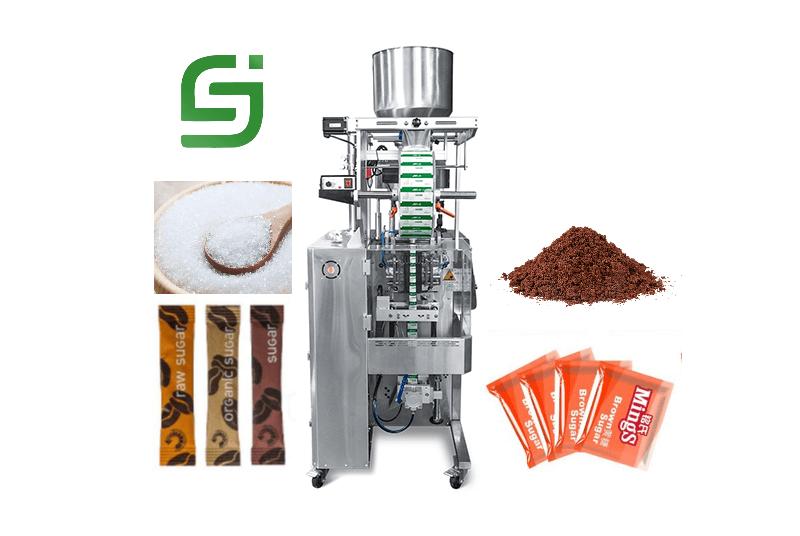
Match the approved weigher and timing interface to the granular packing machine options, then confirm that the chute, forming tube, bag volume, sealing clearance, checkweigher, reject logic, and discharge tested together remain in the quotation.
Measure consecutive packs at startup, stable running, low hopper level, refill, a short stop, and restart. Report individual weights, average, spread, underweight, overweight, giveaway, interventions, and snack damage. Mixed products also need a composition check, not only total weight.
Check mixed-product composition: When a snack contains pieces with different size, density, or value, a total weight result may hide separation. Collect samples early, late, and around hopper replenishment and compare the component mix under an agreed method. Observe whether distribution, vibration, or gate timing favors one component. Record any upstream mixing practice needed to maintain the approved blend.
Measure under changing conditions: Collect individual weights during startup, stable running, before and after replenishment, at intended speed, after a short stop, and after changing target. Use one verified scale and preserve raw values, rejects, and excluded samples. Check giveaway or underweight according to the buyer's defined method without presenting a test average as a legal or commercial guarantee.
Integrate the weigher and bagger as one timed system. Confirm discharge signal, funnel and forming-tube clearance, drop height, product settling, bag length, seal timing, check-weigher feedback, reject isolation, and downstream accumulation under the intended pack rate.
Weigher review: Head count is only one design input. Product distribution, hopper portions, damage, target, speed, discharge, cleaning, and bagger timing determine integrated performance.
Review reject and check-weigh interaction: If the line includes a checkweigher or reject device, define which result controls product release and how rejected packs are counted, isolated, and investigated. Do not use downstream correction to hide unstable multihead feeding. Link check results to the weigher sample group, finished bag, and production phase.
Inspect the bagger interface: Confirm discharge timing, product drop height, bag volume, fragile-product impact, dust or seasoning near seals, and downstream accumulation. A weigher can deliver an acceptable dose while the integrated line damages product or contaminates the seal. Measure accepted finished bags with all required coding, checking, and discharge functions active.
Demonstrate emptying, contact-part removal, cleaning, inspection, drying, reassembly, and first-pack release for flavor or allergen changes. Record tools, lifted parts, inaccessible residue, damaged surfaces, recipe restoration, and the secure storage needed for spare contact sets.
Plan contact-part logistics: Identify trolley, racks, wash or dry-clean area, drying, inspection, and correct reassembly for removable hoppers and chutes. Large sets can create handling damage or mixed revisions when storage is improvised. Include seals, gates, load-cell protection, and verification samples after reassembly in the maintenance handover.
Demonstrate sanitation and changeover: Remove authorized contact parts, manage their weight and storage, clean difficult surfaces, inspect residue, reassemble correctly, restore recipes, and release the next product. Record tools, time, water or dry-clean restrictions, spare components, and retest triggers. Approve each snack with its feeder surfaces, settings, target, speed, result, and known limits.
Approve a product matrix that links each snack to feeder and hopper parts, target, operating settings, accepted output, weight evidence, damage limit, cleaning method, and known restriction. A successful easy product must not be presented as proof for every future SKU.
Require a released sample group after parameter restoration, contact-part reassembly, or a significant product-supply change.
Store recipe backups and identify who may change feeder, hopper, timing, target, and bagger-interface parameters. An unauthorized adjustment can alter weight, damage, and seal cleanliness at the same time.
A multihead-weigher trial should represent the snack range, including the product most likely to bridge, break, stick, or separate. Record piece size, shape, oil or seasoning, fragility, target weight, acceptable variation, feed distribution, vibration settings, hopper level, and product recirculation. Collect consecutive pack weights through startup, stable running, refill, a short stop, and restart. At the same time, count visibly damaged pieces and observe whether seasoning accumulates on feeders or weighing buckets. Mixed products need an additional composition check because an acceptable total weight can still contain the wrong ratio. Compare accepted output and giveaway together; aggressive vibration may improve feeding while increasing breakage or segregation. Time access and cleaning for flavor or allergen changes, and identify parts that need tools or manual lifting. The approved product matrix should link each snack to its feeder arrangement, settings, target range, cleaning method, and observed limits so a successful trial with one easy product is not generalized to every SKU.
Distribution test note: A snack project should test the multihead weigher with the lightest, largest, most fragile, and most adhesive product expected in production. Record target weight, individual sample weights, giveaway, missed combinations, breakage, seasoning buildup, refill behavior, and the rate at which accepted packs leave the bagger. The feed system, distribution cone, radial feeders, hoppers, timing, and discharge chute must be assessed as one path rather than as isolated components. Buyers should also time product changeover and cleaning, inspect access above the packing machine, and confirm how rejected or excess product is handled. This evidence shows whether the quoted weigher configuration fits the real snack range without relying on a single easy demonstration product.
Does a higher head count always give better accuracy? No. Product distribution, hopper size, target, piece size, software, speed, sticking, and setup all influence available combinations and actual performance.
Can a multihead weigher handle fragile snacks? It may, when feeder action, hopper gates, surfaces, drop height, target, and speed are configured for the product. Test breakage through the complete integrated line.
Why does weight performance change after refill? Product level, distribution, settling, piece mix, and feeder behavior can change, so before-and-after samples should be included in the trial.
Should accuracy be evaluated from an average only? No. Preserve individual results, sampling phases, rejected or excluded pieces, target, scale, settings, and the agreed acceptance calculation.
What should a snack product matrix contain? Record product profile, contact parts, feeder and hopper settings, target, speed, sample results, damage, cleaning, bagger interface, limitations, and retest triggers.
A multihead weigher is a combination system whose performance depends on product distribution, hopper portions, selection, discharge, and integration with the bagger. Head count and catalog speed are incomplete selection criteria.
Test representative snacks through refill, speed changes, stops, finished-bag handling, and cleaning. Approve a product-specific matrix that preserves weight evidence, product condition, parts, settings, and limits.

YISEN MACHINERY - The ONE-STOP VFFS PACKING MACHINE SOLUTION SUPPLIER
 Tel: +8617350750975
 Email: info@vffspackingmachinery.com
 MP/WhatsApp: +8617350750975
 Manufacturer Address:Meixi Road, Tongan District, Xiamen,Fujian,China