

Hot Keyword:
Author:YISEN Pouch Packing Machine Manufacturer TIME:2026-10-13
For a selected Tea Bag Making Machine arrangement, specify what each missing input prevents the machine from doing next and what happens to packs already between stations. Filter, string, tag and envelope loss affect different permissions and unfinished units. Agree an input-specific response and disposition table with the OEM; automatic detection, no-material-no-fill hardware and automatic restart remain unverified unless demonstrated.
Take one already selected arrangement with an inner-filter process, required string and tag functions, and an outer-envelope stage. Keep its equipment list and commercial pack fixed. Use the approved drawing to name the actual consumption points and locations where partly completed units remain. The order and position of those functions must follow the offered configuration.
Ask the OEM, the original equipment manufacturer, to complete the following schedule. Permission here means the agreed condition for an action to proceed; it does not imply that a particular automatic interlock is installed. Each row needs both a next-action decision and a decision for units already past the affected point.
| Input unavailable | Next-action permission to specify | Unfinished units to account for | Witness evidence |
|---|---|---|---|
| Inner filter | Withhold the next dose without a valid container; agree closing of committed work | Open or incomplete filters, committed tea, and earlier valid closed bags | Filter boundary, dosing/closing response and separated units |
| Required string | Withhold onward acceptance of an unconfirmed attachment | Filled bags awaiting string and downstream bags with uncertain attachment | Thread-loss boundary and attachment disposition |
| Required tag | Withhold acceptance as the specified string-and-tag pack | String-only units and bags already beyond the tag point | Missing-tag coverage and identified affected bags |
| Required envelope | Withhold a new enveloping action without the approved material | Complete inner bags, partly enveloped units and earlier complete packs | Location-specific holding and complete-pack release boundary |
These are purchasing requirements for OEM agreement, not verified machine behavior. For the selected Tea Bag Making Machine configuration, record how each requirement is delivered and demonstrated. A blank response remains an unresolved item rather than an assumed permission.
Material available at its supply does not necessarily mean material delivered at its consumption point. A tag roll may remain present while a tag fails to arrive; a thread supply may remain while the thread breaks. Ask which condition the offered device observes and which row of the permission table it can support.
Distinguish a warning about remaining quantity from proof of continued input delivery. Also distinguish delivery observation from finished-pack inspection. A detector at one point can leave uncertainty farther along the path. Record its stated coverage and the evidence used to assign affected units.
Require the quotation to mark detection as included, optional or unverified for each input. The cited product pages establish process context, but do not prove automatic no-material-no-fill hardware or the permission logic described here. Where detection is not demonstrated, the OEM and site team must define a workable monitored response and its limitations before accepting that table row.
Filter loss removes the basis for accepting a new container. Ask the OEM to define when the next dose is withheld and how dosing and closing respond together. That requirement is different from the disposition of tea already delivered into a filter before the event was recognized.
An empty formed filter, a dosed but open filter and an earlier closed bag have different states. Map the applicable states to the selected machine's actual locations. The OEM should explain whether a committed unit can complete an approved closing action or must remain held. This is a machine-specific decision, not a promise that every action stops immediately.
Have quality define the evidence needed to accept an earlier closed bag whose filter continuity and closure remain confirmed. Keep an incomplete container or uncertain dose outside that release. The relevant distinction is valid containment versus uncertain containment; an alarm time alone cannot establish it. Any hold state for the closing or cutting assembly belongs in the OEM-approved response.
String loss can leave a correctly contained dose in a bag that lacks a required attachment. Tag loss can leave both a valid filter bag and string present while the specified pack remains incomplete. These conditions must have separate rows even if one alarm display is used for both.
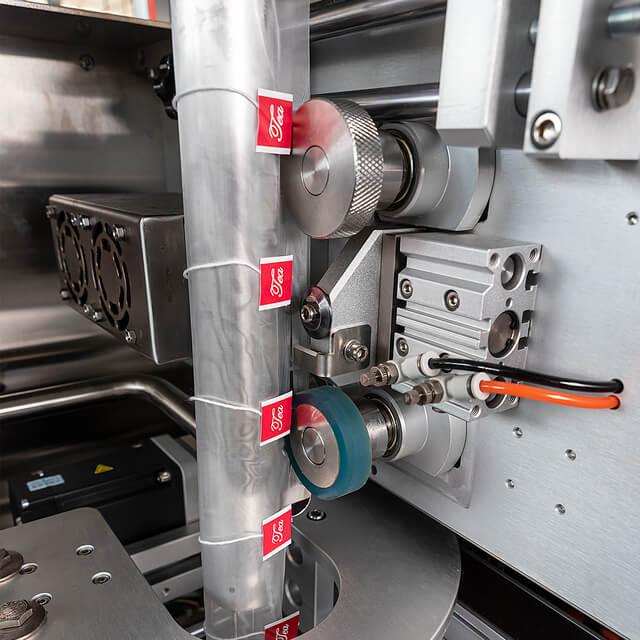
For each loss, ask what permits a unit to leave the attachment point and proceed toward an envelope. Describe the fate of bags waiting before attachment and bags already beyond it when certainty is lost. A confirmed filter closure does not establish string or tag conformity, and an outer envelope can conceal either defect.
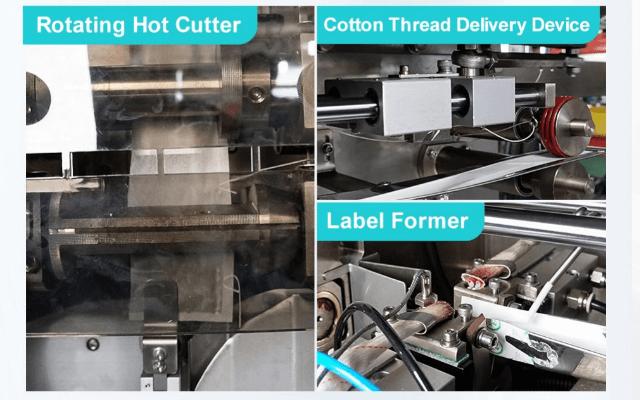
Assign uncertain attachments a documented product disposition. Physical possession of a closed bag does not authorize attachment repair or a second pass through the machine; any such route needs a separately approved method. Restoring the depleted input cannot retroactively establish which earlier units received it correctly.
Envelope loss leaves different physical populations in the selected arrangement. A complete inner bag waiting before insertion has no envelope yet. Another unit may already be partly enclosed, while an earlier retail pack may have completed its closure. List the applicable locations on the actual drawing rather than assigning every unit the same outcome.
Ask the OEM what confirms material availability for the next enveloping action and how an already committed envelope cycle is handled. The YS-169 source identifies separate filter and envelope paths; confirmed filter input therefore cannot establish envelope input availability. Specify this permission without reopening the equipment architecture decision.
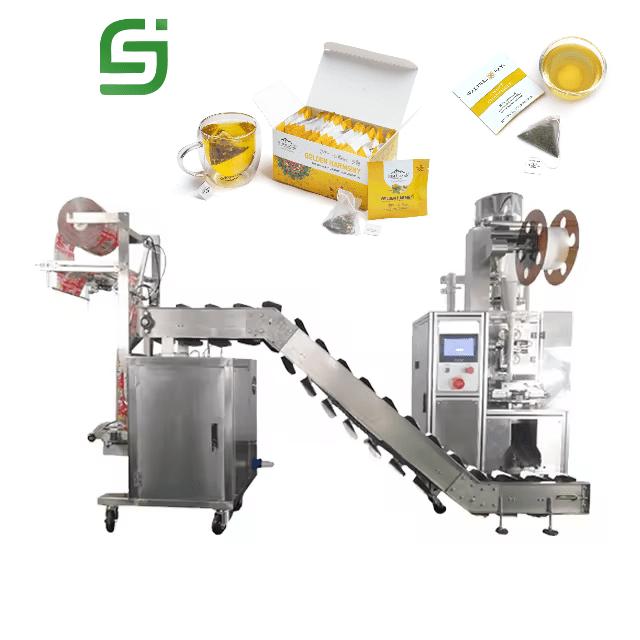
A held complete inner bag may have a different quality disposition from a partly enveloped unit whose position or closure is uncertain. Record those decisions separately. Neither is an accepted complete retail pack merely because the envelope supply later returns. The required deliverable is identified product fate for these locations, not a generic instruction to replenish a roll and restart.
Annotate the selected path with the pack states that can exist there: formed but empty, dosed but open, closed with attachment pending, attachment completed, partly enveloped and fully closed awaiting discharge. Include only states that apply to the delivered arrangement. Their physical positions matter because an input loss affects populations differently.
For each challenged input, record which populations remain demonstrably conforming, which need inspection, and which stay segregated pending a disposition. Quality should identify who may authorize release or rejection. Replenishment is a material action; it does not decide the fate of existing product.
The last good complete pack is the last positively accepted unit before the uncertain population, not necessarily the unit discharged just before the alarm. An upstream attachment failure can reach discharge later. Where individual tracking is unavailable, agree a conservative, demonstrable segregation boundary with the OEM and quality team. Do not assume tracking hardware or a fixed discard count.
Keep the first accepted complete pack after restoration tied to the same input event. Its inspection must close the relevant uncertainty, including downstream presentation when an attachment failed. Label held units by event and location so they cannot be mixed with a later conforming population. The record should explain why each population was released, held or rejected.
The alarm record should identify the failed input and the action whose permission has been withheld. Ask the OEM to connect its displayed event to the corresponding table row and retained populations. A cleared message should not obscure unresolved product disposition.
The restoration agreement needs separate answers for input availability, permission for the next action and acceptance of existing units. Replacement thread may establish a supply again, for example, while bags beyond the attachment point remain uncertain. The approved sequence must account for them rather than treat replenishment as blanket release.
Have the OEM define how acknowledgment, fault resolution and start permission relate in the selected arrangement. No automatic restart is assumed. Require confirmation of the appropriate dosing, closing and cutting states, with motion and quality release demonstrated under the approved method.
This is a specification for supplier behavior and training, not an operator bypass procedure. Qualified personnel must define the actual restoration method. Disabling a detector or changing protected controls cannot serve as evidence that the purchased input-permission requirement has been met.
Ask qualified OEM and site personnel to choose safe challenges that expose each applicable input's effect. The witness should see both the decision for the next action and the disposition of representative units already between stations. Demonstrating an alarm with an otherwise empty path leaves that second result unverified.
A filter-loss case should resolve a pending dose and relevant open or closed units. A string-loss case should identify bags awaiting attachment and affected downstream bags. A separate tag-loss case should establish the fate of string-only or otherwise unconfirmed units. An envelope-loss case should distinguish waiting inner bags from already committed envelope work.
For each case, retain the selected arrangement revision, input condition, observed permission state, identified product locations and disposition evidence. Record whether the result used automatic detection, agreed monitoring or supplier assistance. An offered detector not installed in the demonstrated arrangement remains outside the verified result.
After an OEM correction, repeat the affected row using the final configuration and preserve the revised result. Handover should provide a completed input-permission and unfinished-pack schedule with explicit unresolved cells. This lets the buyer assess a specific delivered behavior without selecting a new wrapper arrangement or accepting an assumed universal stop-and-restart function.
Can an input alarm be accepted with no bags in the path?It can demonstrate the alarm under those conditions, but not the fate of unfinished packs. Require separate evidence for units at the relevant locations and the next-action permission. Describe an empty-path result as limited coverage.
Does a good filter closure make a bag with no tag releasable?Not when the fixed commercial specification requires a tag. Containment and attachment conformity are separate. Quality must assign that population a disposition; a valid seal alone cannot satisfy the missing-tag requirement.
Must every held inner bag be rejected after envelope loss?No universal disposition follows from the input name. A confirmed complete inner bag and an uncertain partly enveloped unit can have different outcomes. The agreed location-specific evidence and quality authority determine what may be released, held or rejected.
What if the supplier describes no-material-no-fill as standard?Ask which input it covers, what condition it detects, which action it prevents and what happens to committed units. Require evidence on the selected arrangement. The description alone does not verify an installed function or its coverage.
Is acknowledgment the same as permission for the next action?Not necessarily. The OEM must explain the delivered sequence. Acknowledgment can confirm awareness while input availability or product disposition remains unresolved. Do not assume that acknowledgment, replenishment or alarm clearance causes automatic movement.
Complete the runout specification for the selected arrangement by connecting each missing input to a next-action permission and the fate of unfinished units at named locations. Establish containment after filter loss, attachment acceptance after string or tag loss, and separate inner-bag versus partial-envelope decisions. Witness the table row by row, preserve the last and first accepted complete-pack boundaries, and leave unsupported automatic functions unverified.

YISEN MACHINERY - The ONE-STOP VFFS PACKING MACHINE SOLUTION SUPPLIER
 Tel: +8617350750975
 Email: info@vffspackingmachinery.com
 MP/WhatsApp: +8617350750975
 Manufacturer Address:Meixi Road, Tongan District, Xiamen,Fujian,China