

Hot Keyword:
Author:YISEN Pouch Packing Machine Manufacturer TIME:2026-10-14
Specify operator language through a reviewed screen list, a translated alarm glossary tied to unchanged alarm codes, and a witnessed demonstration with the people who will run the machine. For a Tea Bag Manufacturing Machine, readable menus alone are insufficient: material names, action prompts, units and restricted screens must also make sense in the agreed language on the offered hardware.
Ask production supervisors which language each operating shift reads confidently, including temporary staff who load materials or respond to routine stops. The answer may differ from the office language used for purchasing. Identify the required language, local terminology and any bilingual labels needed for communication with service personnel. A country name alone does not define this scope.
Have operators review a small vocabulary sample before the supplier translates every screen. Words for a filter web, an envelope and a tag may have several plausible translations. Choose the terms that match the site's material labels and operating documents. Keep approved names consistent across screens, alarm descriptions and the supplier's language-specific instructions.
Request a written response for the particular Tea Bag Manufacturing Machine being offered. Separate an available standard language, a proposed translation service and an unsupported request. A general statement about configurable language does not establish which language, character set or message coverage is available on the quoted control arrangement.
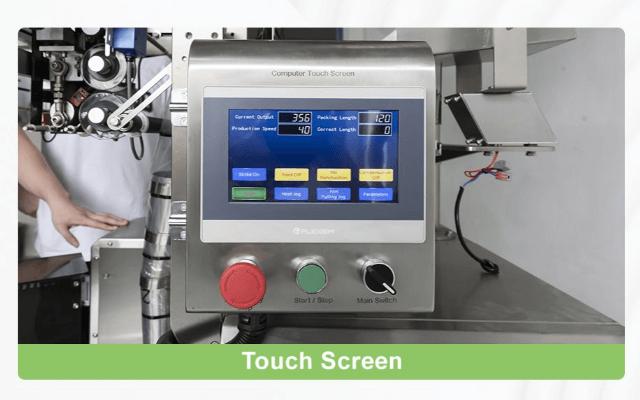
Make a screen inventory with the OEM. Cover the home view, production settings permitted to operators, recipe selection, material replenishment messages, alarm list and routine status displays where these exist. Include confirmation boxes, temporary pop-ups and messages shown only during an interrupted run. Translating navigation labels while leaving these messages untranslated creates an incomplete operating language.
Identify service and engineering screens separately. Agree which require translation, which may remain in a named service language, and who is authorized to use them. Language availability should not expand operator access to protected settings. Ask how the delivered interface distinguishes normal production tasks from adjustments reserved for qualified service personnel.
Mark each screen as included, excluded or awaiting supplier confirmation. Where a connected device has its own display, identify its language scope separately; a translated central HMI does not prove that a coder or other independently controlled accessory is translated. Record such exclusions before comparing quotations.
A message such as "material missing" leaves the operator guessing whether the shortage concerns tea, filter material, outer-envelope film, label stock or thread. Ask the supplier to name the affected stream and location for every relevant message. Use only streams and devices fitted to the purchased configuration, and do not imply that a sensor detects a condition unless that detection is confirmed.
For an inner-and-outer bag arrangement, agree separate terms for the inner filter web and outer-envelope web. Keep the same terms in roll identification, screen text and the alarm glossary. If the machine handles thread and tags, decide whether the site calls the attachment a tag or a label so that the display and stores team describe the same item.
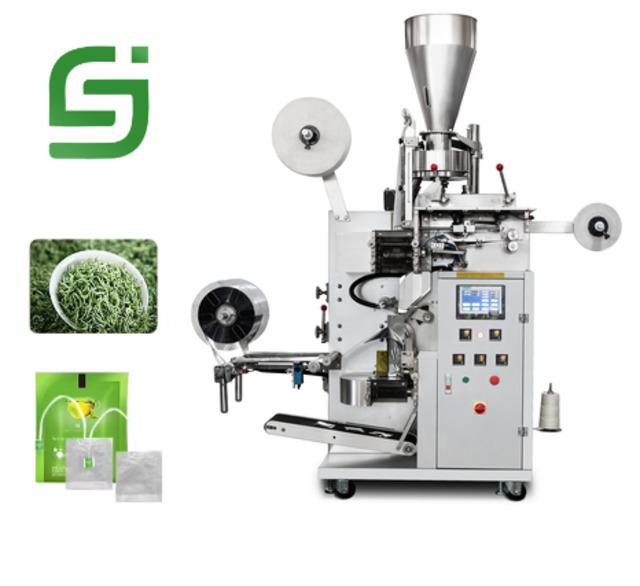
Use photographs or an approved arrangement drawing during the vocabulary review. An operator should be able to point to the named material path without opening a service screen. For the tea bag packaging machine range, confirm this naming against the exact configuration rather than transferring terminology from another model.
Require the same alarm identifier to refer to the same condition in every delivered language. The code gives operators and supplier support a common reference when their spoken languages differ. Request the actual applicable alarm list from the OEM; do not invent a new numbering scheme or infer an alarm from a photograph.
For each code, collect the approved source wording, translated wording, affected device or material, condition described and responsible role. Separate the detected condition from an unverified diagnosis. For example, a confirmed low-level input may indicate a replenishment need, but the translation should not claim a failed sensor unless the control actually identifies that fault.
| Message issue to review | Required glossary entry | Reason to return the wording |
|---|---|---|
| Material identity | OEM code plus the fitted stream and location | "Material" could mean tea or either packaging web |
| Detected condition | What the signal establishes, in both languages | A possible cause is presented as a proven diagnosis |
| Operator action | Permitted response and escalation role | Translation invites a service adjustment by an operator |
| Message state | Active, acknowledged or historical meaning, if provided | Clearing the display appears to confirm cause removal |
| Revision identity | Glossary revision paired with the screen release | The supplied document describes older text |
Use this review for messages the offered interface actually provides. Empty entries reveal missing information; they do not prove a missing machine function. Keep disputed translations open until the OEM and the buyer's language reviewer agree on the meaning.
These words should not become interchangeable during translation. Acknowledging a message may record that it was seen; a reset request may ask the control to reassess a condition. Neither wording should imply that the physical cause has disappeared. The OEM must explain what each available action does on the quoted machine and approve its translated label.
Review prompts such as "confirm," "clear" and "continue" in their screen context. Establish whether they dismiss a notice, confirm an entry or request a machine-state change. Ask whether any prompt could be read as permission to resume production before the required condition is resolved. Have the supplier correct ambiguous wording through its approved control process.
The glossary should point to the applicable OEM instruction and authorized role rather than contain an improvised reset sequence. Messages involving guarded areas, electrical equipment or service adjustments need an appropriate escalation statement. This purchase requirement concerns accurate meaning; it is not a machine-specific fault-clearing procedure.
List the values operators may view or enter, with their units and permitted ranges as supplied by the OEM. A label translated correctly can still be misleading if a numeric field omits whether a quantity is grams, millimetres or another unit. Distinguish a cup adjustment value from measured fill mass; their relationship must not be assumed.
Agree how decimals are displayed and entered in the selected language. Have the supplier demonstrate a permitted example so that a comma, point or grouping separator cannot silently change its interpretation. Compare the displayed result with the intended value. Translation alone is not evidence that numeric entry conventions change with the language.
Where date or lot-entry fields are supplied, request an explicit format such as a named year-month-day order and an example showing what is stored. Clarify whether the value is a production date, another date or free text. Do not assume that changing the HMI language changes a separate coding device's date format or provides batch-record functions.
Obtain evidence on the actual proposed display and screen release. Long translations may clip a material name, hide an action word or wrap over a numeric value. Inspect the longest alarm, confirmation prompt and recipe name, along with text inside buttons. A translated spreadsheet cannot prove that the rendered screen remains readable.
Check required characters, punctuation and font rendering in every agreed screen state. Ask the OEM to confirm supported character handling for this hardware and software combination. Do not assume universal Unicode coverage, downloadable language packs or freedom to install another font. Missing characters require supplier resolution and another display check.
If bilingual wording is proposed, test the actual layout rather than accepting two complete translations squeezed into one label. Agree which language appears first and how technical names remain identifiable. Record any untranslated messages as exclusions with an owner, including device-generated text outside the central interface.

Ask the OEM to prepare a safe demonstration covering agreed routine messages and selected alarms relevant to the ordered configuration. The supplier chooses the approved method for presenting conditions. The buyer observes interpretation and results without creating faults, bypassing devices or experimenting with recovery actions.
Invite representatives of the actual operating shifts. For each selected message, ask them to explain the affected stream, what condition is reported, which response belongs to their role and when they must call service personnel. Compare their explanation with the approved glossary. A translator reading the words aloud does not establish that operators understand the intended action.
Record the machine identity, screen release, selected language, alarm code, visible wording and interpretation outcome. Include units, entry conventions and character rendering in the demonstration. Log corrected text and repeat the affected observations on the revised release. Unshown screens and untested languages remain outside the witnessed result.
Name the OEM owner of control meaning and the buyer's reviewer of local vocabulary. Identify who prepares the translation, who approves it and who installs the released screen text. Include any separate translation charge and the agreed deliverables: screen inventory, glossary, accepted wording and revision record. These responsibilities need a clear home in the order.
Agree how a later software change affects translation. An added alarm needs a matching glossary entry; a renamed material stream may require updates to screens and instructions. Ask the supplier to identify changed codes and messages, explain any altered meaning and obtain the required language approval before issuing the update.
Keep the accepted glossary tied to the installed screen release. Operators need to know when their reference has changed, and service support needs the same revision identity. This is control of operational wording, not a general HMI backup or replacement-hardware recovery requirement.
Does a language selection button prove that all messages are translated?No. Check the agreed screen inventory, pop-ups, alarms and connected-device exclusions. The OEM should demonstrate the selected language on the offered release and identify any messages that remain in another language.
Should translated alarms receive different codes?Request stable identifiers for the same condition across languages. That lets an operator report a code while the supplier consults its own approved wording. Any existing code differences need explicit supplier reconciliation.
Can operators approve the translation without the OEM?Operators can assess readability and local vocabulary. The OEM must verify the technical meaning, control response and permitted role. Both reviews are needed when wording could change how a person interprets a machine condition.
What if the required characters do not display correctly?Hold the affected language item for supplier correction or a clearly agreed alternative. Test the proposed solution on the actual display. A claim that the text is correct in a document does not resolve missing screen characters.
Must service screens use the same language as production screens?Define that separately according to the service arrangement. State the agreed service language and access role, and identify operator-facing messages that must remain understandable when escalation is required.
Language acceptance should establish whether operators can identify the material, understand the reported condition and recognize the limits of their response. Purchase a defined translation scope with stable alarm codes, unambiguous entry conventions and a witnessed screen release. Close character and layout problems on the offered hardware, then assign ownership of later wording changes. A readable language menu is only the beginning of that commitment.

YISEN MACHINERY - The ONE-STOP VFFS PACKING MACHINE SOLUTION SUPPLIER
 Tel: +8617350750975
 Email: info@vffspackingmachinery.com
 MP/WhatsApp: +8617350750975
 Manufacturer Address:Meixi Road, Tongan District, Xiamen,Fujian,China