

Hot Keyword:
Author:YISEN Pouch Packing Machine Manufacturer TIME:2026-10-15
Compare end-of-batch tea hold-up by weighing retained tea at the same agreed finish boundary and reconciling it with tea issued, filled bags, rejects, samples and spills. For an Automatic Tea Bag Packing Machine running short lots, a low hopper remainder alone does not establish low internal retention. The comparison needs location-specific measurements, packaging tare and an explicit account of measurement uncertainty.
Choose the finish event before reviewing any supplier result. It might be the agreed planned stop after an identified short lot has been processed using the OEM's approved operating method. Record when replenishment ends, which final bags belong to the trial and the machine state at that stop. A supplier should not select a more favorable endpoint after seeing the residue.
Separate the operating finish from the subsequent collection used to measure tea still inside. Additional running that turns retained tea into bags changes the original endpoint. If such a run is useful, record it as a separate extension; do not silently replace the result from the agreed finish boundary.
Agree the same boundary for every Automatic Tea Bag Packing Machine being compared. Identify any configuration that cannot operate within the proposed test method. The OEM should approve the operating and access arrangements; this comparison does not instruct operators to run a hopper dry or improvise machine stopping procedures.
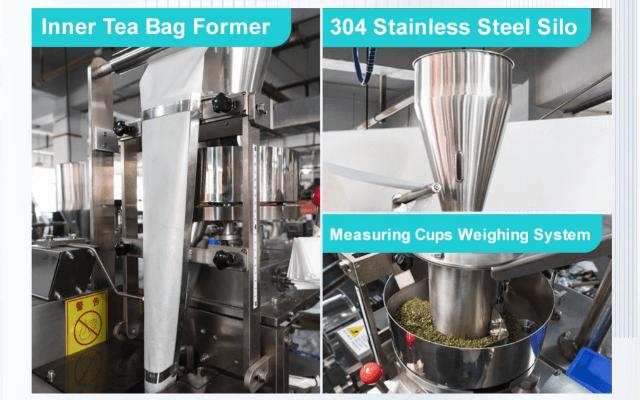
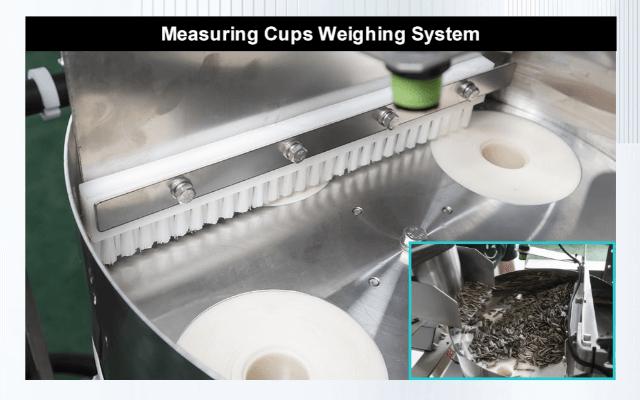
Start at the receiving hopper and follow the fitted product-contact path. List the hopper outlet, measuring cups or other dosing device, transfer surfaces, chutes and the final delivery path into the bag. Use the exact arrangement drawing and an OEM-assisted inspection. A machine with a different dosing arrangement needs its own location map.
Give each location a stable identifier, such as hopper remainder or cup-area remainder, and note how its tea will be observed or collected. Identify surfaces hidden in the assembled configuration. A large visible hopper is easy to discuss, but small pockets elsewhere may matter when the planned tea lot is short.
Keep upstream bulk-transfer equipment outside this internal-retention comparison unless the agreed boundary explicitly includes it. An elevator or receiver can have its own residual quantity. Combining that tea with hopper and cup retention would prevent the buyer from determining which quoted component needs improvement.
Document the machine's starting tea condition. A trial starting with tea already in the cups cannot be compared directly with one starting from an inspected empty path unless that initial inventory is included. Ask the supplier to identify what can be measured and what remains uncertain; a visually empty hopper does not prove an entirely empty machine.
Weigh the tea issued to the defined machine boundary using identified containers and a suitable reference balance. Record gross mass, container tare and net tea mass in one agreed unit. Account separately for tea left in the source container rather than treating the whole container issue as machine input.
Use the same representative tea condition for the comparison, including its leaf cut, fines and blend character. Identify the material and any handling between weighing and feeding. Lost portions, evaluation samples or tea sent elsewhere before loading must be excluded from machine input or recorded in a separate, explicit entry.
Use tea mass throughout the worksheet, not the combined weight of tea and packaging. The basic reconciliation is: issued tea plus starting tea inventory equals tea in accepted bags, rejected bags, samples, loose spills and end hold-up, plus an unexplained difference. Define the sign of that difference so an excess accounted quantity is also visible.
| Worksheet row | Mass and identification to record | How it affects the comparison |
|---|---|---|
| Issued tea and starting inventory | Net tea mass, unit, container tare and starting condition | Defines the input available to the measured path |
| Accepted filled bags | Tea-only mass measured directly or estimated by a declared sample method | Prevents envelope, filter, thread or tag weight becoming tea output |
| Rejected bags and test samples | Separate tea masses; identify samples removed from other counts | Prevents rejection losses or double-counting from hiding retention |
| Loose spills and handling losses | Collected tea mass and location; flag unmeasurable portions | Separates tea outside the contact path from tea held inside |
| End hold-up by mapped zone | Container tare, collected net tea and inaccessible locations | Reveals where a contact-part change could help |
| Unexplained difference | Input minus accounted outputs, with uncertainty notes | Blocks unsupported claims about inaccessible residue or yield |
State whether a sample bag remains in accepted output or has been moved to the sample row. When bag tea mass is estimated from sampled net fills, record the sampling method and number of bags represented. Nominal recipe weight multiplied by bag count is not a substitute for measured output evidence.
After the agreed stop, have qualified supplier personnel use the approved access and collection method. Provide separately identified, pre-weighed containers for the mapped zones. Record net tea from each zone, including visible fines, and identify anything that cannot be collected quantitatively. Do not describe a brushed surface or a photograph as a mass measurement.
Preserve the location distinction while collecting. Tea falling from a cup area into a chute during approved access should be assigned by the agreed rule and recorded. If zones cannot be separated reliably, report a combined zone rather than inventing individual values. Collection method changes can otherwise make identical machines appear different.
Keep loose floor spills, rejected bags and already discharged acceptable bags outside these residue containers. Record collection losses and material removed for inspection. The result should distinguish the measured quantity held at the finish boundary from how successfully it was collected afterward.
A short-lot test should reflect the hopper levels the buyer expects during normal production. Ask the OEM to define permitted conditions and compare the intended replenishment pattern with an agreed lower-level condition where applicable. Record the level observations and refill events. Do not select an abnormal condition merely because it leaves less tea visible.
Keep lot size, tea condition, bag target, configuration and the finish rule comparable across these trials. Feed level is the variable under review; extending one run, adding extra tea to another or counting a different final bag changes additional variables. If the machine requires a different approved method, report that limitation openly.
Repeat sufficiently to understand normal variation, with the trial count agreed before ranking results. Retain each result rather than reporting only the best run. Track accepted bags and rejects alongside residue so that a lower retained quantity achieved through extra rejection is not presented as better tea utilization.
Some tea present at a planned stop may remain in the normal product path for a later run under the buyer's approved production rules. That is a disposition category, not evidence of zero end hold-up. Include its measured quantity at the finish boundary, then identify it separately as proposed carryover rather than hiding it in future output.
Inaccessible hold-up refers to tea retained in locations that the agreed routine access cannot reach or measure adequately. Mark these locations and their limitations. An unexplained balance difference alone does not locate tea there: spills, sample handling, tare error or estimated bag contents could produce the same difference.
Ask the buyer's product team to decide the permitted disposition of each collected or retained portion. Physical recoverability does not authorize reuse, blending into another lot or return to production. The machine comparison should report quantity and accessibility without making assumptions about the tea's release status.
Choose a balance with suitable resolution for both the main input and small residual portions, and record its verification status and the weighing conditions. Check container tare consistently. Damp or dusty containers, changing collection liners and packaging fragments can affect small measurements enough to alter an apparent ranking.
Where filled-bag tea mass is estimated, assess the variability of sampled net fills and whether the sample represents startup, stable output and the final accepted bags. A sample drawn only from the easiest middle segment may miss a different final dose distribution. State the estimated total and its uncertainty rather than presenting it as directly weighed tea.
Agree a method for reviewing the reconciliation difference that reflects instrument, sampling and collection uncertainty. If the difference exceeds the accepted review range, investigate count errors, duplicated samples, input boundaries and collection loss. Do not force the worksheet to balance by assigning an unexplained remainder to internal retention.
Compare differences in hold-up with the uncertainty of the methods used. When the apparent gap is smaller than the evidence can resolve, report the ranking as inconclusive. Improve the measurement or repeat the matched trial before turning that small gap into a purchase preference.
Use the zone results to ask for a targeted quotation: a revised contact part, a different outlet transition, improved inspection access or a change in collection clearance where the OEM considers it suitable. Name the retained location, explain the problem observed and ask for a drawing showing the proposed change. A broad promise of higher yield gives no such purchase scope.
Have the supplier identify included parts, installation responsibility, access requirements and the checks needed after modification. Altering a clearance or contact surface can affect feeding, dosing or bag delivery, so residual-mass improvement needs review alongside accepted output. Request a repeat of the same boundary and measurement method on the final proposed configuration.
Compare options in the tea bag packaging machine category using documented residue locations and trial conditions. Preserve separate prices for supported design changes and unresolved proposals. Do not infer a blanket yield guarantee, zero residue or universal material recovery from a reduced measured hold-up in one test.
Is the tea left in the hopper the entire end hold-up?No. Inspect the fitted dosing and delivery path as well. Record hopper, cup or other dosing-area and chute quantities separately where reliable collection is possible, and identify unmeasured locations.
Can an unexplained mass difference be called inaccessible residue?Only after evidence establishes where the tea remains. The difference may reflect tare, sampling, counting or collection error. Keep it unexplained until the investigation supports a location and quantity.
Can finished-bag counts replace tea-mass measurements?Counts help define output, but they do not establish its tea mass. Use directly measured net contents or a declared representative sampling estimate, excluding all packaging tare and accounting for removed samples once.
Should a supplier run extra bags to reduce the recorded remainder?Only as a separately agreed test or extension. Extra running changes the original finish boundary. Retain the first result and show the additional tea output, rejects and residue under the extended condition.
Does collected tea automatically become usable inventory?No. Collection establishes where the measured tea was held. Its future disposition belongs to the buyer's product-release process, including any restrictions associated with handling or the intended next lot.
A short-lot purchase comparison is strongest when the finish event stays fixed and every tea portion has one place in the worksheet. Weigh retained zones separately, distinguish packaging tare from tea and explain uncertain quantities before ranking results. Then connect a proposed contact-part or access change to the location it improves and repeat the matched trial. The useful commitment is a documented residual-material result under agreed conditions, with clear access and disposition limits.

YISEN MACHINERY - The ONE-STOP VFFS PACKING MACHINE SOLUTION SUPPLIER
 Tel: +8617350750975
 Email: info@vffspackingmachinery.com
 MP/WhatsApp: +8617350750975
 Manufacturer Address:Meixi Road, Tongan District, Xiamen,Fujian,China