

Hot Keyword:

Author:YISEN Pouch Packing Machine Manufacturer TIME:2026-03-06
Neither technology is universally superior. Buyers should mark production packaging at realistic speeds and positions, then inspect the complete pack after sealing and handling. A good comparison includes installation and operating work, not only the sample's appearance or the price of the coding head.
A ribbon coder transfers ink from a consumable ribbon onto packaging through a controlled printhead process, while a laser coder creates a mark by changing the substrate or a receptive coating with focused energy. The better system depends on the exact film, label, code content, line motion, mark test, consumables, safety, extraction, maintenance, and ownership model.
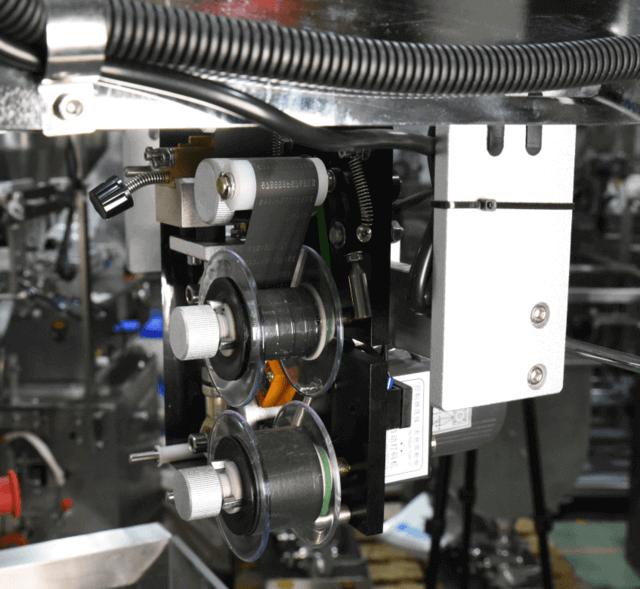
A thermal-transfer ribbon coder typically brings an inked ribbon and flexible packaging into a controlled print zone. A heated printhead transfers selected dots from the ribbon to the material against a suitable support. It can print variable text, numbers, barcodes, or graphics within the capability of the head, ribbon, substrate, and line motion. Ribbon condition, tension, printhead contact, temperature, cleanliness, and the relationship between packaging movement and print cycle affect the result.
A laser system directs energy onto a defined package area. Depending on substrate and system, the interaction may remove, discolor, foam, or otherwise change a layer to create contrast. There is no ink ribbon between marks, but the process needs compatible material, controlled focus and position, engineered guarding, and management of process emissions. "No ribbon" does not mean no service items, risk controls, or operating costs.
Flexible films, labels, coated papers, cartons, laminates, and rigid containers respond differently. A ribbon must adhere with sufficient contrast and durability without damaging the web. The laser wavelength, power, speed, focus, and material interaction must produce an acceptable mark without weakening barrier, seal, appearance, or package function. The packaging-material specialist and buyer should approve any receptive coating or coding area included in the design.
Test production lots and every planned material construction. A mark that works on one color or top layer may lose contrast after artwork, coating, supplier, or laminate changes. Check the actual printing surface, including varnish and slip treatment. Retain identified coded samples and establish change control. Generic statements such as "prints film" or "laser ready" are too broad for purchase approval.
Define message content, character height, line count, barcode or graphic requirements, print area, orientation, and required change frequency. Then map packaging motion at the code point. Intermittent machines may present a stationary window during part of the cycle, while continuous web or conveyor applications require coding synchronized with movement. The coder, trigger, encoder where used, and mounting arrangement must suit that state.
Longer or denser messages need enough physical area and processing time. A fast packaging-machine rate does not guarantee that a large code can be placed legibly. Test startup, normal rate, speed changes, stops, and restart. Check code location relative to seals, gussets, folds, zippers, forming contact, and cutters. The message should remain readable after the package is filled and handled, not only while film lies flat.
Ribbon systems require a compatible ribbon grade and width, roll changes, storage, stock control, used-ribbon handling, and printhead care. Ribbon economy depends on message size, spacing, machine mode, and the coder's control strategy. A low ribbon price can be offset by frequent changes or poor use; a premium ribbon may be justified only when it improves a specified mark or operating condition.
Laser systems avoid ink-ribbon replenishment, but ownership may include extraction filters, lenses or windows, cooling or air requirements, service, source life considerations, and specialized safety checks. Exact items depend on the model and installation. Compare total work and cost using the buyer's production hours, message mix, maintenance capability, energy, consumable supply, support terms, and expected downtime. Avoid universal cost-per-code claims without those inputs.
Ribbon coders can contain heated surfaces, moving carriages, ribbon drives, and nip or contact areas. Mounting and guards should prevent unsafe access while allowing approved ribbon replacement and cleaning. The coder should integrate with machine safety and maintenance isolation according to the final installation. Operators need a defined cool-down or safe-access method where applicable.
Laser installation requires an engineered enclosure, interlocks, beam containment, labels, controls, and qualified review appropriate to the system. Marking can generate fumes or particles from packaging material, so extraction and filtration need assessment for the exact substrate and process. Position pickup, ducting, filter monitoring, exhaust, and maintenance access as a complete system. A laser head mounted on an open line is not a finished safety design.
Both technologies need to know when the correct package is present. Product sensors, registration signals, encoders, machine-cycle states, and software messages coordinate the mark. Define what happens when the coder is unavailable, the message is missing, or the trigger occurs at the wrong time. The packaging line may stop or reject output depending on the risk and design; the buyer must approve that response.
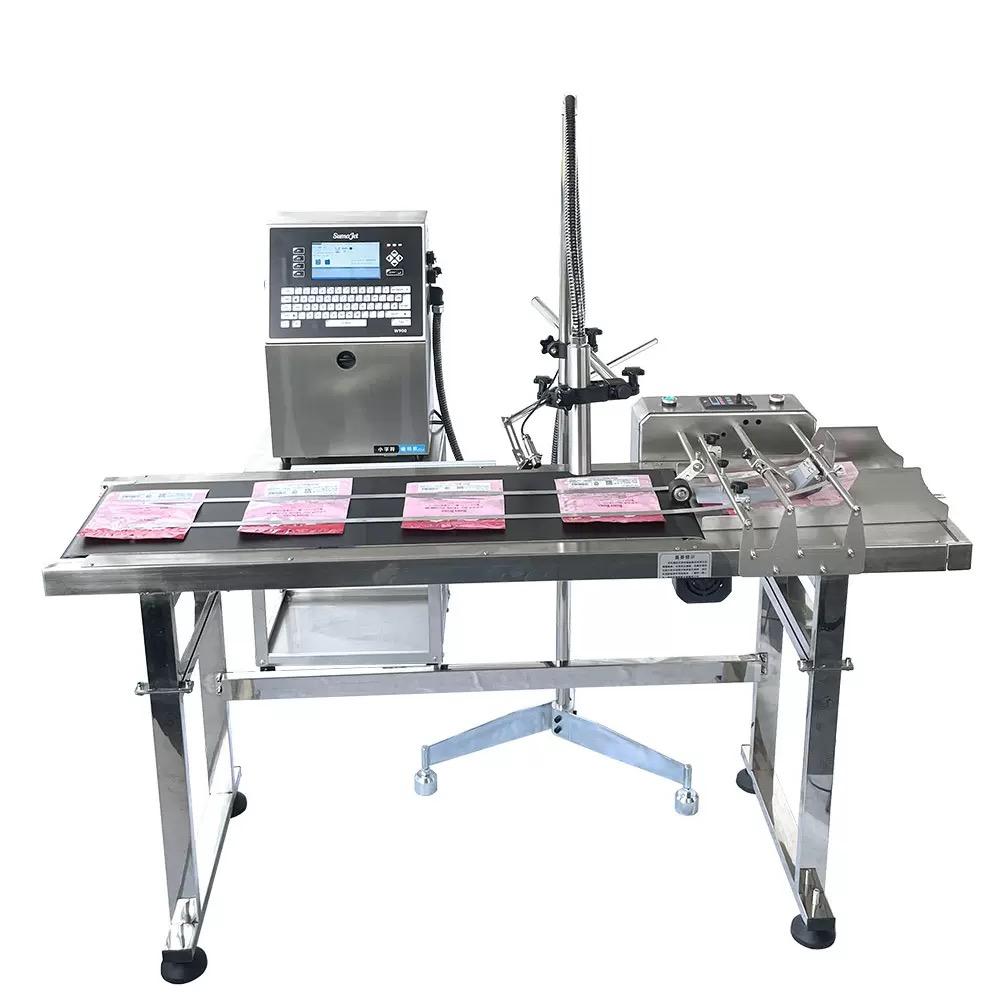
Message governance is as important as physical print quality. Limit access, maintain approved templates, verify date and batch rules, back up settings, and link product recipes where appropriate. A readable incorrect code remains a failure. First-off release should confirm product, packaging, message, location, contrast, and downstream readability. The Doypack packing machine category illustrates one packaging environment where coder placement must avoid pouch features and machine contact.
Ribbon maintenance can include cleaning the printhead and support surface, checking ribbon path and tension, removing deposits, inspecting cables and mechanisms, and replacing identified wear parts. Improper cleaning can damage fine print elements. Keep approved materials and procedures near the equipment, train operators to recognize missing dots or wrinkles, and retain a spare strategy based on supplier lead time.
Laser care may include keeping optical surfaces clean, maintaining extraction, checking focus and mounting, inspecting interlocks, managing software, and using qualified service for specified work. Plants should assess local skills, remote access rules, backup, service response, and replacement lead times. A technically capable coder can still be a weak production choice if support cannot restore it within the site's operating plan.
Code production material in the exact position and pass it through forming, filling, sealing, cooling, inspection, conveying, case packing, and representative handling. Check legibility, contrast, edge quality, message, position, abrasion, chemical or moisture exposure relevant to the buyer, and any effect on package function. The buyer's method defines acceptance; selected photographs are not enough.
| Decision factor | Ribbon coder | Laser coder | Evidence required |
|---|---|---|---|
| Mark creation | Transfers ink from a consumable ribbon | Changes a compatible substrate or receptive layer | Coded production lots at real line states |
| Routine inputs | Ribbon rolls, change work, and printhead care | Extraction filters, optical care, service, and utilities as specified | Ownership model based on actual campaigns |
| Material fit | Ribbon adhesion, contrast, and transfer response | Laser interaction, contrast, and package effect | Finished-pack tests after downstream handling |
| Safety | Hot and moving parts managed by guarding and procedure | Beam containment, interlocks, and process-emission control | Qualified review of the installed system |
| Data control | Correct message, trigger, recipe, access, inspection, and reject logic | First-off release plus challenged missing or wrong-code response | |
Run enough material to include consumable change or normal service interaction where practical. Deliberately challenge missing print, wrong message, poor contrast, and trigger response using a controlled protocol. Reconcile rejected packs. Normalize quotations for mounting, guarding, extraction, controller, software, inspection, installation, training, consumables, spares, and support before comparing price.
Is laser coding free of consumables? It may avoid ink ribbon, but filters, maintenance items, utilities, service, and compatible packaging still belong in the cost review.
Can a laser mark every flexible film? No. Response depends on material and coatings, and the process must not compromise package function. Test exact constructions.
Why might a ribbon coder be preferred? It can be practical for compatible flexible packaging, defined code areas, and plants prepared to manage ribbon changes and printhead care.
Which mark is more permanent? Durability depends on substrate, ribbon or laser process, abrasion, chemicals, heat, moisture, handling, and the buyer's test.
What integration error matters most? A clear wrong code can be more serious than a faint correct one. Message selection, product identity, and verification need control.
Artwork and package changes require coder change control. Moving a window, changing background color, varnish, laminate, label stock, or pouch feature can alter contrast, focus, ribbon transfer, or available print area. Review revised material before the commercial roll enters production, update mounting or recipes under control, and retain an approved coded sample. A coder selected correctly for the original pack should not be assumed suitable after the printing surface changes.
Define a supported response when coding is unavailable. Depending on product and site rules, production may stop, use an approved alternate station, or hold uncoded packs for controlled disposition. The fallback needs identity protection, reconciliation, verification, and authorization; it should not be invented during downtime.
Ribbon and laser coders differ in mark formation, substrate interaction, consumables, safety systems, extraction, and maintenance. The preferred choice depends on the exact package and line duty rather than a general ranking of modern versus traditional technology.
Test complete packages under normal motion and downstream handling, challenge message and reject controls, and compare the full installed ownership scope. That evidence shows which system produces the required code without weakening package quality or creating unsupported plant obligations.

YISEN MACHINERY - The ONE-STOP VFFS PACKING MACHINE SOLUTION SUPPLIER
 Tel: +8617350750975
 Email: info@vffspackingmachinery.com
 MP/WhatsApp: +8617350750975
 Manufacturer Address:Meixi Road, Tongan District, Xiamen,Fujian,China